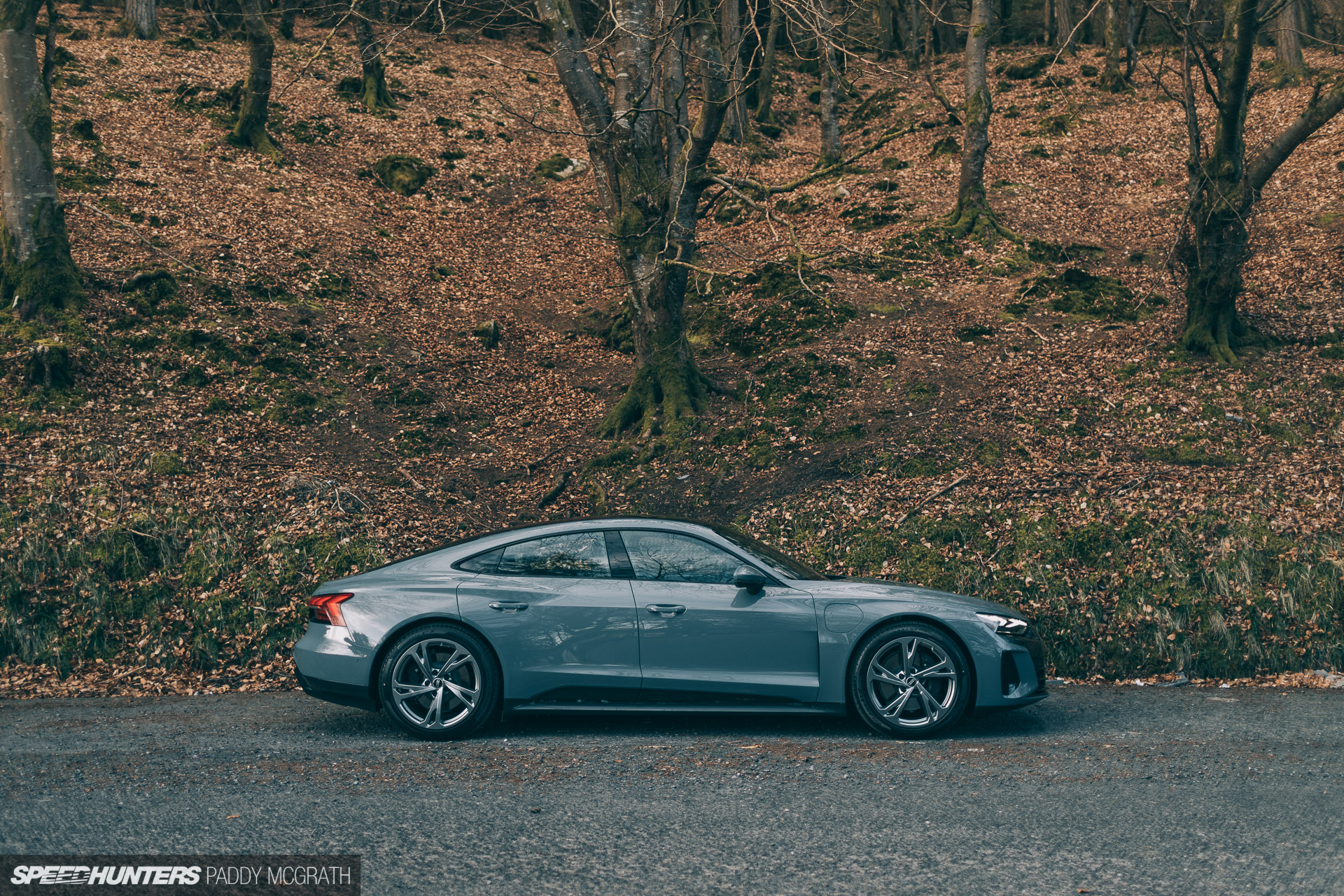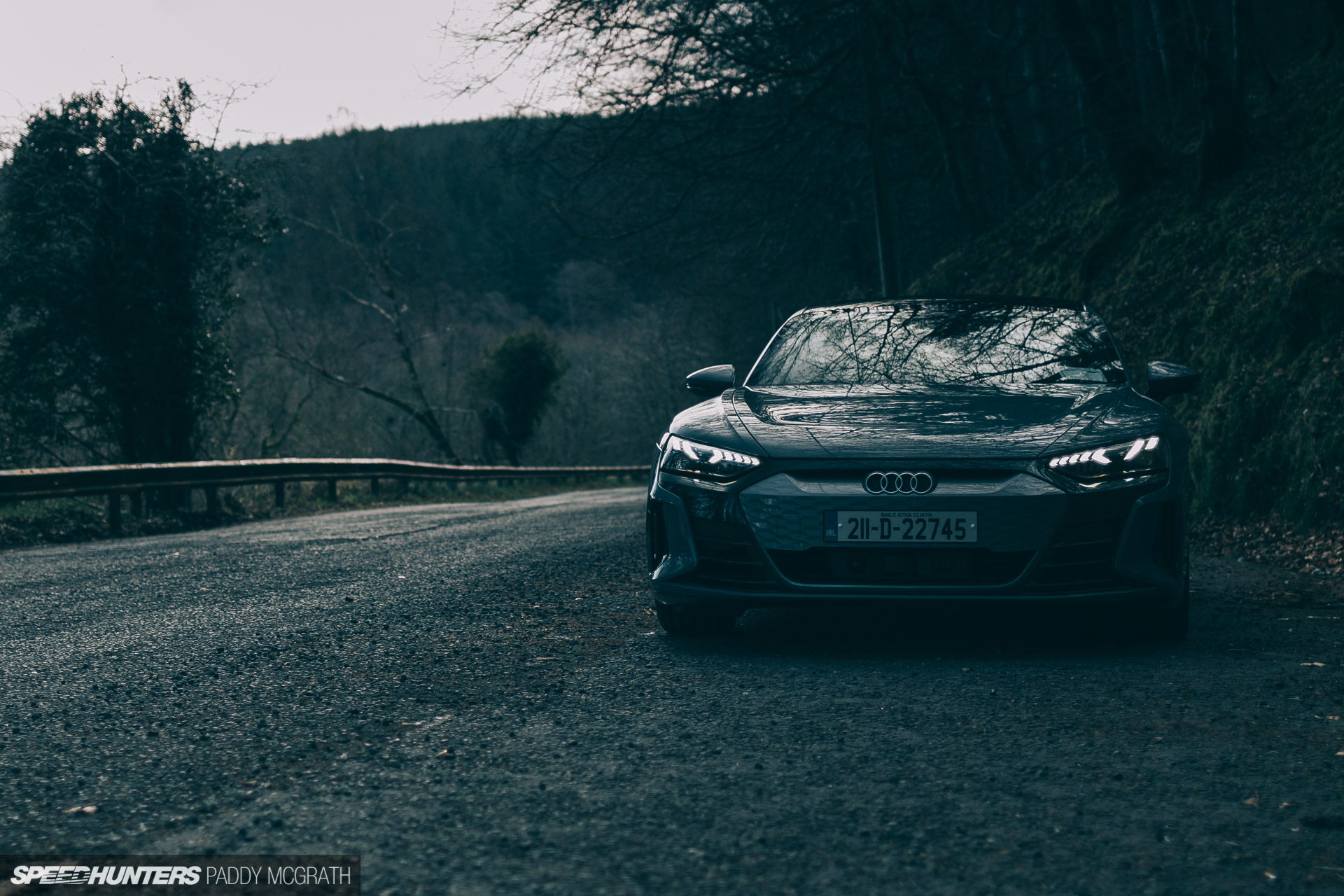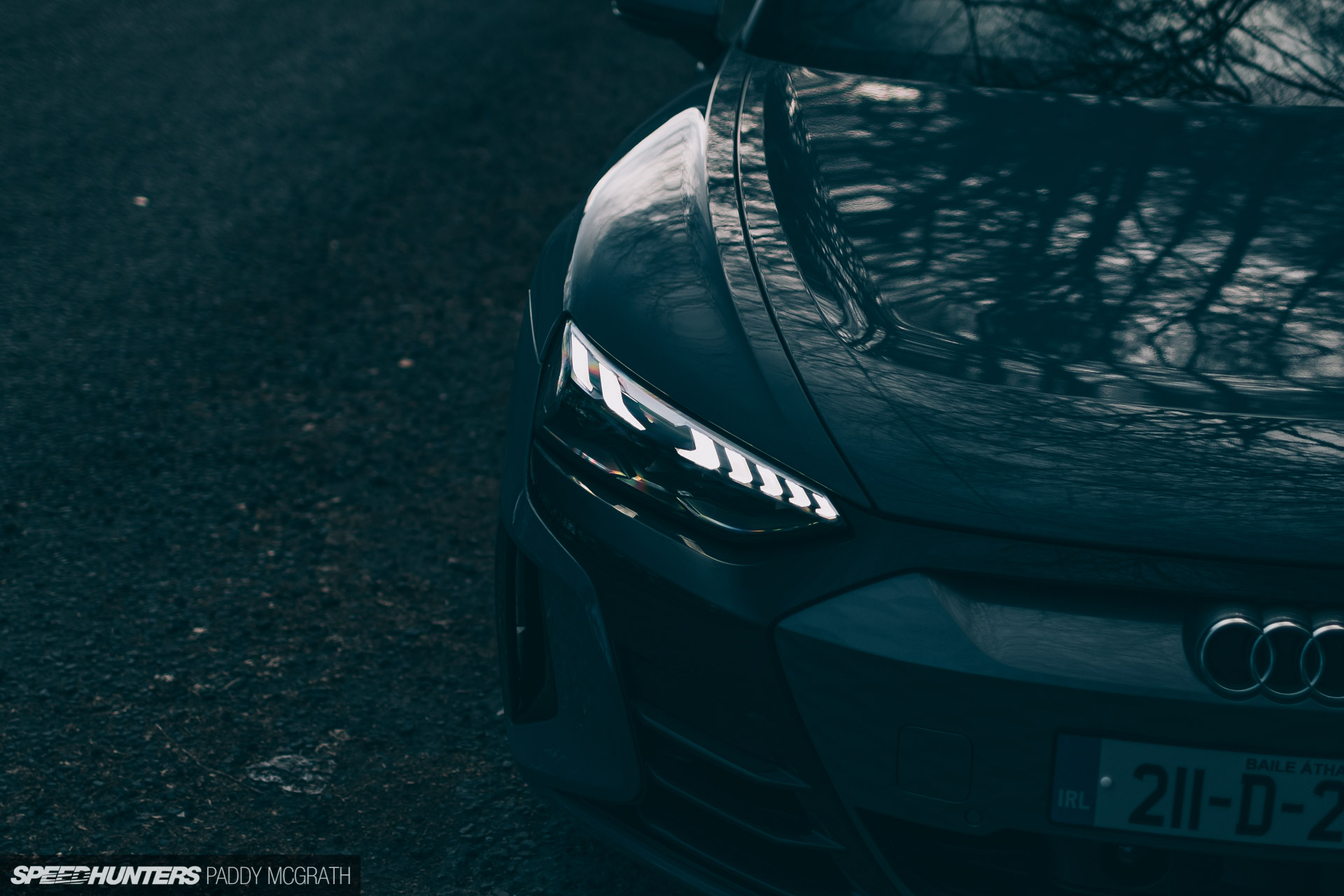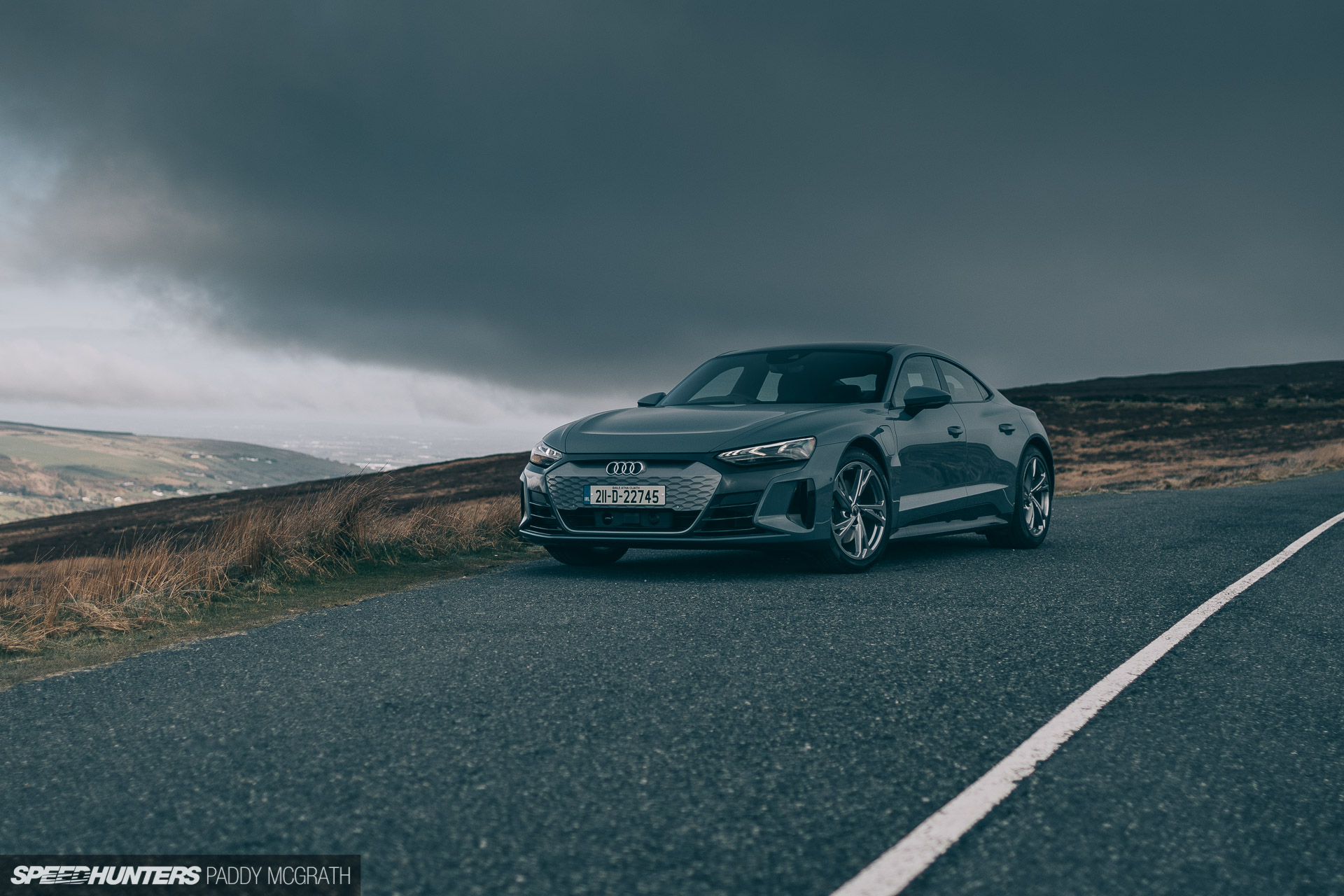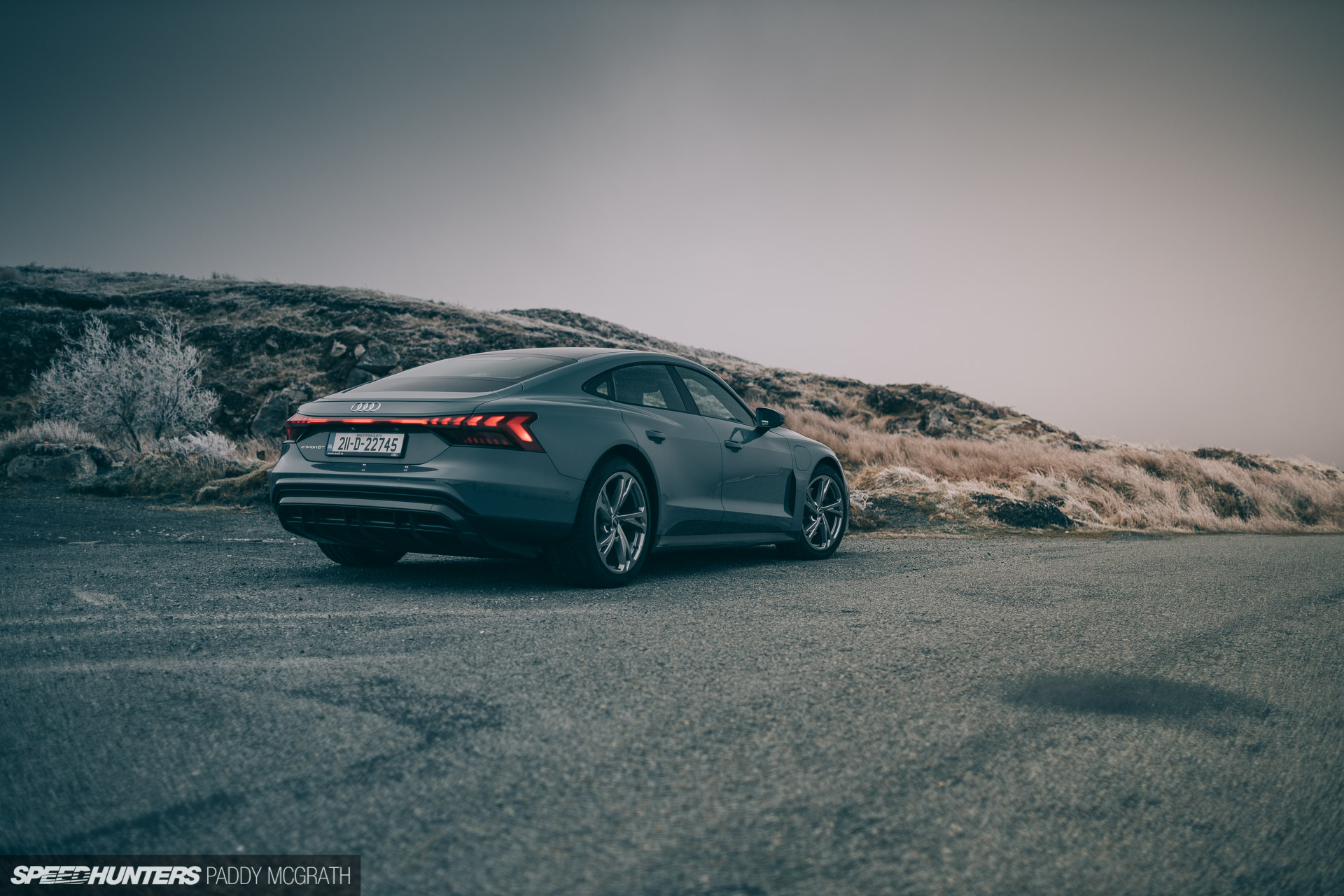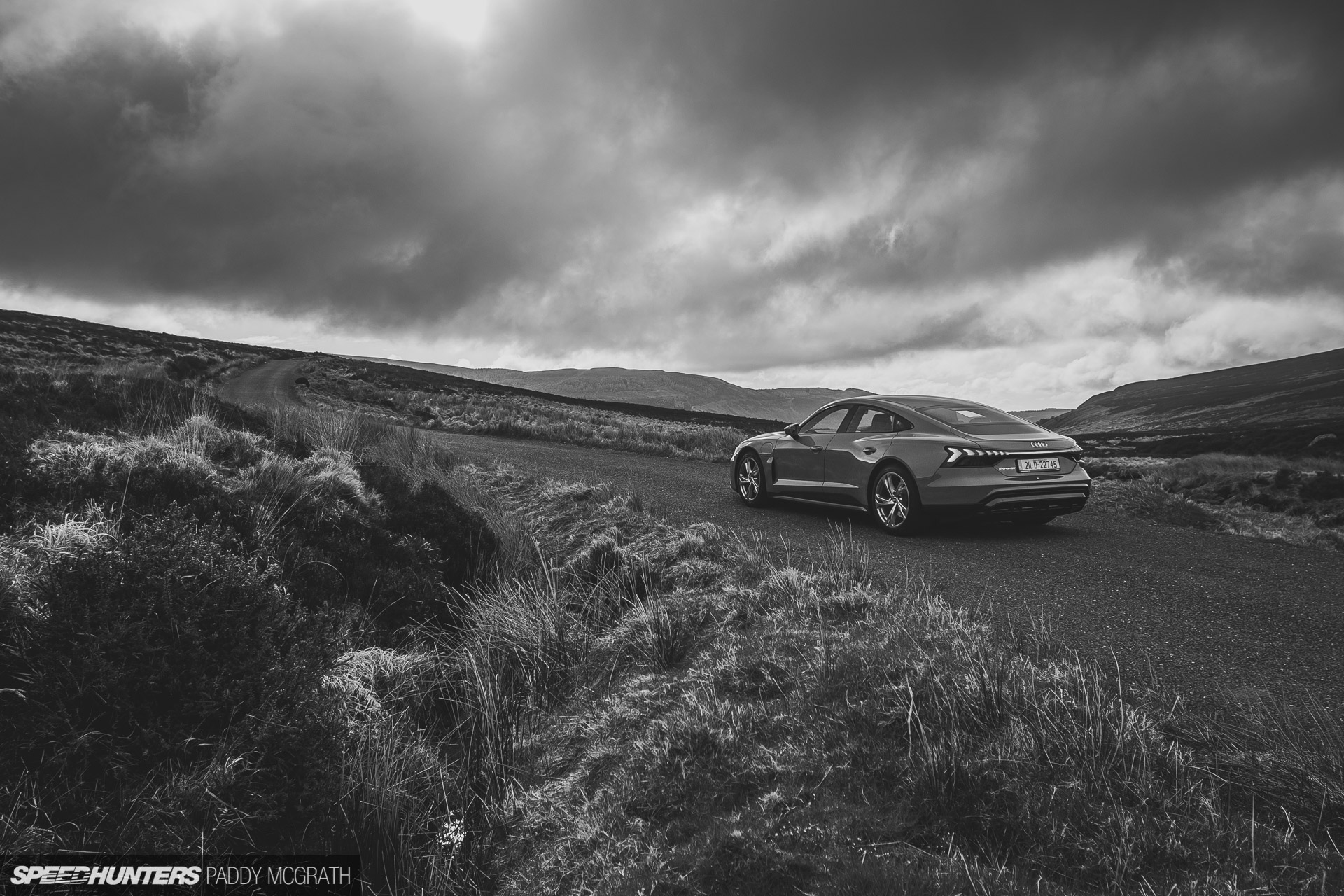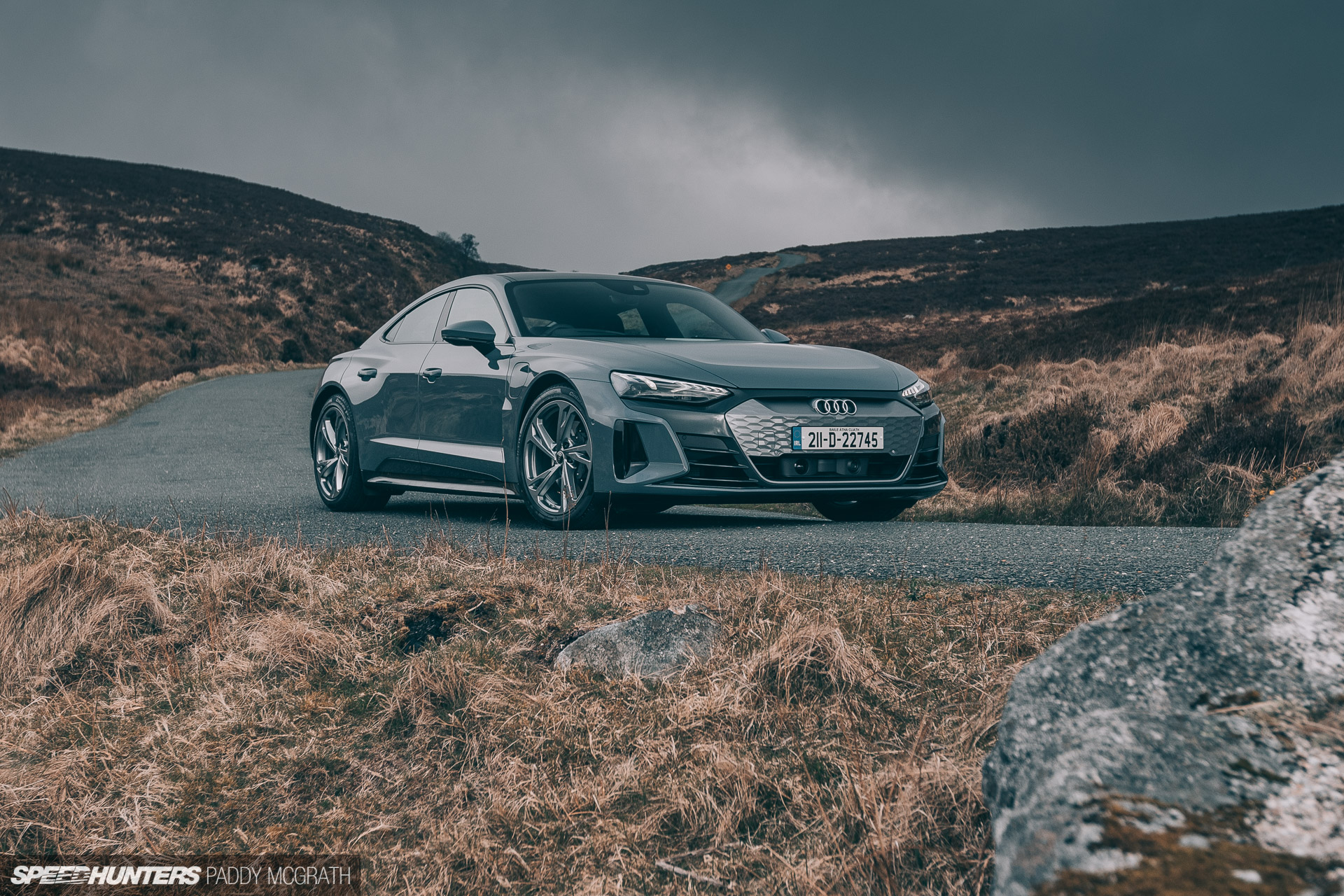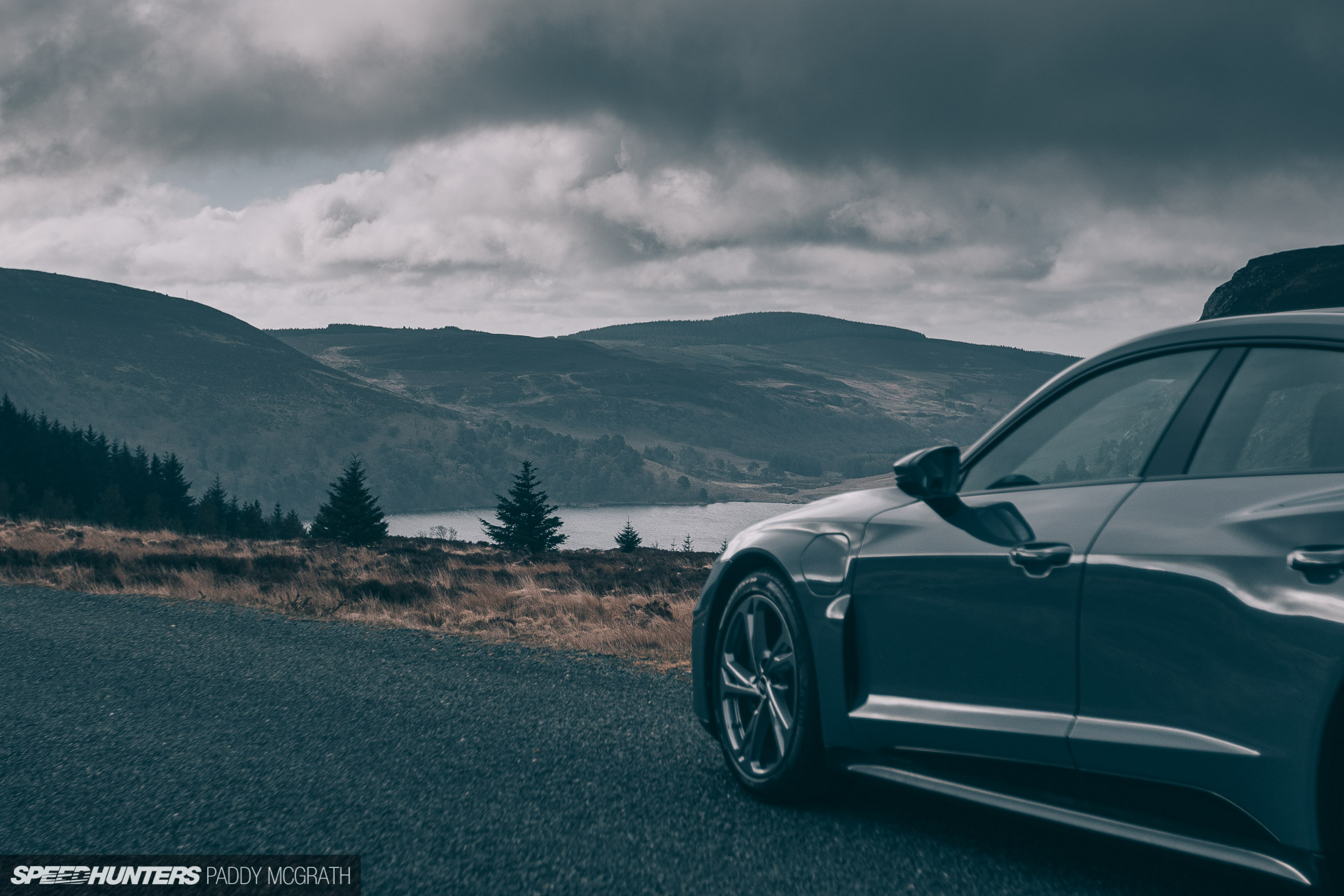
A few days after driving Audi’s new e-tron GT, ‘conflicted’ is the only word I can find that comes close to portraying how I feel.
I feel like it’s almost a betrayal of sorts to even acknowledge the possibility of an electric future, let alone admit to myself that it’s almost a certainty at this point.

The promise of a hydrogen-based revolution is still no closer than it has been promised for years, and the reality of e-fuels isn’t quite as rosy as we might be led to believe. Bosch’s claims that renewable synthetic fuels will be available for €1.20 per litre (approximately US$5.40 per gallon) by 2030 is also widely disputed.
Some reasonable assumptions predict that the same quantity of e-fuel could be closer to €4 per litre, or almost US$18 per gallon. Apparently, it’s really expensive and not that efficient to create e-fuels from renewable sources.
The potential net result of this is that running a traditional internal combustion engined vehicle will become prohibitively expensive, and that’s before governments around the world introduce punitive taxes and other disincentives to encourage us away from our fossil fuel burners.

I don’t for a second believe that quote which states ‘the best thing to happen to horse enthusiasts was the arrival of the car’ will be relevant this time around. The last time I checked, horses were primarily the domain of the wealthy.
What is most infuriating from an enthusiast’s perspective, is that even if every single performance and classic car was removed from the roads overnight, it likely wouldn’t even make the smallest of impacts on the planet’s current climate crisis. Yet, we’re likely to be the ones that lose the most during this transition to an electric future.
Or will we?
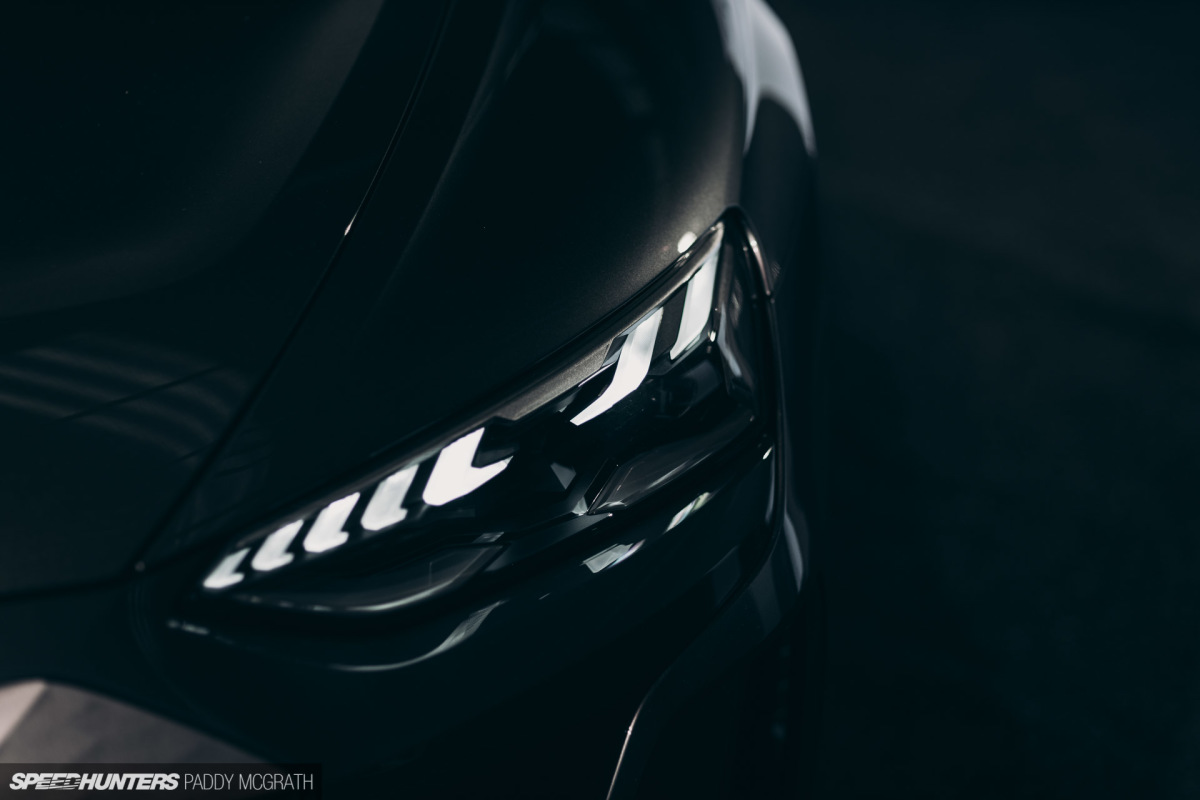
It’s the Tuesday morning just after Easter weekend. Despite the promise of snow and wintry showers, it’s pleasantly bright and dry, but there’s a sharpness to the cold in the air. I’m making the relatively short journey to an undisclosed location where I’ve been offered the opportunity to drive the all-electric Audi e-tron GT. Short enough that Habu doesn’t even reach full oil temperature. Unusually, I haven’t been asked to photograph the vehicle for press purposes on this occasion (that will happen in time), but rather to take a no obligation drive in the car for a few hours.
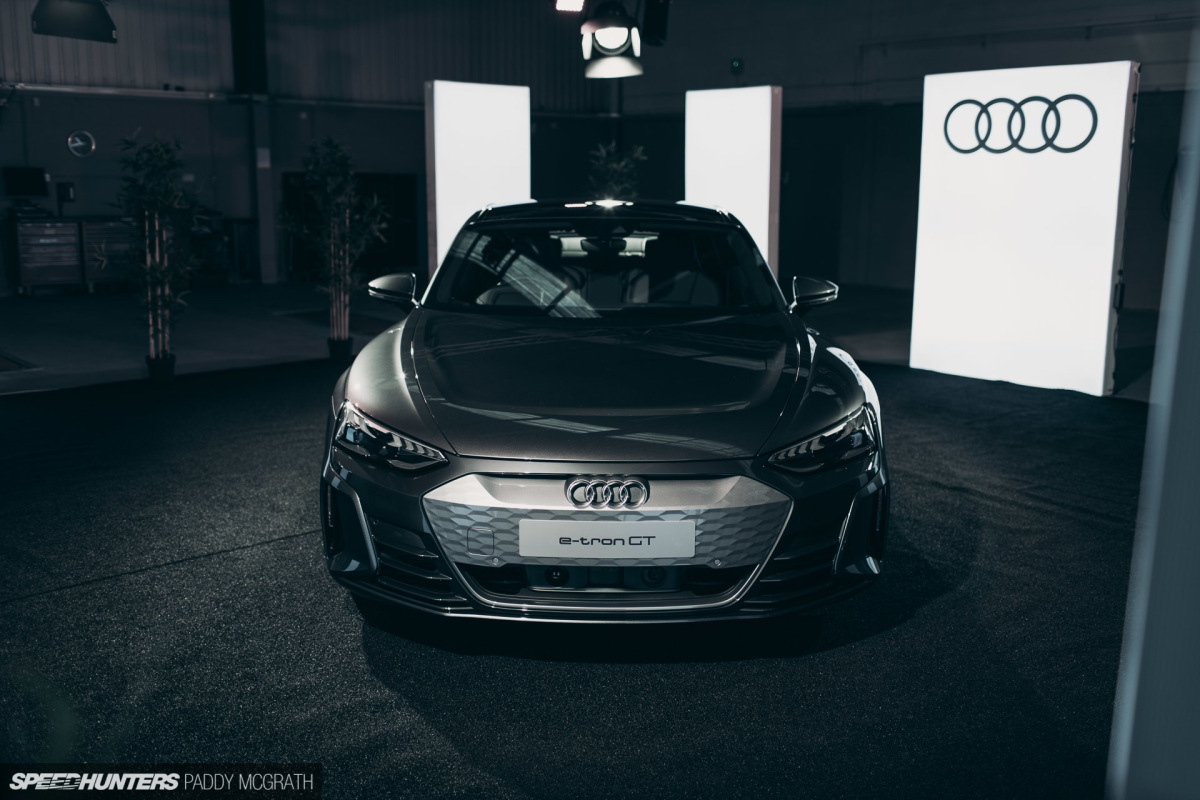
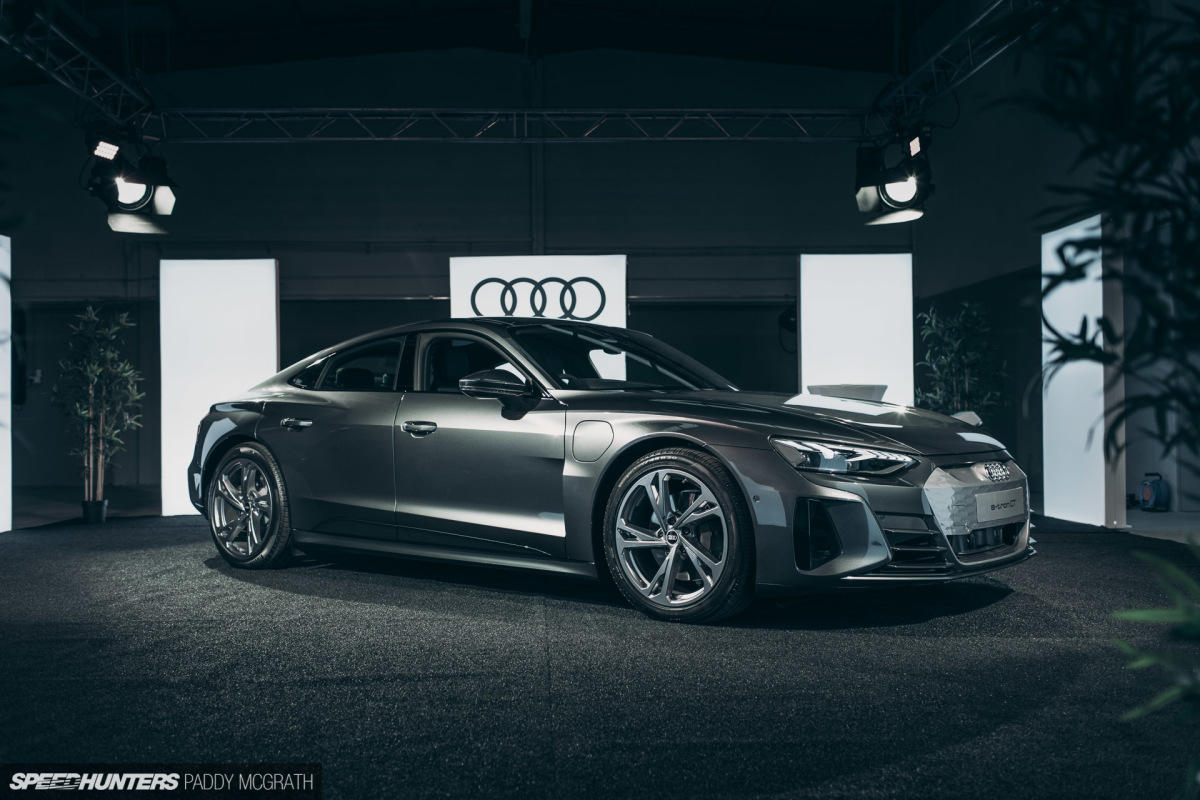
There was a quick walk around the ‘hero’ car in the makeshift venue, before I was handed the keys to a Kemora Gray Metallic example waiting for me.

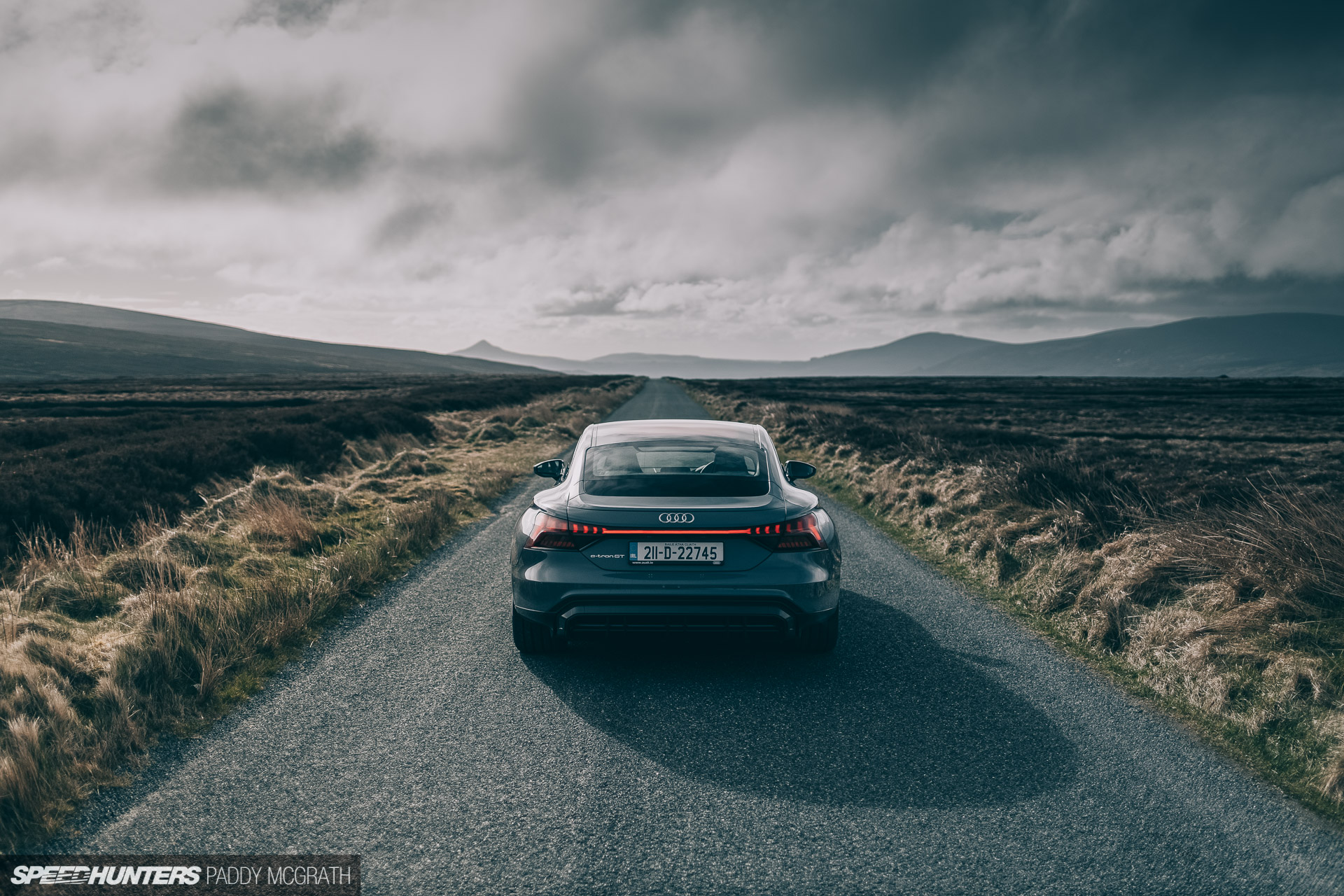
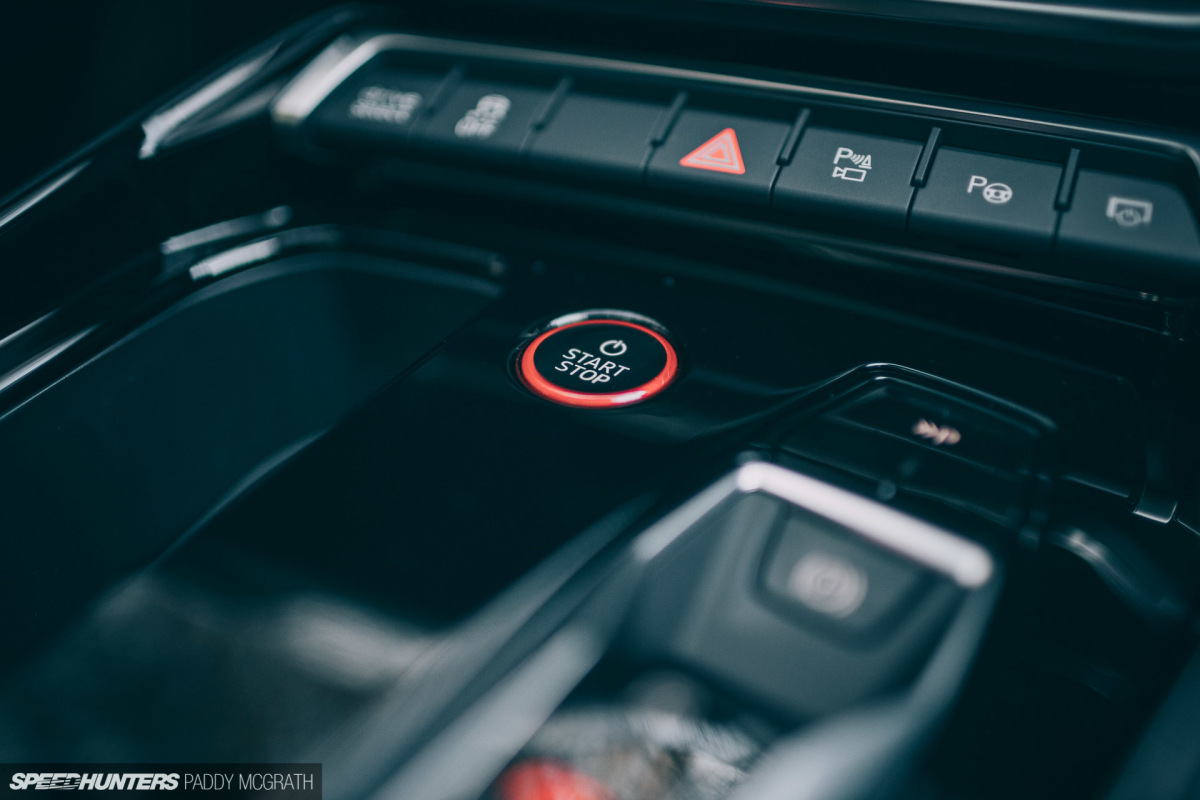
The Audi e-tron GT is a large car – certainly by European standards – at almost five metres long (16.4ft) and just under two metres (6.4ft) wide. I’ve grown used to driving battery electric vehicles over the last few years in my life outside of Speedhunters, but it’s a surprise when I hit the start button, engage Drive and the car emits a purposeful, but synthetic, ‘hum’.

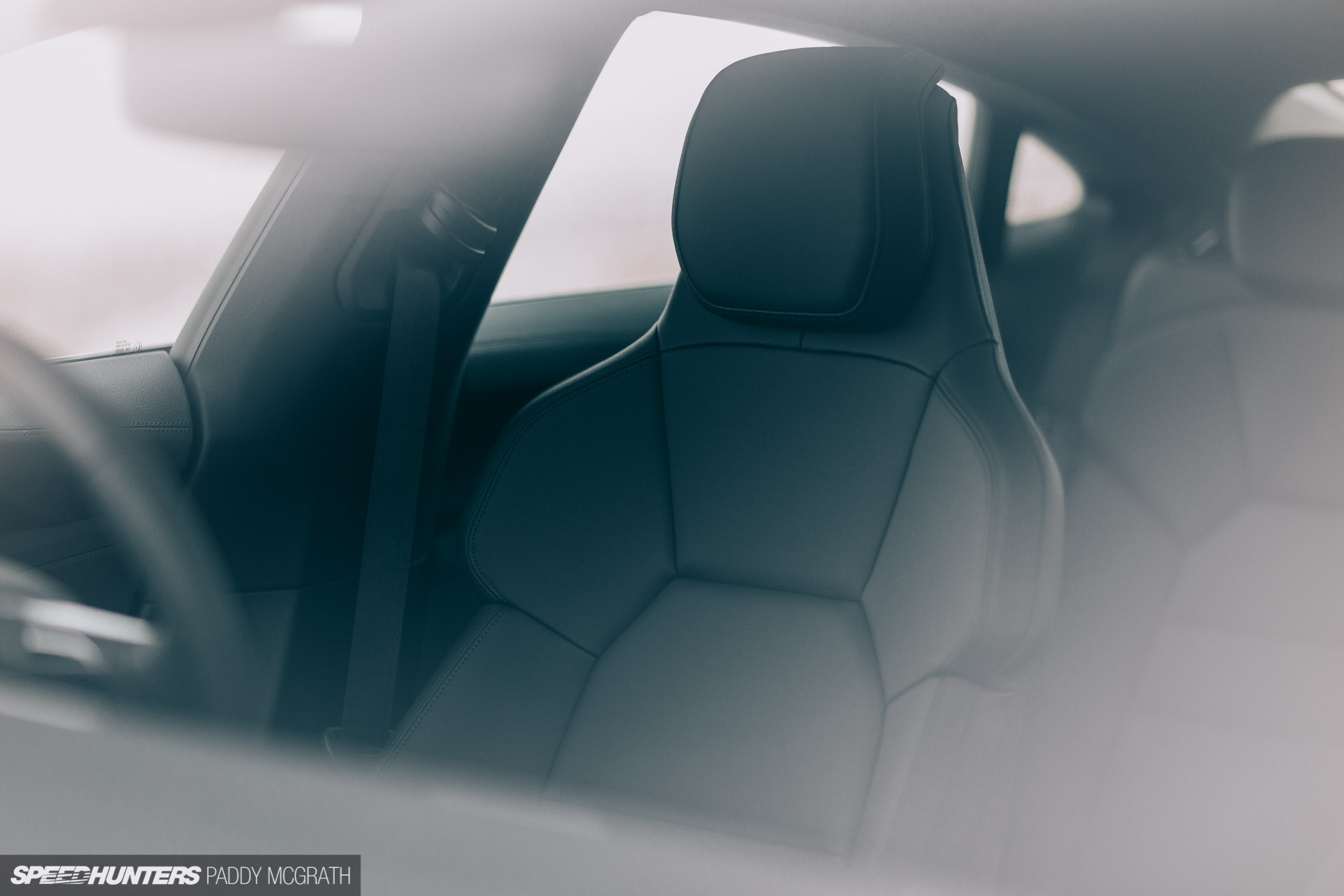
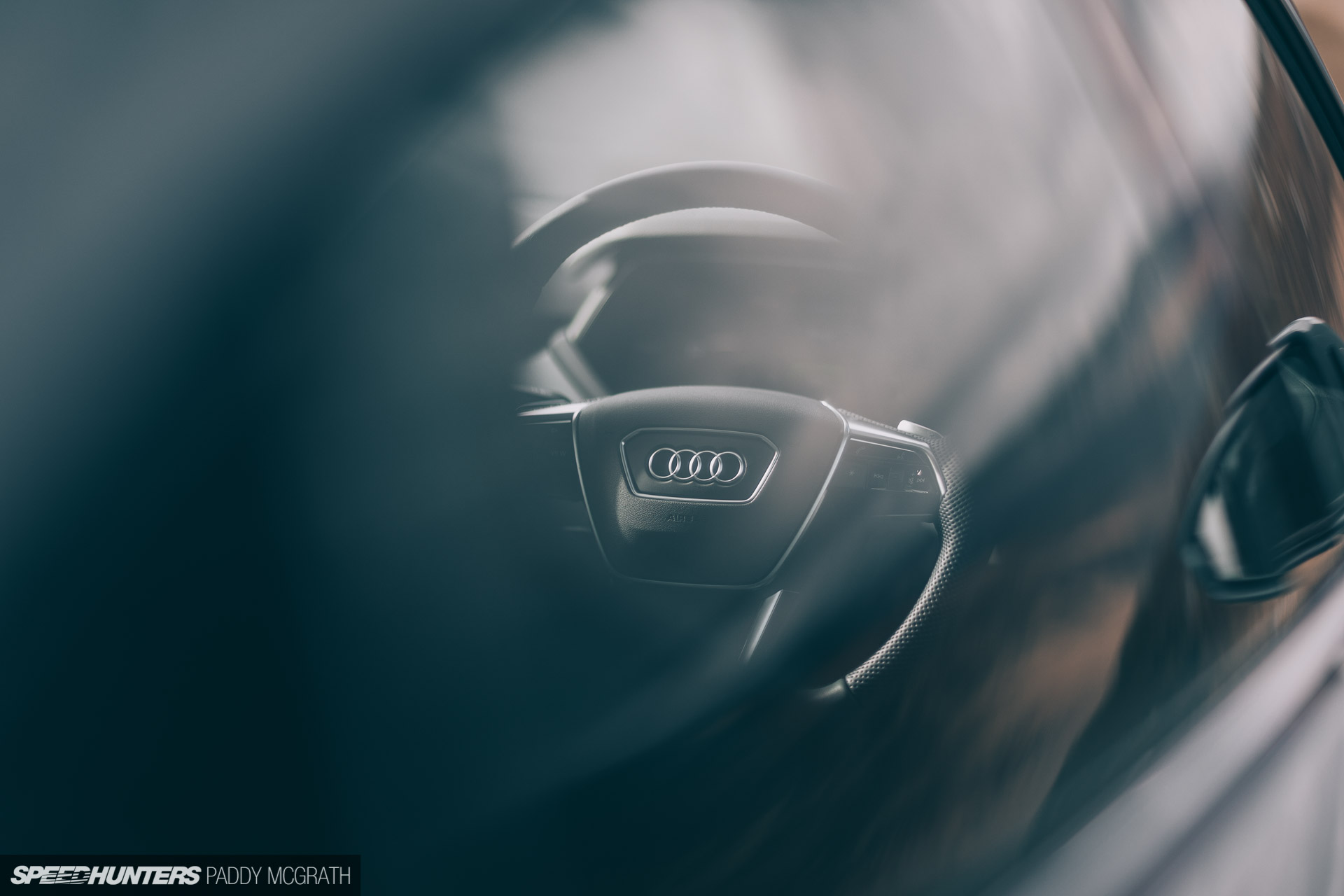
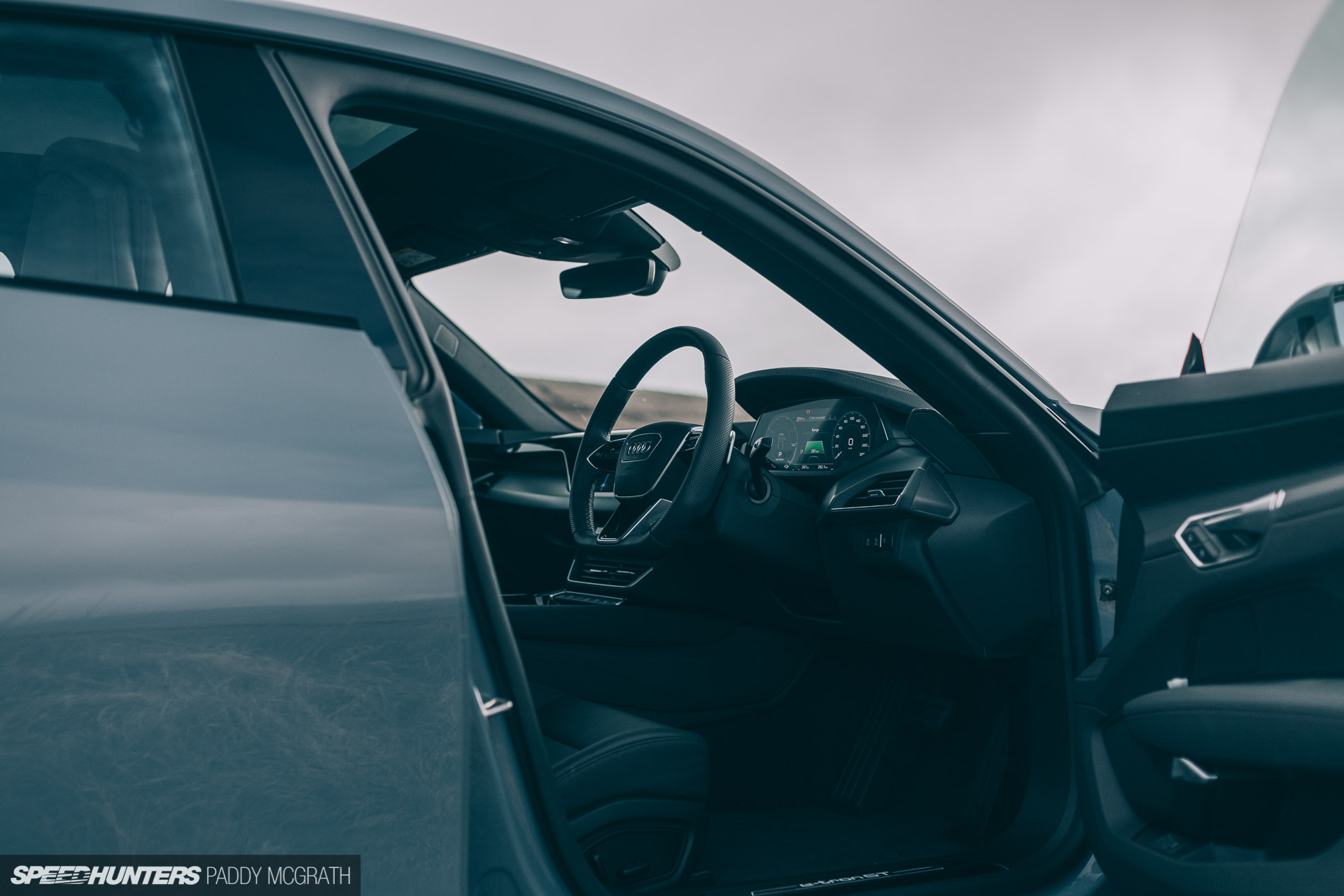
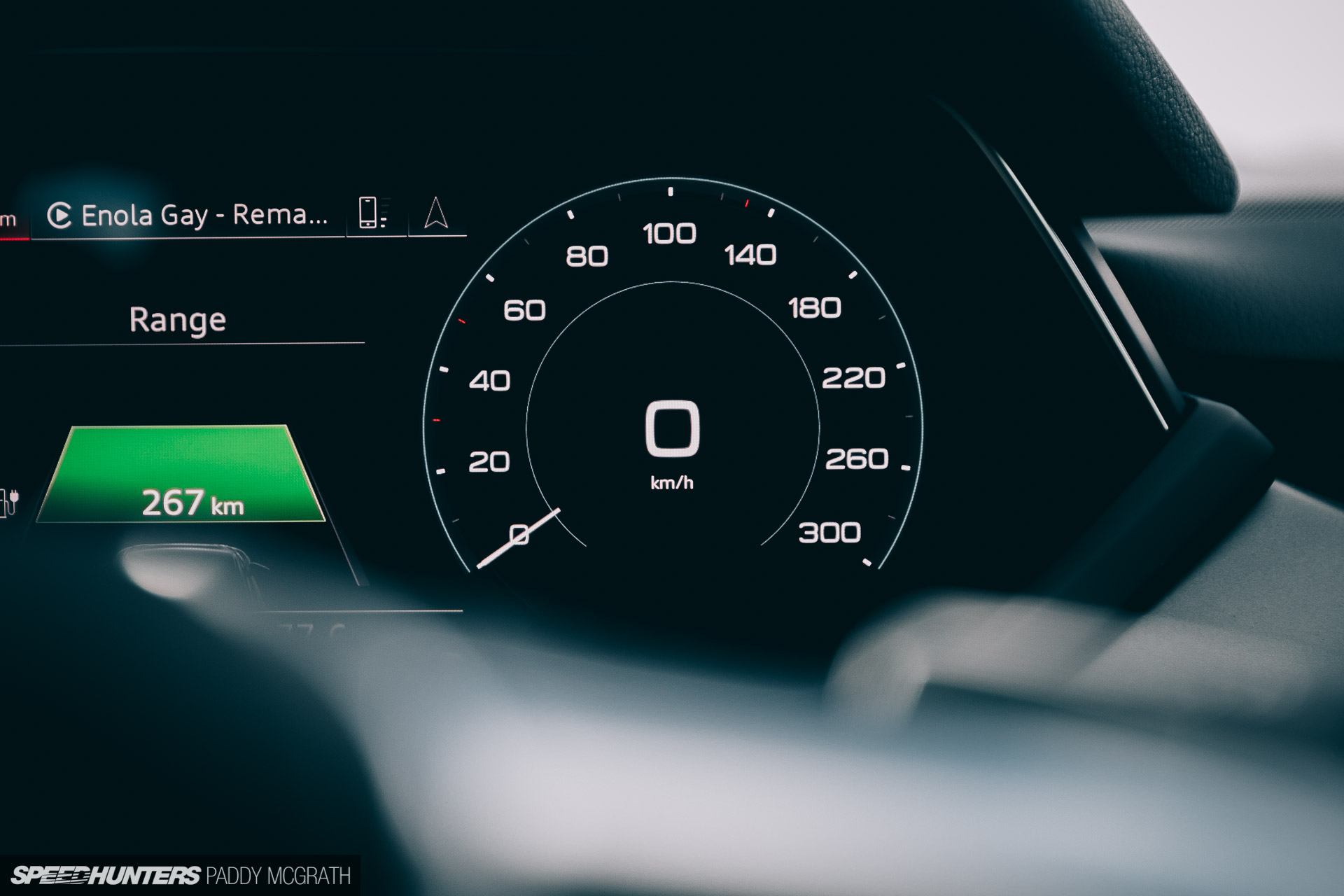
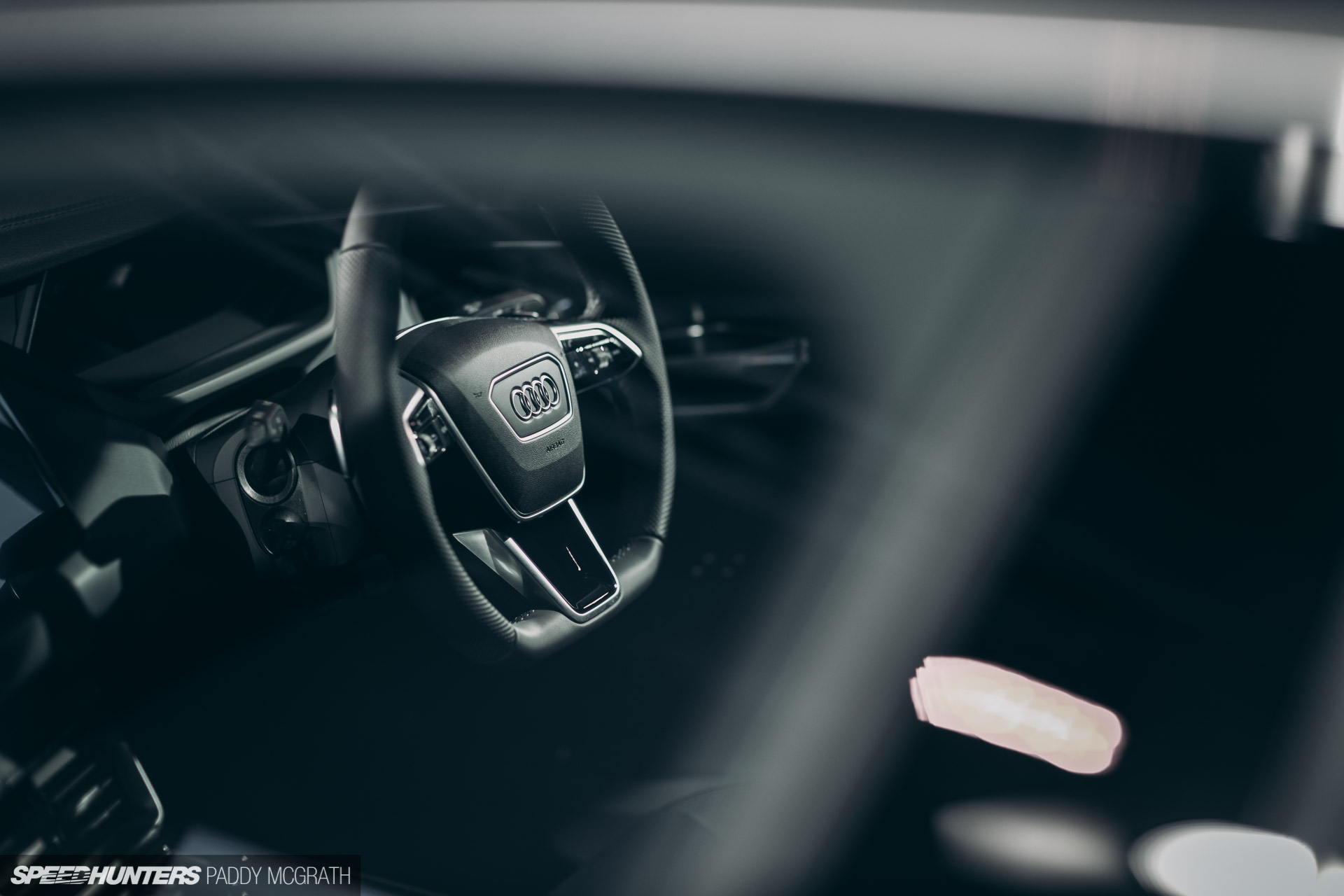
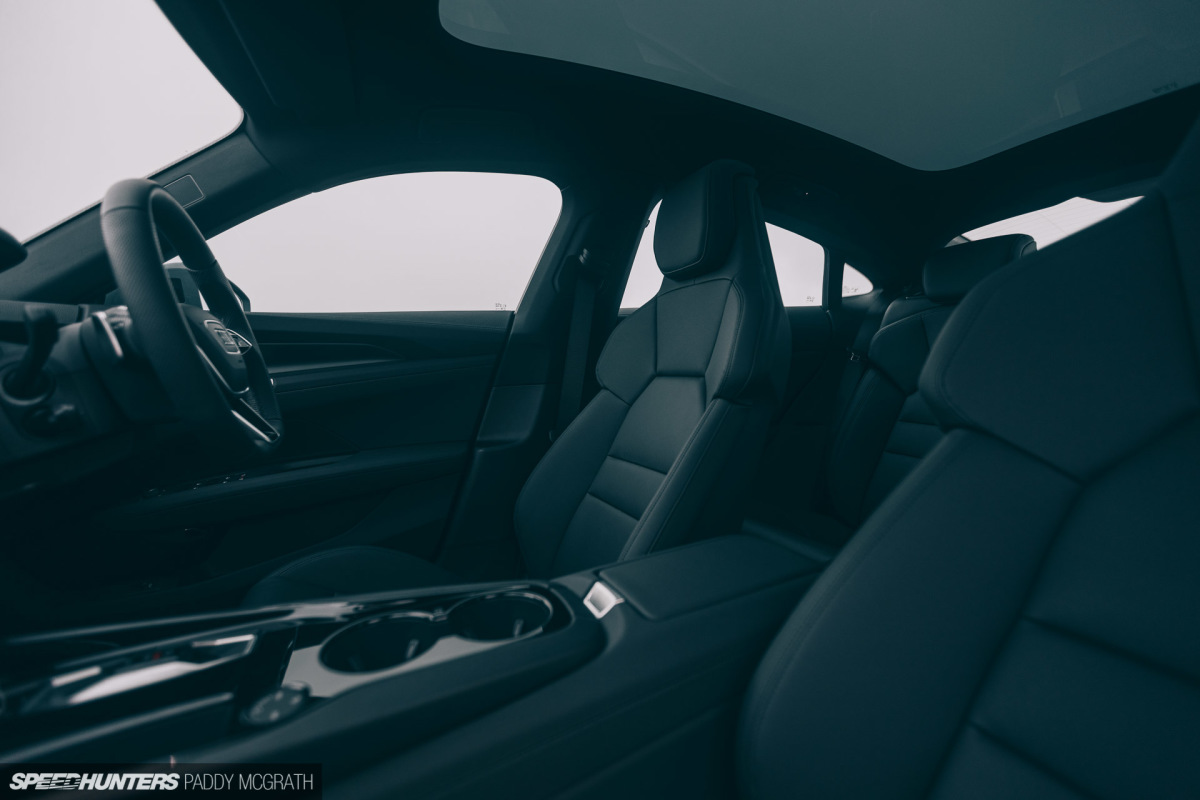
Inside, it’s an Audi. That is, it’s solid, well designed and intuitive. While this is the more placid e-tron GT model, as opposed to the more raucous and sporty RS version, the driving position and controls are still well placed with plenty of adjustment.
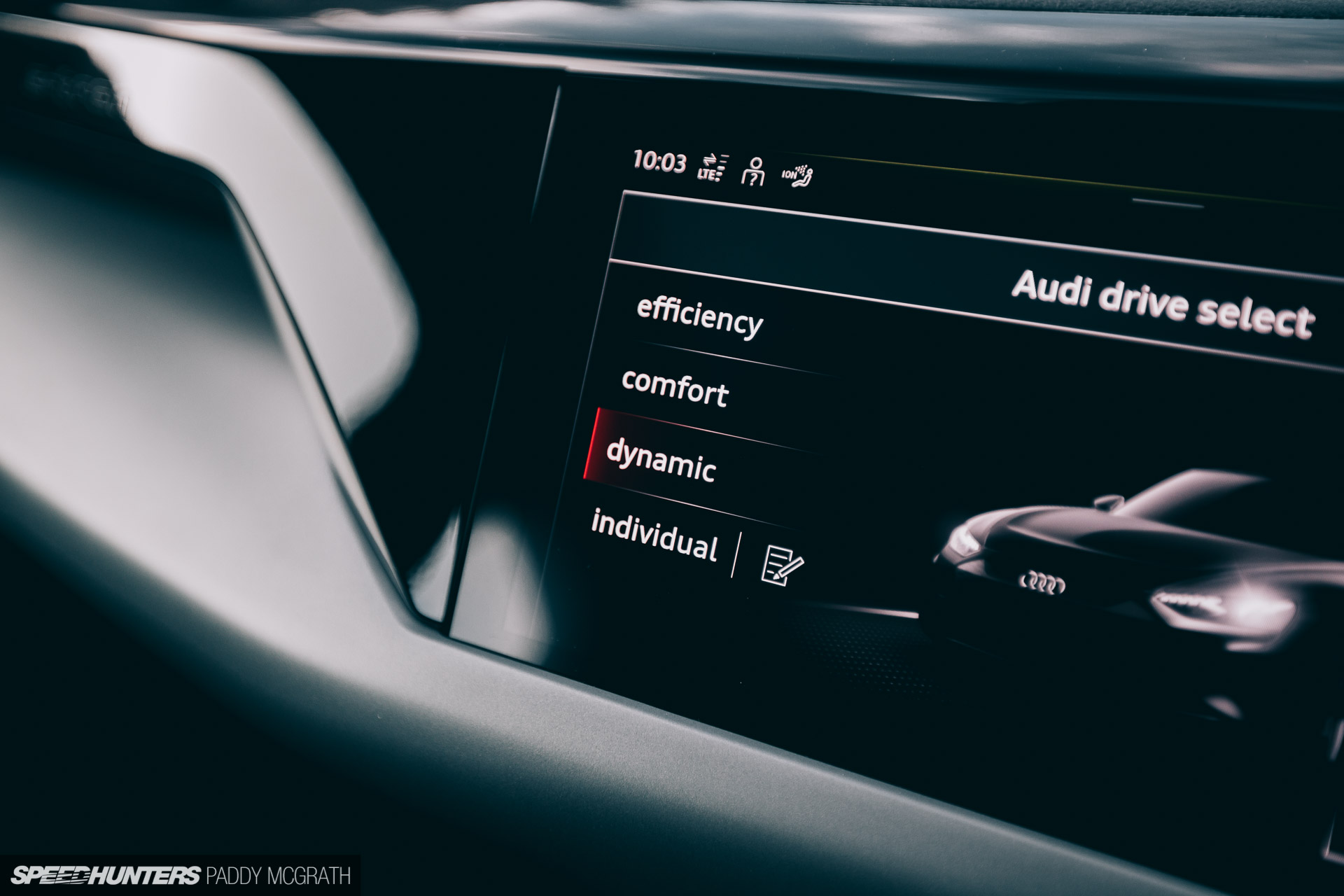
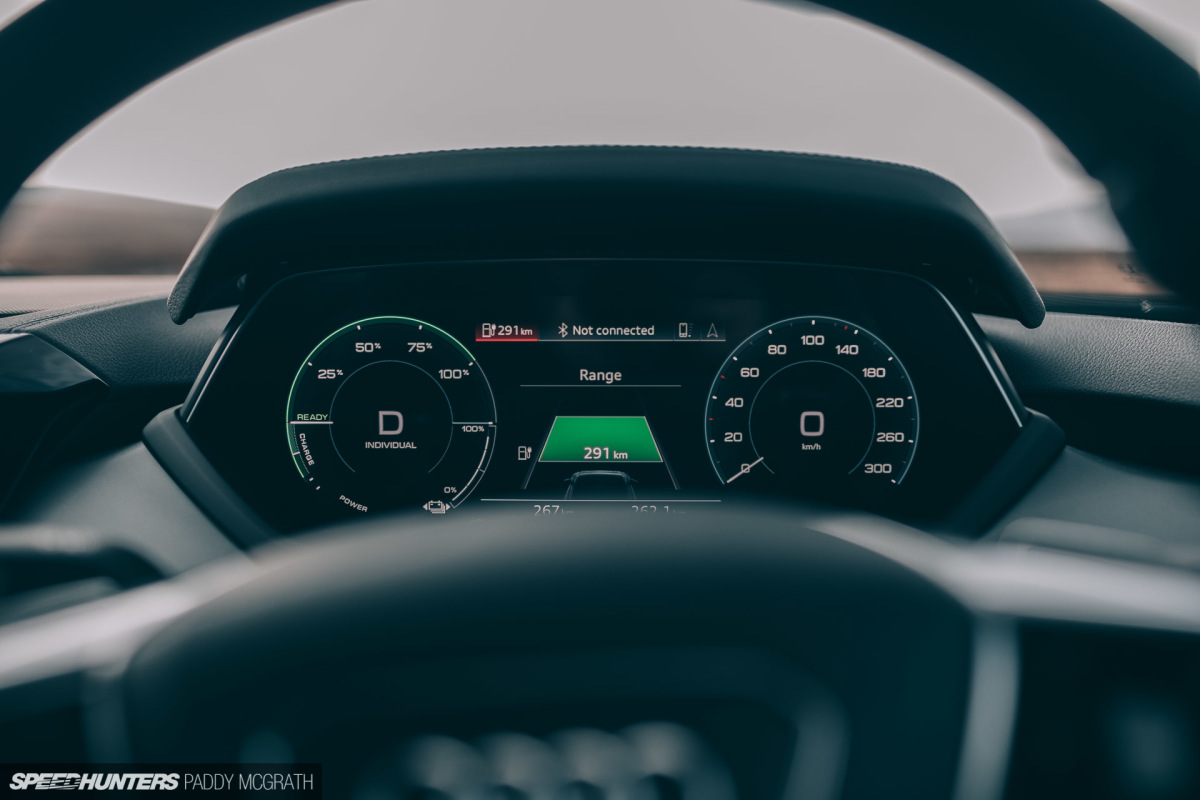
It doesn’t take long to find a comfortable posture, customise the Individual Drive Select mode to my preferred settings (everything to Dynamic, but with the dampers set to Comfort) and take off in the direction of my own pre-determined route. So far, so good.

The e-tron GT is, as the name suggests, a GT car as opposed to an outright sports car. Still, there’s a certain amount of dynamism to the car’s DNA. It’s the first BEV I’ve driven which has consideration for an emotive driving experience. In traffic, it’s quiet, comfortable and easy to manoeuvre.

Moving away from suburbia and onto quieter and more technical roads, the e-tron GT continues to remain unfazed, as it should do. Despite its size, it doesn’t feel as big from behind the wheel and you quickly and quite easily learn to position the car accurately on the road.

These are roads which I know very well, which is the primary reason for choosing this route. With limited time available before the car had to be back in Audi’s hands to be cleaned, sanitised and handed off to the next journalist, I didn’t want to waste a precious moment. Stopping regularly to take photographs eats up enough time as it is.

There were a couple of things I purposely didn’t want to know before I took to the road; primarily the power and weight figures. I like to try and feel my way around any car without preconceptions of whether it’s fast or not on paper. Naturally, BEVs are heavy cars due to the battery weight. The sole benefit is that this weight can be placed accurately throughout the car, which is typically as low as possible.

Thirty minutes into my drive and I’m still feeling my way into the car. Across the less-than-perfect surface it still feels good; surprisingly so. The road isn’t rough so to speak, but is nuanced. Even on a relatively straight section, parts of the road rise and fall at different points beneath the car.
Through some corners you can hook a front wheel into a dip to help the car around the corner. On others the dip is replaced with a sudden rise which has the potential to send you wide of target after the apex.

The e-tron GT copes with these variances impeccably. Steering is precise, although dulled slightly with regards to feel, something I would expect for any GT car where the comfort versus performance balance must be considered.
The car always remains compliant, while providing enough information from the road to keep you involved. You don’t feel disconnected from the experience.

The Audi is equipped with a two-speed transmission, similar to the one found in the Porsche Taycan. The gears are not manually selectable, but you can adjust the level of energy recuperation off throttle with the paddles on the steering wheel, which offers a new form of driver engagement.

When the opportunity arrives for a full throttle application, I take it. The response and delivery from low speed is nothing short of astounding.
With a traditional high-power ICE car, there will always be those brief moments between gear shifts where you can catch your breath. Those opportunities don’t exist here, and you only then realise how much you appreciate those few milliseconds of respite.

True, a BEV typically doesn’t match a performance ICE at the top end, but there’s an argument to be made that the instant delivery of power and torque from low down provides a far more exciting real world driving experience.
Imagine my surprise afterwards when I learn that the e-tron GT weighs 2.2-tonnes (4,850lbs) and only has 469hp, with 523hp available with a temporary boost. That’s only around 213hp per tonne (237hp per tonne with boost), but the experience behind the wheel completely belies these figures.

Truthfully, if the Audi representative had told me the car had a three-figure power output number which started with a six or seven, I would have believed them. In this case, it’s all about the power delivery and the car’s ability to distribute it to the road via its fully variable quattro AWD system.
Just a reminder that this isn’t the range-topping RS model, either.

Without the sound and vibration of a combustion engine’s rotating assembly, does it fail to deliver an emotive driving experience? Yes, and no.
The sound of turbocharged V8 or a naturally aspirated V10, as is the norm in Audi Sport models, is special, but I don’t feel like the e-tron GT is missing anything at all. It’s just a different experience. Not necessarily better or worse, just different.

The absence of the orchestra of a piston engine is akin to removing one of your five senses, but only serves to heighten the remaining four. There is more to a driving experience than just the powertrain, and this car is a fascinating taste of what we can expect in the future.


With my cameras packed safely away, I enjoyed the last half hour or so of the drive in relative silence, contemplating the many questions which an electric future pose. Will we actually lose out? Personally, I don’t think so.
As things currently stand, I’m all for the mass electrification of the vast majority of vehicles on the road. Most commuter cars with ordinary petrol and diesels will not be missed, and are far better suited to being electric in any case. They’ve always been appliances, so they might as well be quiet and zero emission as well.

I still think there will always be a place for special petrol cars, whether these are new models or classics. I don’t see them vanishing or being banned outright in our lifetime. I think as the automotive industry as a whole transitions towards electrification, the target will ultimately be taken off our backs as well.

There’s still the question of where the electricity will be generated from, but the ultimate goal of cleaning up the mess we’ve made as a species puts the onus on us to figure it out, and the easiest way to do this is by choosing renewable energy sources where possible.
As enthusiasts, I believe the time for burying our heads in the sand and pretending that electrification isn’t happening is over. If we want to ensure that we have a future as car enthusiasts, we need to play our part in influencing the cars that come next, however we choose to do that.
It doesn’t have to be armageddon if we don’t want it to be.
Paddy McGrath
Instagram: pmcgphotos
Twitter: pmcgphotos
paddy@speedhunters.com