
Some say that Okayama is the setting of the Momotarō legend, the ‘Peach Boy’ who slayed demon prince Ura.
Momotarō may have been successful in defeating Ura, but today another devil roams the prefecture, home to Madlane custom shop and its owner Kazuki Ohashi.
As the legend goes, Ura ruled the Kinojo region, but being a demon he was a rubbish ruler and gave the people a pretty hard time. This all supposedly happened in the Yayoi period of Japanese history, somewhere around 200BC. Legendary emperor Kōrei got wind of this troublesome demon and sent his son, Kōgen, to sort things out. Of course, the prince was successful and the rest is history.
From that legendary history grew the fable of Momotarō, embellished of course with a miraculous peach birth, some mochi snacks and a talking dog, monkey and pheasant.
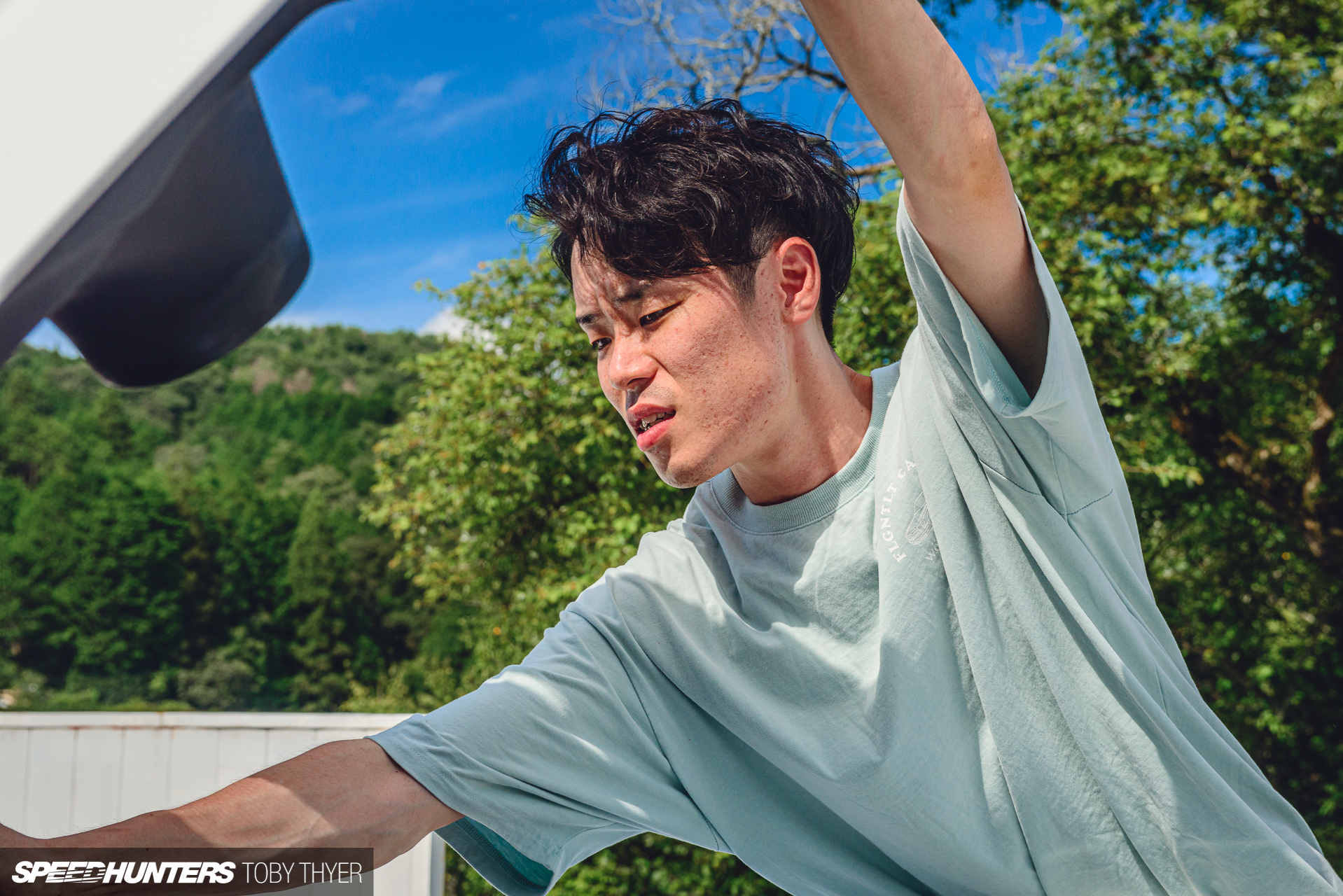
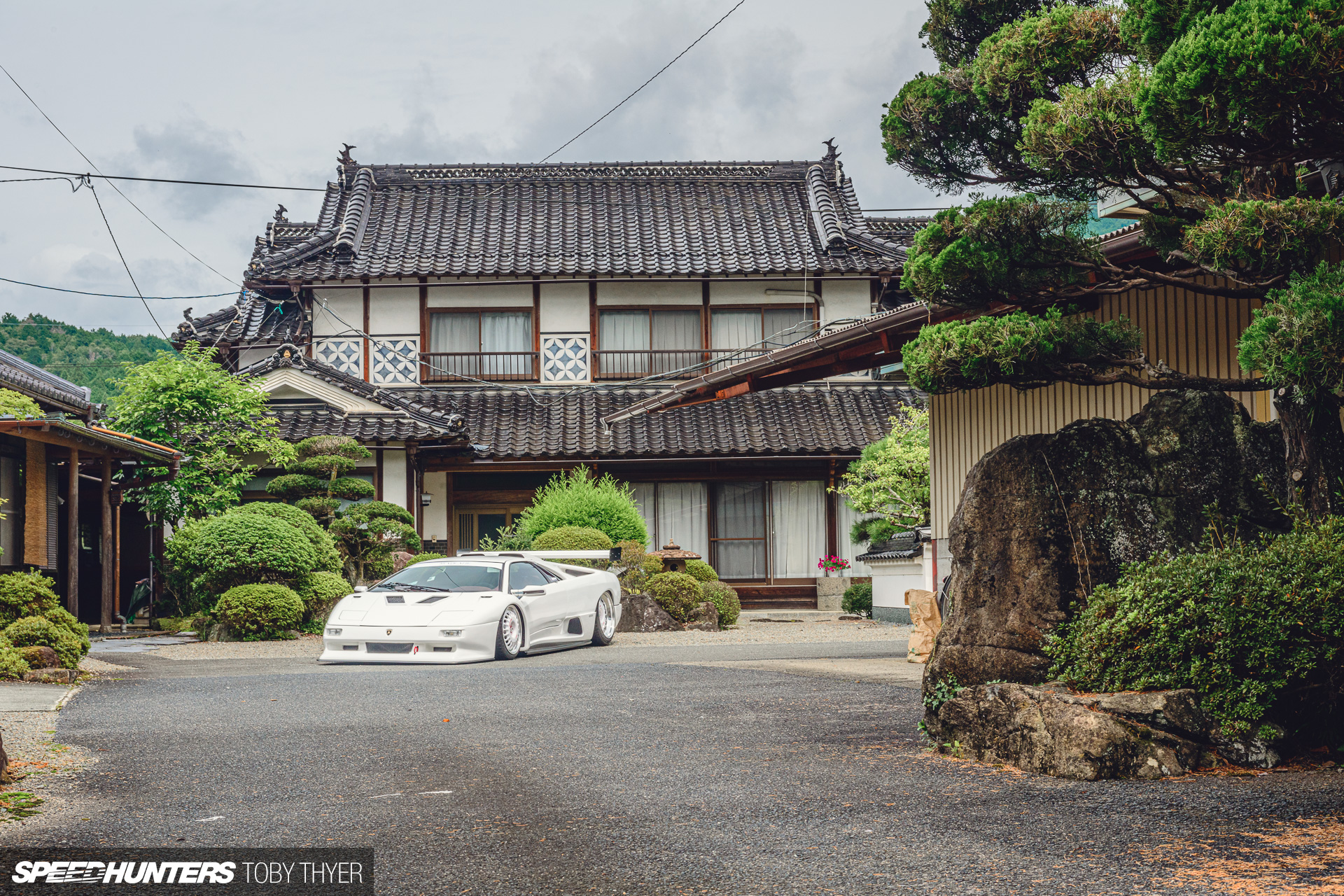
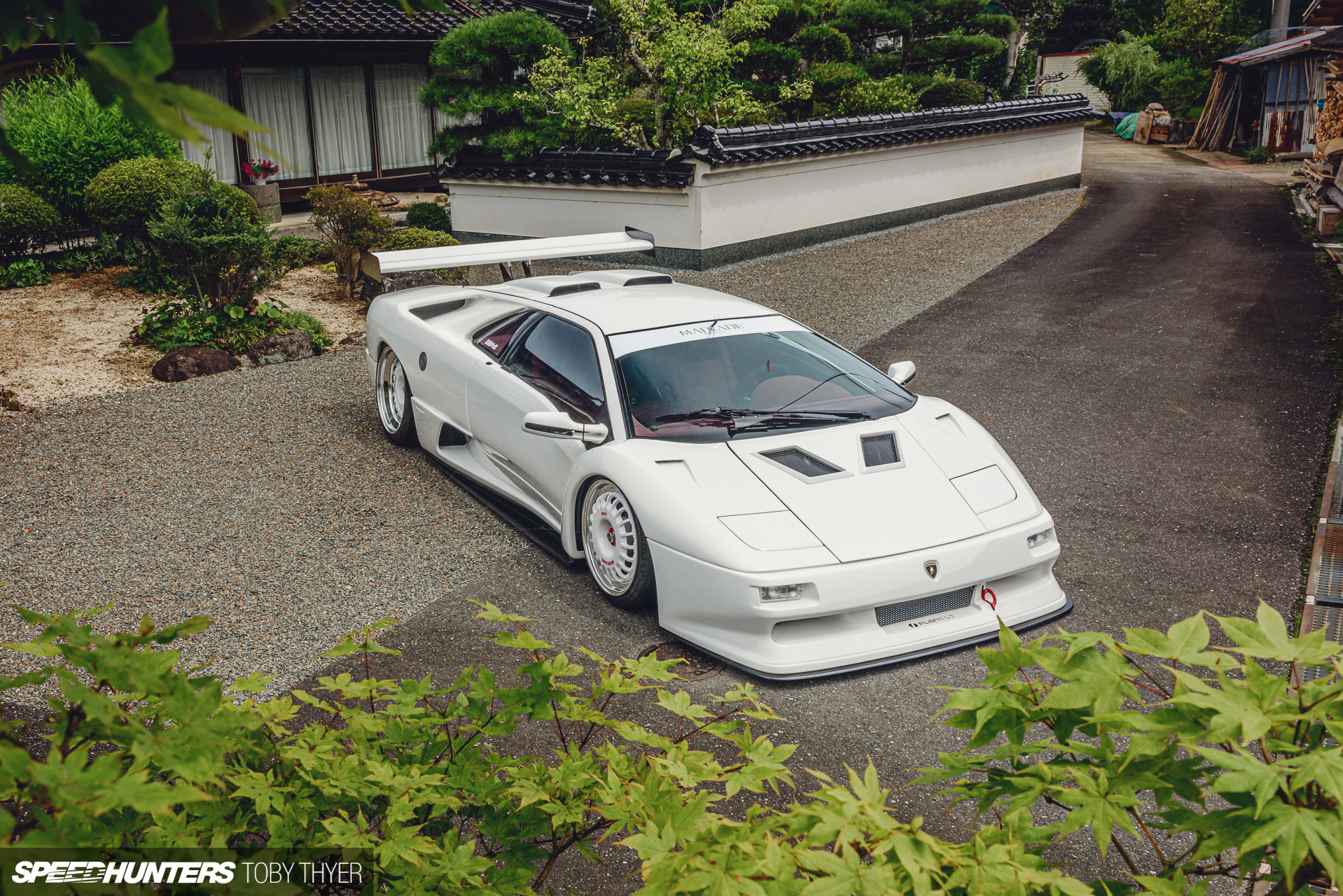
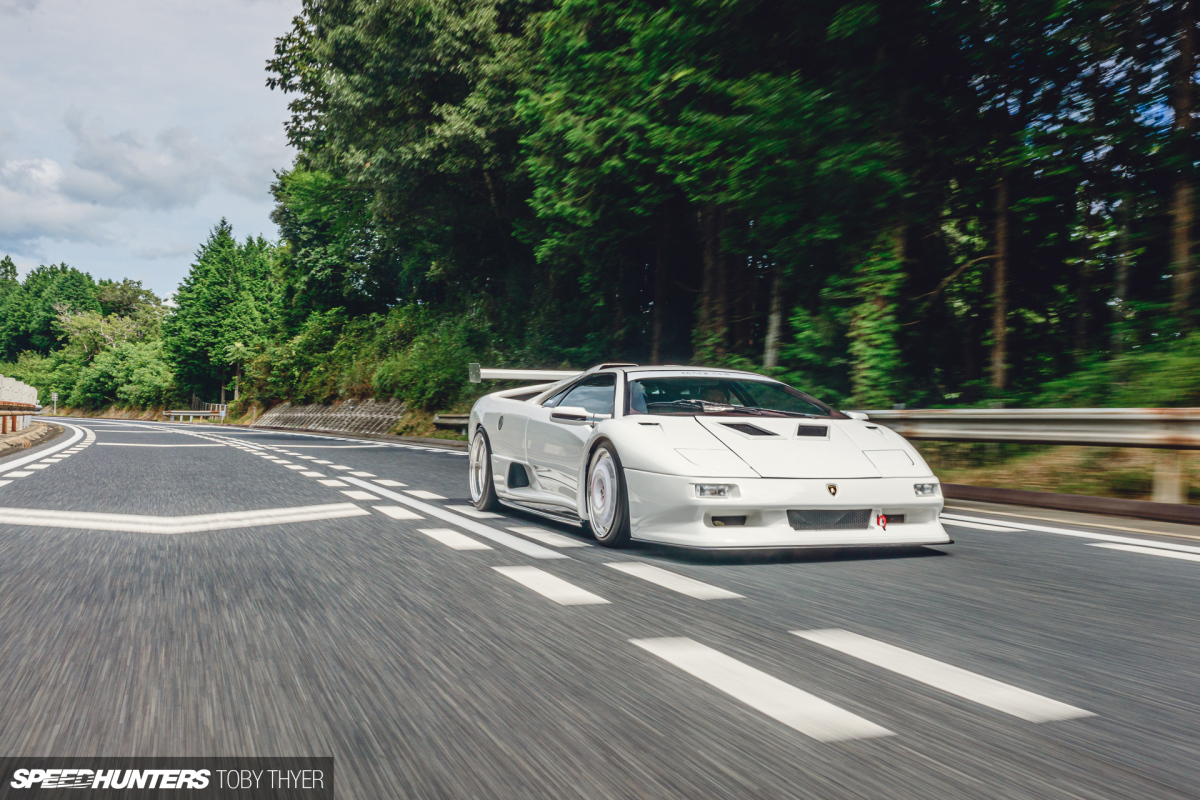
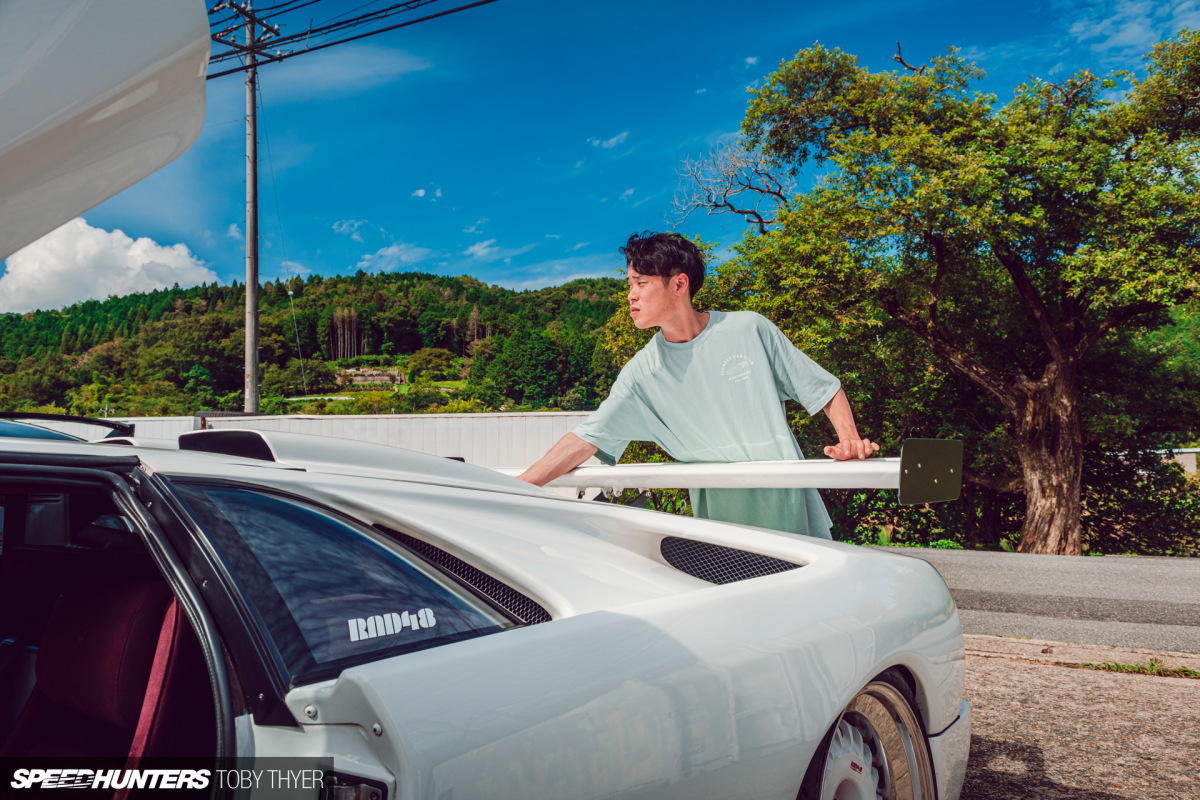
Another absolute legend is Kazuki Ohashi, and this is his personal project Lamborghini Diablo, a new flagship build for Madlane. Unlike the Momotarō fable though, this car is very much real. I was lucky enough to ride shotgun in it, at the same time popping my Lamborghini cherry.
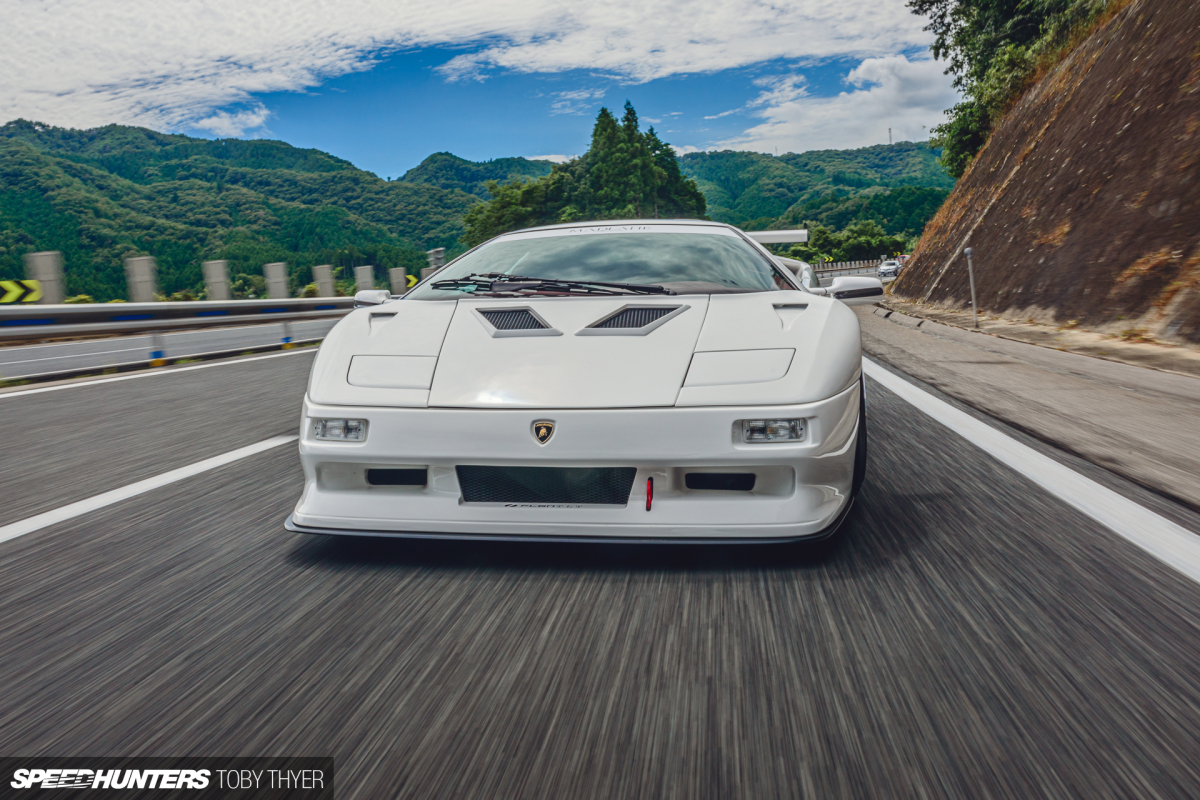

I’ll be the first to admit I know next to nothing about supercars, and Lamborghinis in particular have never really resonated with me. They always just seemed too big, bulky, obnoxious and showy for my liking. Painted in flashy colours and squashed to the ground, I never really took them seriously. Growing up, they were always owned by yuppies.
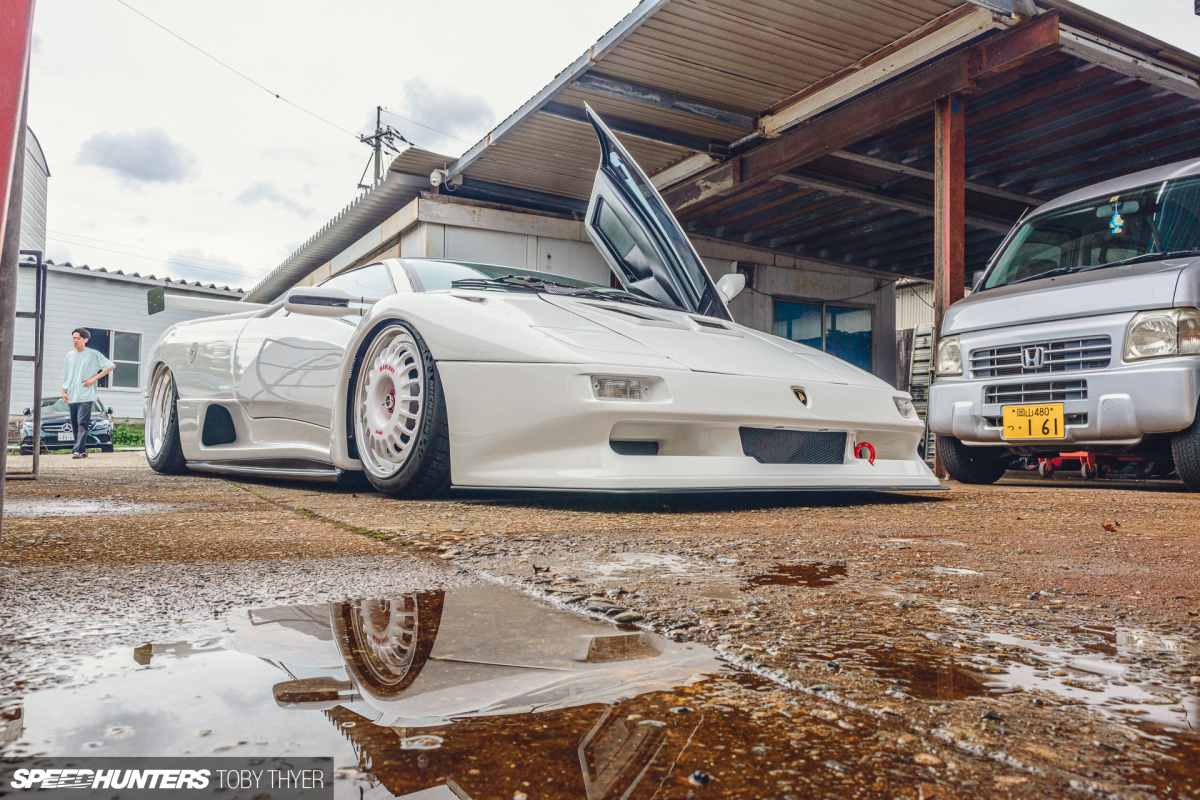
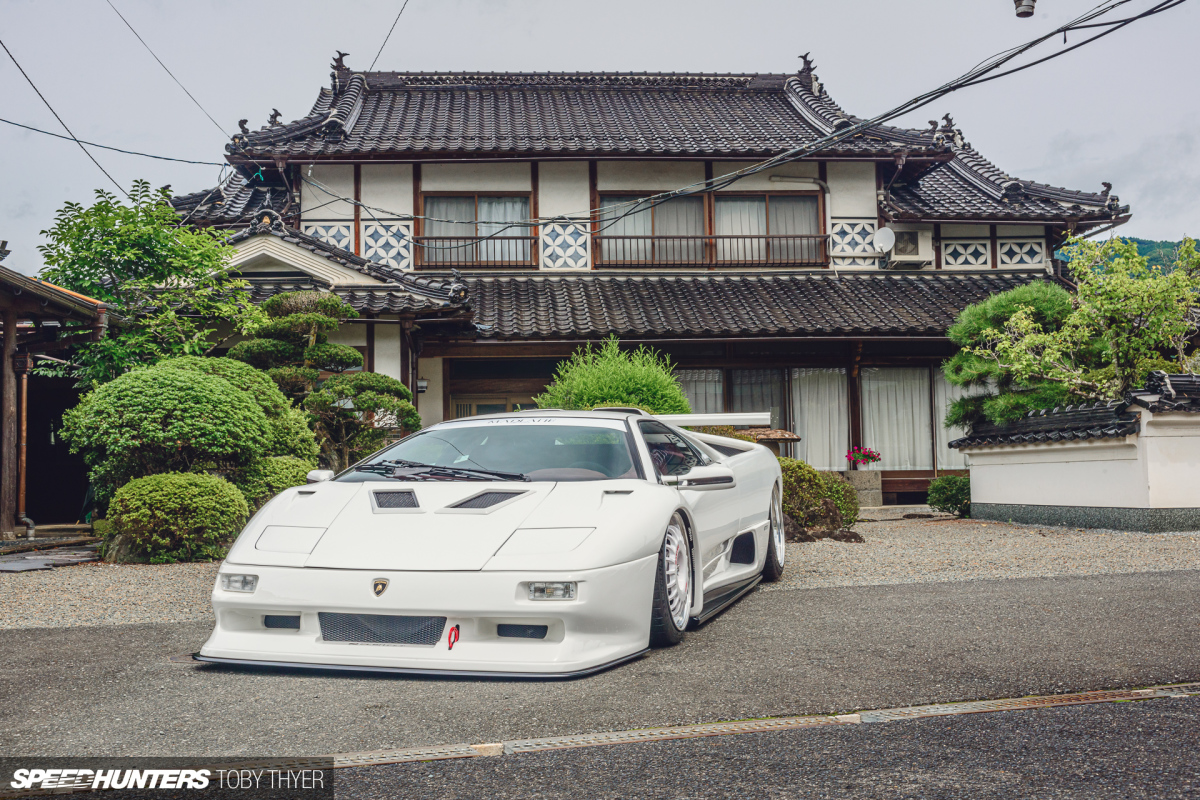
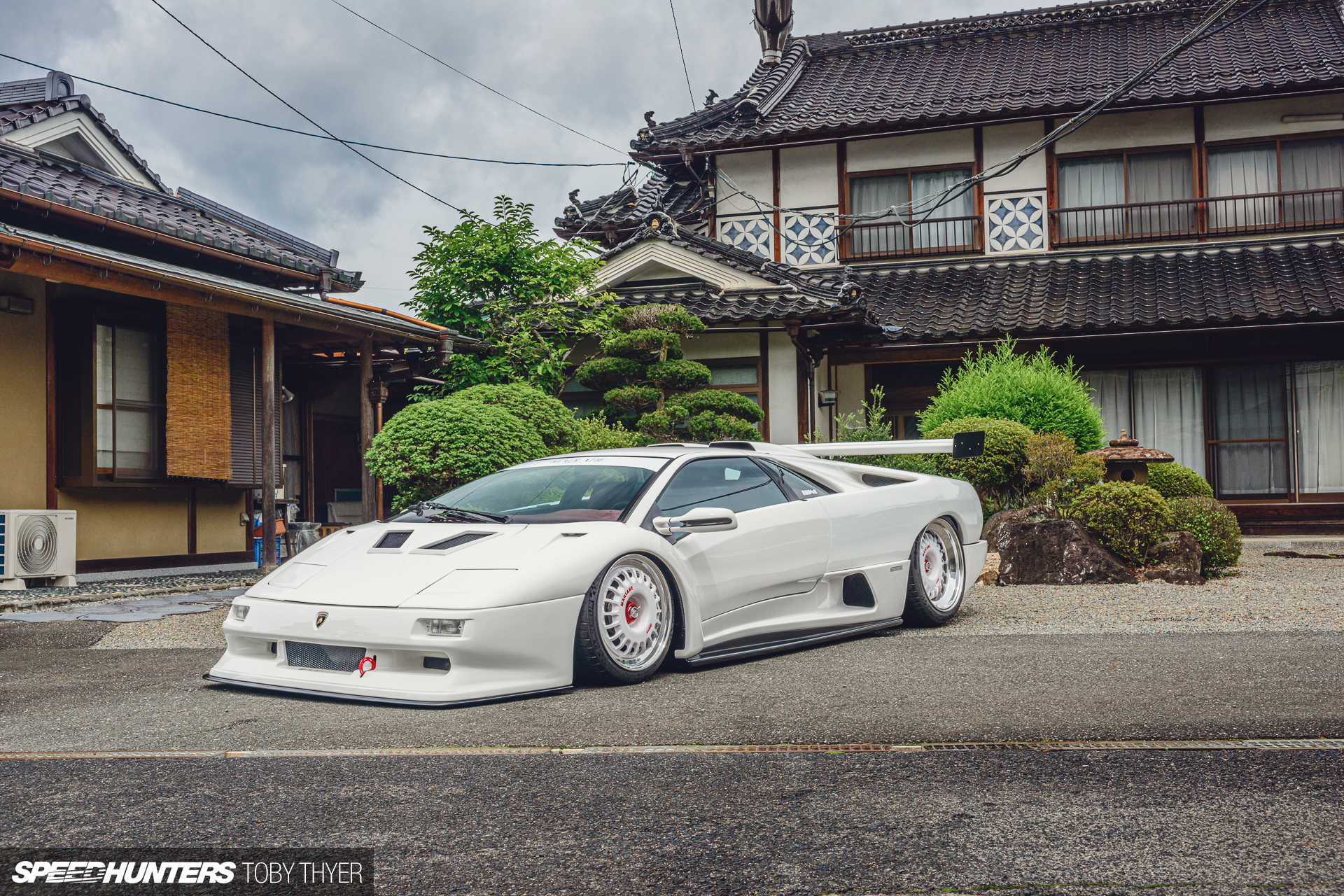
So now I offer my sincere thanks to Kazuki-san for building a supercar, a Lamborghini no less, that has an elegance and an attitude that grabs me by my special place and shakes me violently into a state of both joy and terror.
Now I get it.
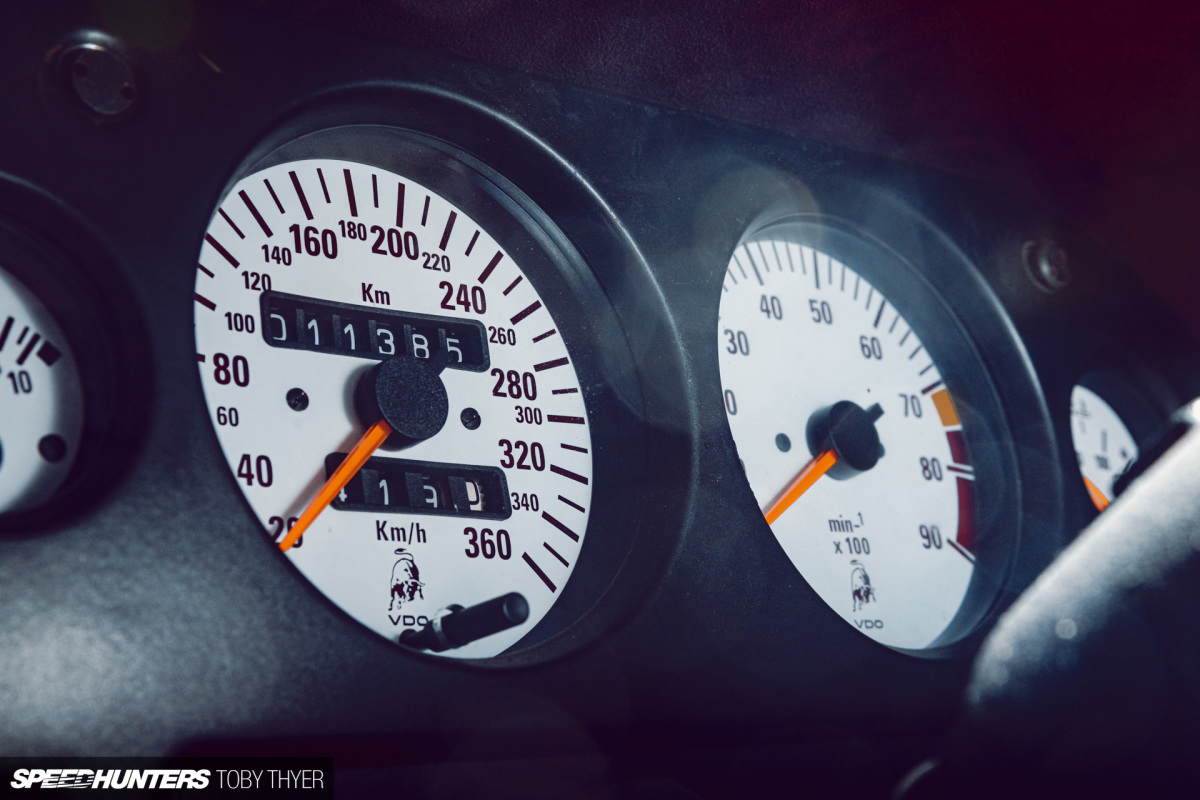
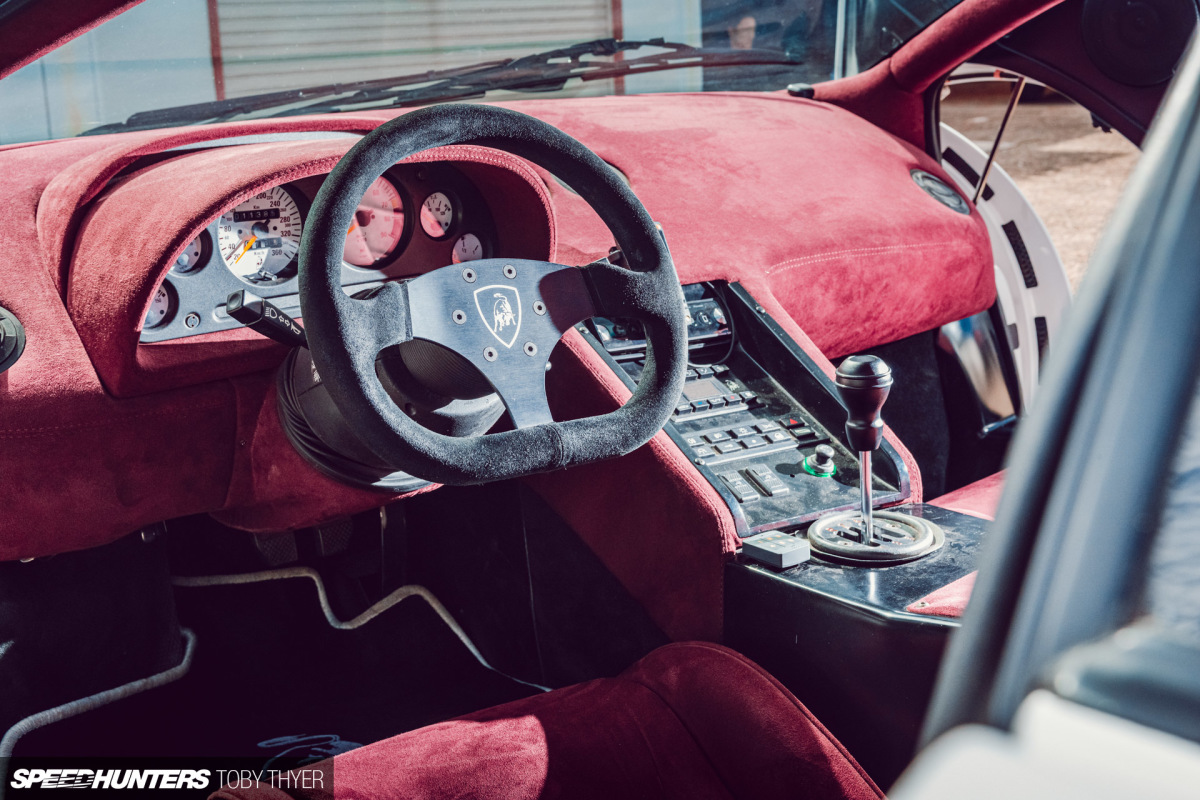
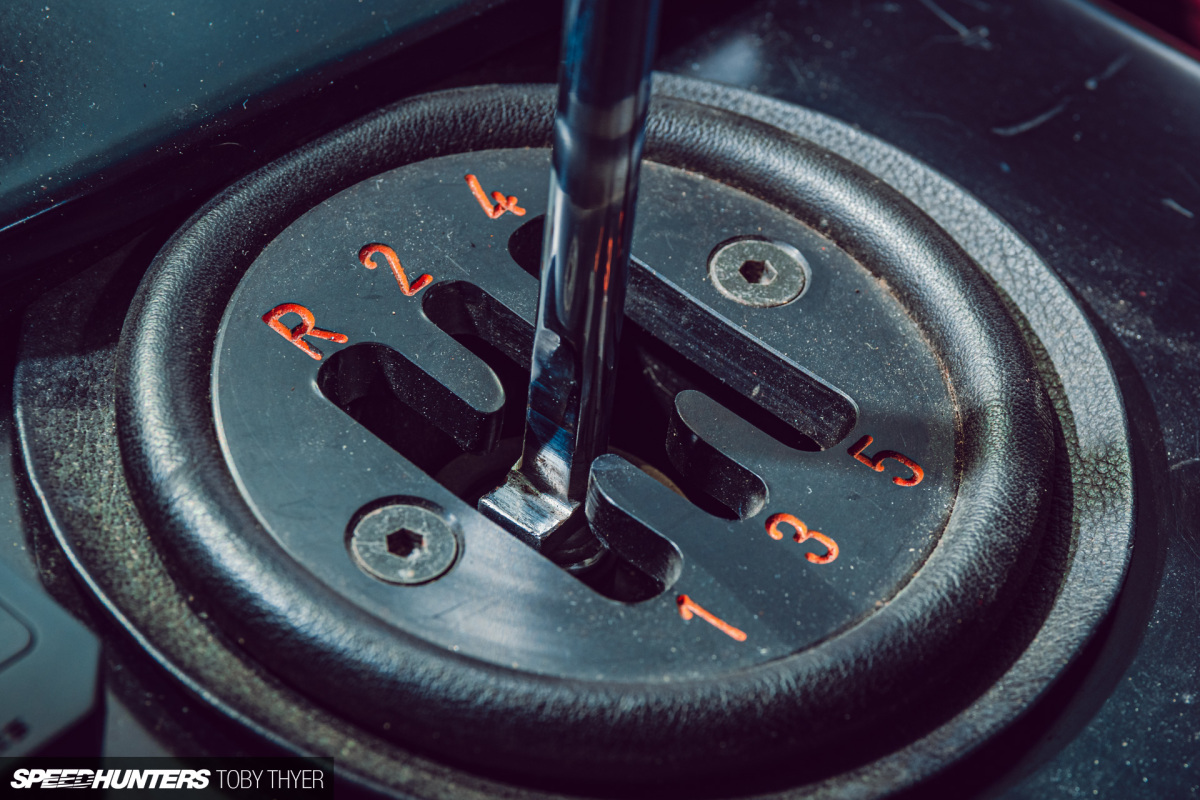
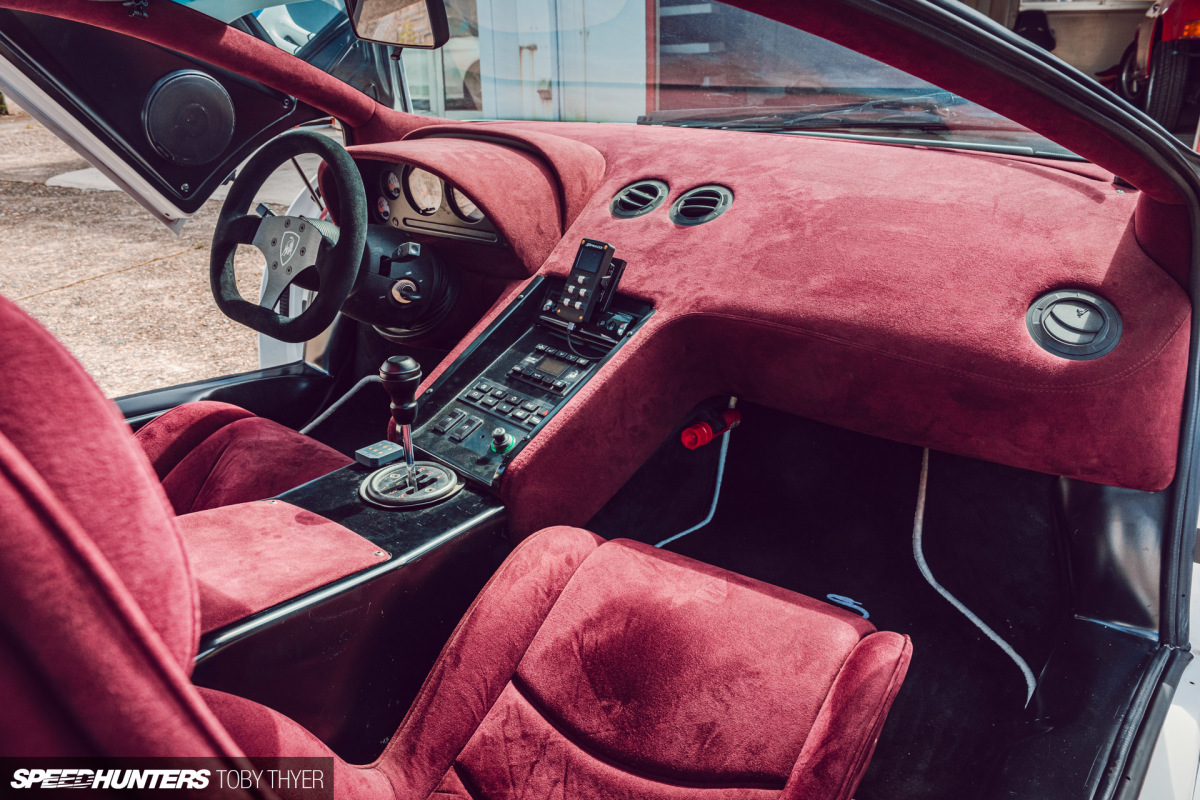
Sitting in the White Devil, cocooned in plush maroon Alcantara, the sensation of acceleration from the position of what feels like your grandad’s favourite chair is disconcerting to say the least. The dashboard extends forwards like the red carpet at a Hollywood film premier, and the angry V12 is so close behind you it makes the hairs stand up on the back of your neck with each gear change.
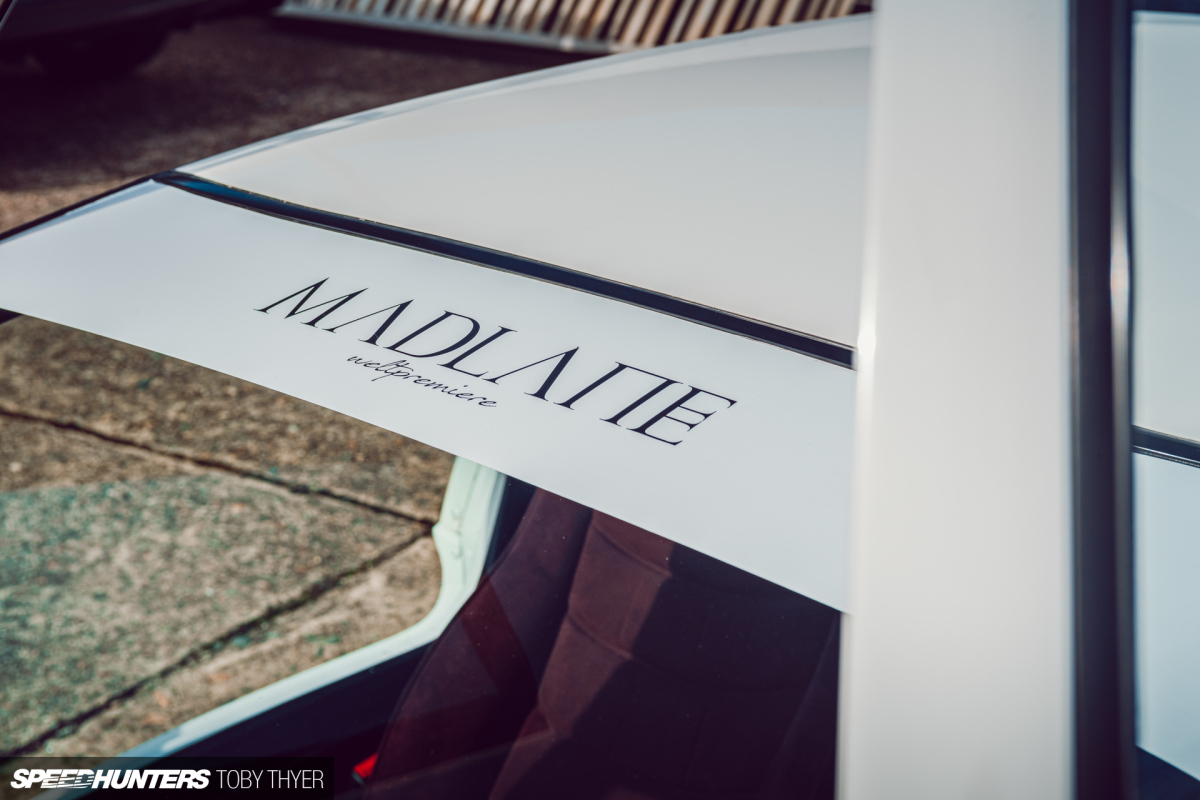
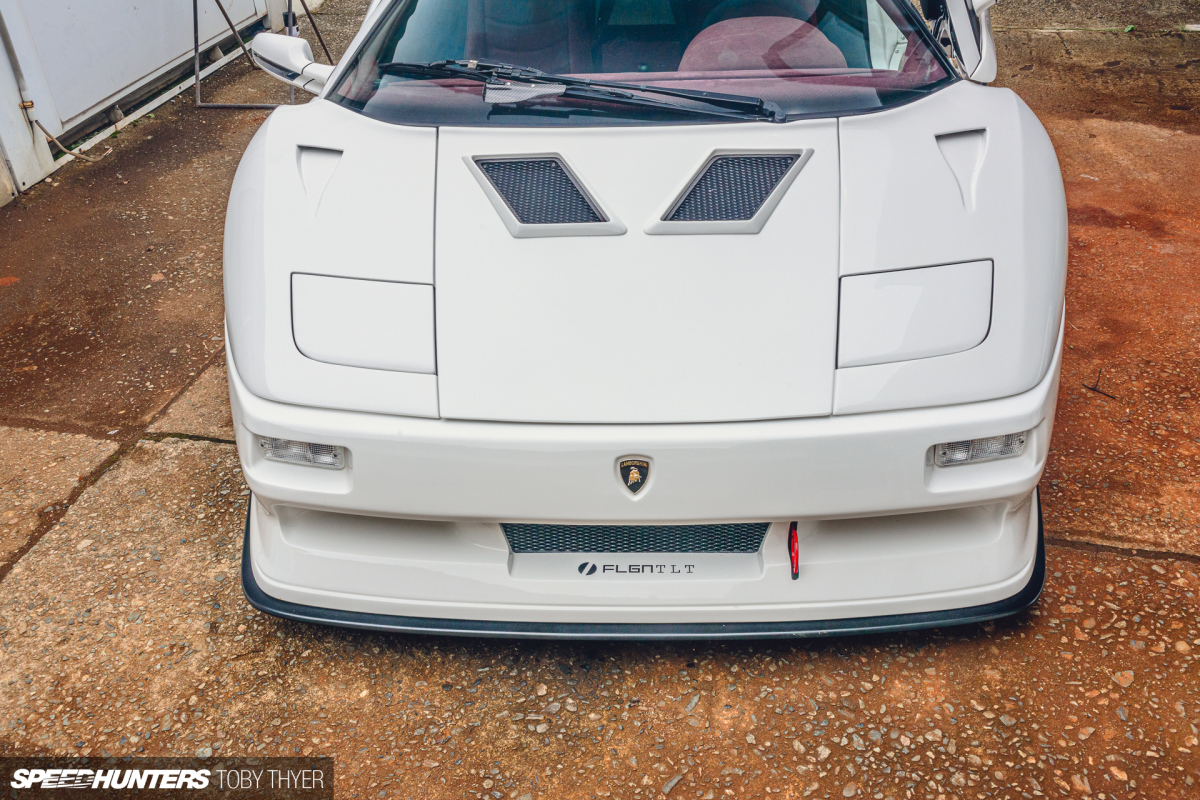
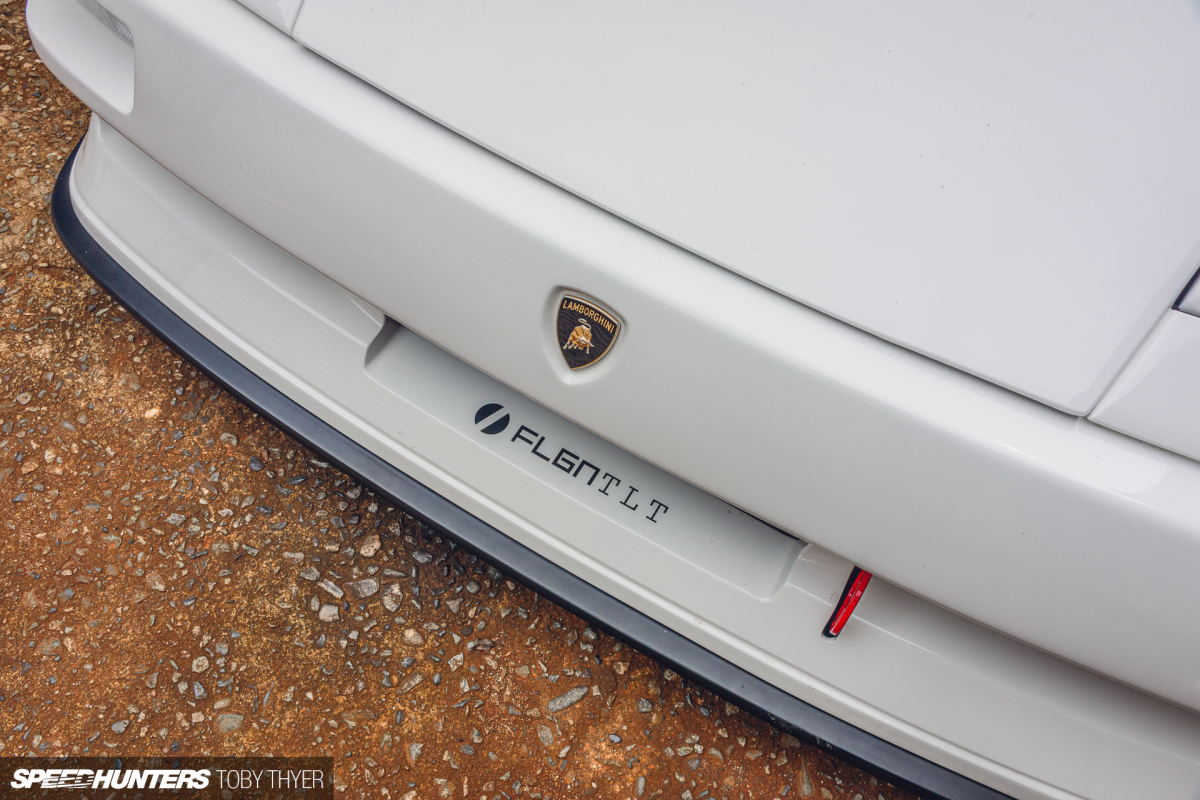
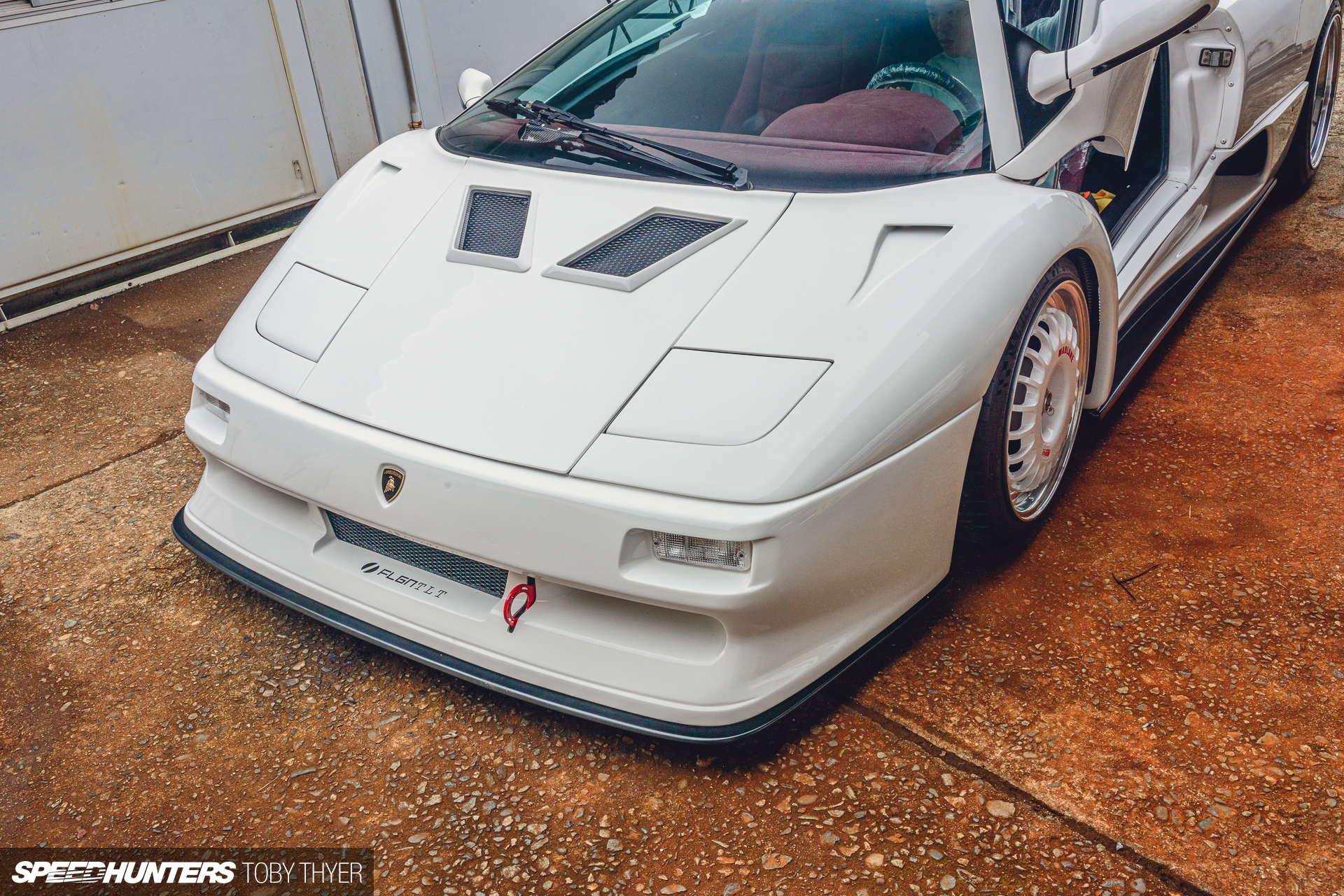
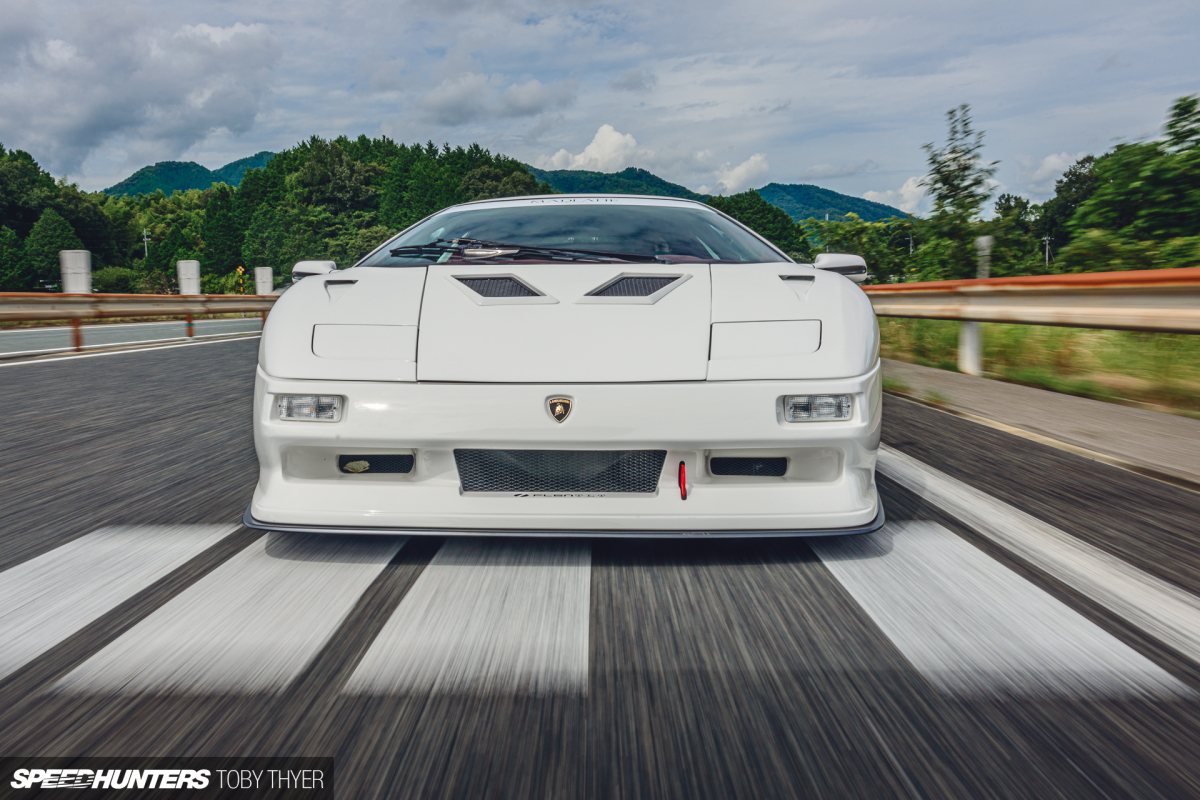
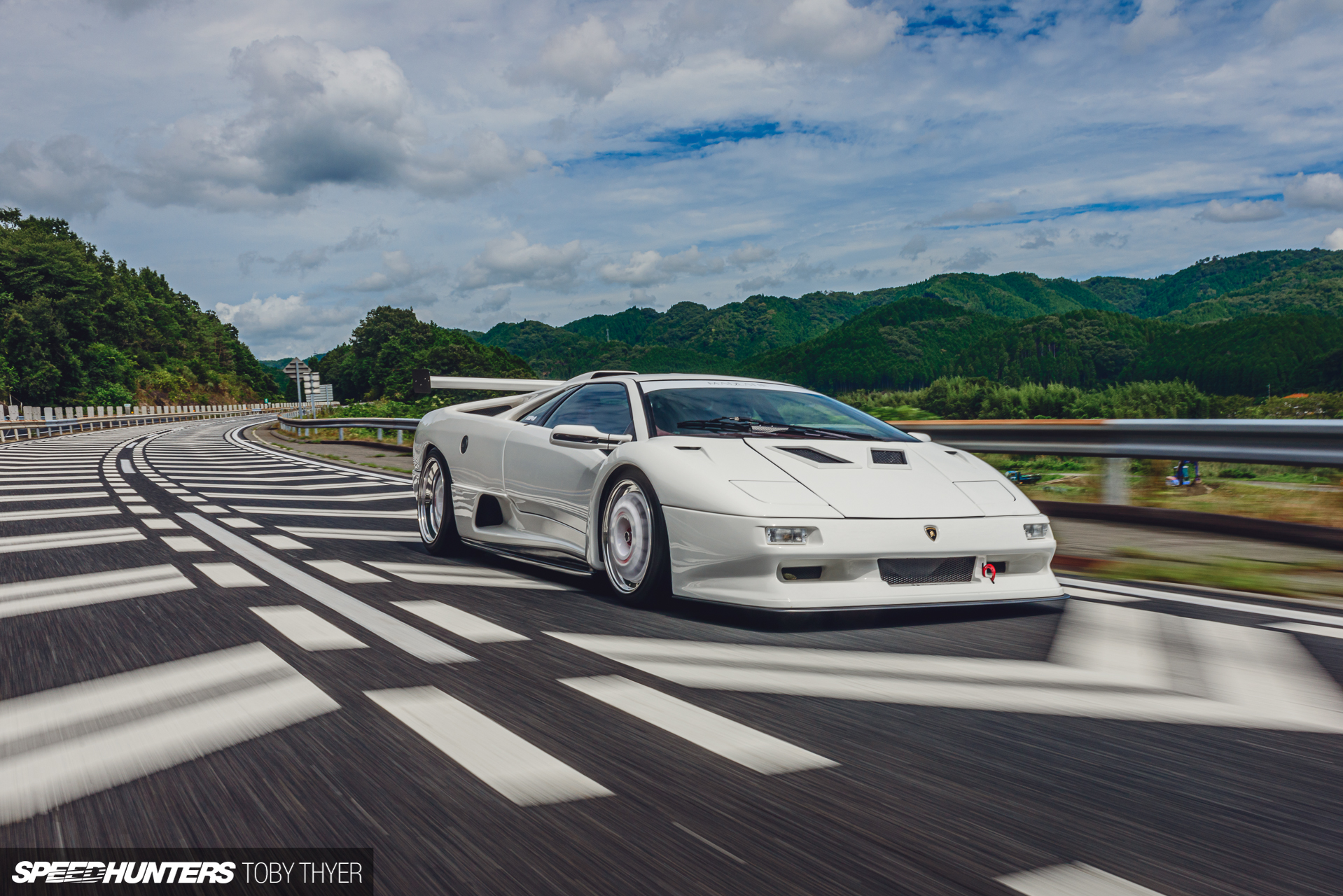
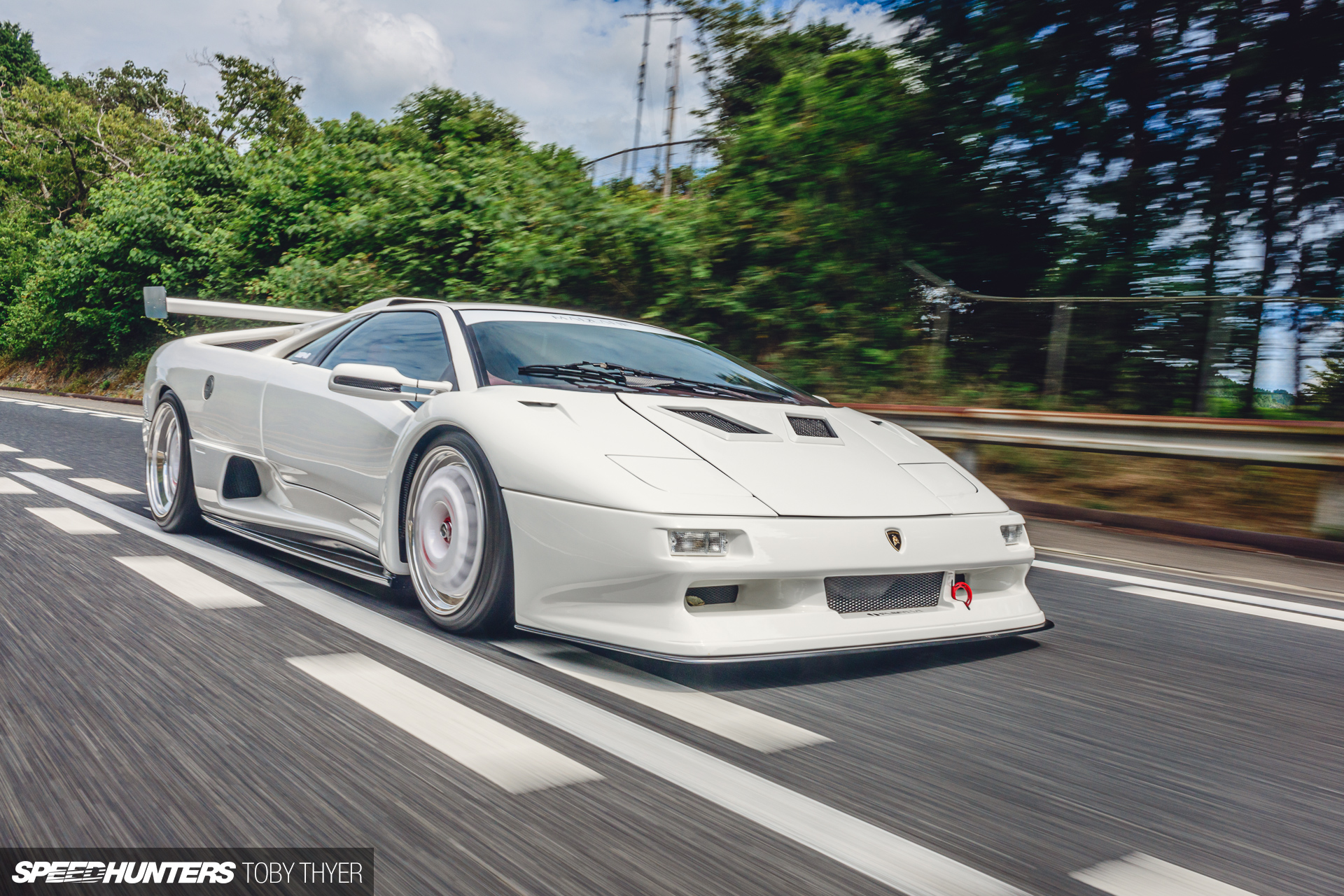
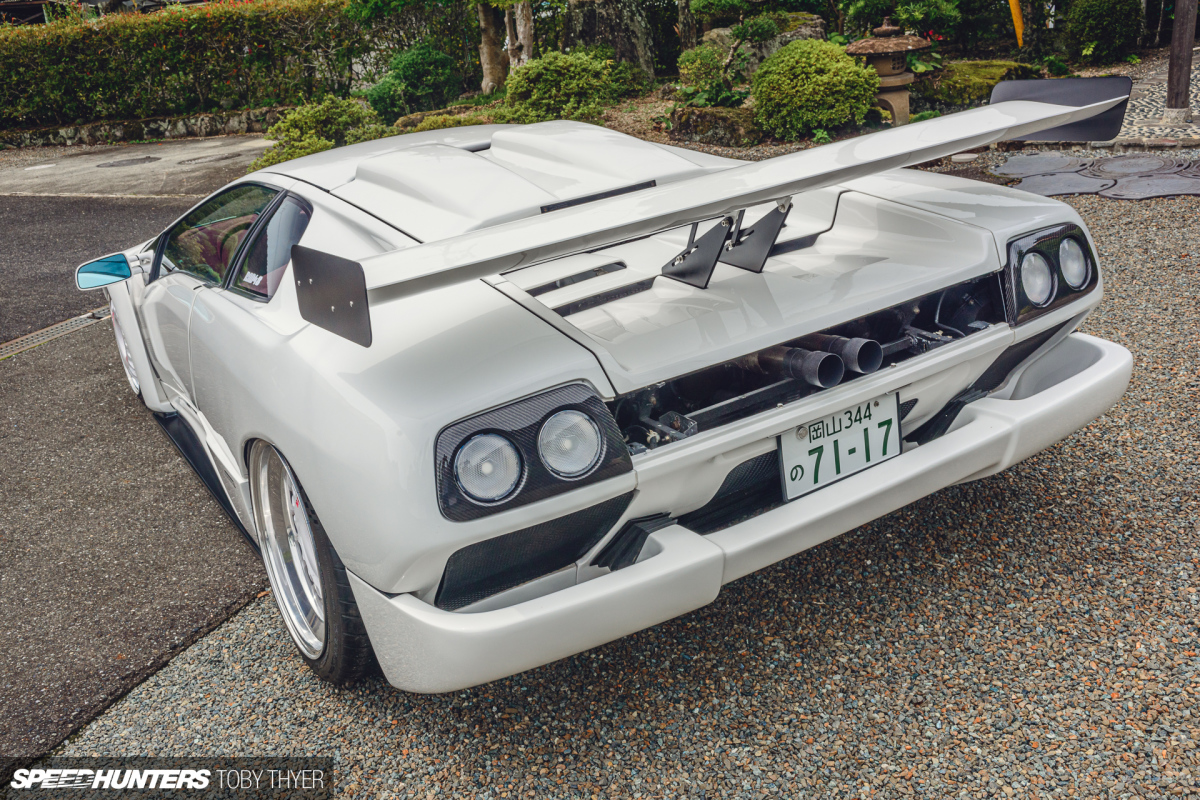
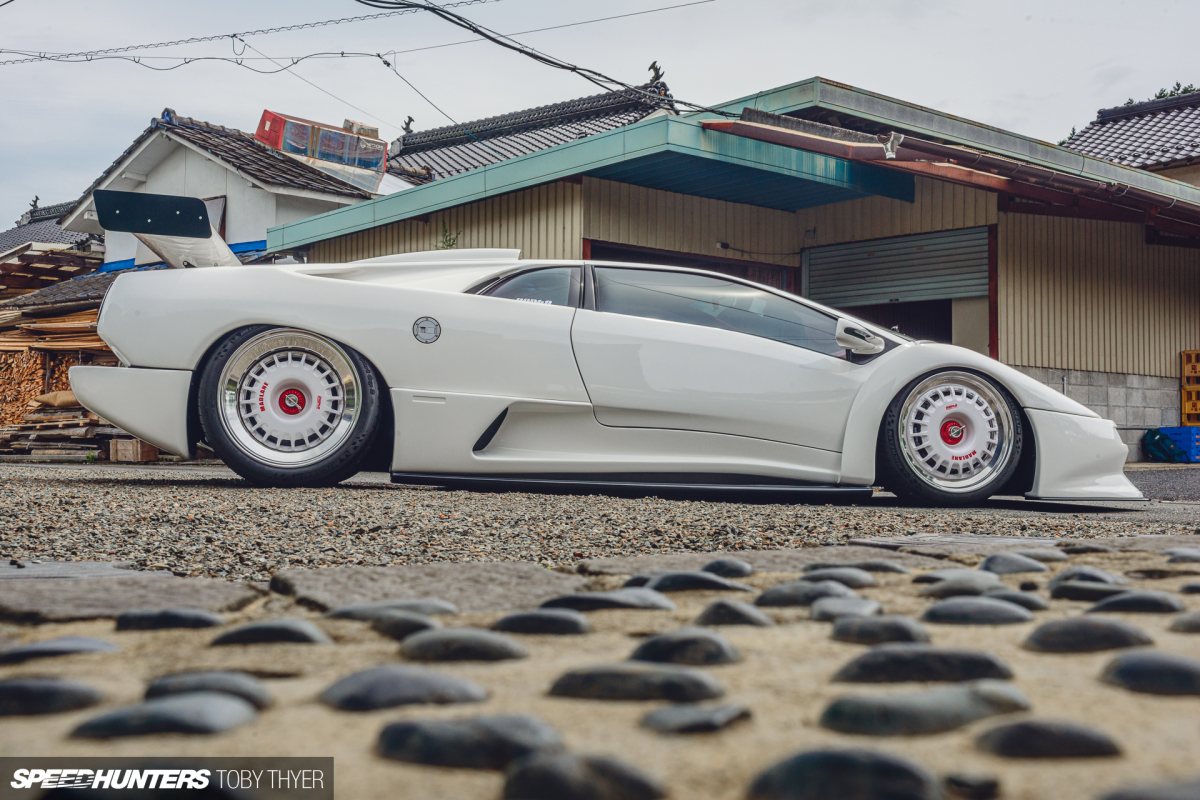
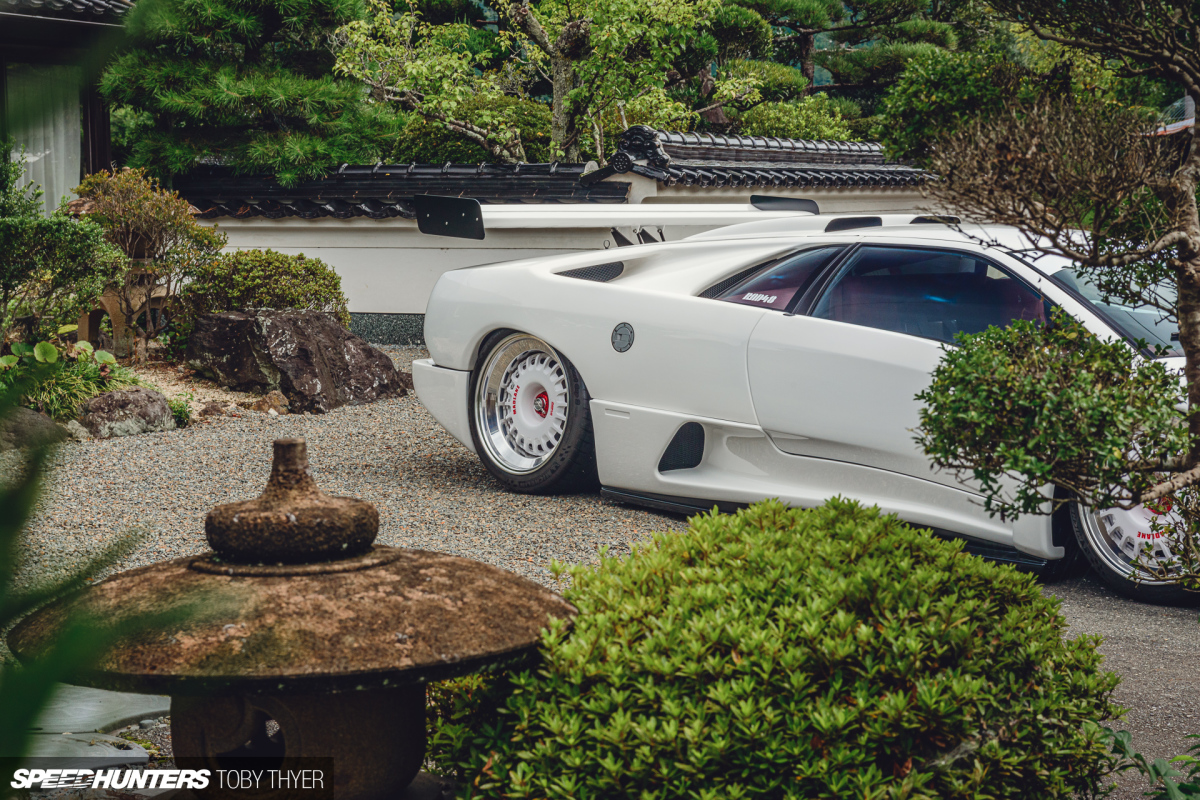
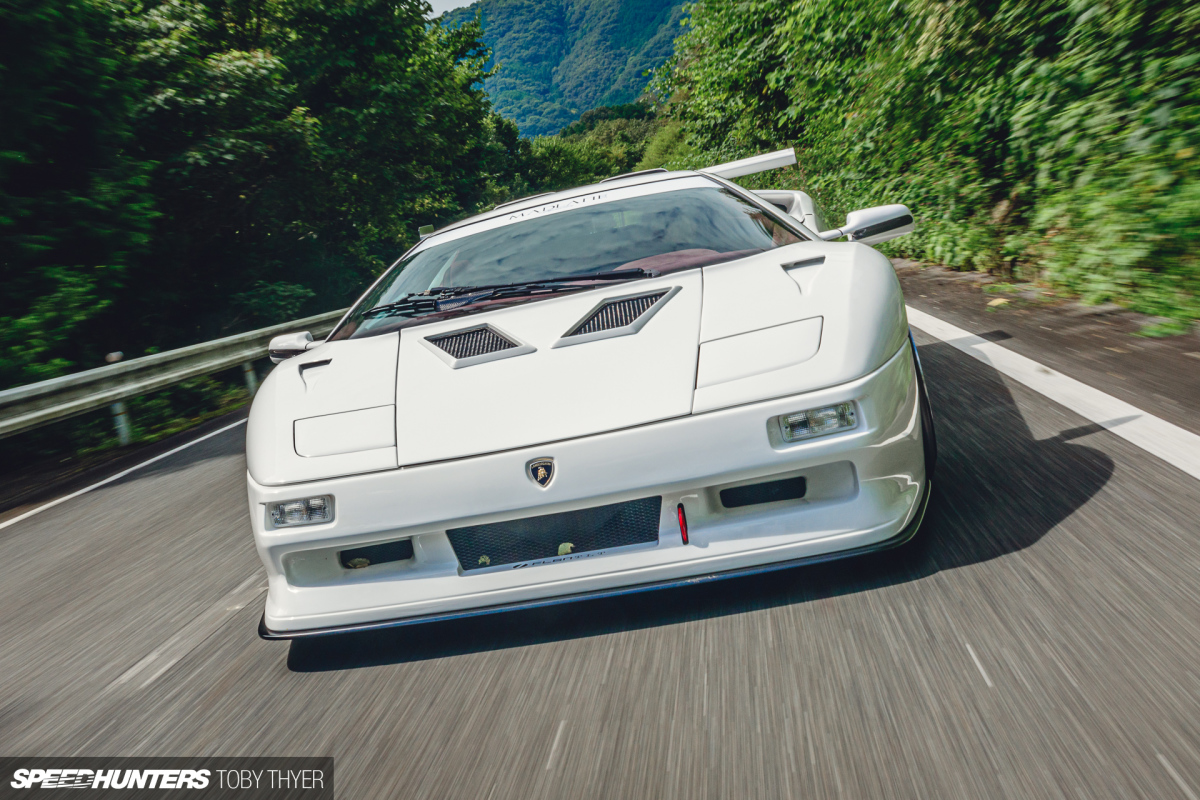
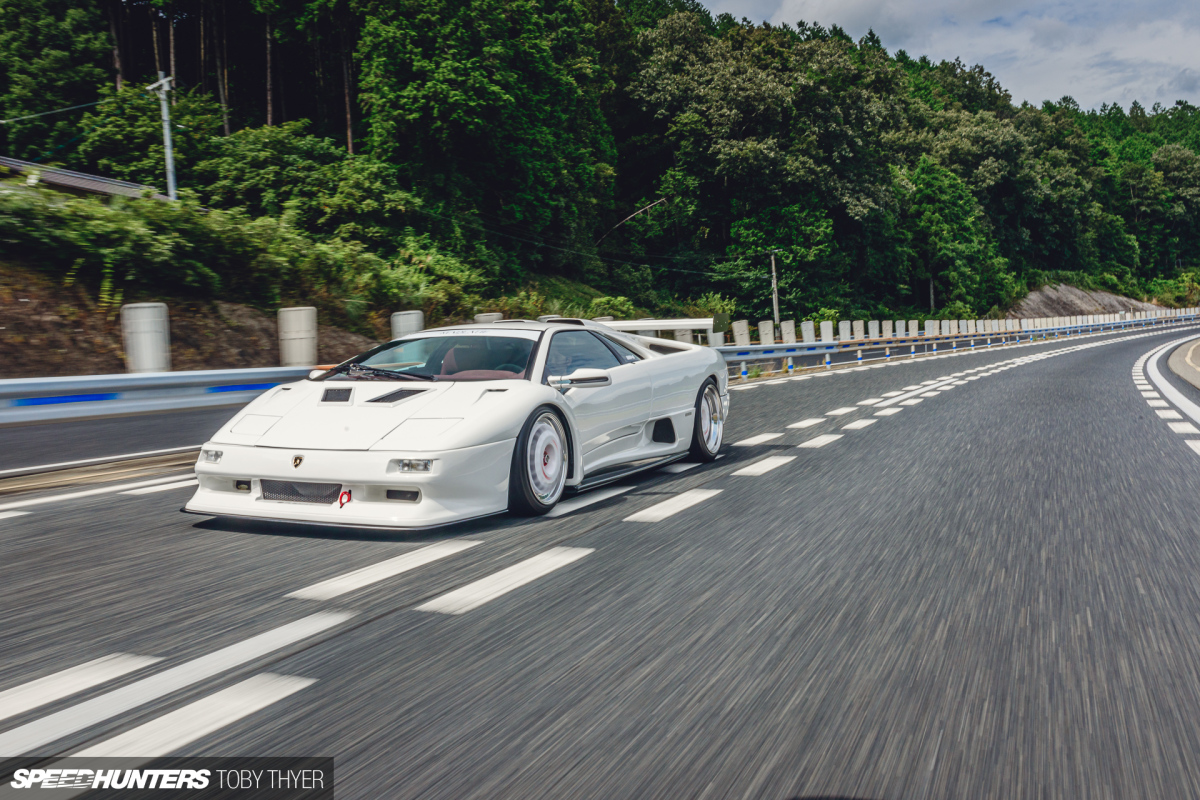
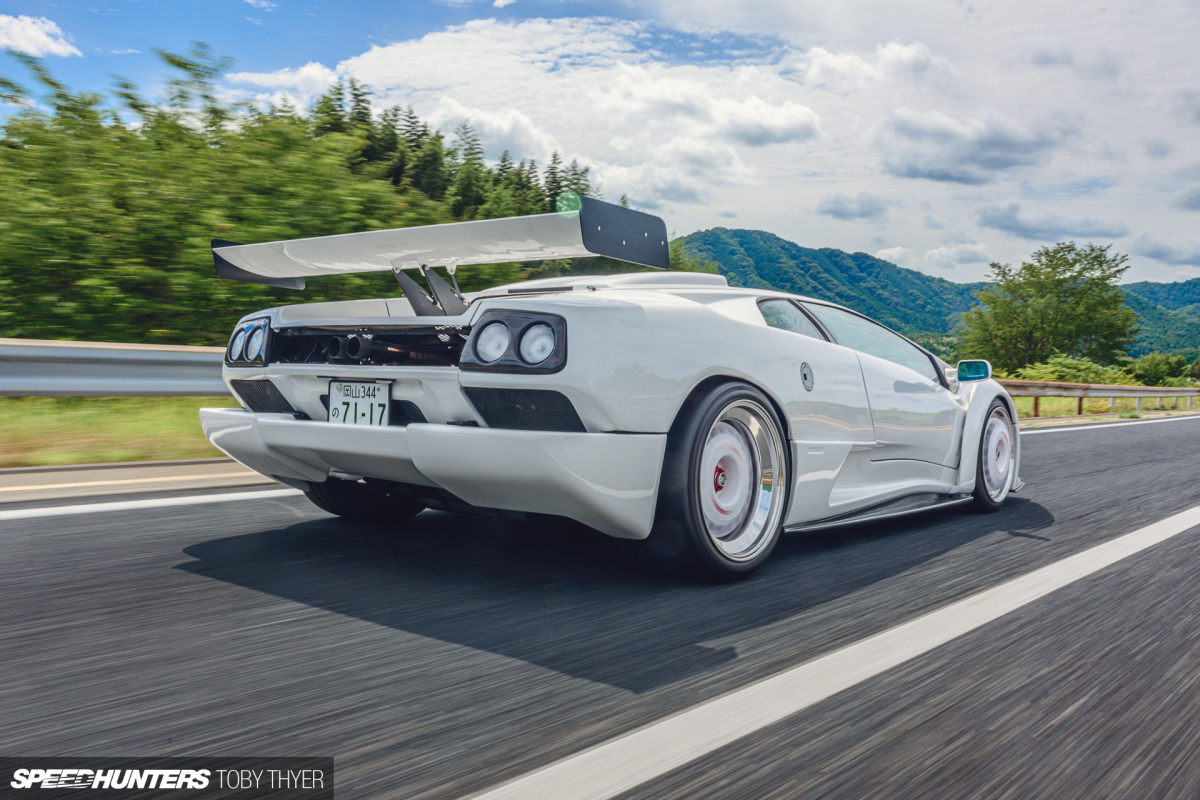
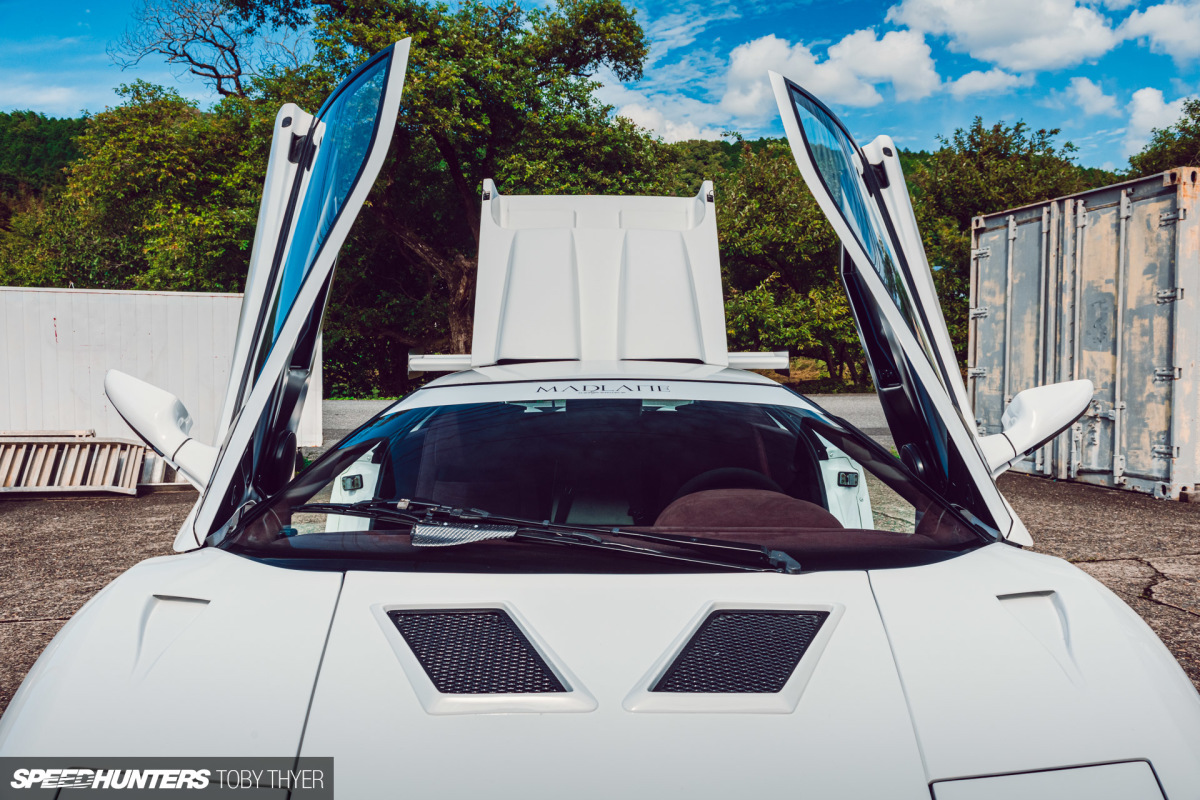
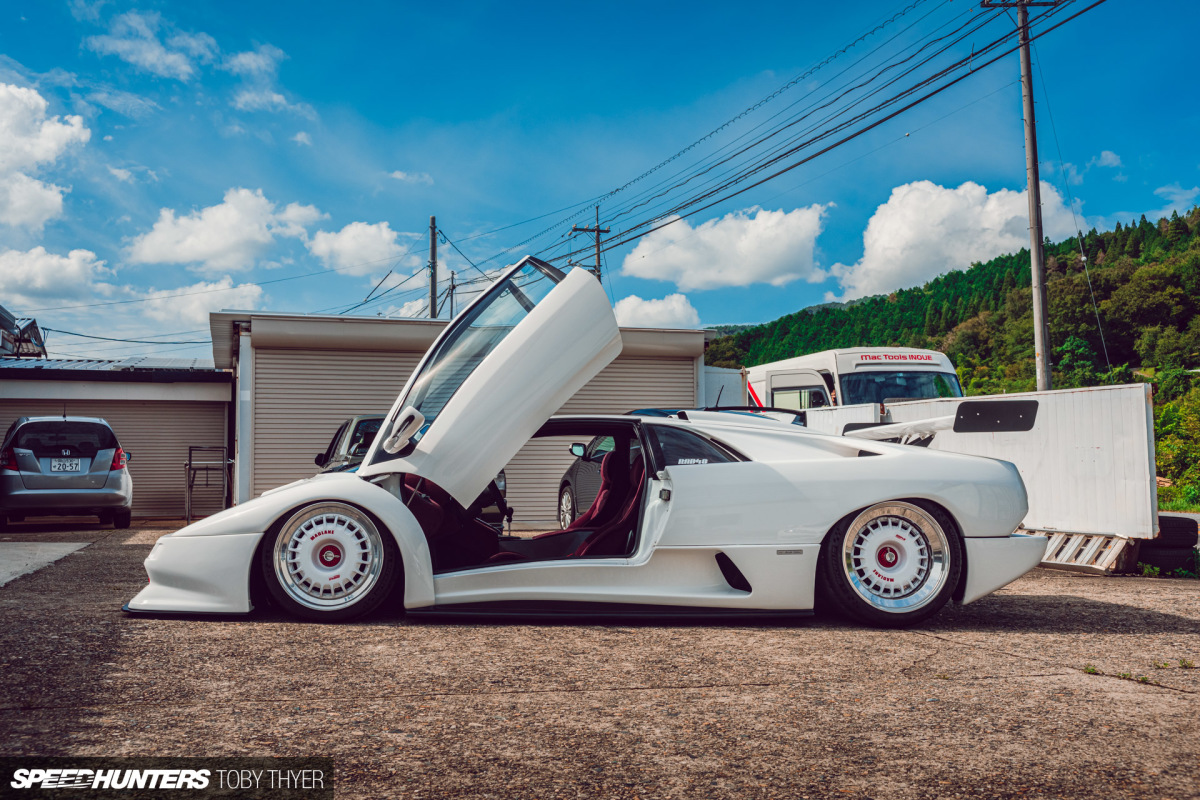
Even with my limited supercar knowledge, and knowing Kazuki-san, I could tell that the car wasn’t entirely stock. The custom front and rear bumpers, front fenders, wing and bonnet have been designed in the image of one of Lamborghini’s first race cars.
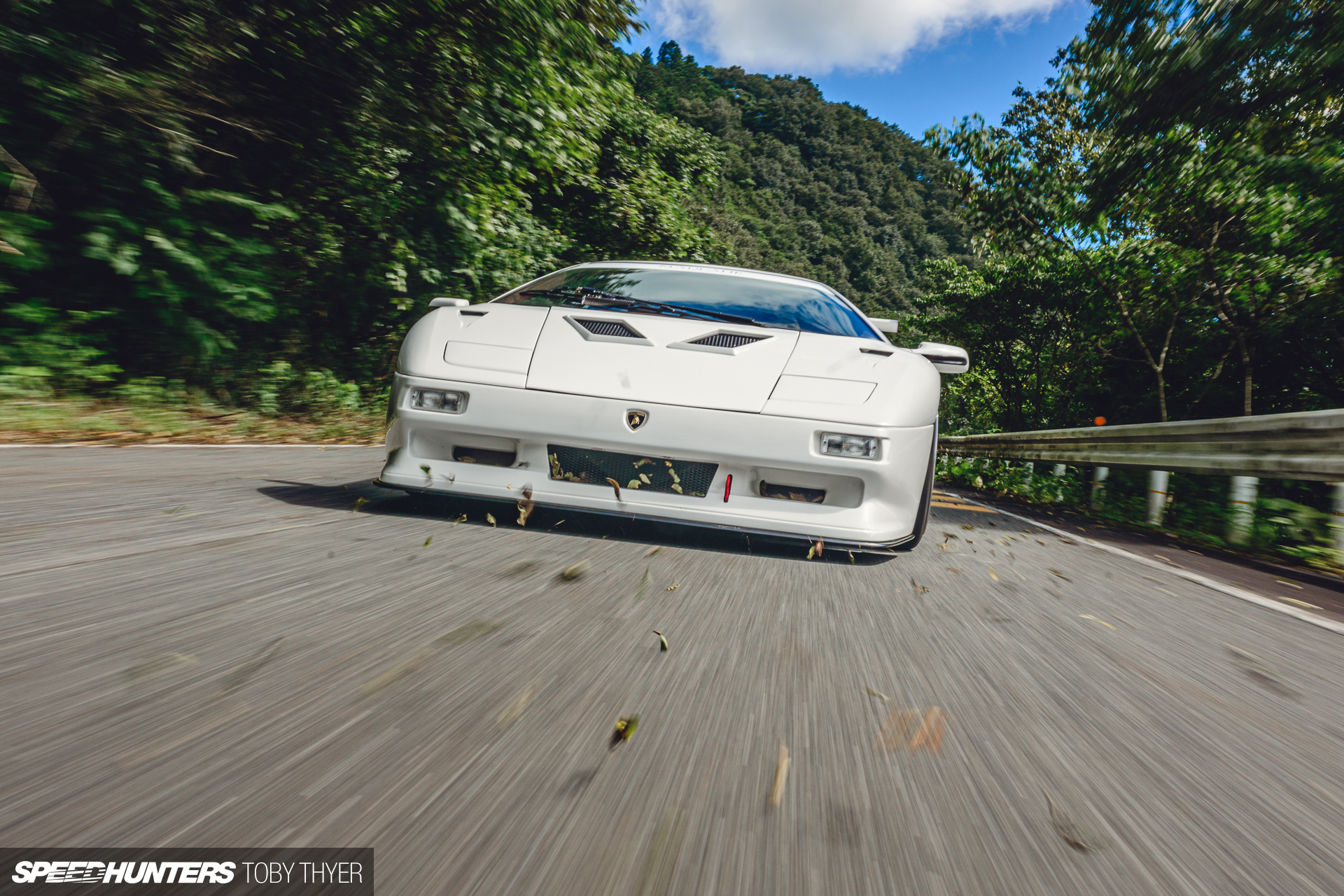
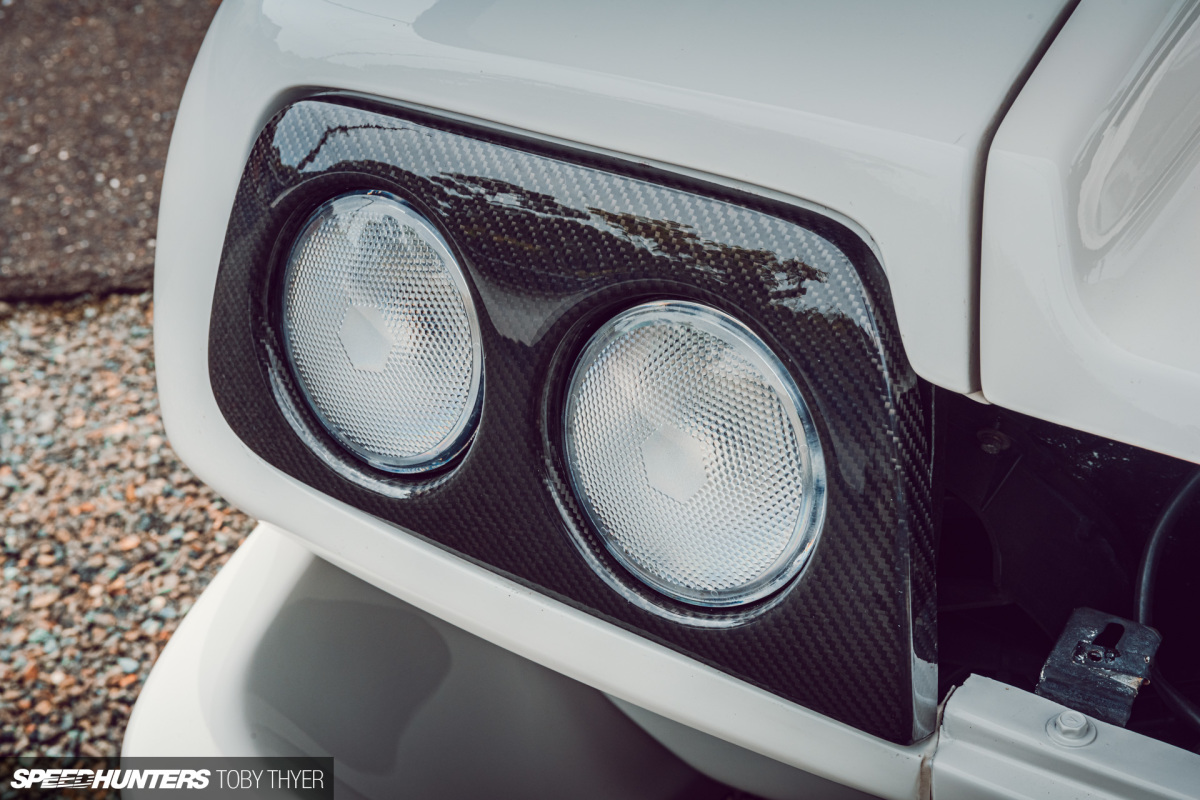
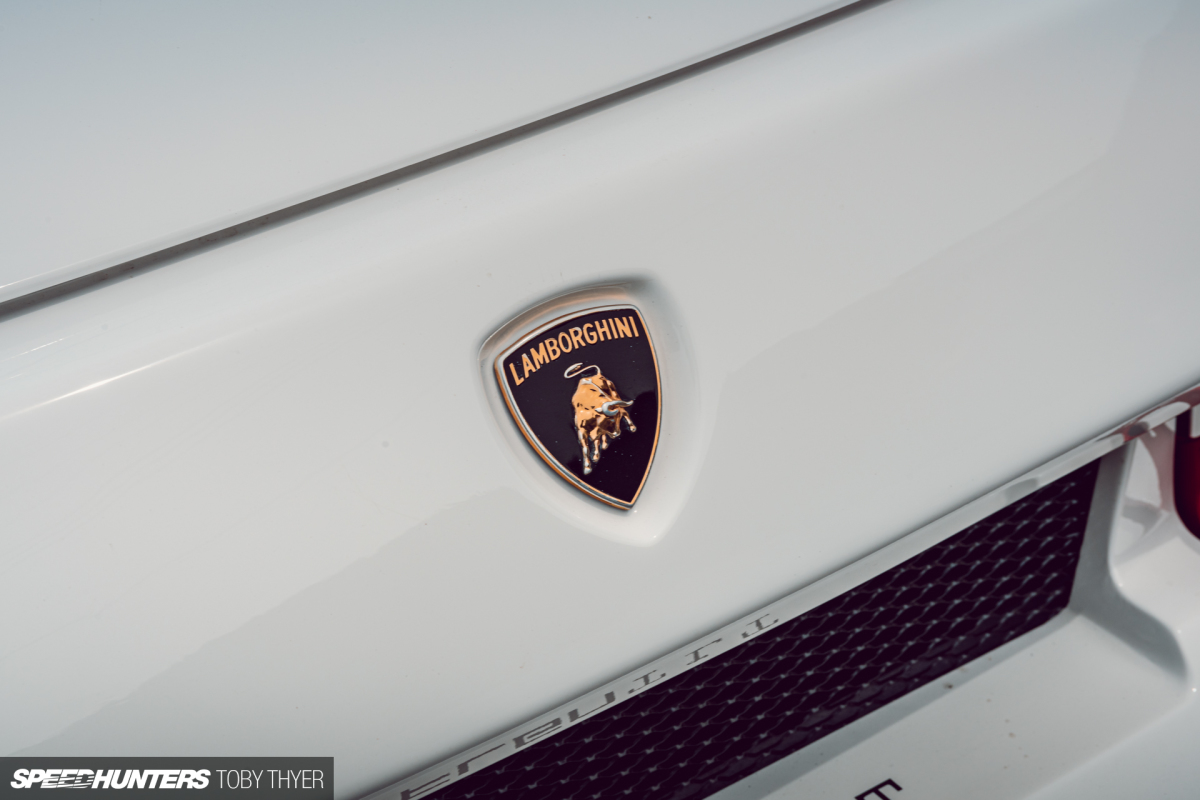
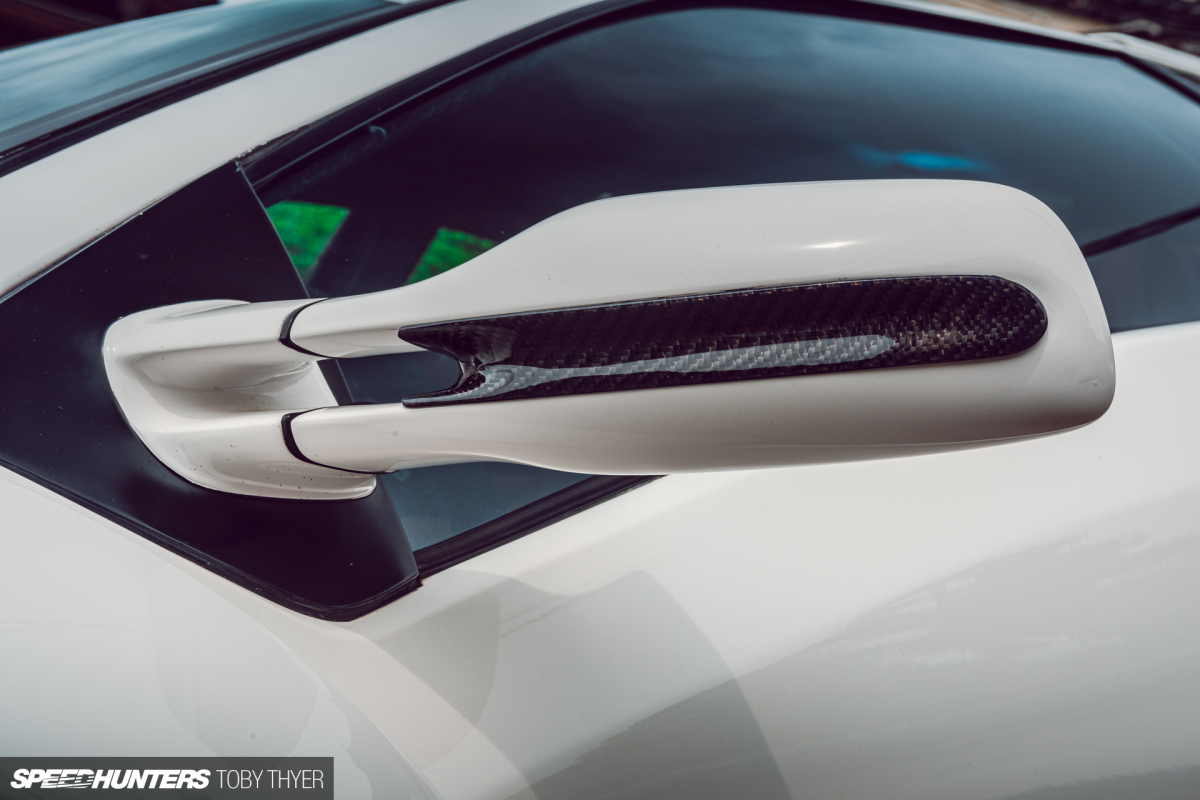
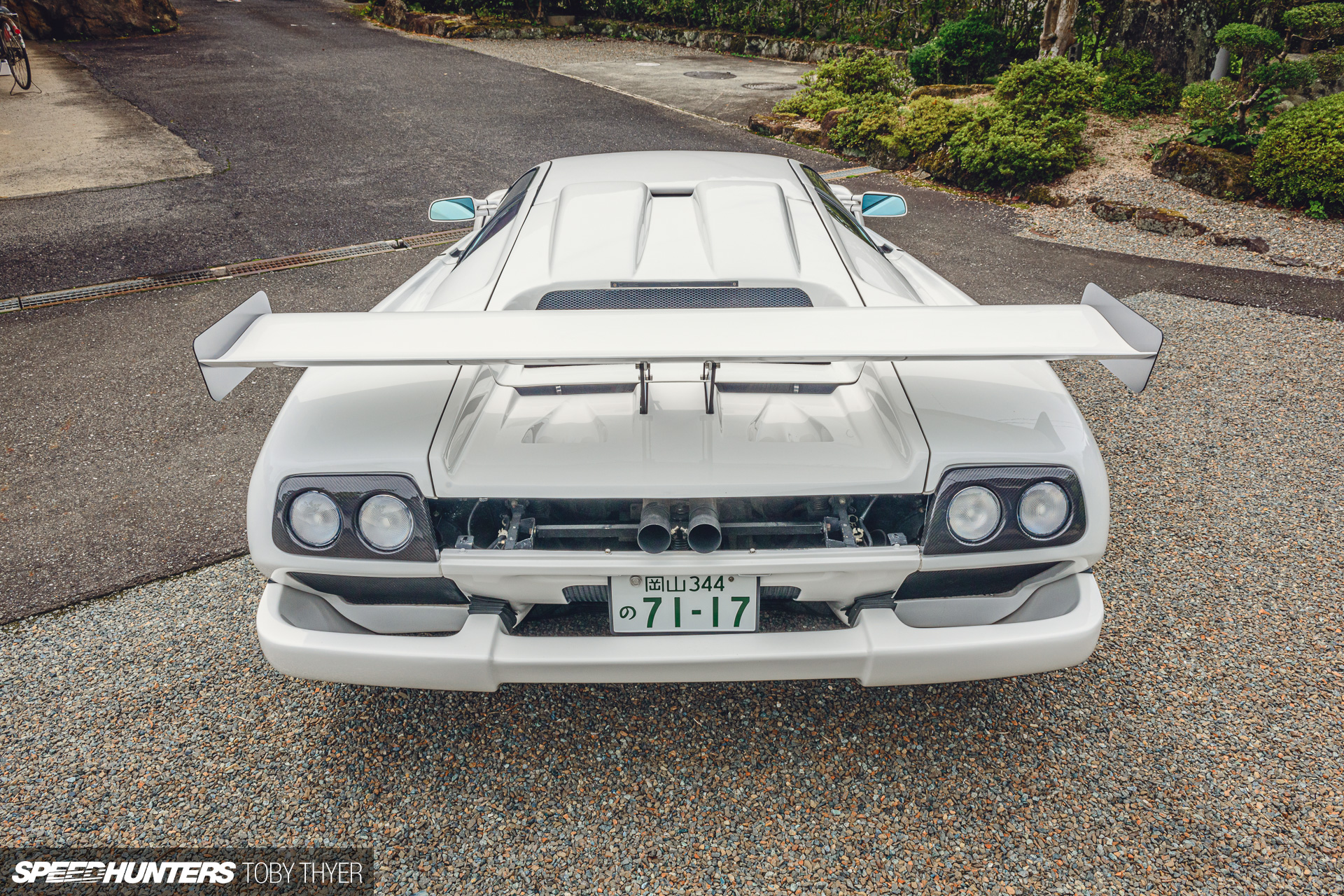
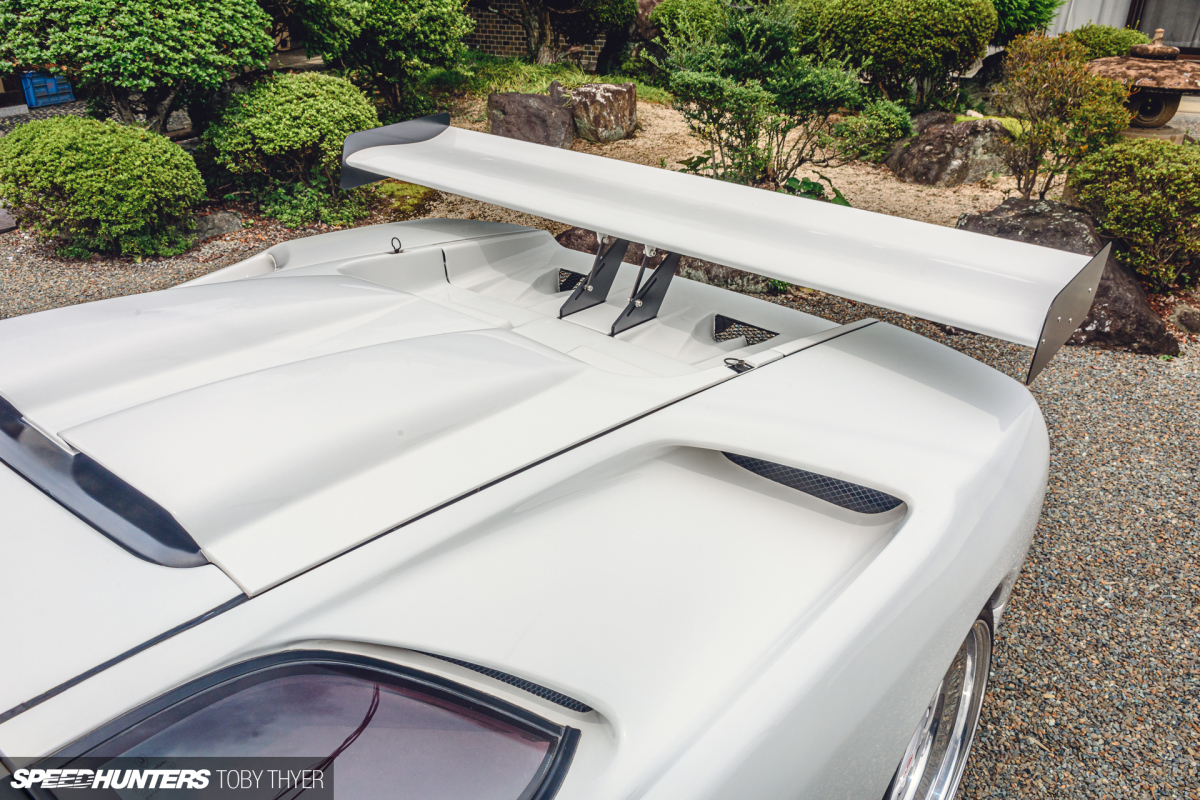
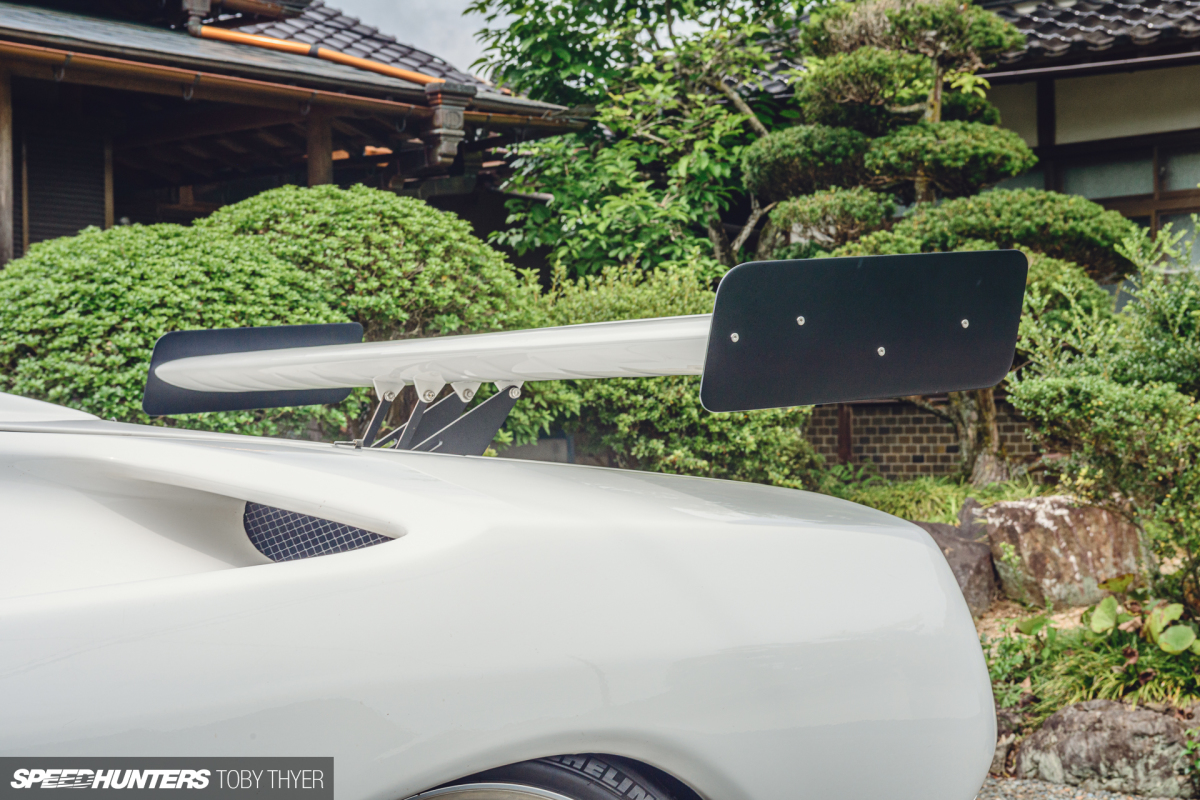
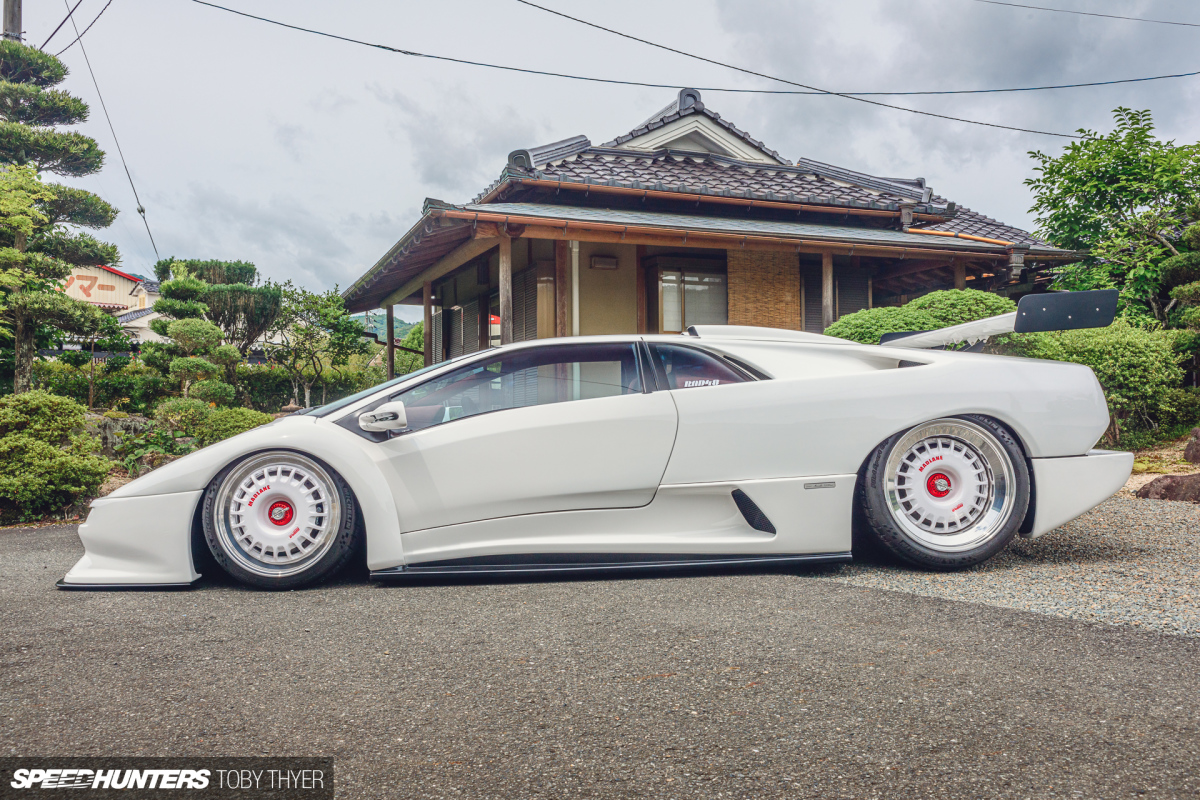
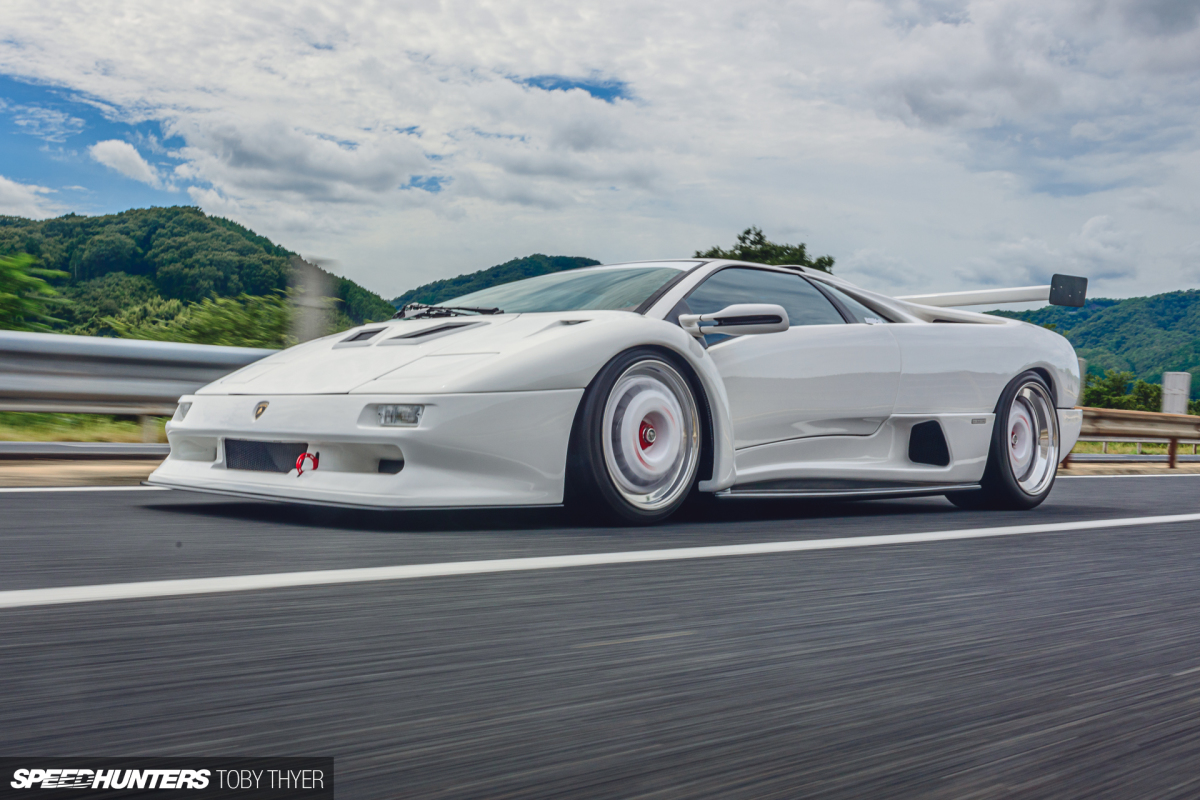
But unlike Kazuki-san’s current Porsche 935 K4 project, his Diablo, in its current form, has a more classy, street-focused look. The carbon fiber accents, and the white, black and red colour palette give it an elegant exterior to compliment its unruly innards.
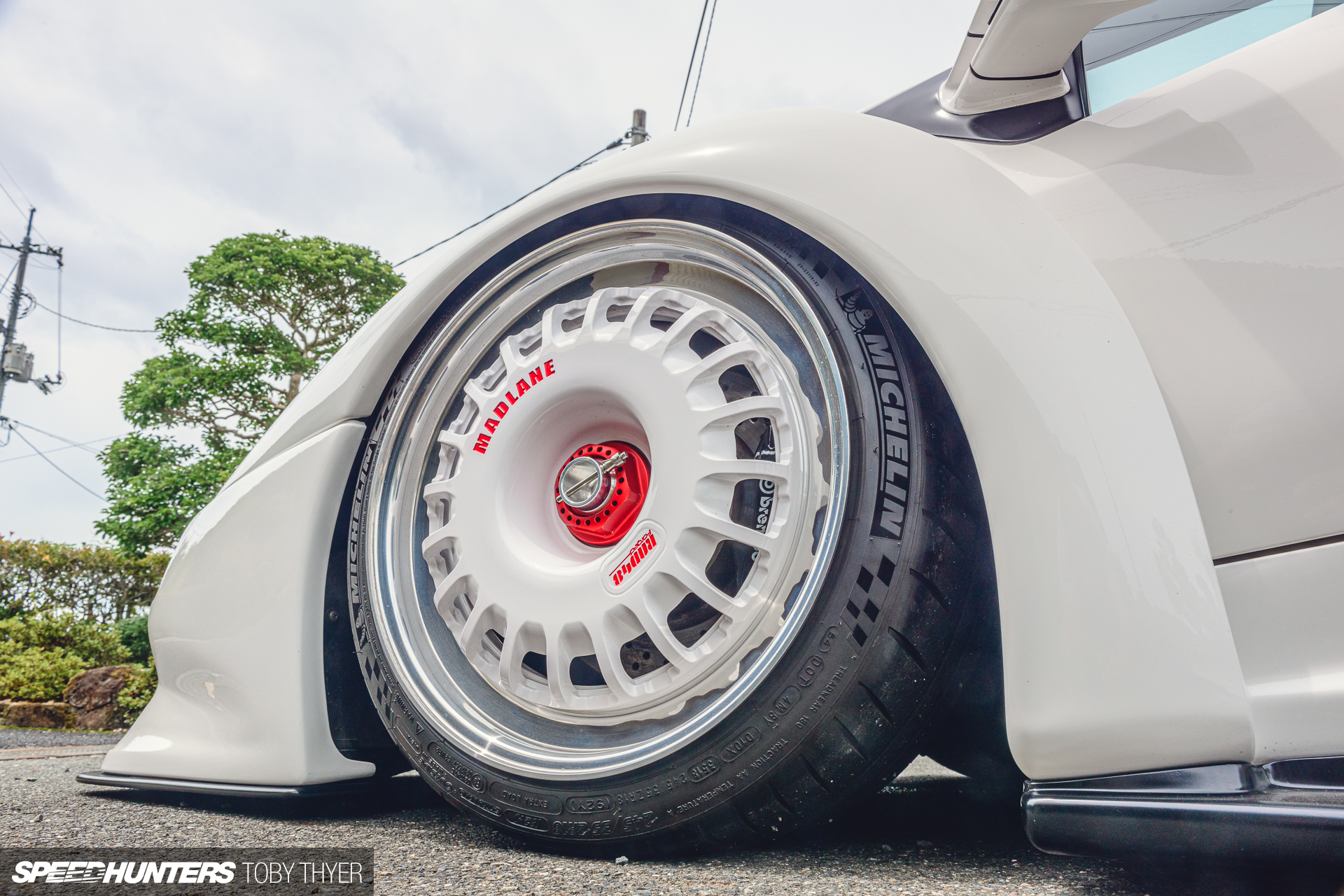
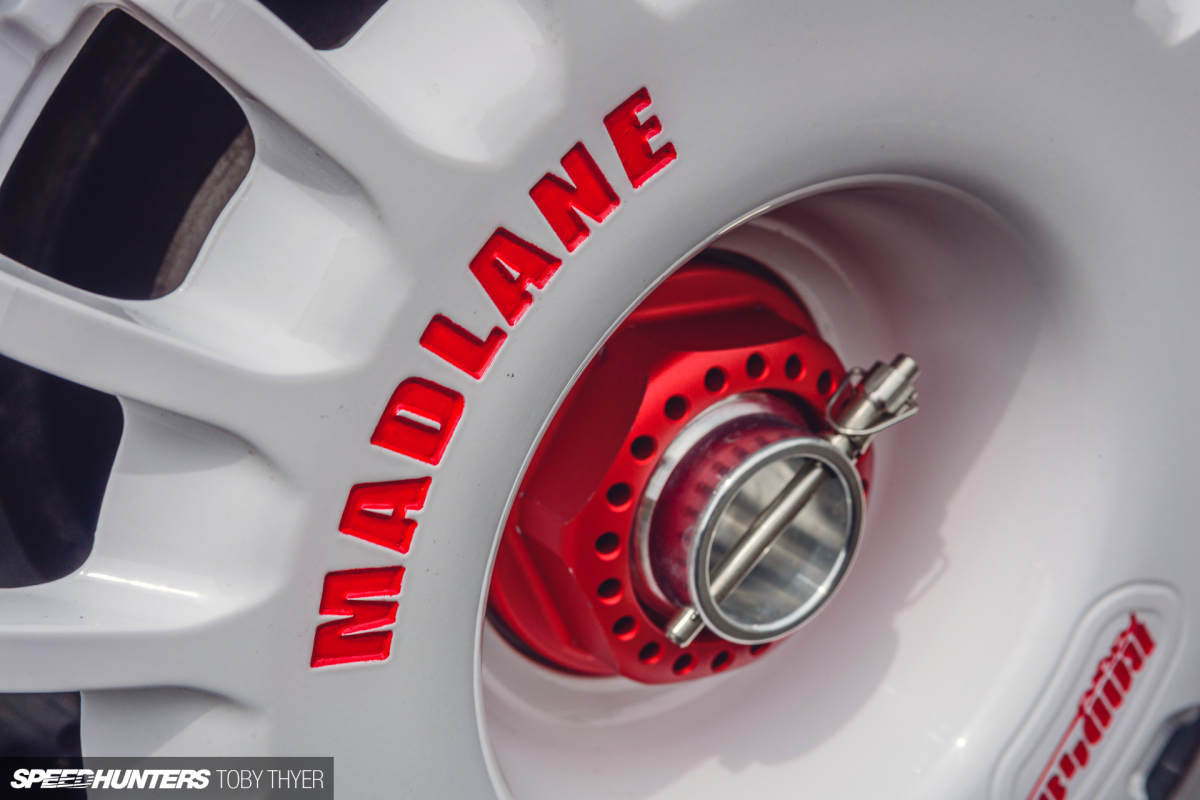
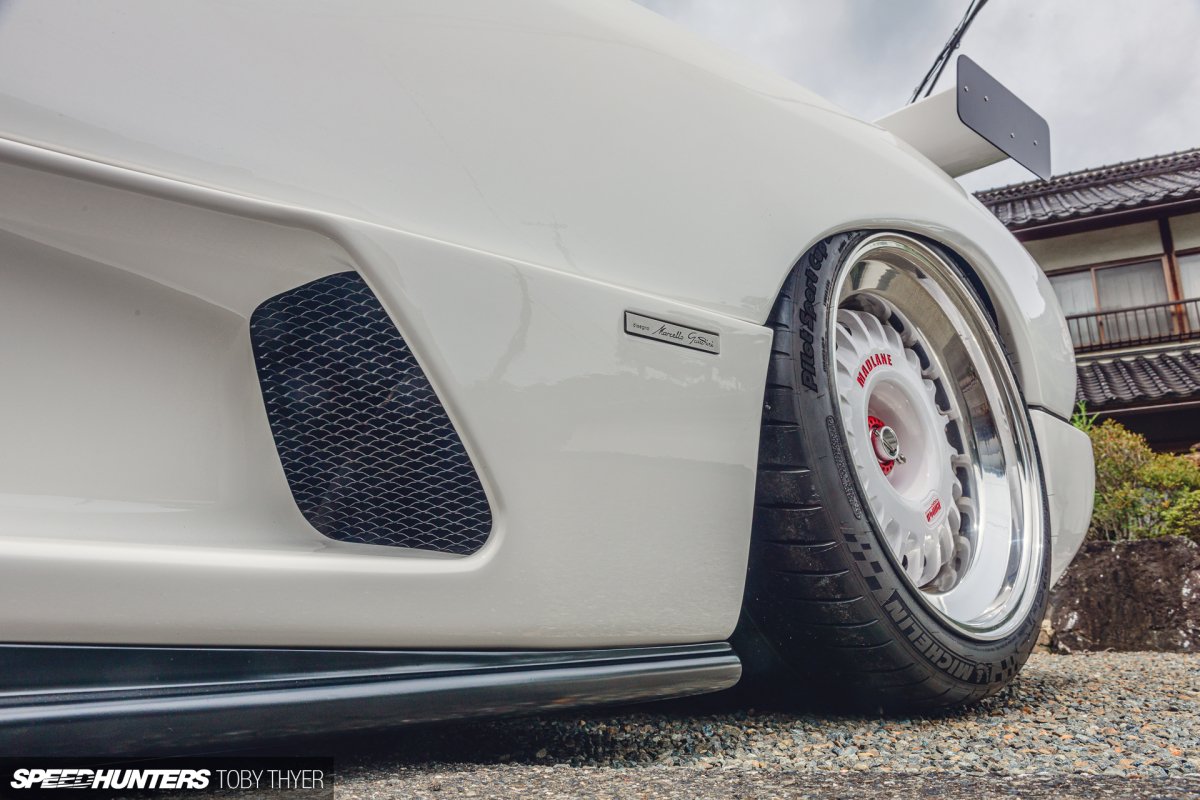
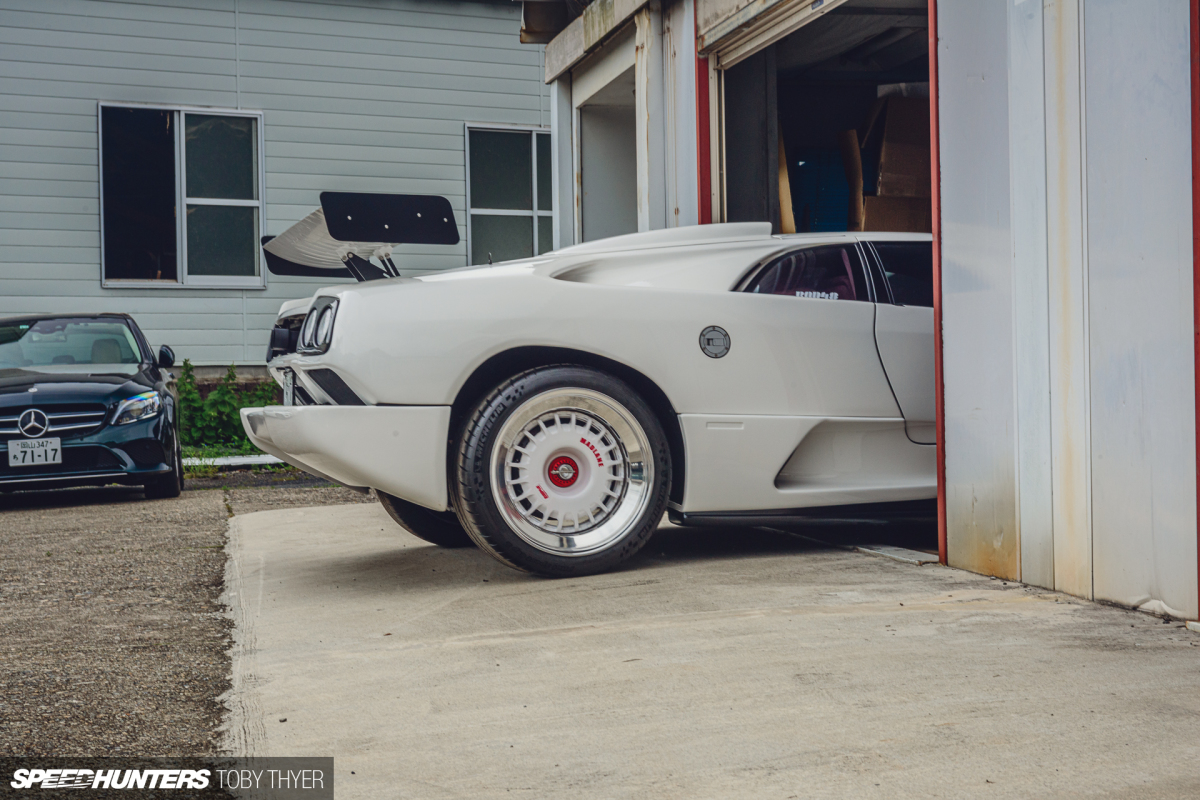
Wheels can make or break a car, and Kazuki-san has chosen some Bugatti EB110-inspired RAD48s, which definitely work for me.
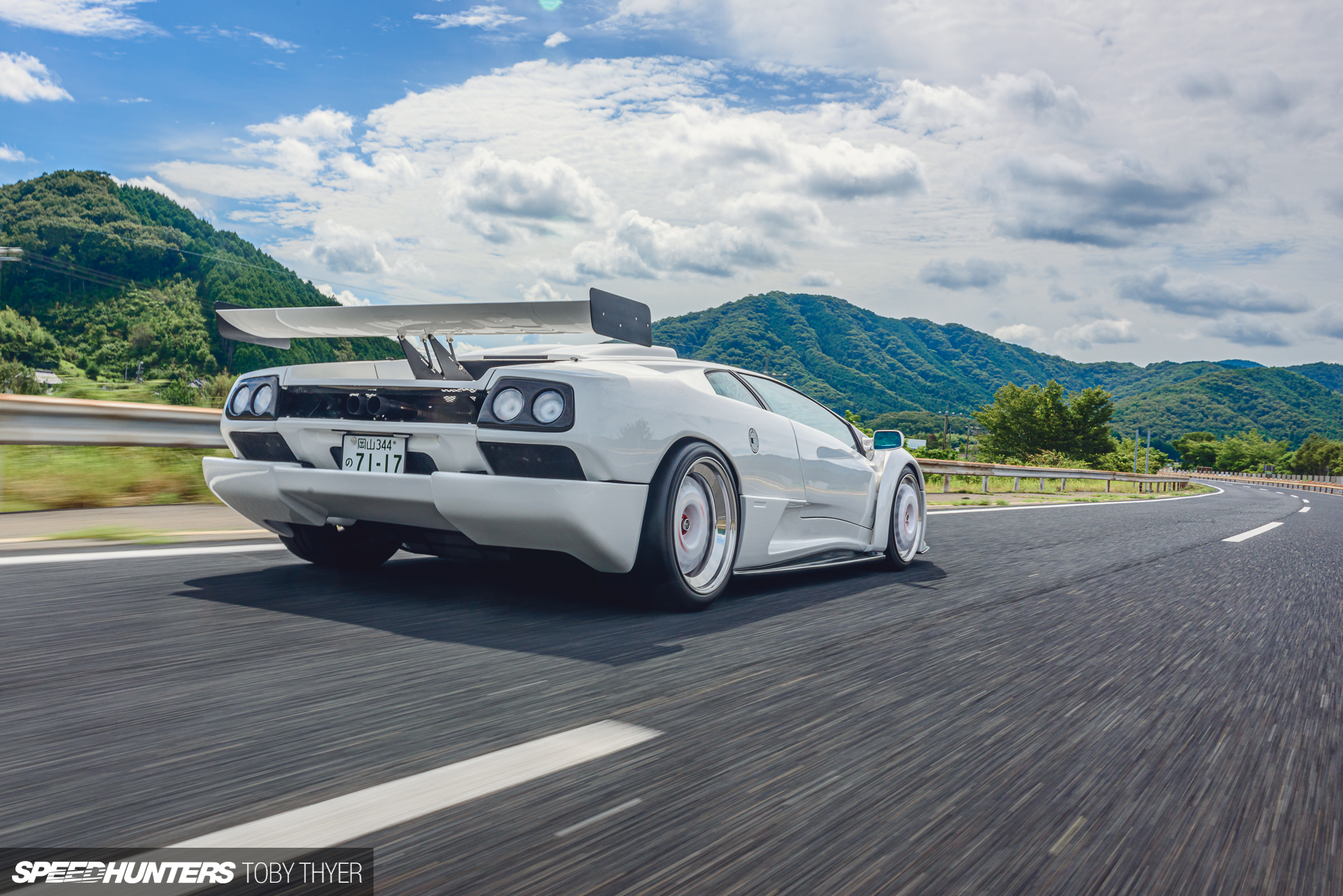
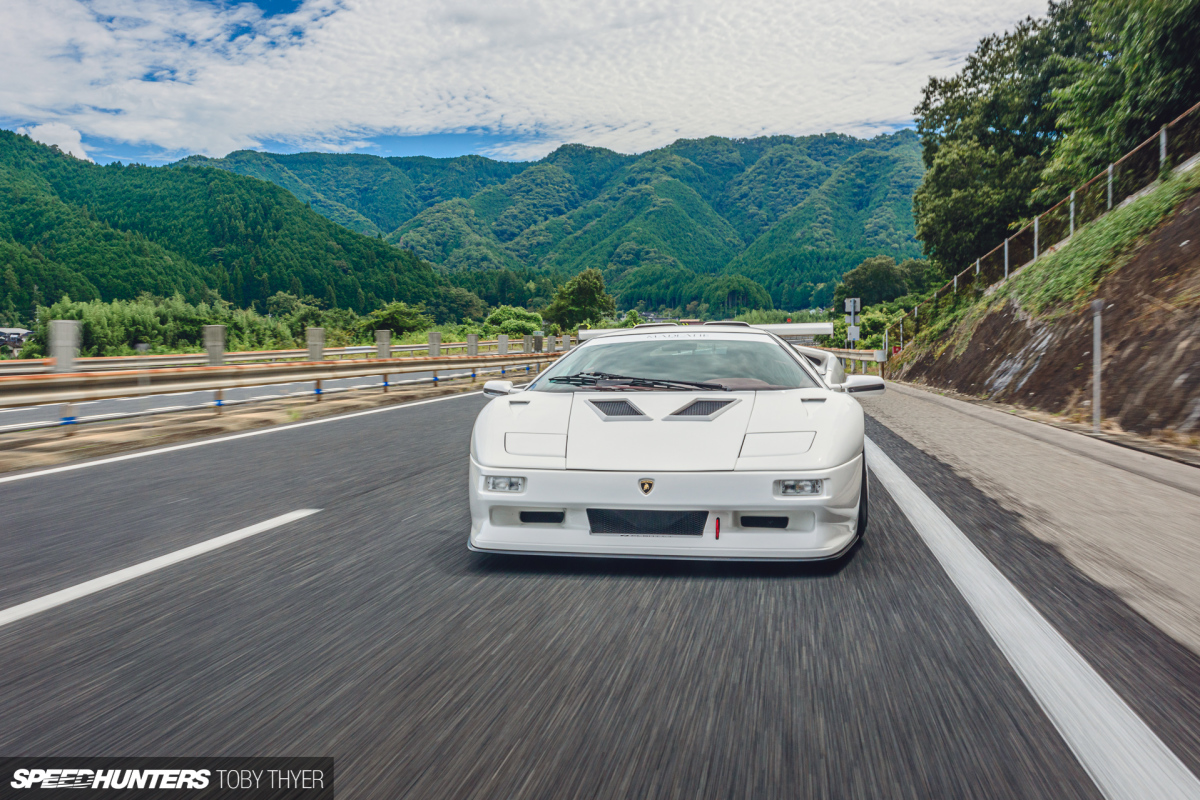
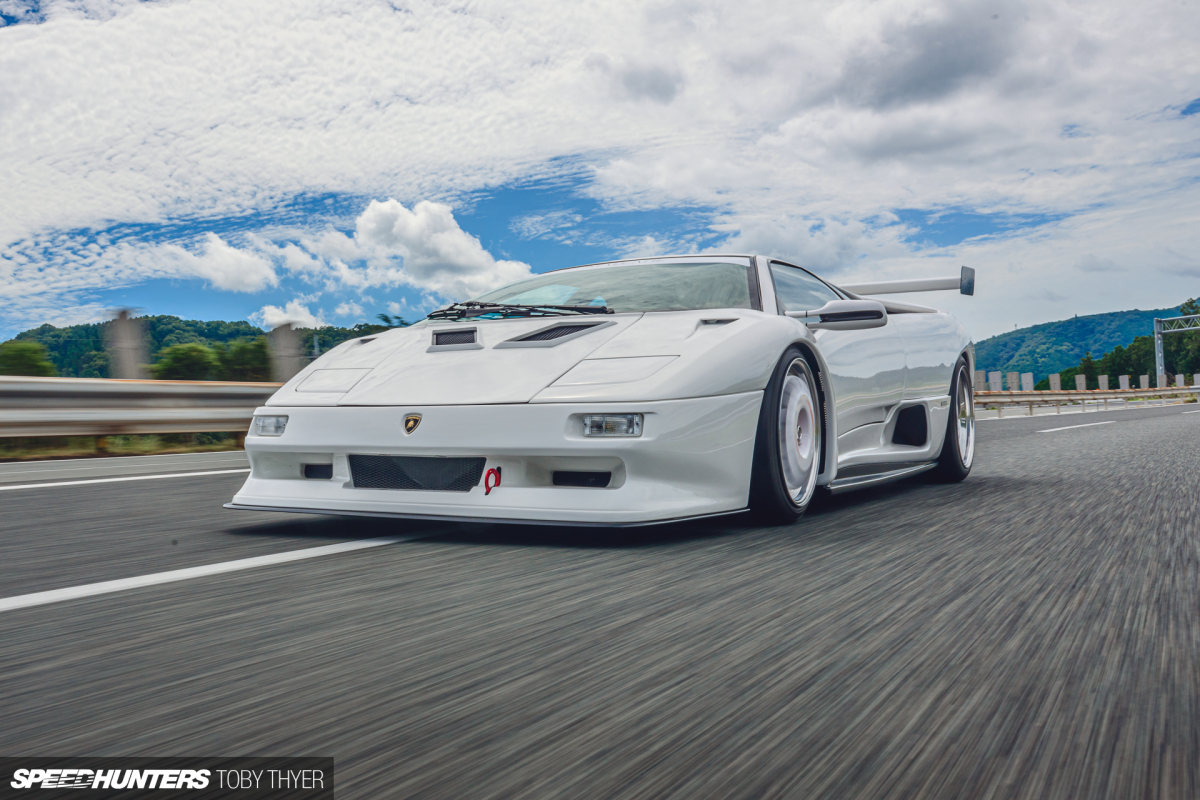
So while it may not scream race car with decals, a roll cage or crazy aero, the heritage is definitely there in the inspiration and design of the sleek custom body parts. These parts are hand-built from fibreglass by Pop Design, a Lamborghini aero specialist in Mie Prefecture, and were modeled on those that Lamborghini used for its Diablo Jota PO.01.
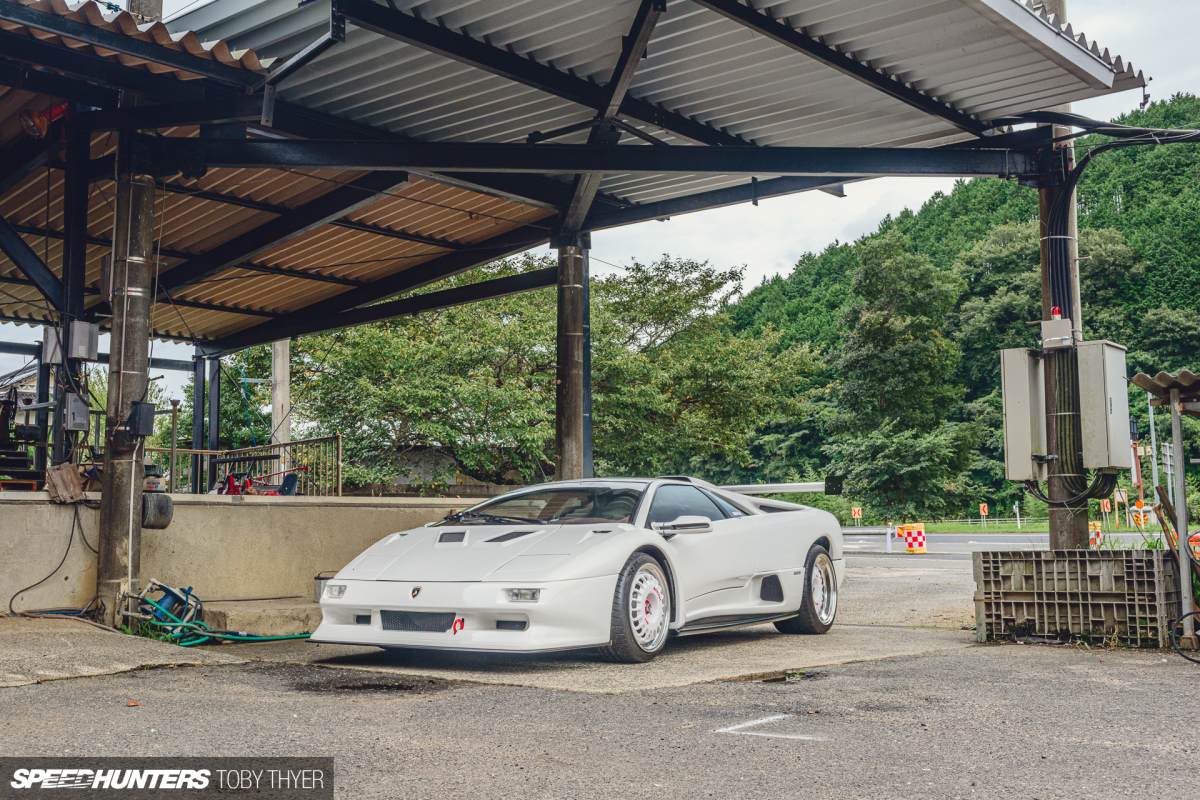
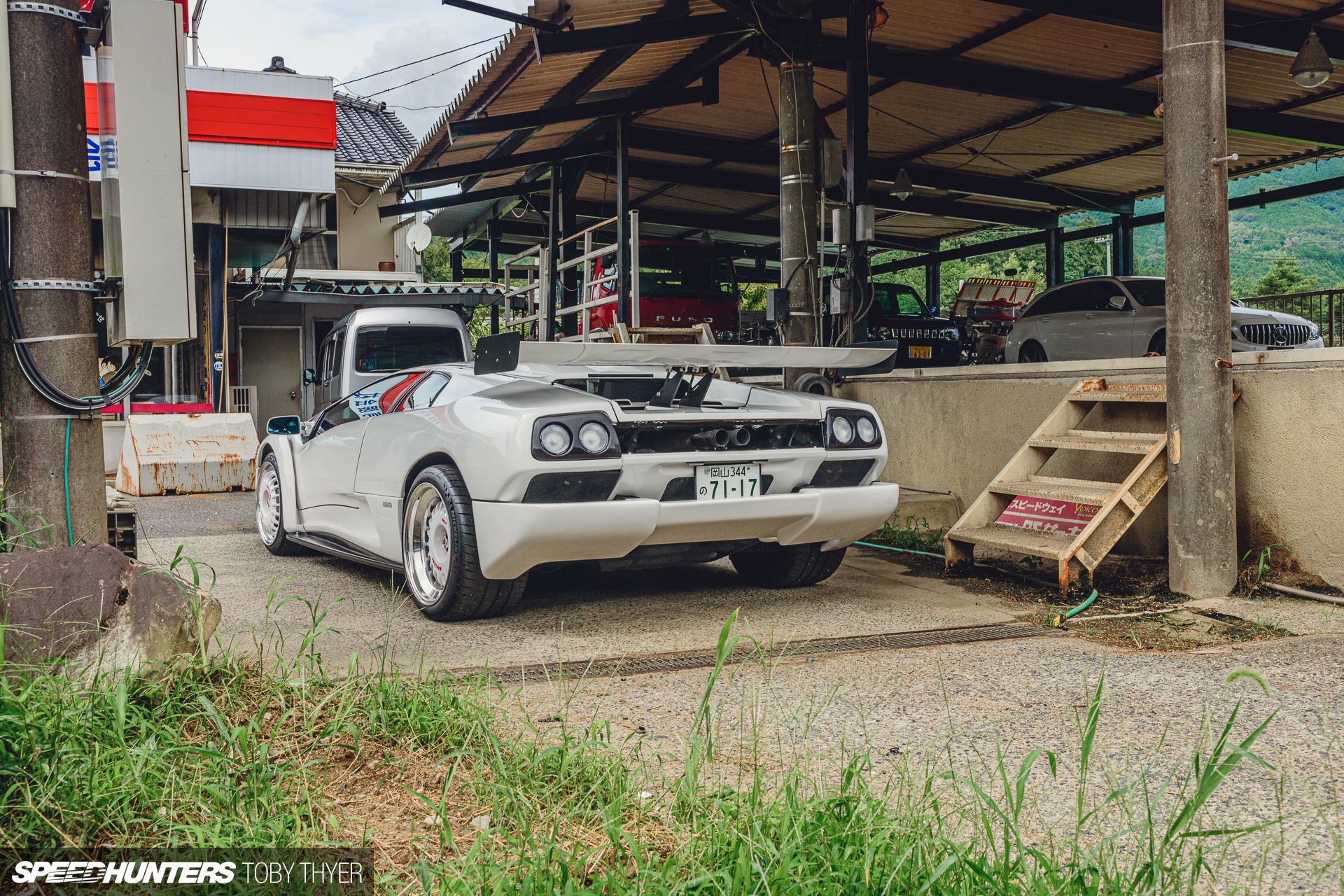
In 1994, a year after Feruccio Lamborghini departed this mortal coil, the company decided to finally enter the world of motorsports. This of course went against the late founder’s wishes, who famously regarded racing as a waste of time and money. After a long absence from motorsport, it was in fact the Japanese who ignited a spark which lit the fire that forged a long line of Lamborghini race cars.
Having had mixed success with the ageing Countach, the Japan Lamborghini Owners Club (JLOC) ordered two competition cars to compete in the 1995 JGTC series. One road-going car was also supplied for homologation purposes.

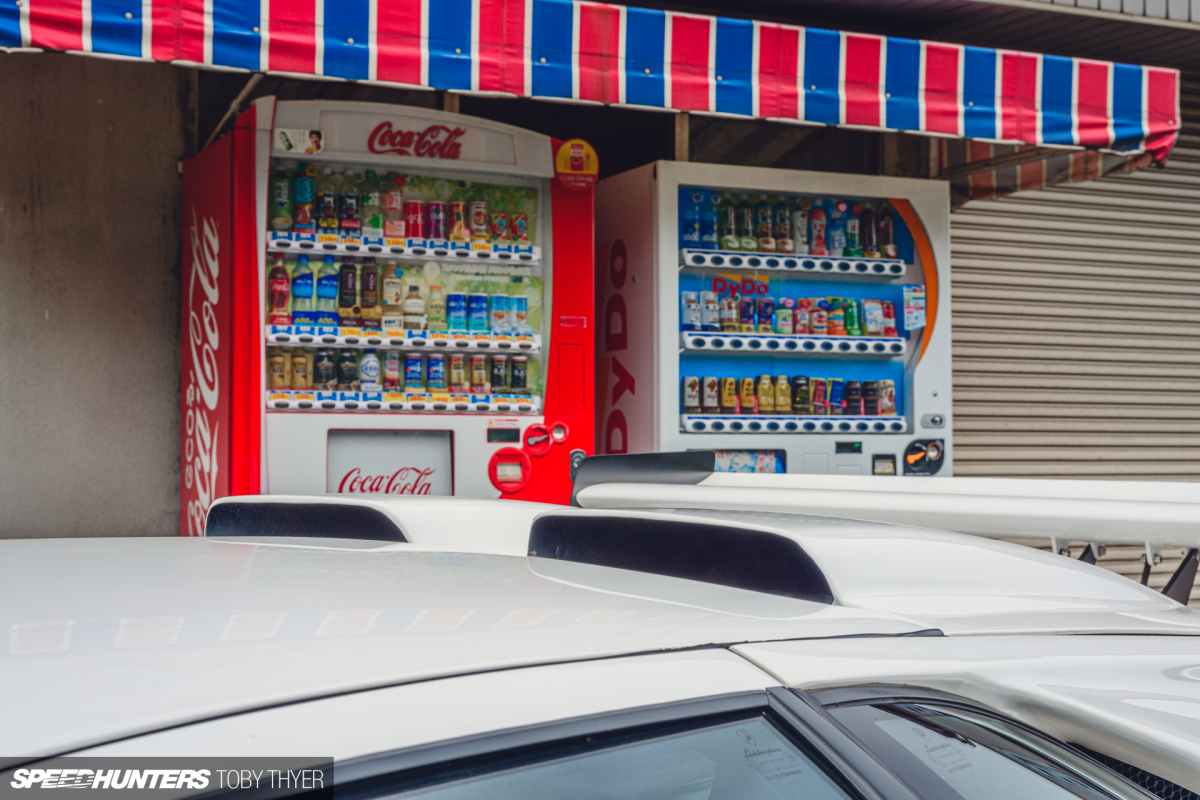

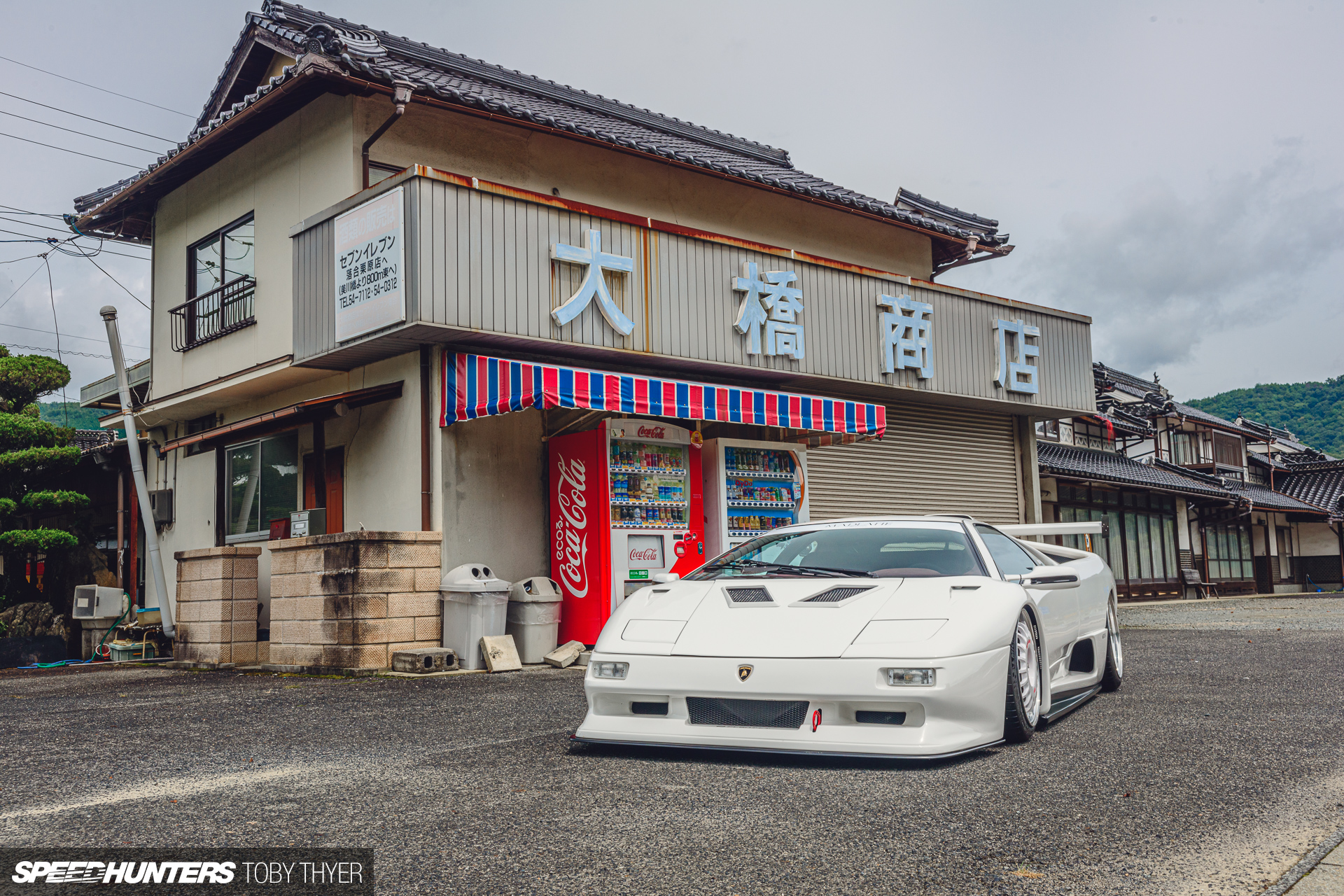
The Jota PO cars were built by Lamborghini Engineering, who were responsible for Lamborghini’s F1 team. They were based on the SE series, but power was pushed up to 620hp, topping the standard SE30 Jota which peaked at 595hp. Various other upgrades and alterations were made, including a new exhaust system with exit points between the tail lights, something which Kazuki-san has carried through to his version.
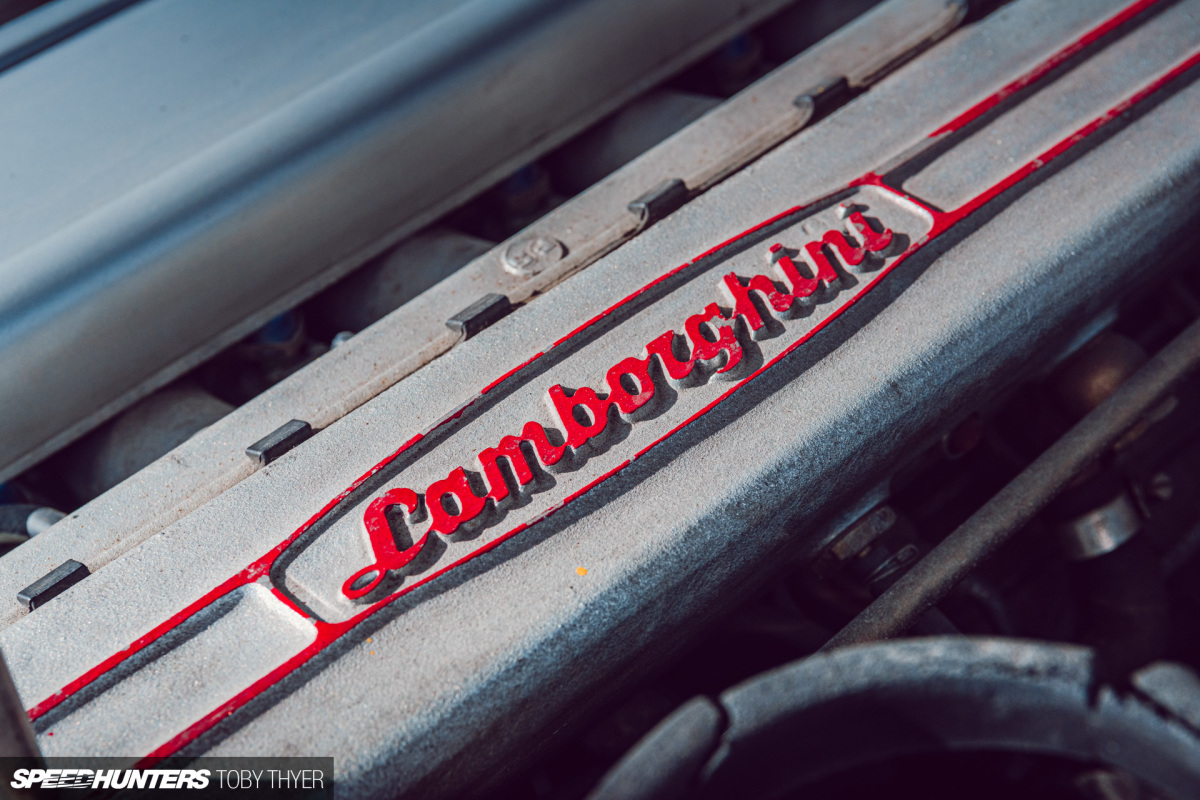
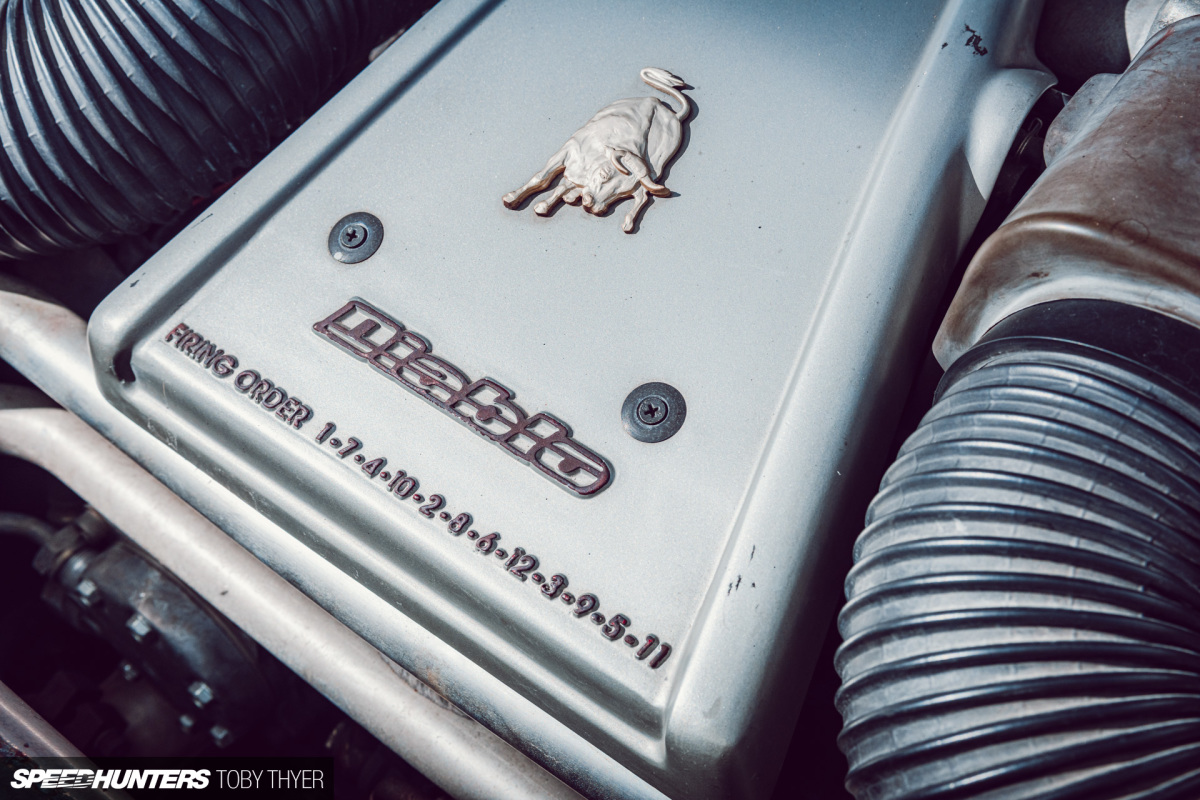
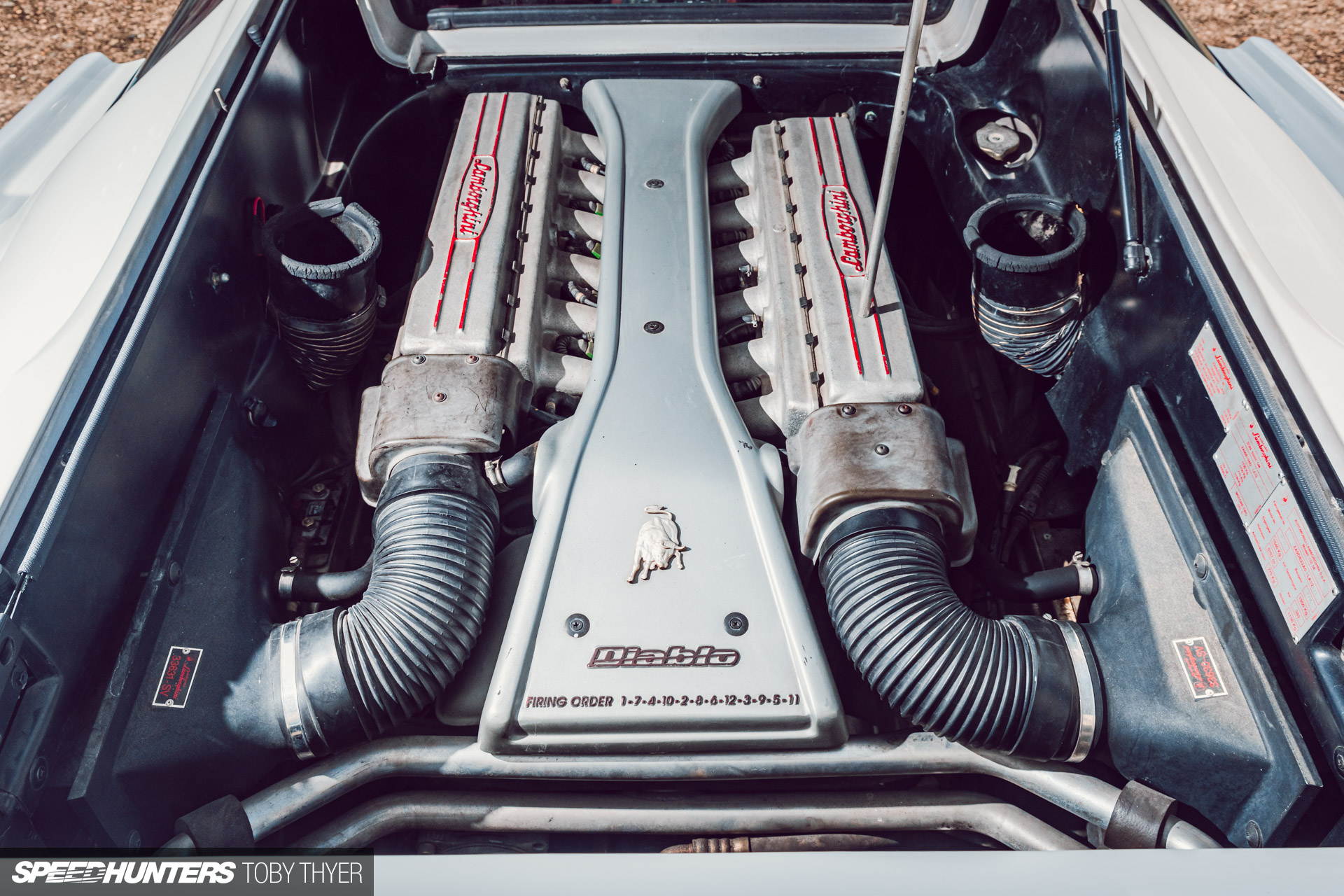
What you see here is a 1997 Diablo SV, which had an increase in power over the stock Diablo and borrowed the SE30 Jota’s roof-mounted air ducts. Some of you may even remember it from Need for Speed III: Hot Pursuit.
When Kazuki-san picked up this example it only had 10,000km on the clock, which is undoubtedly a crime against humanity.


Under the hood the giant V12 is still mostly stock, but the ultimate goal is to make a race car for the road, so you can be sure a few more bulls will be added to the herd. There’s always a chance demons will return to Okayama, so how else would Kazuki-san outrun them?
The original PO series Jotas never achieved the success the JLOC had hoped for. And the next version, which raced in 1996, was still 10 seconds slower than the winning McLaren F1. An SV Diablo finally took pole position in 2001, but that’s all history and not entirely the point.

The Diablo Jota cars are special to Kazuki-san because they were awesome to watch back in the day. They were run by a Japanese club and they oozed style and power that was unique in a sea of Porsches and Ferraris.
Sometimes you don’t need to be the fastest bull to be the most impressive.
Toby Thyer
Instagram _tobinsta_
tobythyer.co.uk