
The 1990s were a remarkable era for cars. So much new technology was becoming available, which brought a return to performance. Most notably, in Japan, turbo and AWD became the formula for success.
Here in the US, those of us who were teenagers in the early ’90s weren’t all that familiar with the R32 Skyline GT-R. We knew the Japanese halo cars as the A80 Supra, FD3S RX-7, Z32 300ZX and the one often left out of the comparison – the Mitsubishi 3000GT. It really wasn’t until later in the decade that we became familiar with all that Japan had to offer.

Even though they aren’t often in the spotlight, and despite my lack of any actual experience with them, I have always been fond of the 3000GT. One of my most vivid memories of Mitsubishi’s ’90s supercar came about when I was aged 12-13. I convinced my dad (who was a die-hard Nissan guy) to stop in at the Mitsubishi dealership so we could take a closer look. At the time, the 3000GT was the most beautiful car I had ever seen, and I was actually upset by the fact that I could not convince my dad to purchase one.
Ever since then, I have always had a special place in my heart for 3000GTs, admiring them when occasionally spotted in the wild. It seems odd to me that they have gone mostly unnoticed, especially when you consider the technology they offered when new. It does seem, though, that they have a pretty bad reputation from a maintenance standpoint.
Jay Belknap disagrees. He has dedicated many years to this platform, and today owns one of the best examples I could ever imagine. His love of the 3000GT has led to other major impacts in his life as well.


The 3000GT VR-4/GTO community is a very niche one. These all-wheel drive machines are extremely capable when built correctly, however limited aftermarket support (and a movie or two) has redirected the spotlight to other ’90s Japanese supercars.
Even off the showroom floor, the 3000GT VR-4 had an arsenal of weapons to deploy: From active exhaust to four-wheel steering, front and rear active aerodynamics to active suspension; a torque-happy 3.0L V6 twin-turbo engine paired to a Getrag 6-speed transmission; a Getrag transfer case to assist power delivery to all four wheels; 320hp (and 315tq on tap at 2,500rpm) for 0-60mph in 4.8 seconds; curves for days thanks to its Ferrari-inspired styling.
So looking back through the years, it’s hard to understand why there wasn’t more love for the 3000GT platform. Perhaps nostalgia for this beautiful classic has returned us here.

Jay’s first 3000GT VR-4 was purchased in the summer of 2000. It was tuned to 500+awhp on US 93 octane fuel, painted Porsche GT silver, and featured on the June ’08 cover of Modified magazine. Around the same time, Jay met his future wife-to-be at the annual 3000GT/Stealth National Gathering. Jacqueline Belknap (nee Kassen) brought her 1994 3000GT Twin Turbo from the Chicago suburbs to share a garage in Virginia Beach with Jay’s silver car. Jackie and Jay have been married since April 2011.
But what looked like ‘happily ever after’ turned into tough times in 2013. An unexpected job loss led to a silver car part-out, loss of home, then on top of that Jay had to fight a rare neurological disease. These challenges meant that the silver 3000GT rebuild was put on the back burner for some time.

By 2016, Jay and Jackie found their new life in rural southern Virginia. A new career, new house, and a won medical battle meant that Jay could finally rebuild the silver VR-4. His lofty goals meant a lot of time and work was required to get the 3000GT back to its old glory days. At Jackie’s insistence, she convinced Jay to just find a clean driver to enjoy and not go crazy with while the silver car was restored.
Any car person knows how this story ends up…

In late 2017, Jay found a single-owner 1994 Caracas Red 3000GT VR-4 with 42,000 miles on the clock. It was completely stock, the car’s first owner had never let it see rain, and it had all maintenance performed by Mitsubishi. A binder full of receipts even included the original window sticker. It was the perfect car for Jay to not go crazy with. A short flight and drive later, Jay and Jackie’s 3000GTs had a new friend.
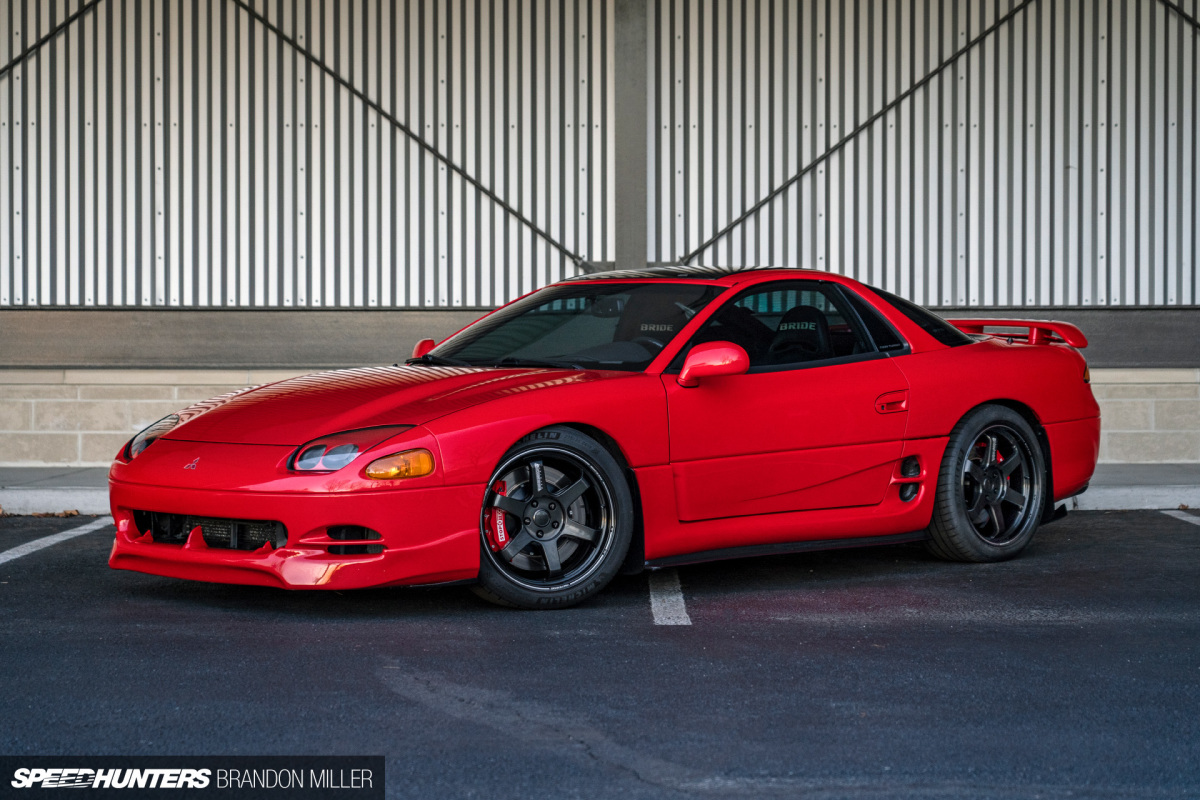
Having had many years to plan out the next GTO build, Jay got right to work. The vision for the red car was a great weekend cruiser that would feel at home on track or at a Cars & Coffee event. This meant keeping certain amenities and ditching others; carefully reducing weight, but not turning the car into a tin can. Thermal management would be vital.
Above all though, the 6G72TT engine would be kept, preserving the soul of the VR-4.

The red VR-4’s first service under new ownership included a timing belt inspection and fluids front to rear. A Supercar-Engineering extended capacity oil pan was filled with six quarts of Mobil 1 5W-50, and the 3000GT Stealth Solutions extended capacity oil cooler would receive a 7th quart. A 3SX Performance high-capacity radiator was filled with 66/34% water/coolant mix, and an HKS 1.1bar radiator cap added higher headroom for boiling. Redline fluids freshened up the Getrag gearbox, transfer case and rear differential.
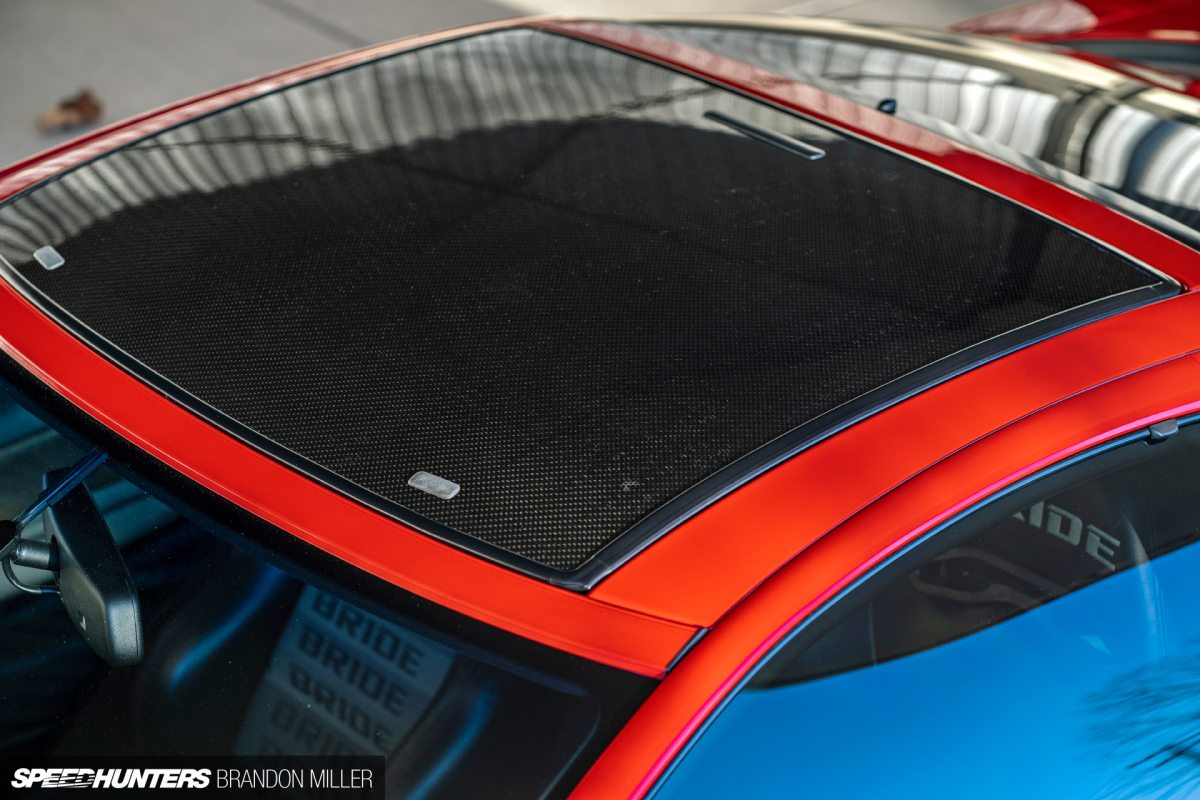
Strategic weight reduction was next. This included the removal of rear seats and belts, plastic hatch trays, spare tire and tools, CD changer, rear wiper and fluid tank, EGR, EVAP, fog lights, active exhaust, cargo cover and many fasteners no longer required. Other items were replaced with lighter versions, such as a carbon fiber roof, carbon fiber driveshaft, carbon wiper cowl, Odyssey battery, tow hooks, lighter seats, wheels, suspension, exhaust, tubular frames, etc.
All in all, weight was reduced by 311lbs, bringing the scales down to 3,470lbs. This number is more impressive when considering that 4WS, ABS, air-conditioning, power steering and the car’s active aero were retained.
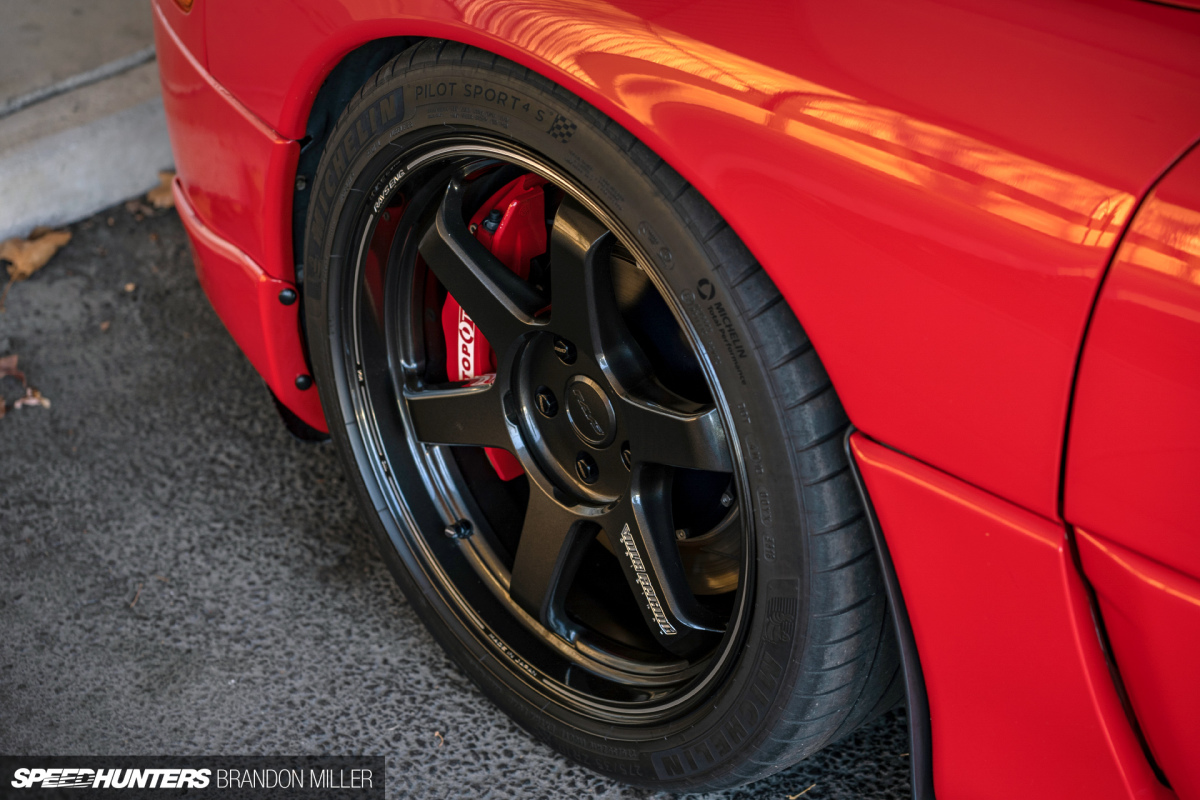
Stopping this twin-turbo juggernaut meant an increase in thermal capacity. Supercar-Engineering and StopTech collaborated to provide a 6-piston caliper with 380x35mm rotors up front, and a balanced 2-piston 328x28mm setup out back. GTO MR brake ducts guide air to the front rotors and keep the Carbotech pads cool.
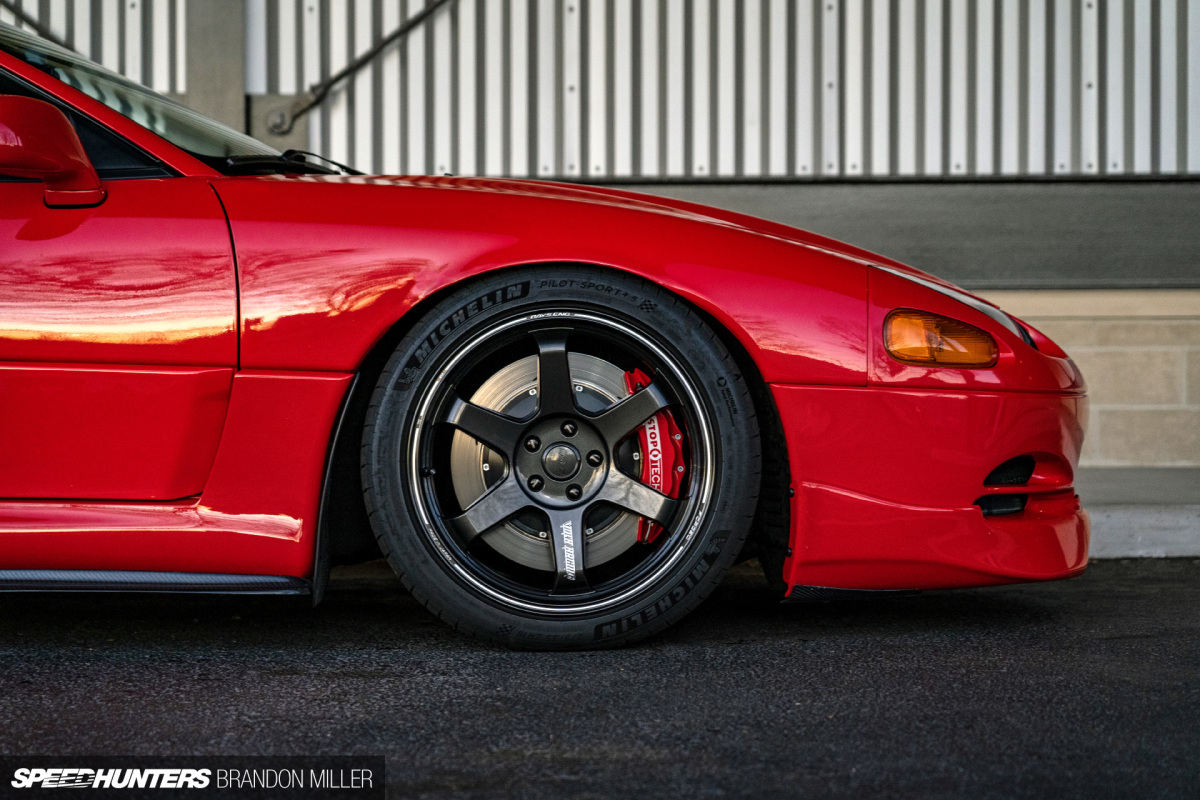
The monstrous brakes are wrapped in square setup of 19×9.5-inch RAYS Volk Racing TE37 Ultra wheels wrapped in sticky 275/35R19 Michelin Pilot Sport 4S tires.
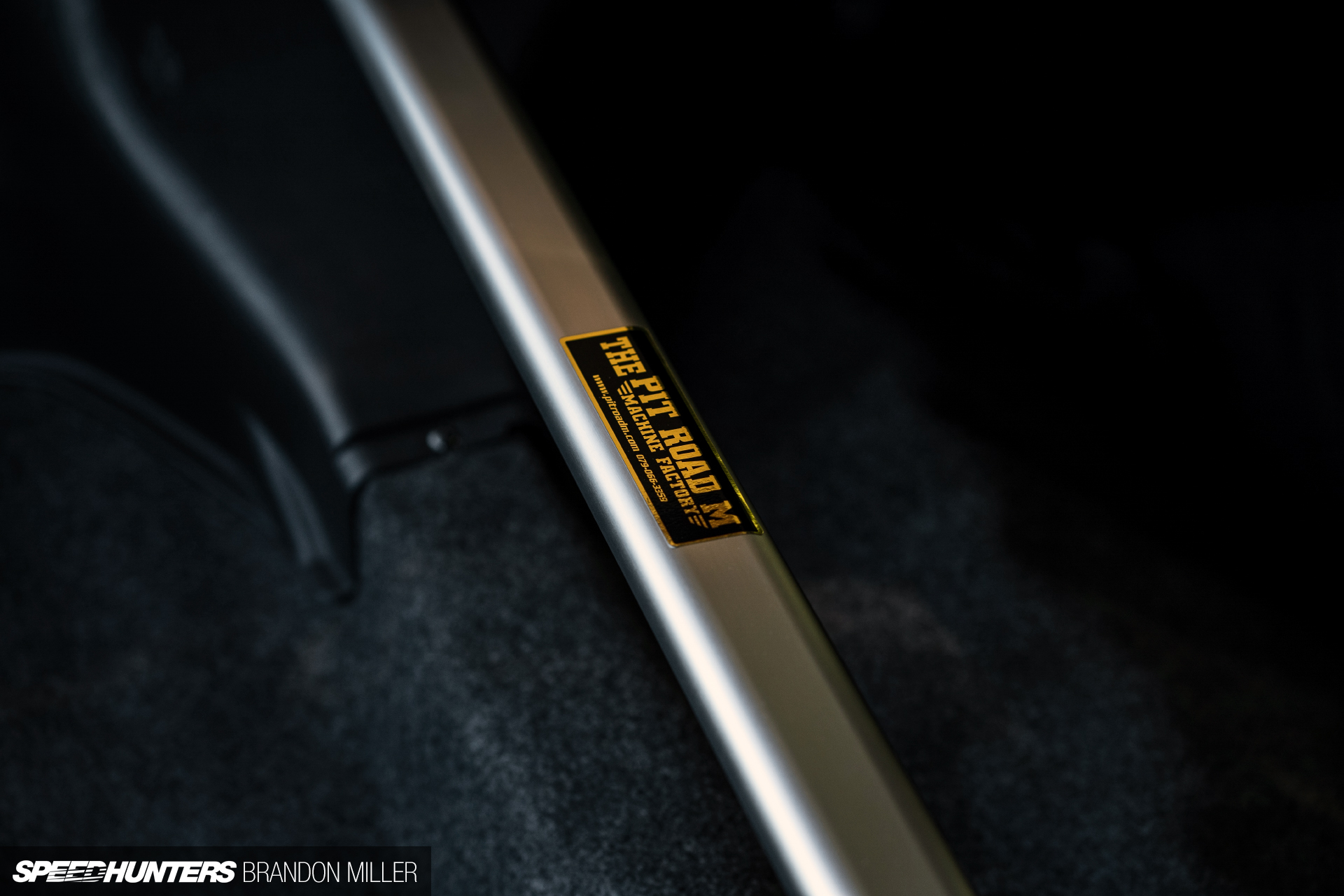
The 3000GT VR-4 is a nose-heavy car, setup by Mitsubishi to understeer at the limit. Jay revised the handling to a neutral/rear-bias with the addition of Addco front and rear sway bars, 3S Solutions end links, Tein Flex coilovers and Oohnoo steering rack bushings. Chassis stiffness is increased with non-adjustable front and rear strut bars by Pit Road M – Japan’s foremost GTO tuning specialist.


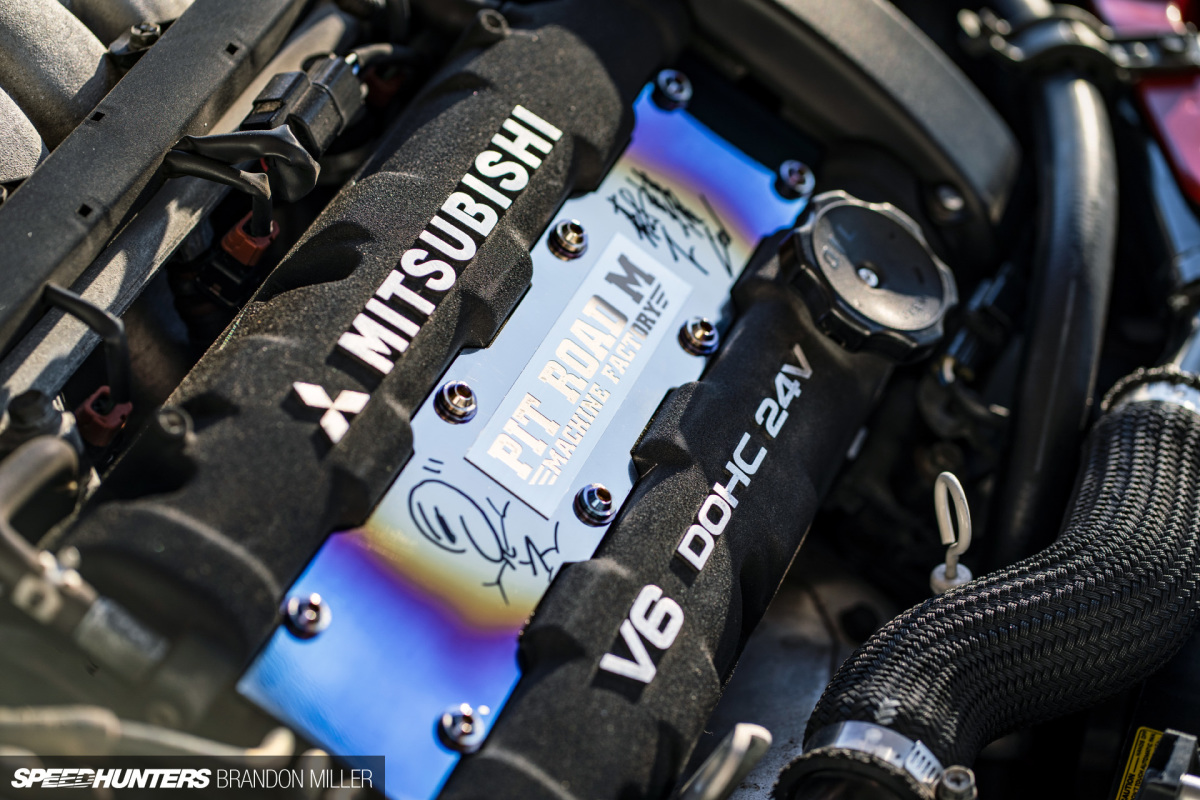

Under the hood, air is filtered through the OEM airbox by a K&N panel filter, routed by 3SX inlet pipes, compressed and heated by twin Dynamic Racing DR-750 turbos, then cooled back down by a pair of Oohnoo/Bell side-mount intercoolers. The Mitsubishi 3.0L V6 DOHC heads are ported and fitted with Supertech valves, Brian Crower 266/272 cams, and revised OEM lifters. On the lower end, torsional vibration is calmed with a Fluidampr crankshaft pulley. The Jester flash-able OEM ECU controls boost and fuel delivered by a FueLab pump. Exhaust gases are routed through gutted pre-cats, GZP down-pipe, 3SX high-flow main cat, and a Tanabe Medallion Touring cat-back system.
Road tuning has power north of 500hp to all four wheels on pump gas. On most of the hot-side parts, thermal insulation is provided by Heatshield Products. The centerpiece of the engine bay is a Pit Road M titanium spark plug cover, signed by PRM boss Bruce Morishita.


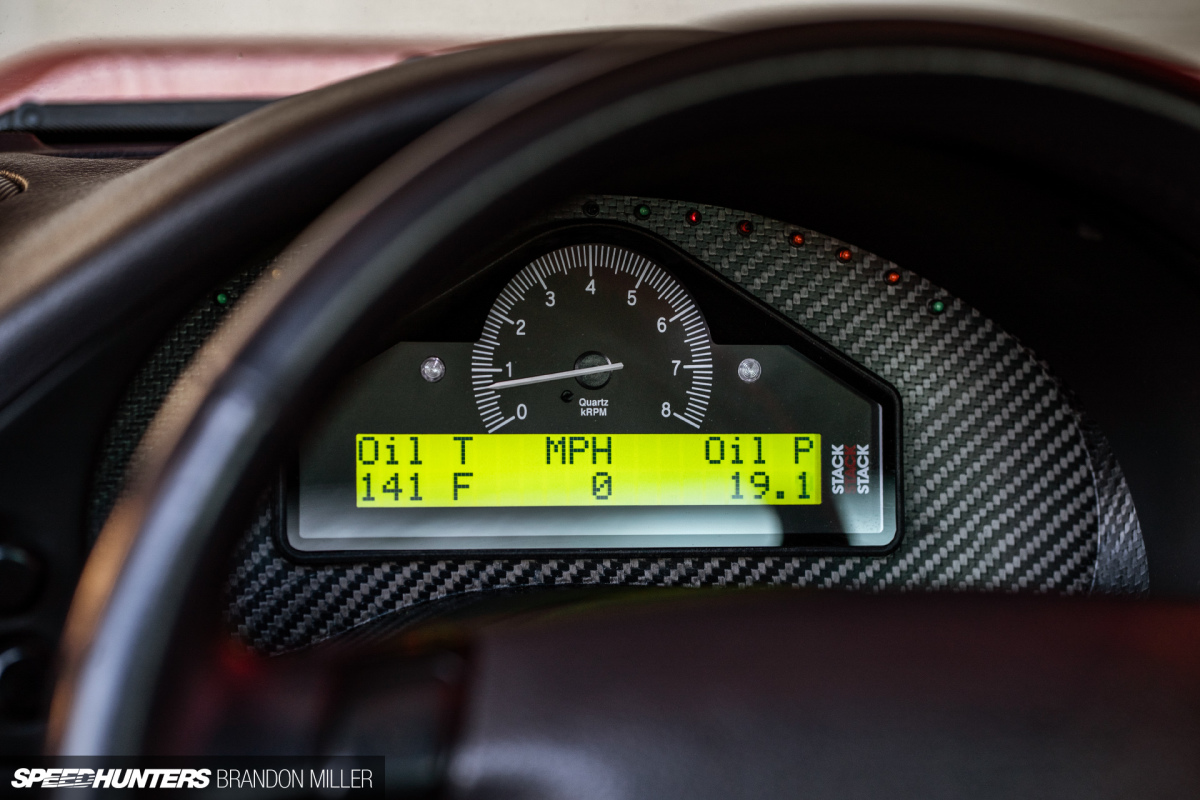
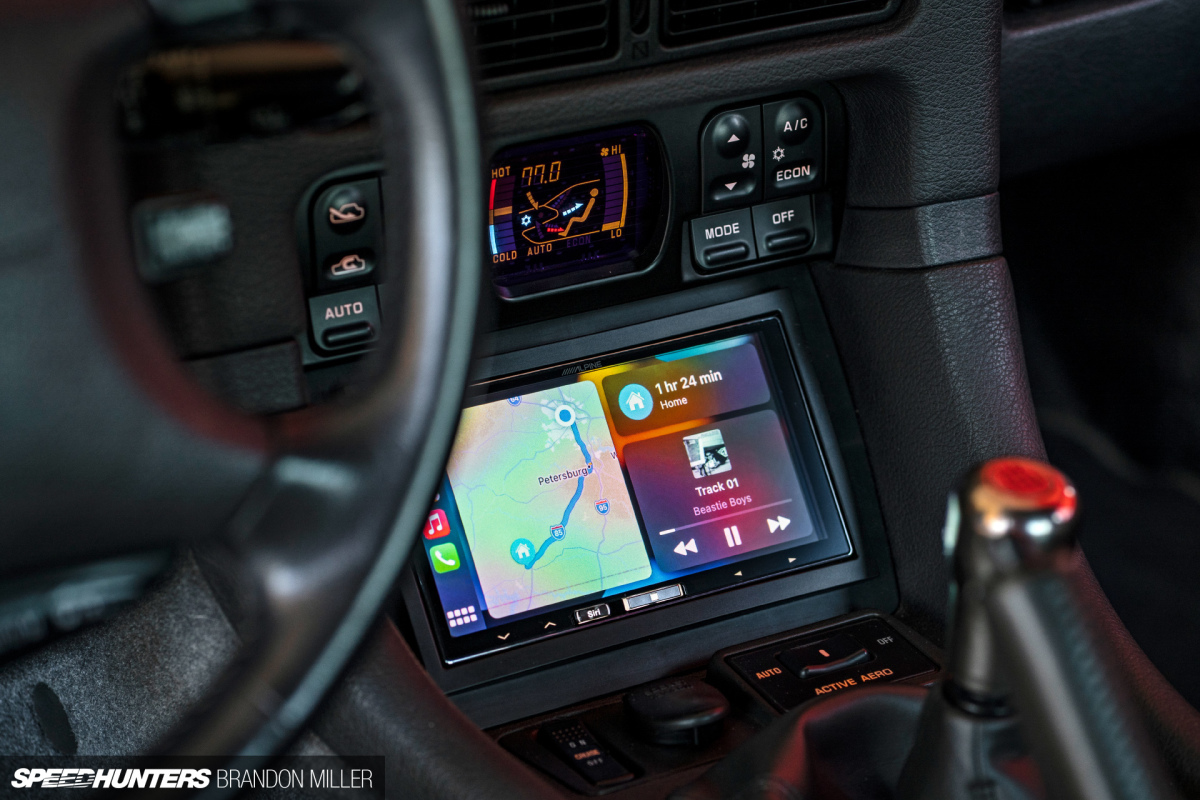
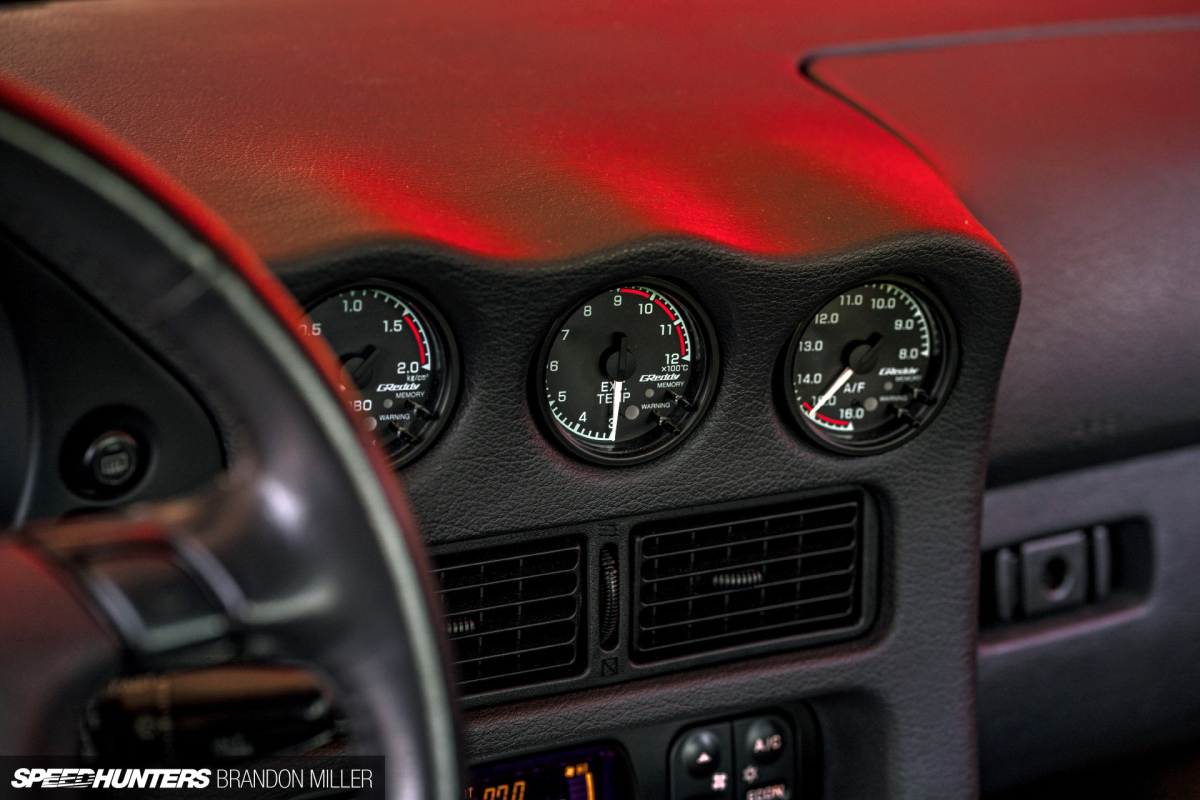

In the VR-4’s cabin, Jay installed a period-correct Stack ST8130 display cluster and a trio of Greddy 60mm electronic gauges. The carbon fiber dash bezel is a one-off and has an arc of LEDs across the top to serve OEM indication functions, while the titanium shift knob is a very rare Mitsubishi GTO MR factory option. An Alpine iLX-107 with wireless Apple CarPlay connects to Jay’s iPhone for music and navigation. Furthermore, a SWI-RC allows the OEM steering wheel radio controls to be retained and a Montero rear-view mirror provides HomeLink functionality,

The seats are a pair of long-discontinued Bride XAX-II (leather/gradation) items.


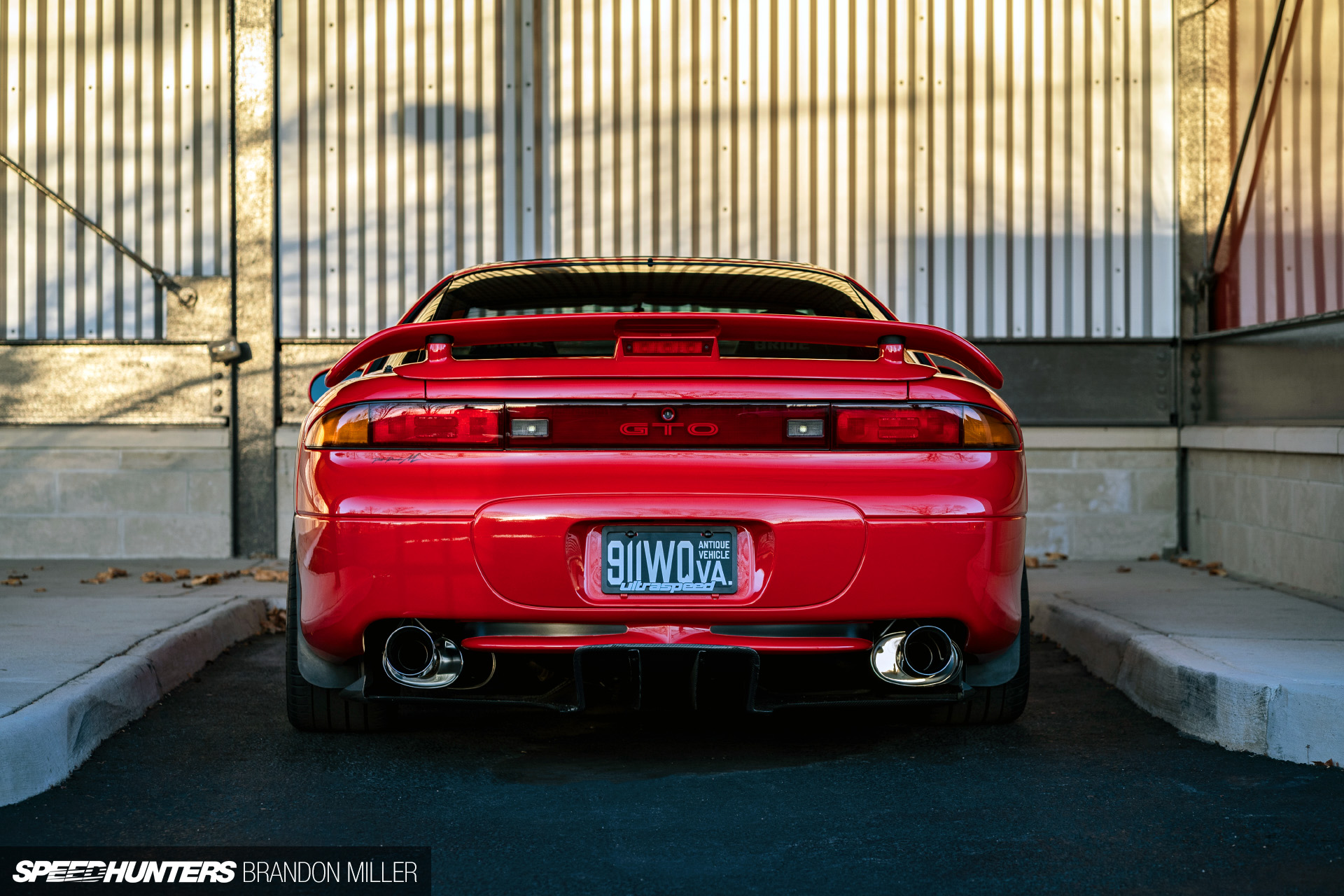
Outside, the low-mile Caracas Red single-stage paint is original and has been corrected to a mirror shine. A Bomex lip shields the front active aerodynamics. Carbon fiber accents can be found in the Retro-Spec side splitters, Retro-Spec wiper cowl, one-off roof, one-off rear brake inlets, and finally the RE Amemiya rear diffuser.
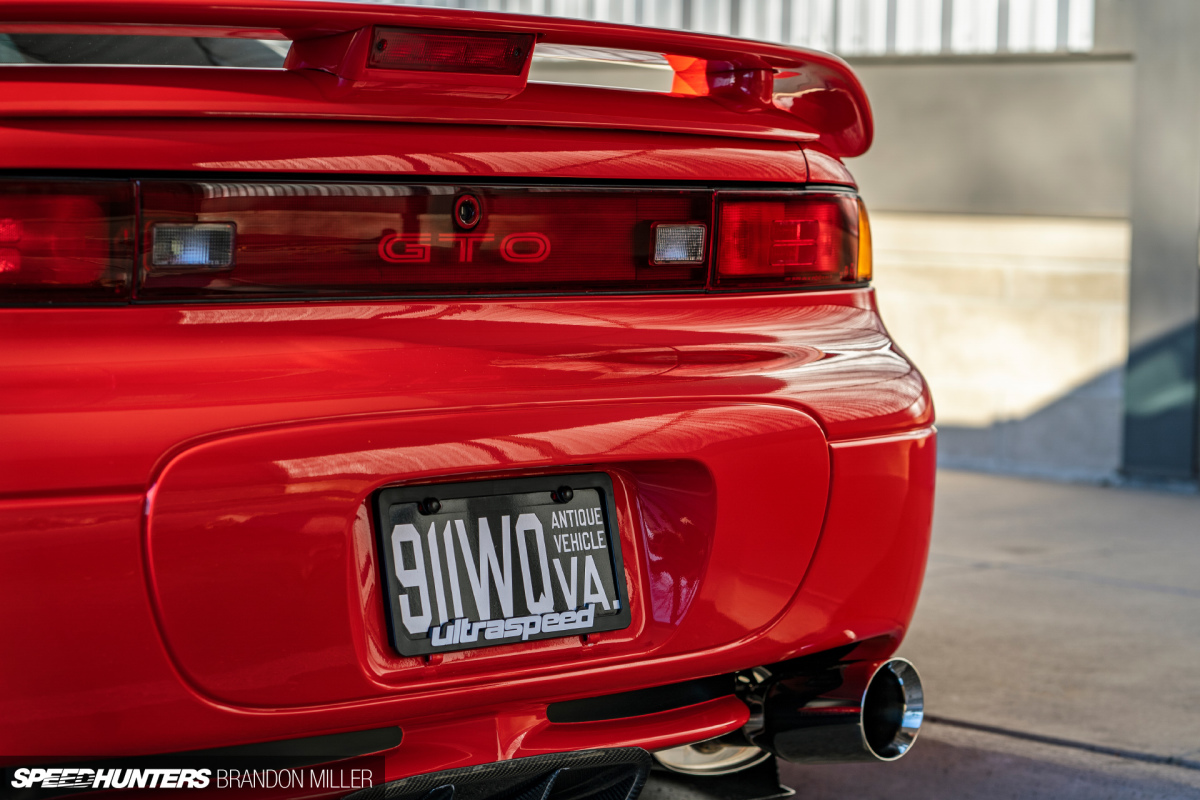
GTO taillamps have been fitted and mega-rare GTO illuminated panels sit inside the rear-quarter windows. All lighting has been converted to LED, except for the headlamps which are powered by a set of McCulloch HIDs from the early ’00s.
From the latest Hot Wheels drop to higher prices on Bring-a-Trailer, the Mitsubishi 3000GT VR-4/GTO platform has been getting some well-deserved love lately. Despite this, I imagine there will likely be some comments on how maintenance in its engine bay makes a Z32 seem like child’s play.
With the longitudinal layout being crammed with items in every square inch, it would seem that many maintenance items might require countless hours of removing neighboring components, but Jay tells me there are certain shortcuts you must know, like loosening the brake booster to replace the clutch master. OEM specialty tools are also a must with longterm ownership.
Jay mentioned that the 3000GT VR-4’s accessible cost to attain has led to a lot of shade tree mechanics working on, and subsequently destroying engines, drivelines, electrical systems etc. Reliability issues are mostly unfounded. As with any car, maintenance first, modify second. This goes extra for high-end cars that are now 25+ years old. You’re probably going to want to look at a couple of capacitors in the control modules as well…
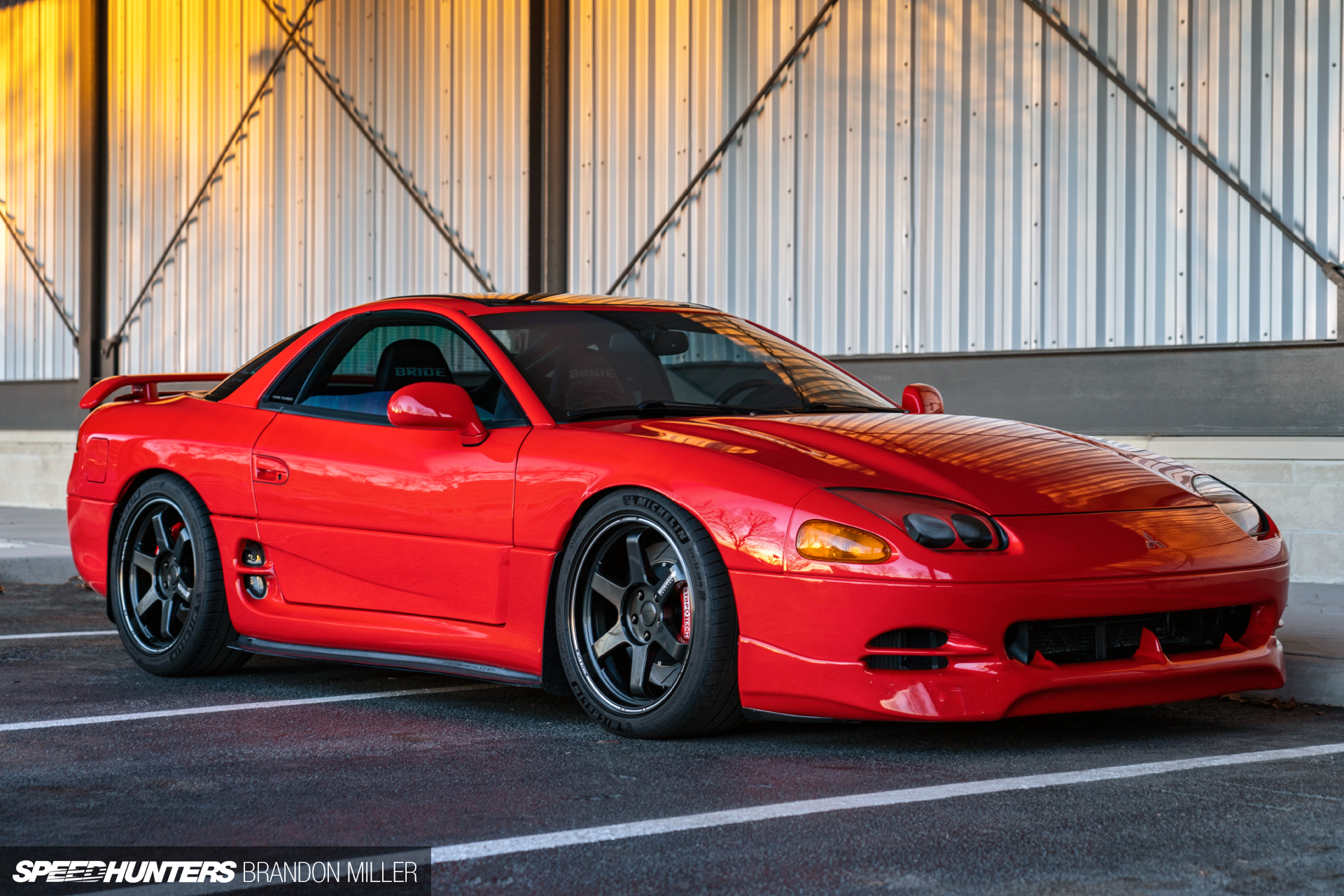
The goal for the red 3000GT VR-4 is pretty much done: Drive it. Enjoy it. Don’t go crazy with it. Let it tide you over until the silver VR-4 is built.
I guess it’s time Jay gets back to building that one, and we can’t wait to see him go bonkers with a dedicated track build. When it comes to 3000GTs, don’t call it a comeback, Jay has been here for years.
Brandon Miller
Instagram: rvae38
Jay Belknap
Instagram: JRBelknap
Jay Thanks: Jacqueline Belknap, Team Ultraspeed, Bruce Morishita, Patrick Antell, Russell Hobbs, Chris Hill, Philip Glazatov, David Mennella, Hans Ertl, Steve Burrows, Robert Prinz, Jason Zachariev, Nick Davis, Tony Kwan, Mike Chang, and Aaron Dabrowski