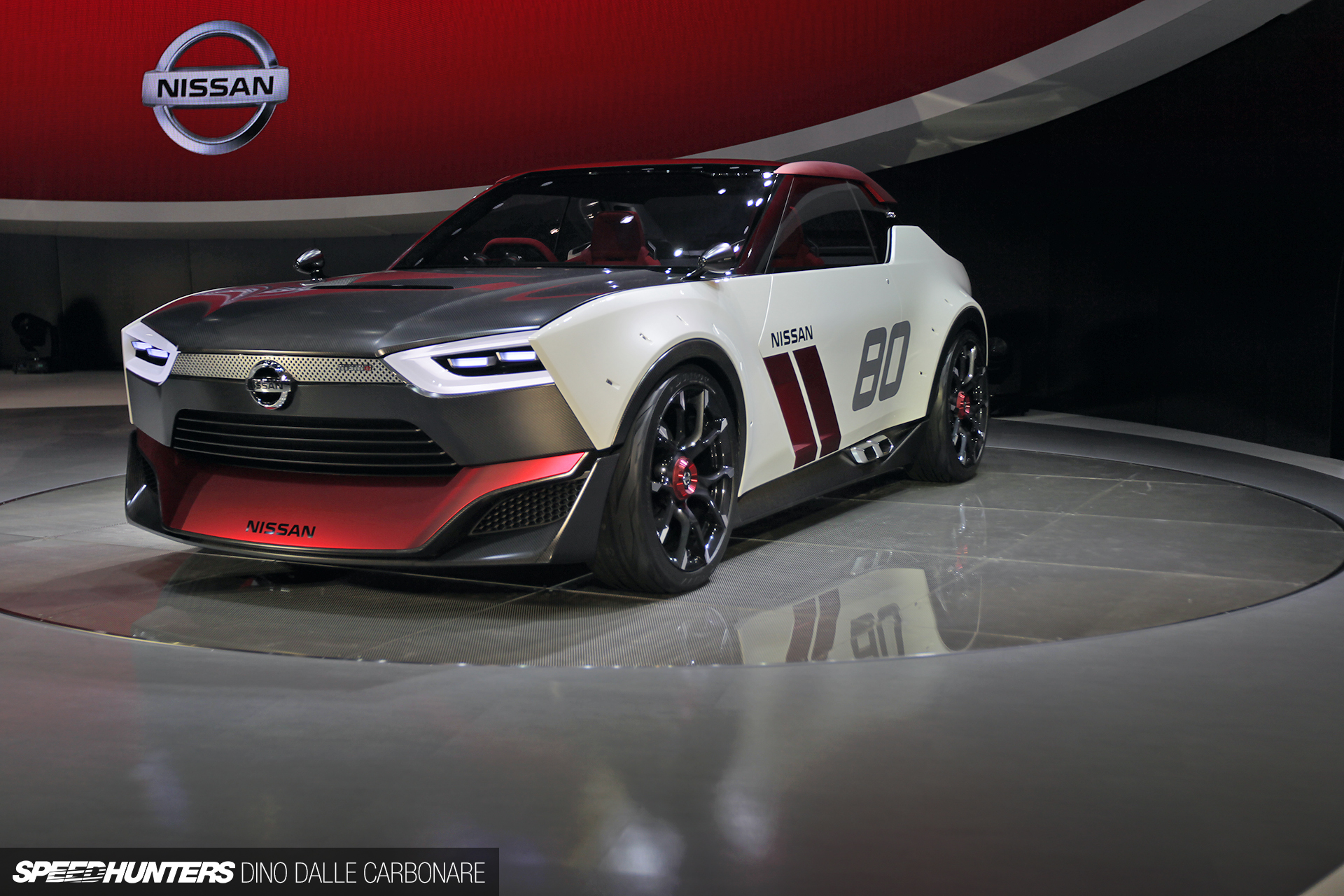
Is this Nissan’s answer to the Toyota 86? Whether or not it might be, there’s no arguing that Nissan has provided the biggest surprise at the 2013 Tokyo Motor Show. I don’t know if it was the same experience for others at the show, but the ’70s-inspired IDx Freeflow proved to be initially confusing. Like a lot of people attending the event, I was expecting to see a concept of the next generation Silvia, but instead there we were, looking at this strange, angular creation that Carlos Ghosn so proudly unveiled.
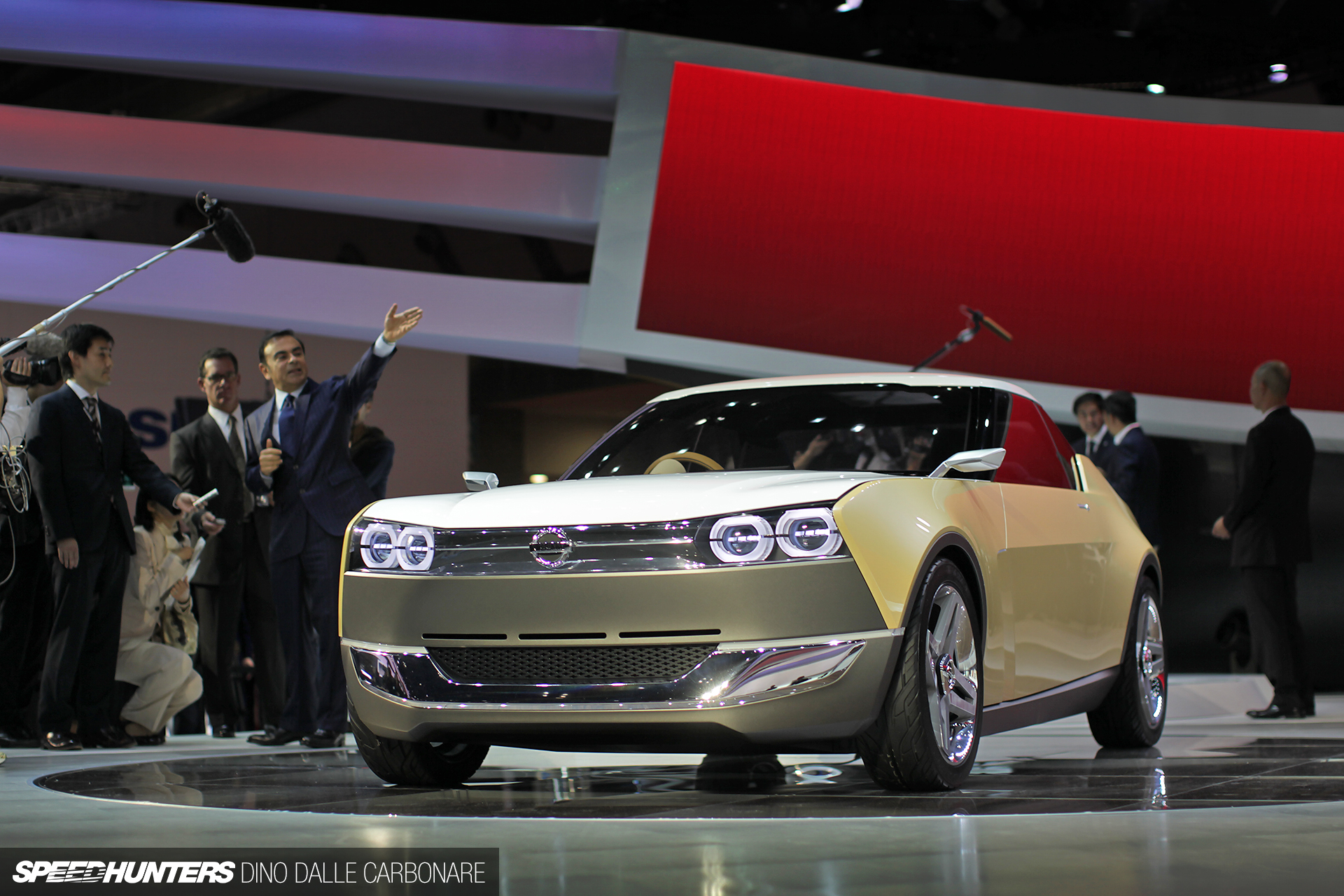
I initially didn’t know what to make of it. That square, almost flat face with differing surfaces looked alien to anything Nissan has created in the past. But that was before it rotated around on its display…
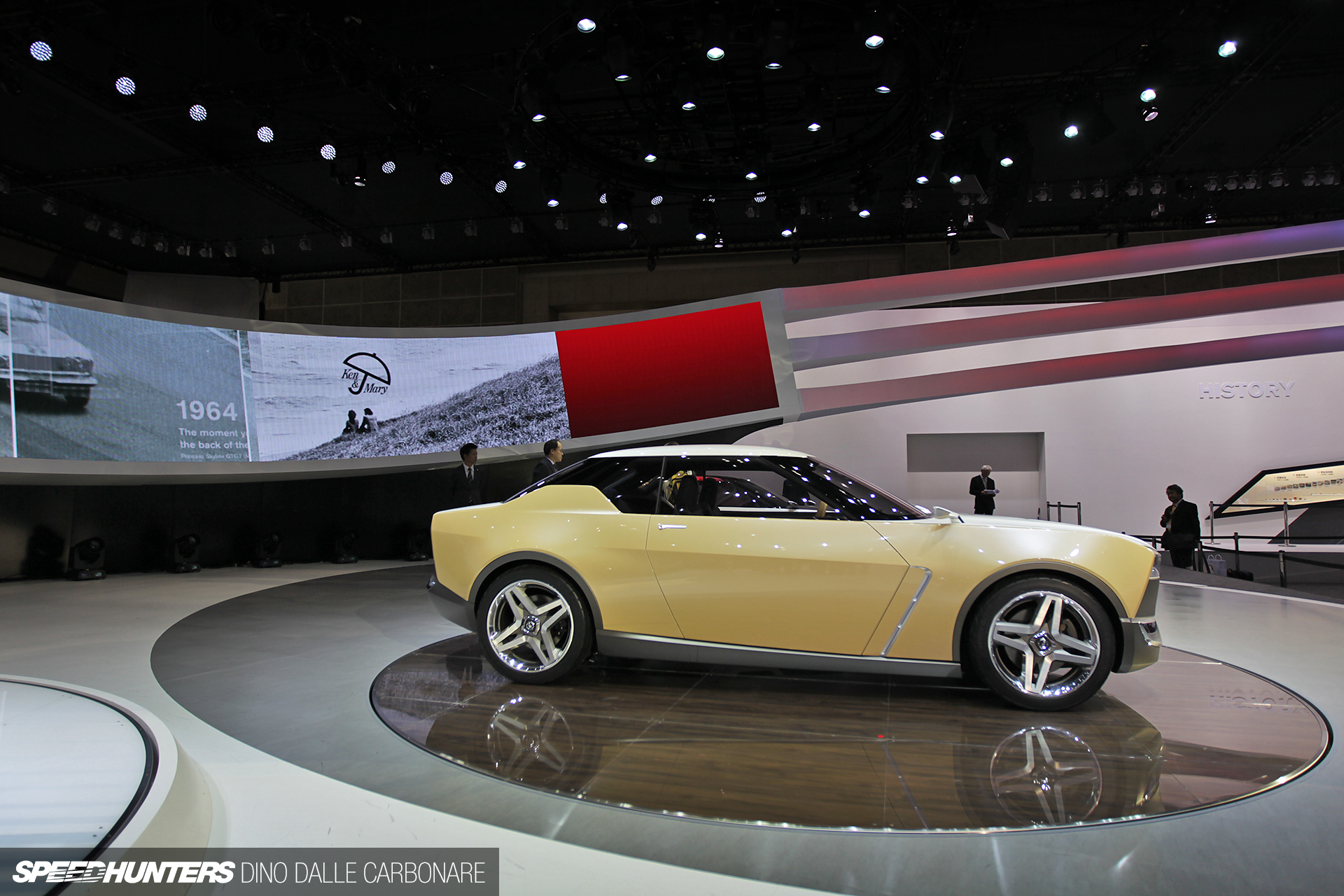
… where right at that point it made complete sense. The obvious inspiration had been the Datsun 510 – an iconic car and a favourite with enthusiasts around the world.
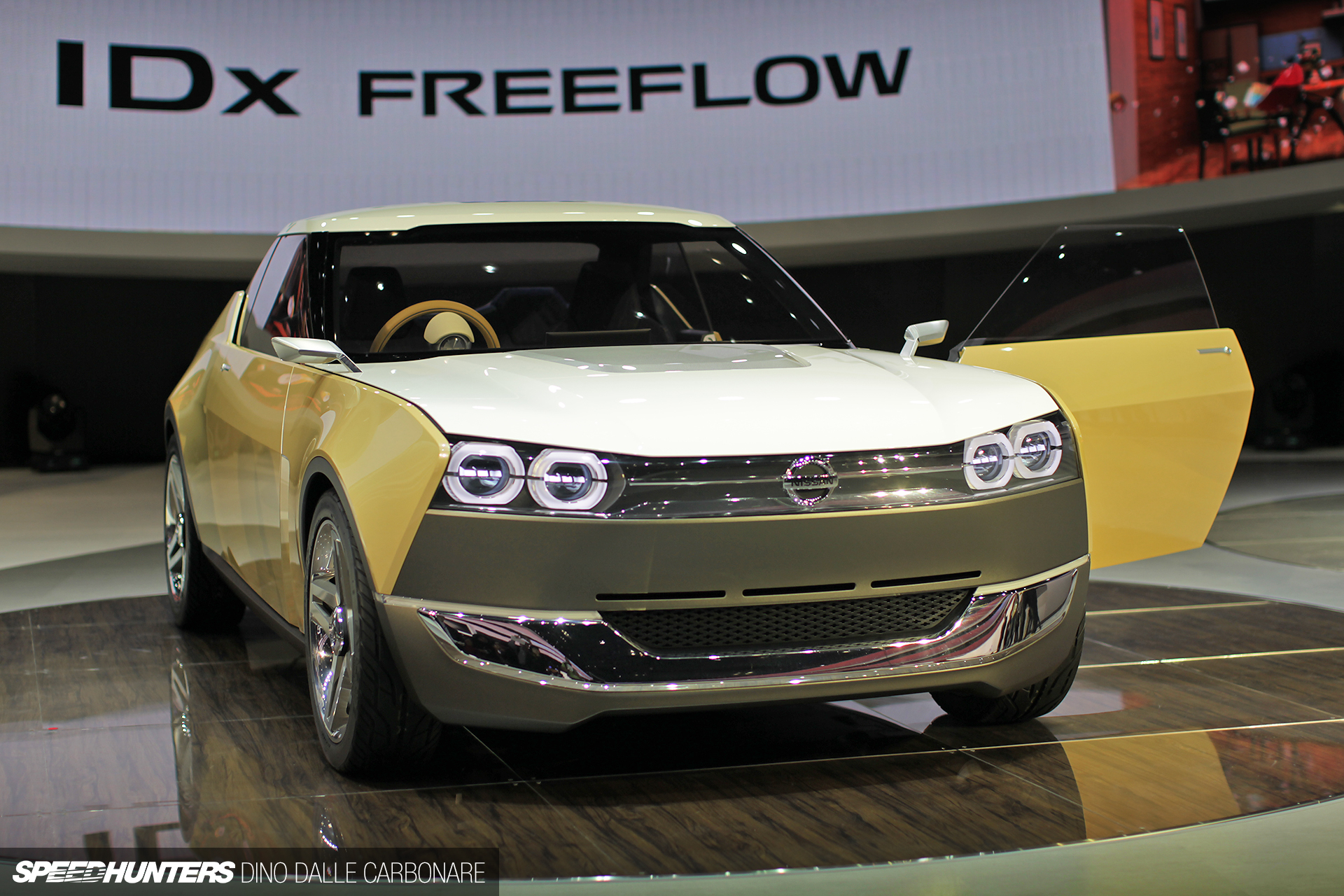
While Toyota looked to the ’80s for inspiration with its 86/GT86/FR-S, Nissan wound the clock back another decade and embraced those angular lines to create something different. And it’s precisely here where I think it got it right. Had Nissan looked at the ’80s and the Silvia, it wouldn’t have made as much of an impact, and perhaps been seen as following in Toyota’s footsteps. That said, however…
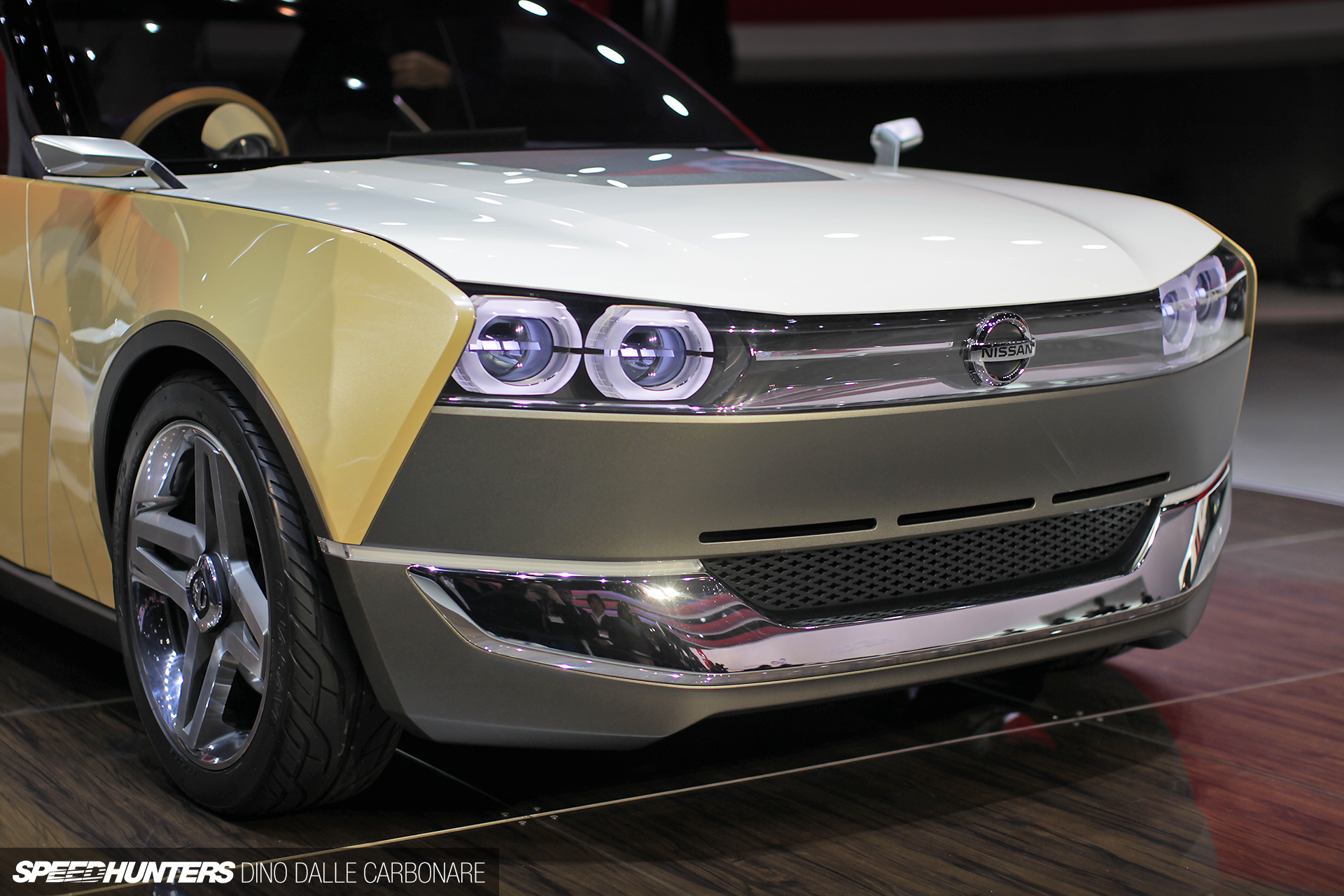
… there’s no denying that the IDx Freeflow does channel some obvious CSP311 Silvia traits in its innovative design DNA.
Nismo and the BRE influence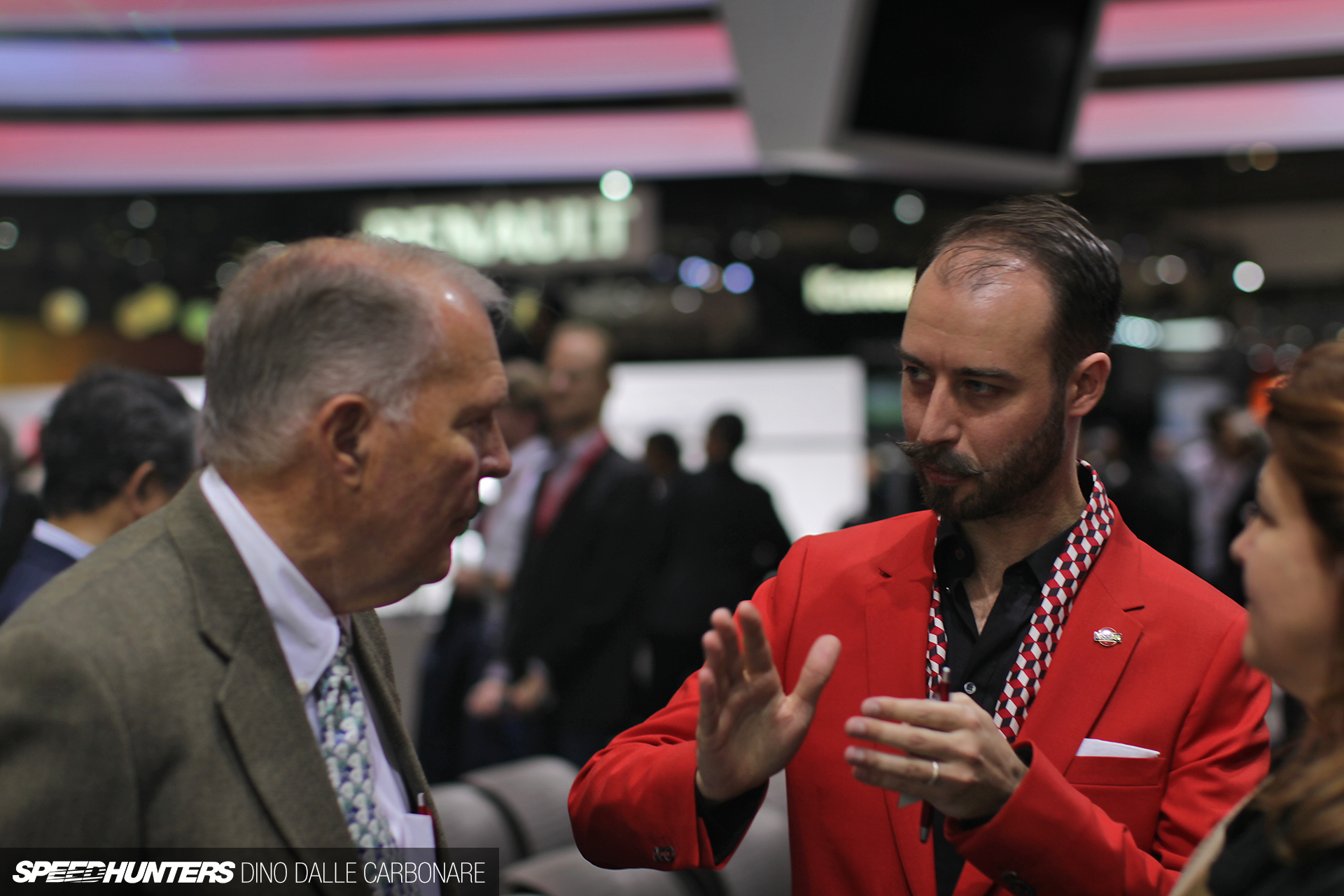
Nissan entrusted David Malcolm Beasley, working out of the automaker’s London design studio, to come up with a car that would allow the manufacturer to make a bold statement. Here is Beasley explaining the finer details of his creation to Peter Brock of Brock Racing Enterprises – a man that won two Trans Am championships in his BRE Datsun 510 back in the original car’s heyday. While the homage to the BRE wasn’t quite spelled out…
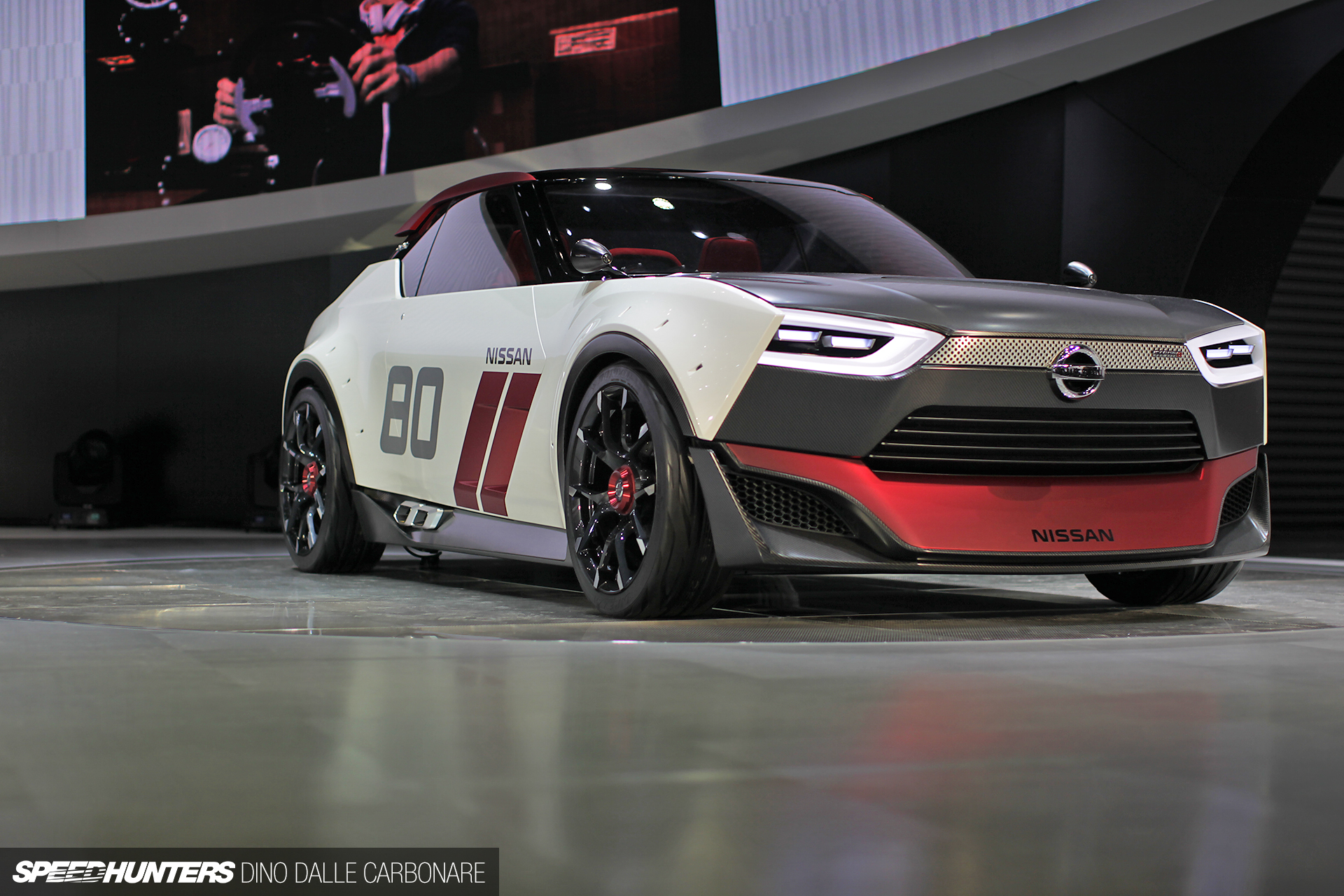
… the Nismo version of the IDx didn’t need to wear the BRE letters for those in the know to understand the obvious linkage. David stays well informed with current tuning culture around the world, and has relied on his knowledge to take the IDx and give it the Nismo treatment. Needless to say, Nissan couldn’t have picked a better designer to come up with a faithful interpretation of what enthusiasts really wanted to see. There are lots of touches that add further aggression to the design, from the different headlights and that bucktooth front spoiler…
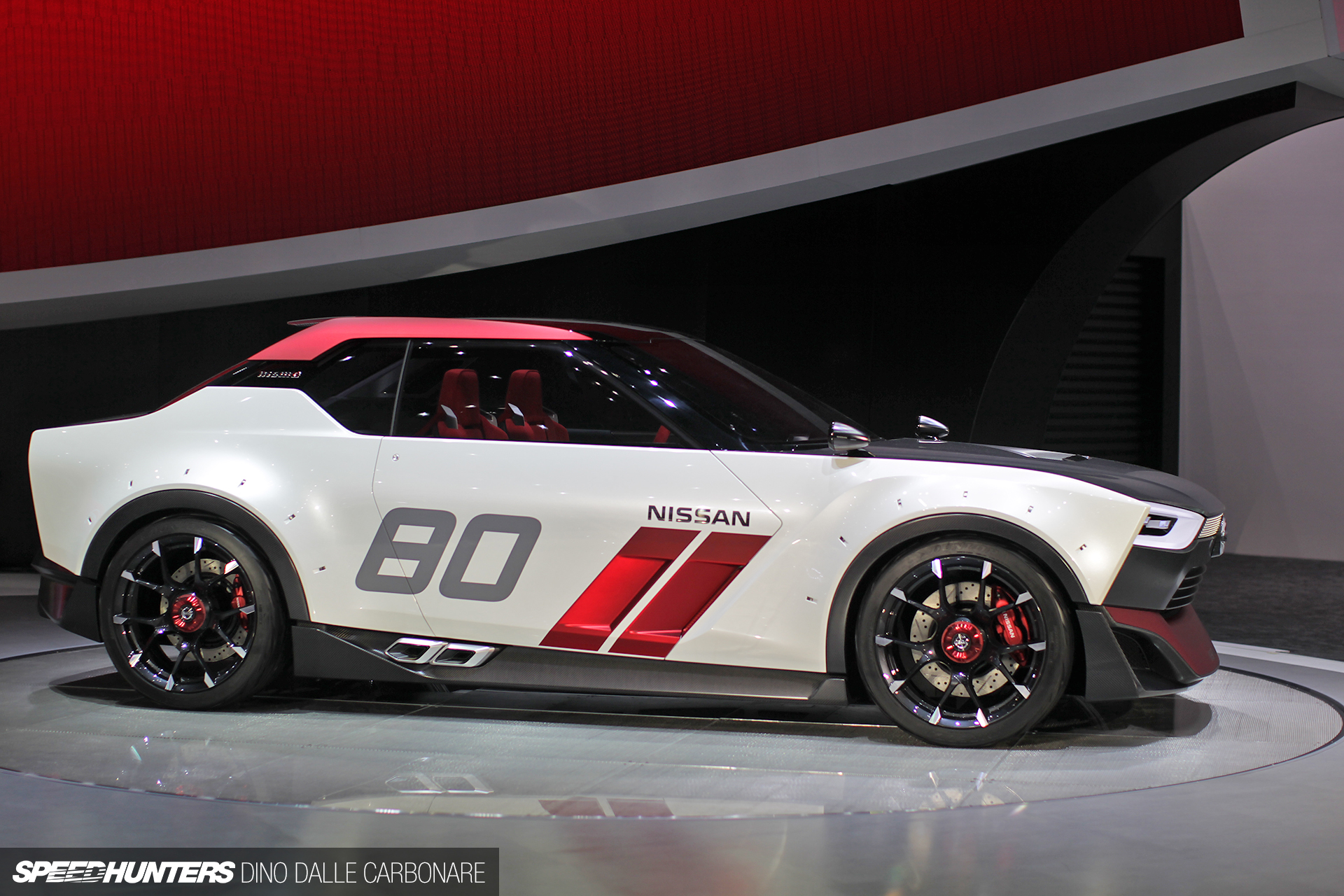
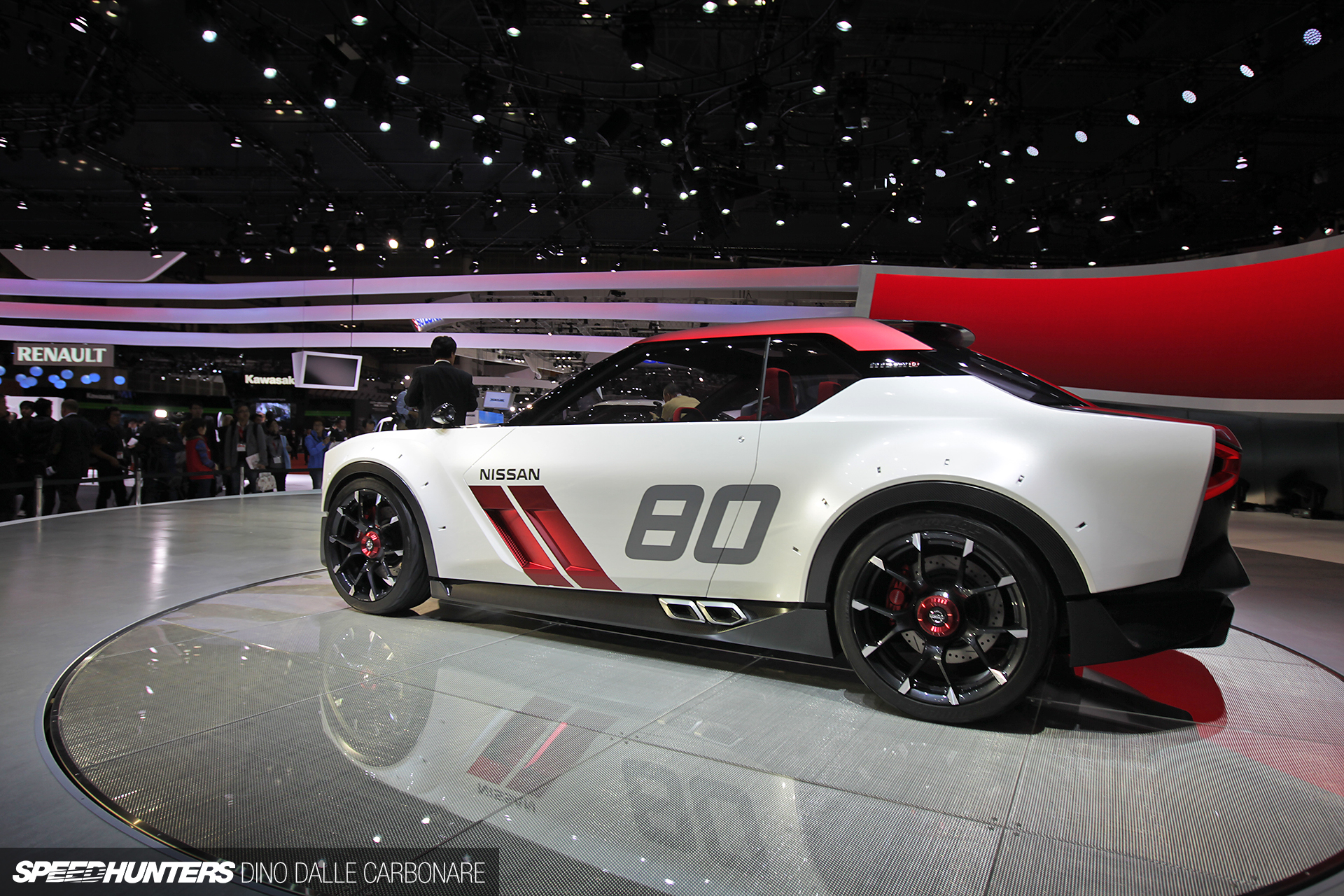
… to works-inspired pumped front and rear fenders. The red-on-white Nismo motif is carried out throughout the design, and that C-pillar detailing which truly links the car back to the 510, wears a Nissan badge.
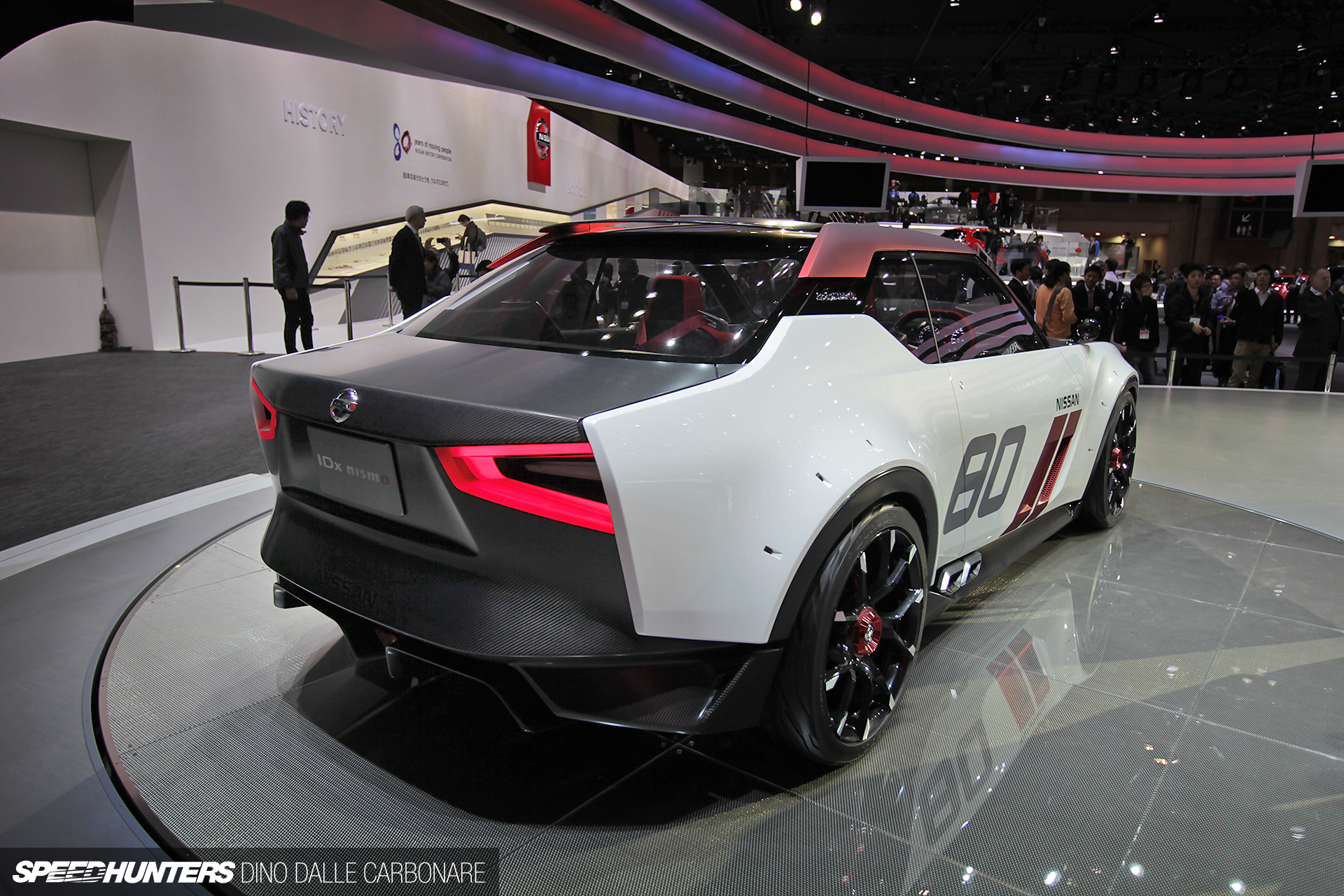
There is copious use of carbon fiber throughout, especially at the rear of the car around the taillights and the trunk.
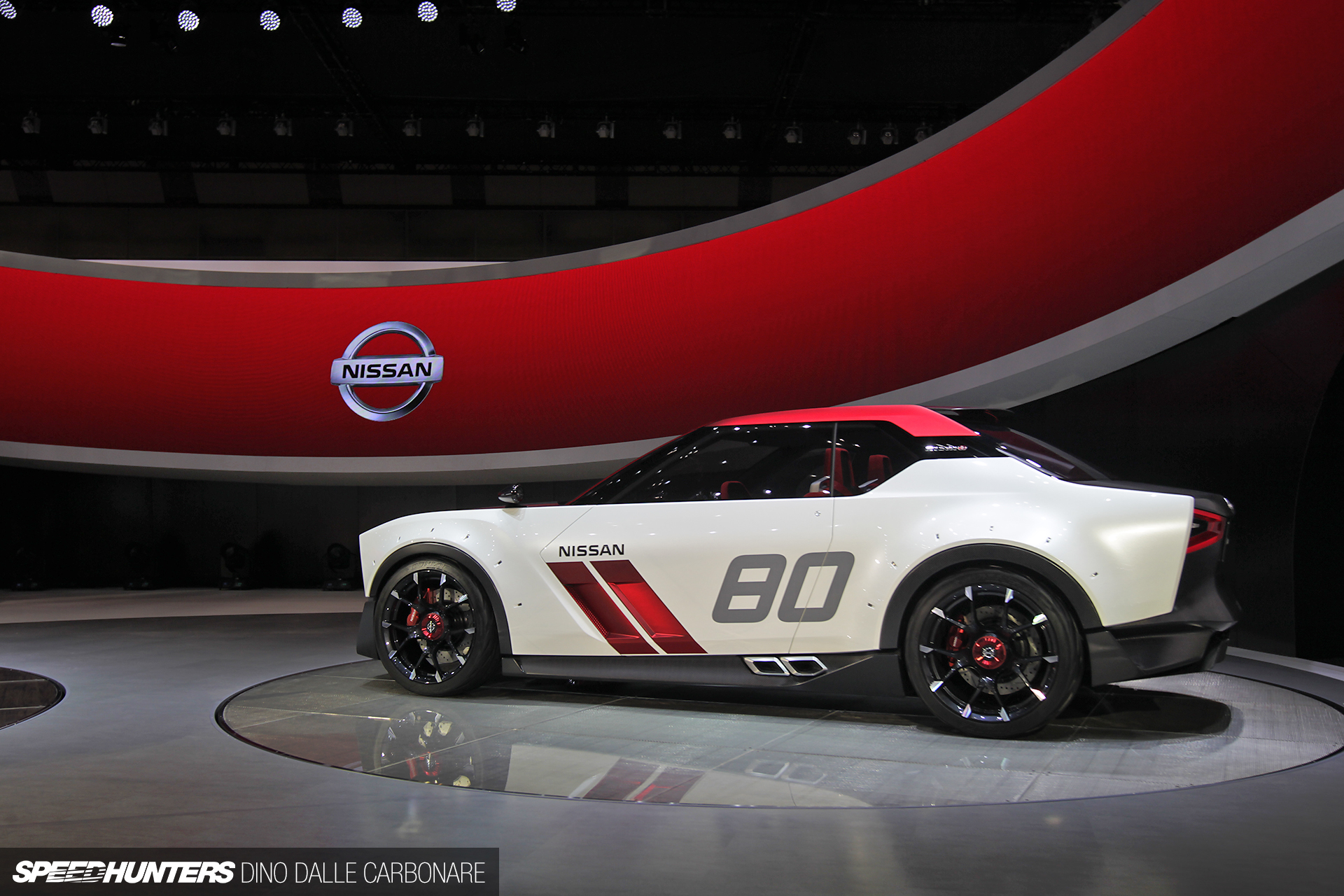
Contrary to what many assumed, both these cars are actually built on running chassis, but there is no indication what engine and transmission configuration might be used for production. We weren’t even given a straight answer to whether these cars would actually make it to production one day. Judging from the runways success these where however, it goes without saying Nissan really, really needs to make the IDx. Oh and no CVT transmissions please. Seriously – no CVTs!

Wanting to take a closer look, the cool guys at Nissan allowed me to hop up on the display…
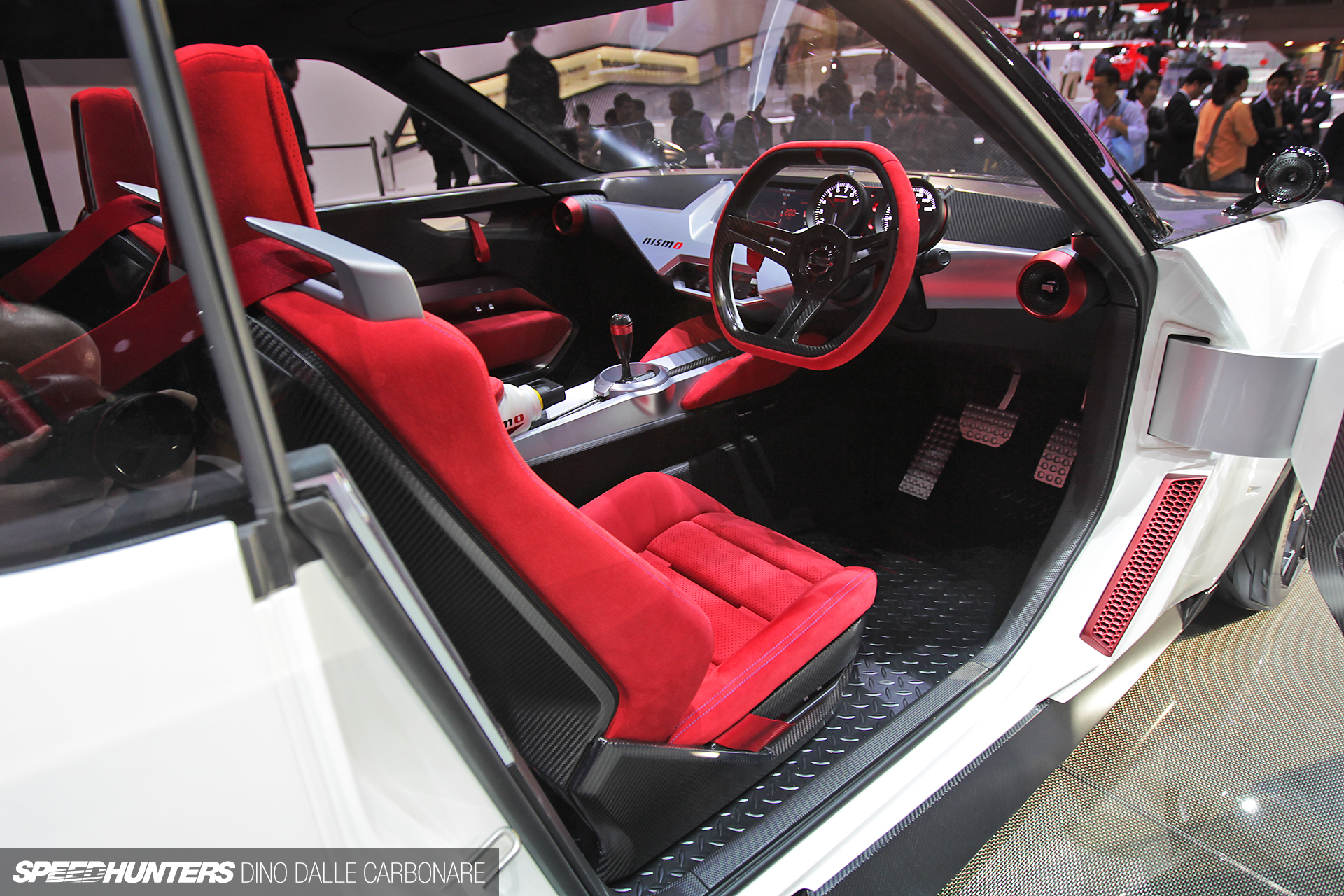
… so I could take a little nose around in the Nismo version of the car, which of course is the version we’re far more interested in.

Red suede race seats flanked by Nismo harness feature at the centre of the two-seater cabin, hinting at the intended use of the car.
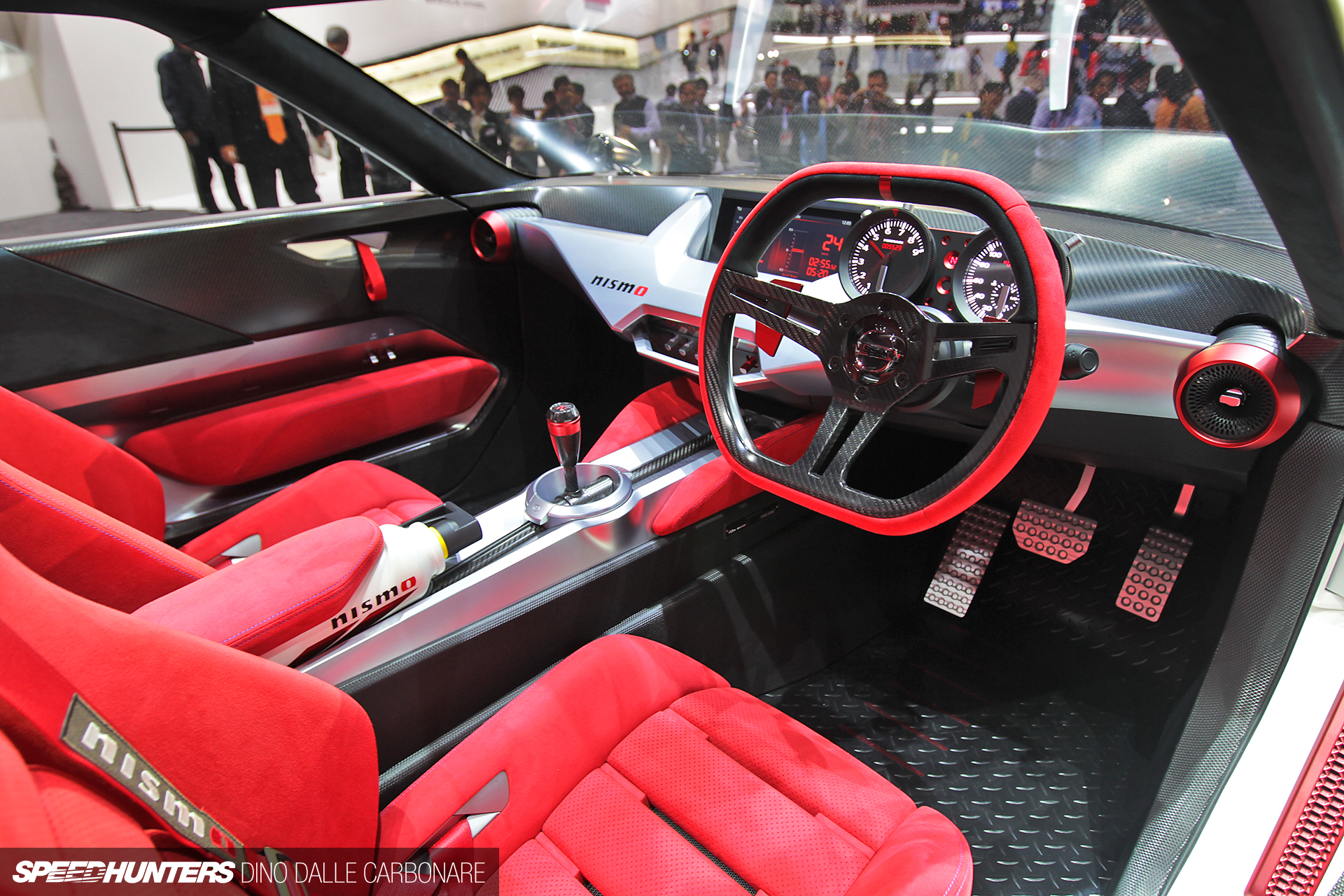
The interior layout is very simple and very driver oriented with a carbon fiber dashboard and brushed aluminium-look trim to brighten things up. The simple analogue instrumentations is combined with a GT-R-inspired Multi Function Display at the centre of the dash and minimalistic switch gear. That might be all good stuff, but the two pedal layout worries me a little. If Nissan are planning to use a dual-clutch transmission on the production version of the IDx then, good – very good. But with a lot of rumours hinting towards use of the Juke’s 1.6-litre turbo four-banger, then the obvious concerns for the CVT transmission continue to mount.
I really don’t want to see Nissan coming up with such a cool and forward-thinking design, and then spoil it all with a continuously variable transmission. Hopefully its engineers know that such a transmission has absolutely no place in a car like this. Oh, and of course we want a traditional manual too. Luckily the Juke does have a manual gearbox option, so there is no reason that couldn’t be used in this car.

So there you have it. Nissan showed us it has taken notice of the 86 and its runaway success and is planning to do something about it – and in a very unique way that is getting lots of thumbs up from enthusiasts around the world. The IDx and its Nismo counterpart was such a showstopper it sort of stole some of the attention away from the 2015 GT-R and the Nismo version which managed to set another record at the Nürbugring with a 7:08 lap of the famous Nordschleife. Fear not however, I’ll be driving the Nismo GT-R next week so you can expect to see much more on that then!
Dino Dalle Carbonare
Instagram: speedhunters_dino
dino@speedhunters.com