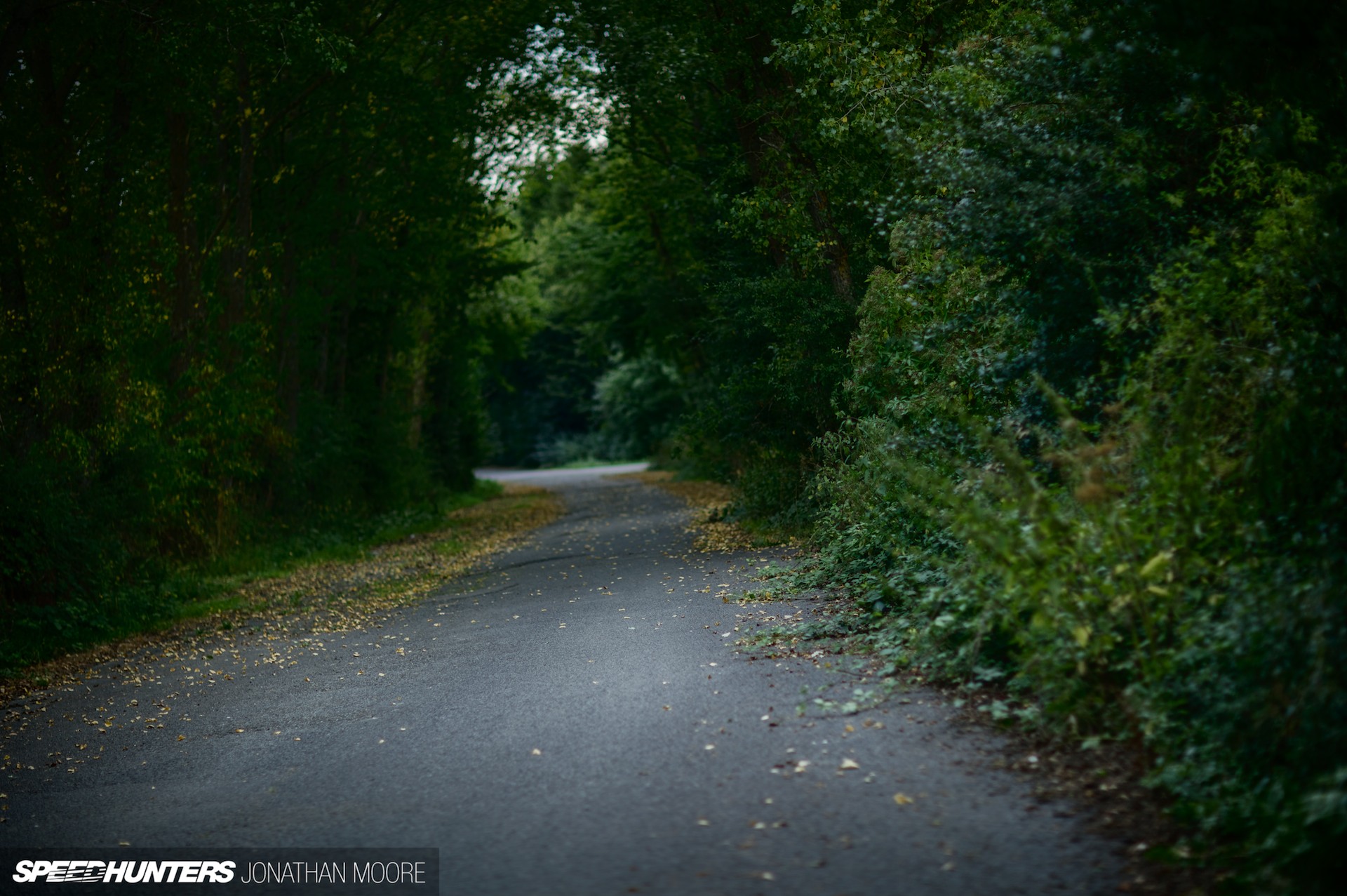
This was the place considered the safer option in this neck of the German woods. The layout that was only five miles long and had ‘just’ 25 corners. The track that, in relative terms, drivers preferred risking themselves on compared to the alternative to the north: the Nordschleife. This is the Südschleife: the abandoned, emasculated ghost track that clings onto life in the valley shadow of its famous sibling. Safer was a subjective term: the shorter, lower altitude section of the Nürburgring was just as much a challenge – and judging from contemporary reports just as dangerous. But then in the old days everyone was seemingly certifiable anyway…
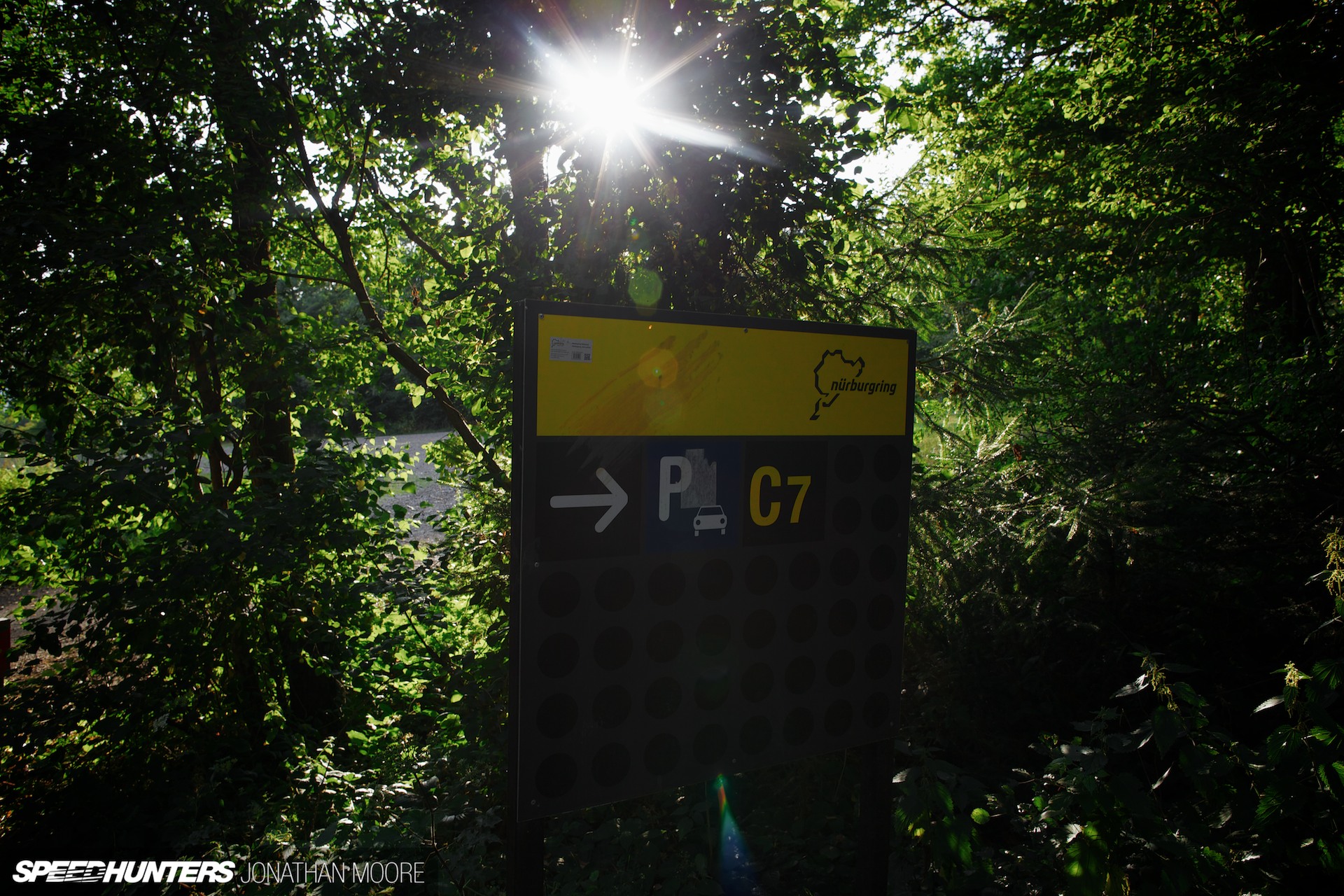
If the North Loop went through and over the forest, the Southen Loop was the forest.
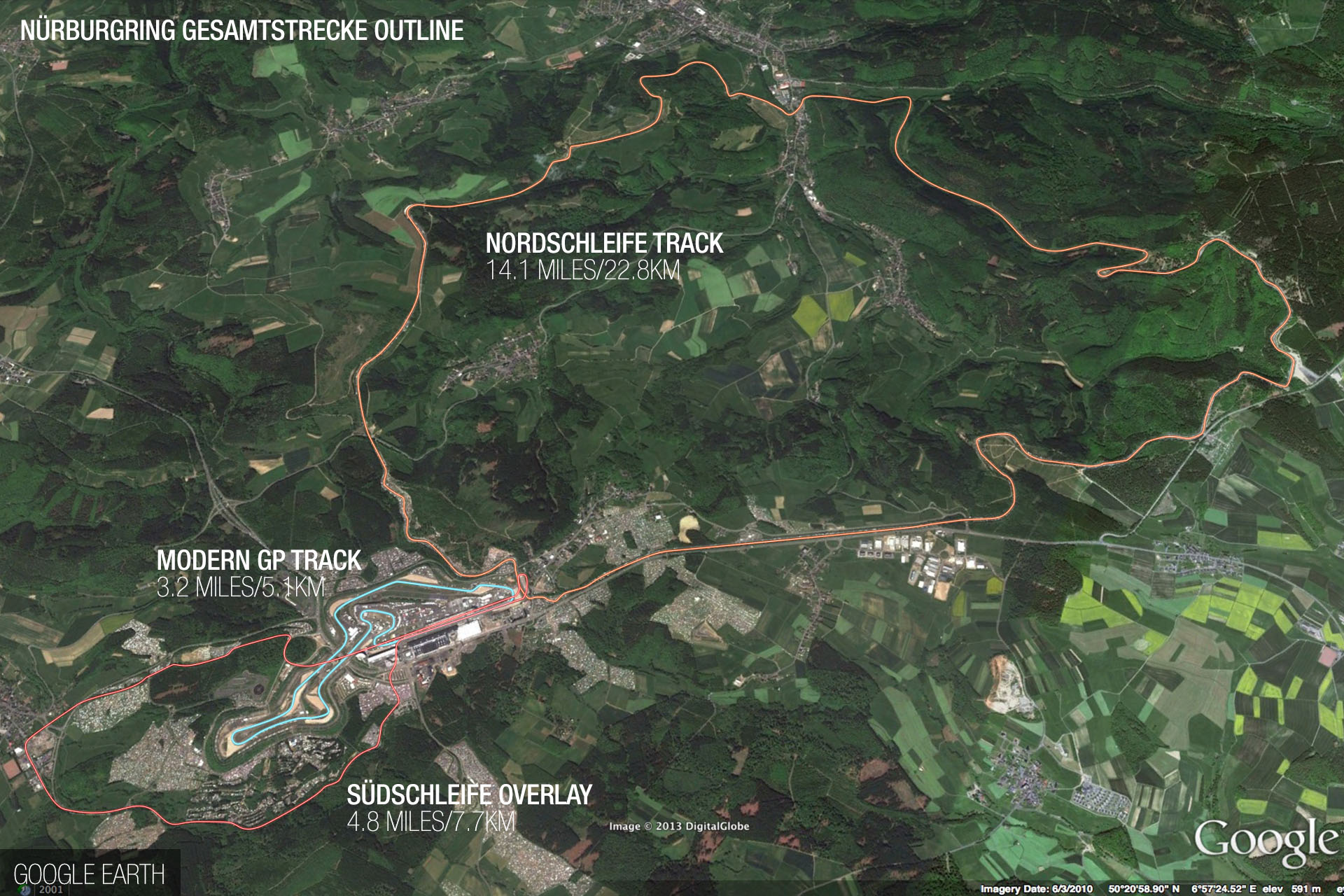
In general, the Südschleife’s layout reminds me of the old Rouen-Les-Essarts track in northern France – but on steroids. It has the same kind of dual personality: long, fast downhill swoops mirrored by an even quicker, longer run back uphill. But without in any way belittling the fearsome French track, the Südschleife was a different beast altogether.
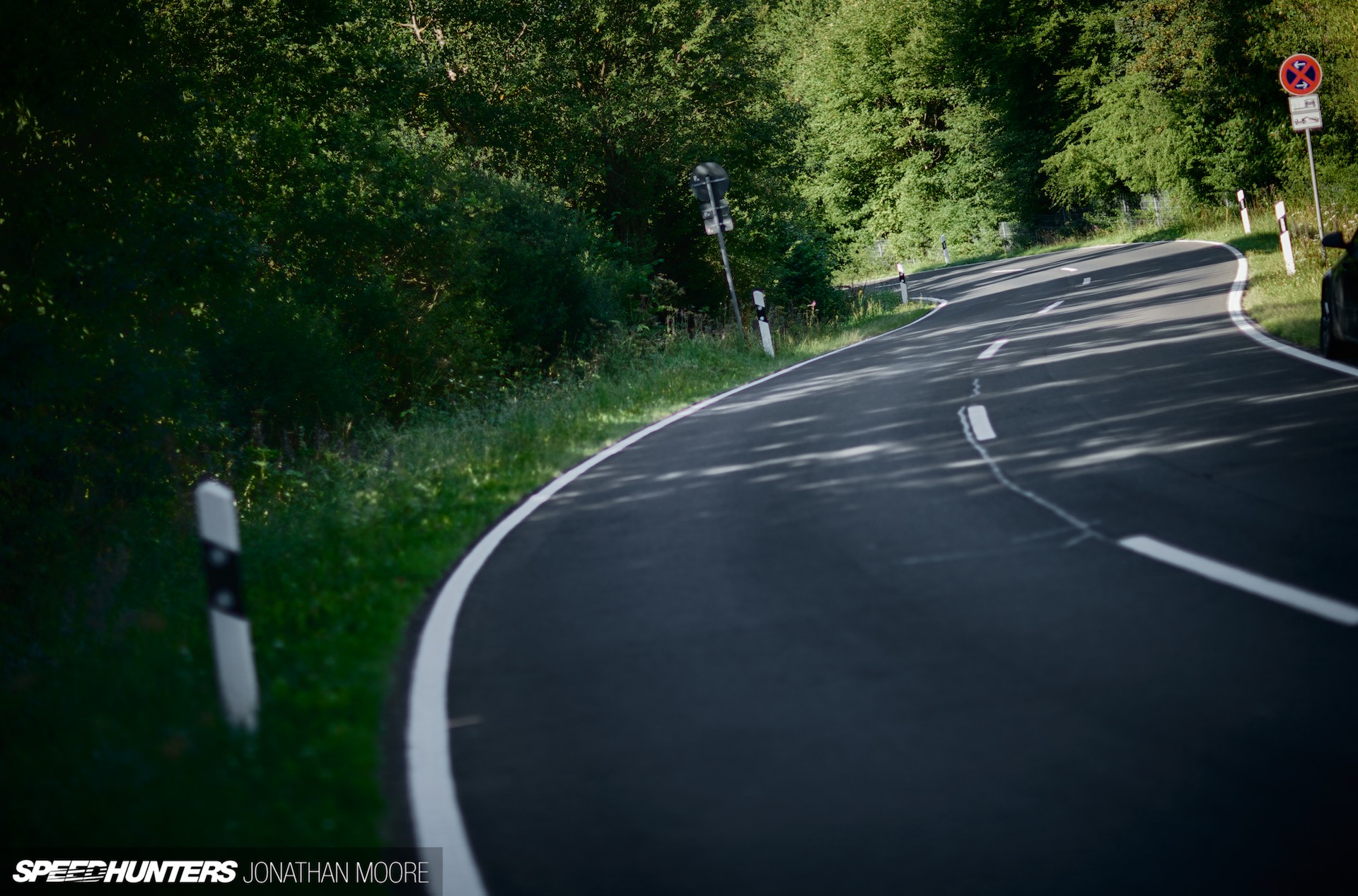
Like its better known brother, the Südschleife was all about speed. There was none of the layout-by-numbers, ‘Ooh, must have a heavy braking area to promote overtaking’ of today’s tracks, just a sinuous game of high-speed thread the needle. Like the Nordschleife that was built at the same time, almost 90 years ago, the Südschleife had no barriers, no run-off, no short-cuts, no second chances. You were on the track or you were in the trees.
Little remains of the Südschleife, photographs are rare and video rarer still. This video from towards the end of the track’s life gives a montage of the layout, unfortunately missing out some of the most impressive corners. But it shows the insanity of throwing buzzbomb midget Formula Vees at a track like the Südschleife. It’s no wonder Germany was producing hardy drivers.
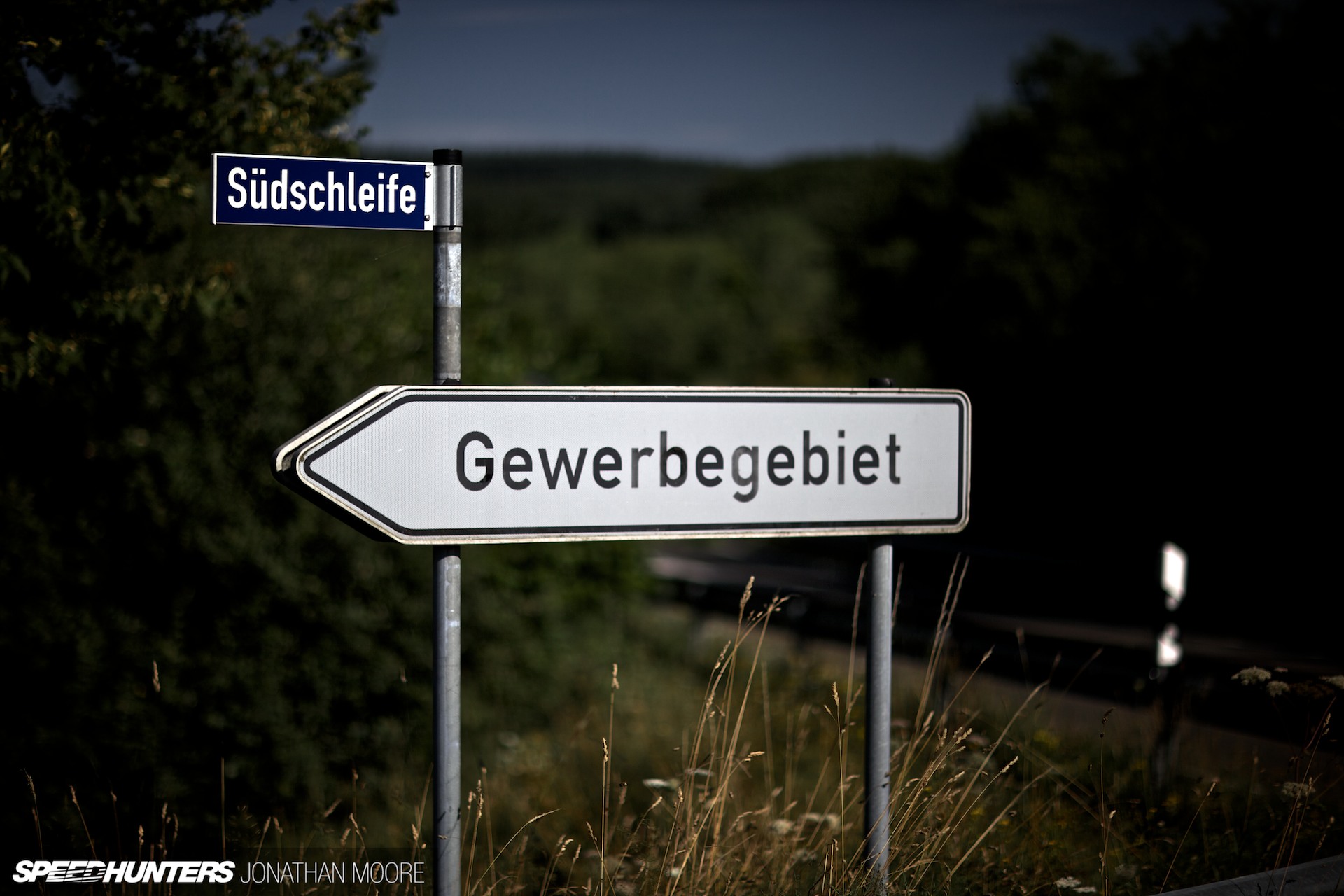
I went on a mission to track down the remains of the Southern Loop during August’s Oldtimer Grand Prix at the Nürburgring: the perfect background to go history hunting. Finding the Südschleife is not as straightforward as it might sound. ‘Remains’ is the catch here, as so much of the track was erased during the construction of the modern Grand Prix track between 1982 and ’84.

It was a sad end to something that had stood in tandem with the Nordschleife since they were both built as part of the Nürburgring project back in 1927. Now all that’s left is the trace outline of two thirds of the track and blowing leaves over crumbling asphalt.

The economic depression that hung over Europe had caused mass unemployment, and Germany was suffering the legacy of its defeat in the First World War. In 1925, 14.1 million Reichmarks were put into a project in the Eifel Mountains to create a new racing track, following on from the creation of Avus in 1921. Work started with the picking out of the southern section of the track, the Südschleife, out of the forest canopy and construction of the accompanying Nordschliefe was completed in 1927.
The southern section was aimed at national racing and testing, with the longer northern section for international competitions. But the two layouts could also be run as one enormous combined circuit, the Gesamtstrecke, at a length of 17.5 miles – which they were for the first ever race meeting and for much of the early years of the Nürburgring. It was by far the longest purpose-built racing track ever built.
The Südschleife endured a tough life though, always playing second fiddle to the Other Circuit. The track was badly damaged during the Second World War by Allied tanks stationed in the area, and though rebuilt before the North Loop in the aftermath (with French government money no less) was used inconsistently as the years rolled on. Weather played an even bigger role in racing on the Südschleife than on the Nordschleife: its lower elevation meant that it was even more prone to being draped in mist, and many of the images from the Südschleife’s history show cars emerging from clouds of fog and rain.

It was infrequently used for competition in comparison to the more open and impressive North Loop, though when it was pressed into service it made its mark, like the original Eifelrennen events. There was also the epic 84-hour Marathon De La Route, run across the Gesamtstrecke.
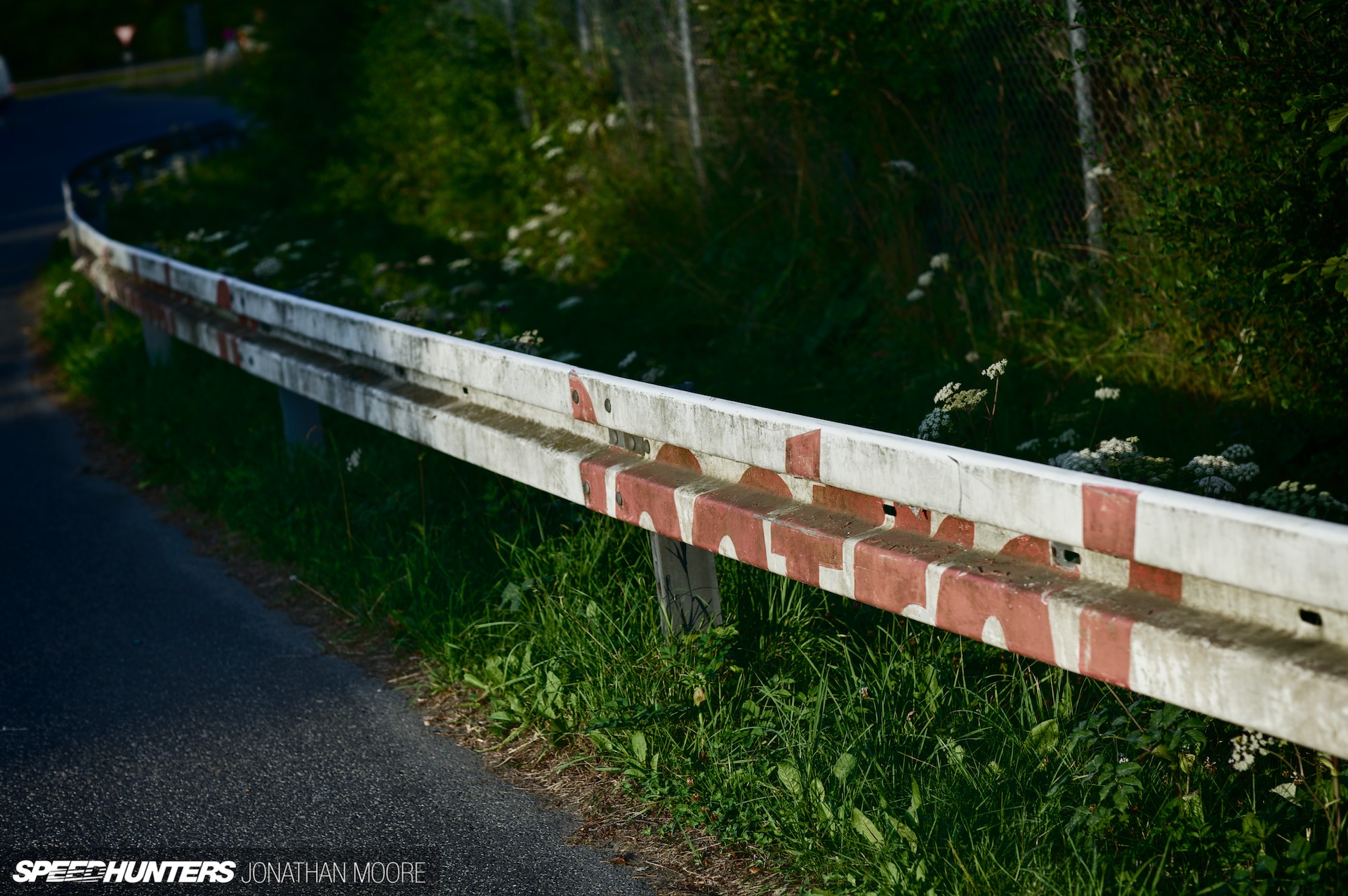
After a bright decade of increased use during the 1960s, by 1970 races were back down to a trickle (there was time for one last Marathon De La Route), and the final ever race on the Südschleife took place in 1971, a Formula 3 event. A phase of major rebuilding then took place – but only on the Nordschleife. Bits of old armco even ended up lining the remains of Scharfer Kopf. You can see some amazing contemporary pictures of what the Northern Loop looked like here. On this second set of pictures, I love the fact that the Döttinger Höhe straight is bordered on either see by manicured hedges. Just the things to stop an out of control car.
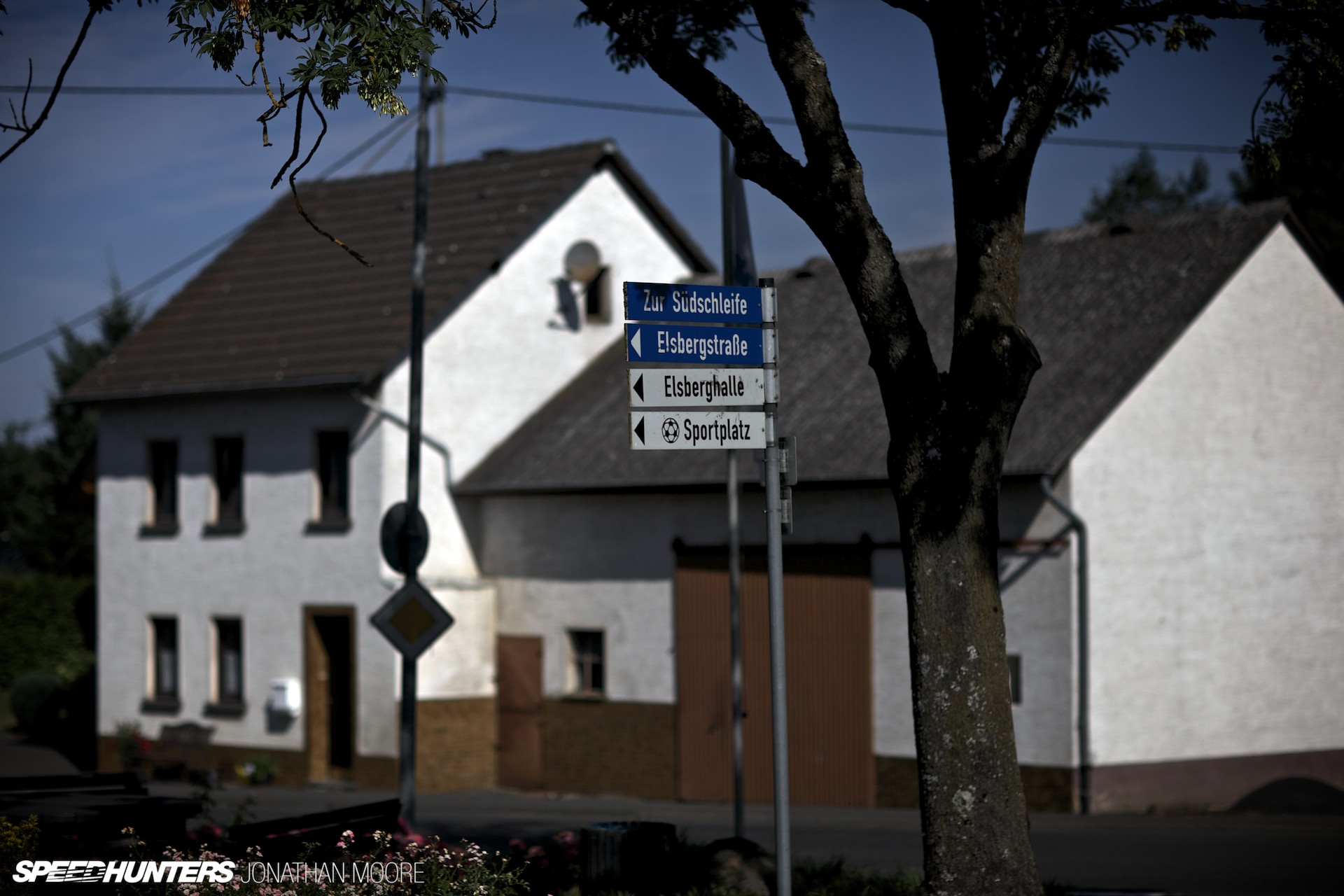
The Südschliefe remained open until 1975 as part of the tourist route – yes, just like the Nordschleife today, the Southern Loop was also an open, public road available for Touristenfahrten. But then, with Lauda’s accident fresh in the mind and safety finally beginning to overtake optimism, time was called on the Südschleife and the bulldozers moved in.
On the hunt for the Südschleife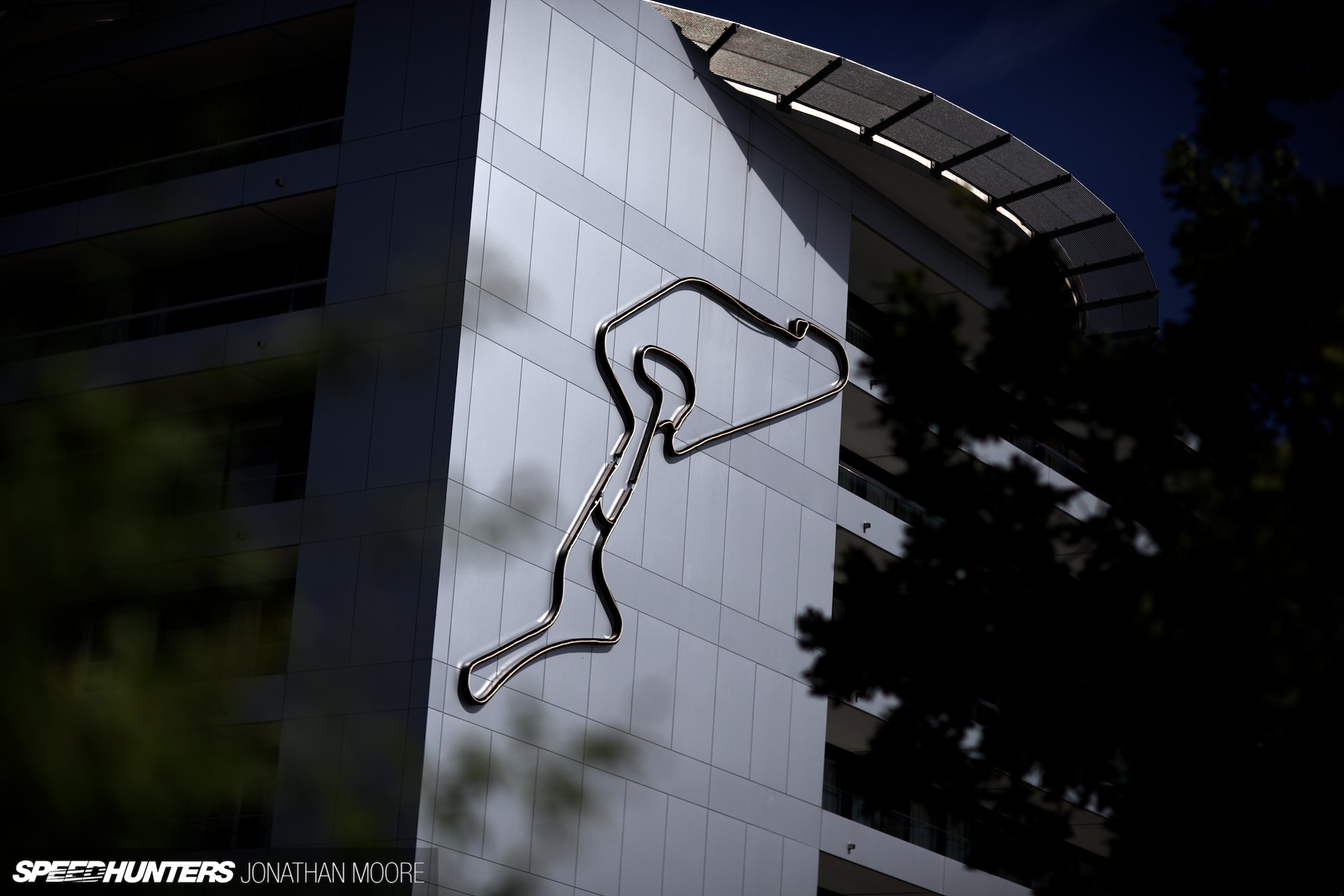
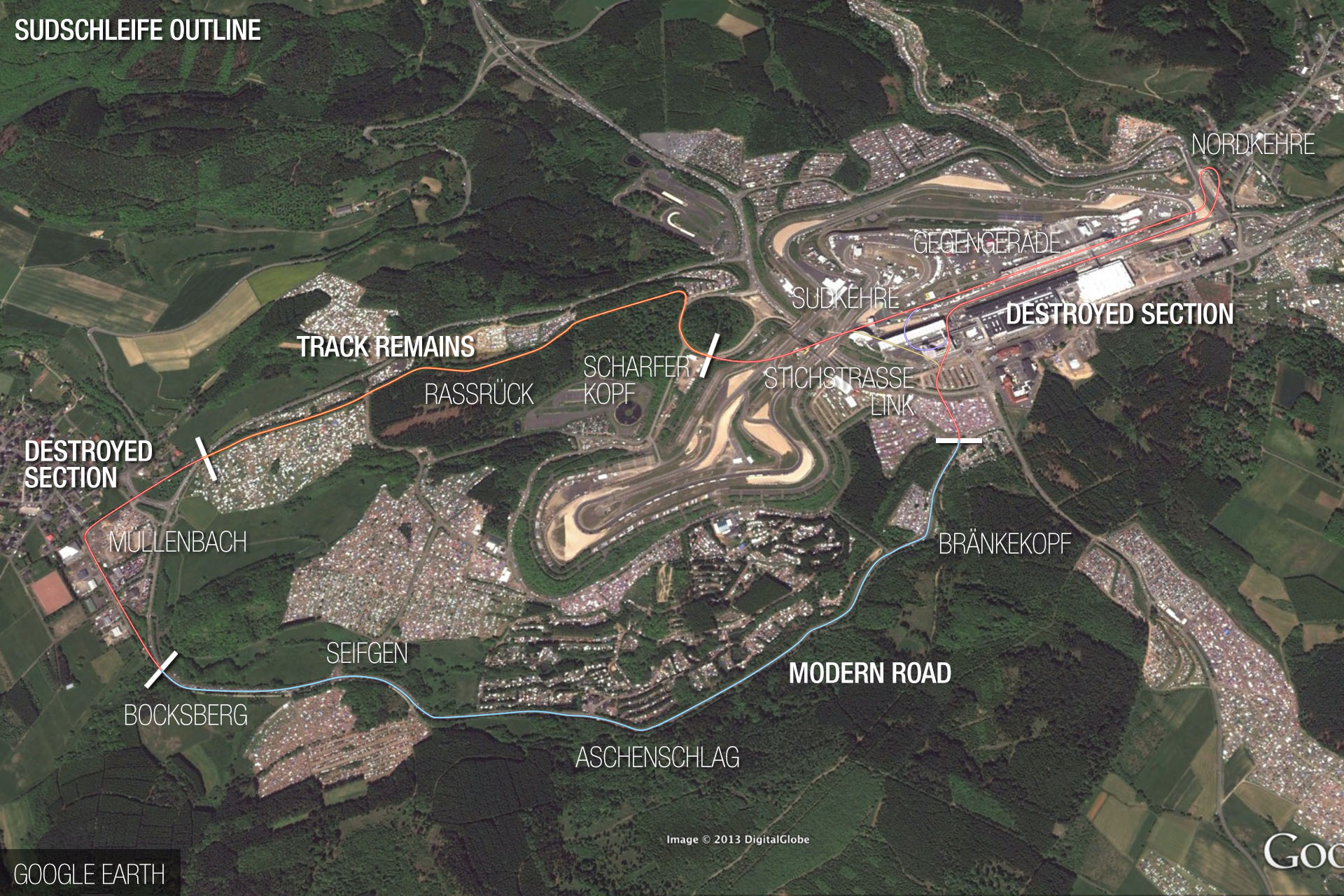
Tracing the route of the Südschleife from beginning to end starts off with disappointment, but ends in joy. The original starting straight, the 20m wide and 500m long Start und Ziel Platz, was erased when work on the modern GP track started in 1982. Now there’s the new start-finish straight, its accompanying line of grandstands and ‘that’ line of Ring Boulevard buildings. Also gone is the daunting opening flurry of corners, which were hit after the cars ducked down under a bridge carrying the local road. Nowadays it’s the inverse, with the local road running under the track.
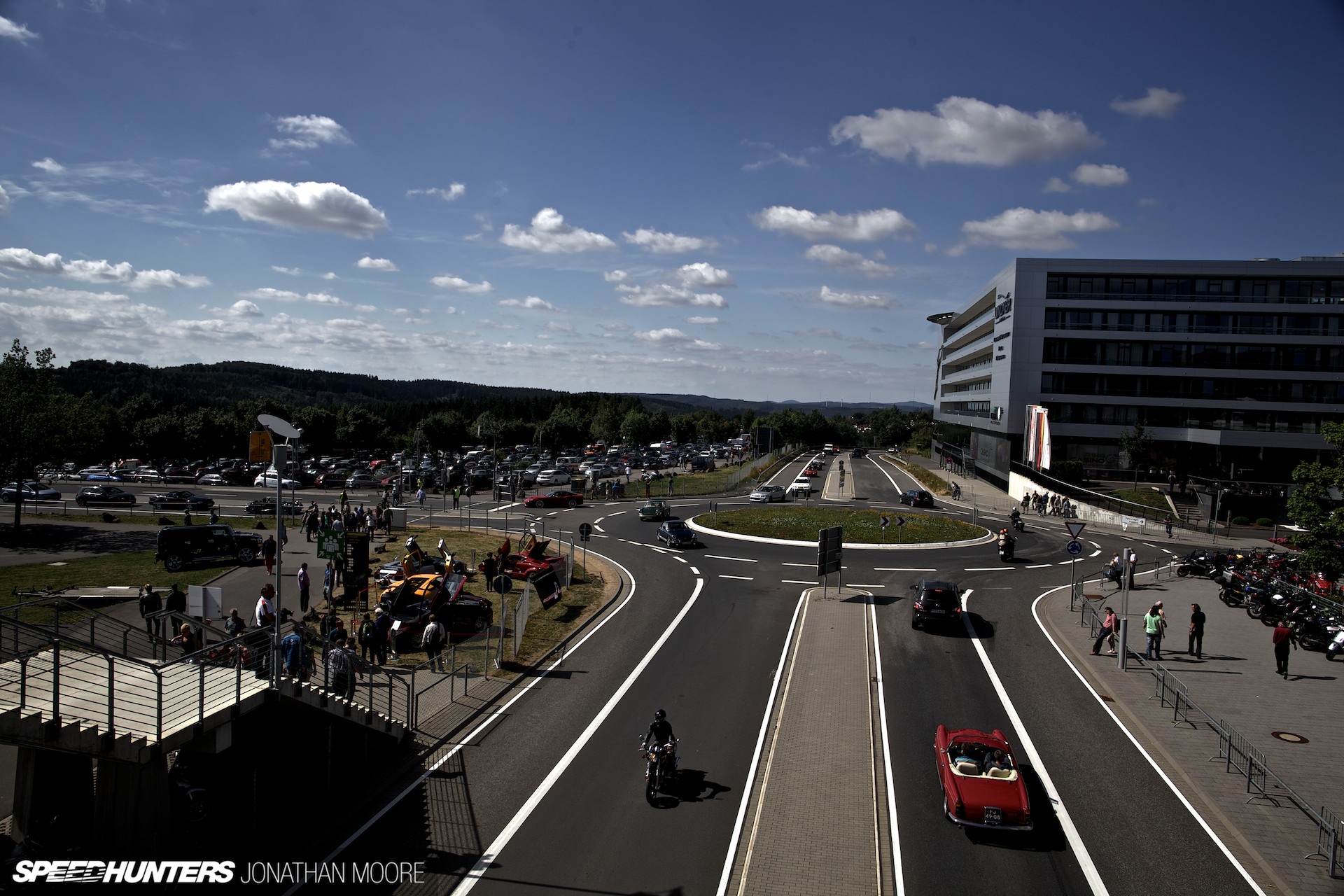
Another section no longer here is the original iconic hairpin of Südkehre, which was the opening corner for races on the Nordschleife, and the Stichstrasse, which was a link straight that ran below Südkehre and allowed the Südschleife to be run as a separate entity. All there is now is car park…
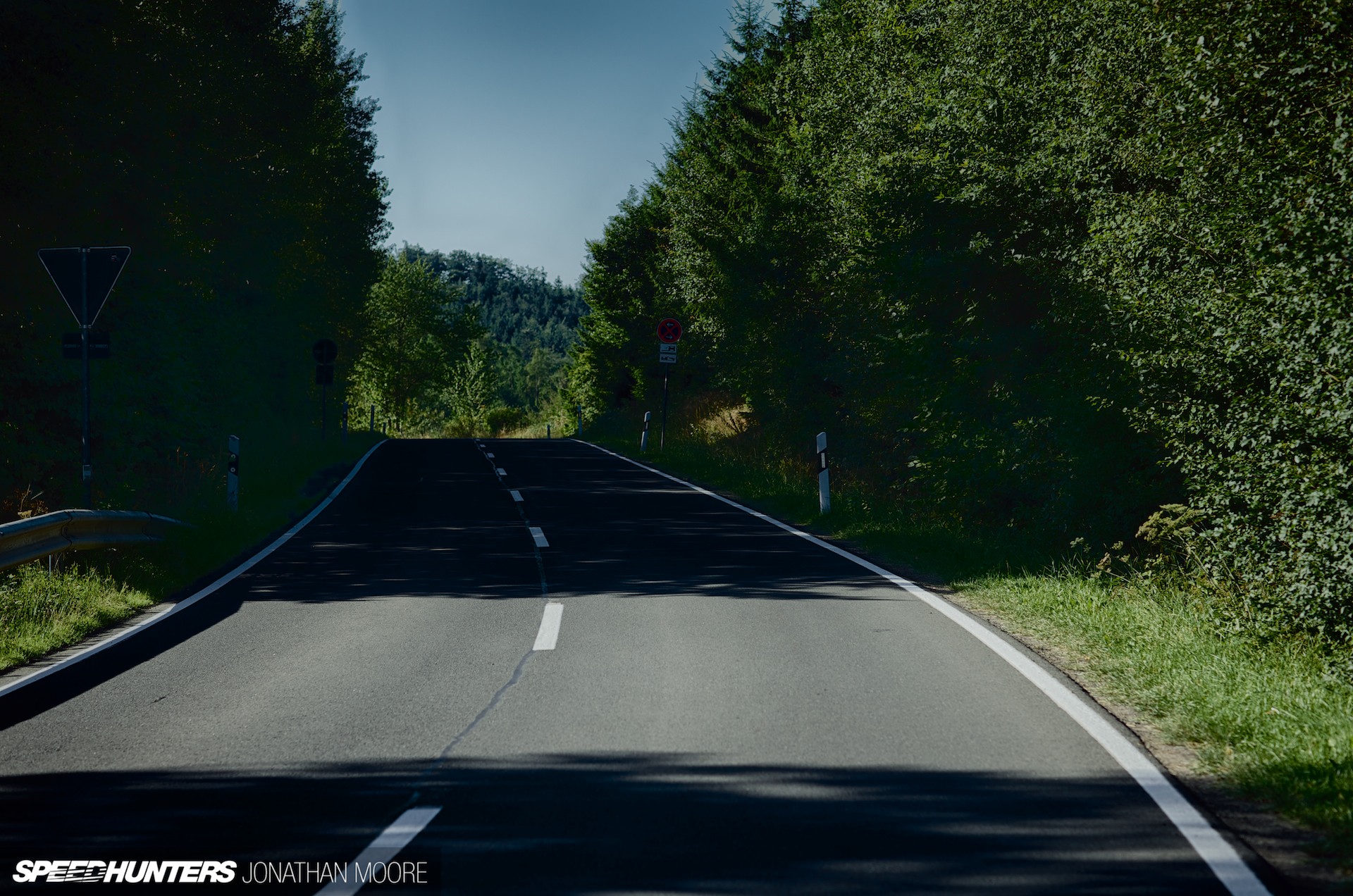
You pick up the Südschleife on the K72 local road, slightly below the parking lot. In front, a beautifully smooth, freshly-laid road that follows the trace of the Südschleife, if not the exact line. The rough edges and harsher radiuses have been shaved down for the sensibilities of the modern driver.
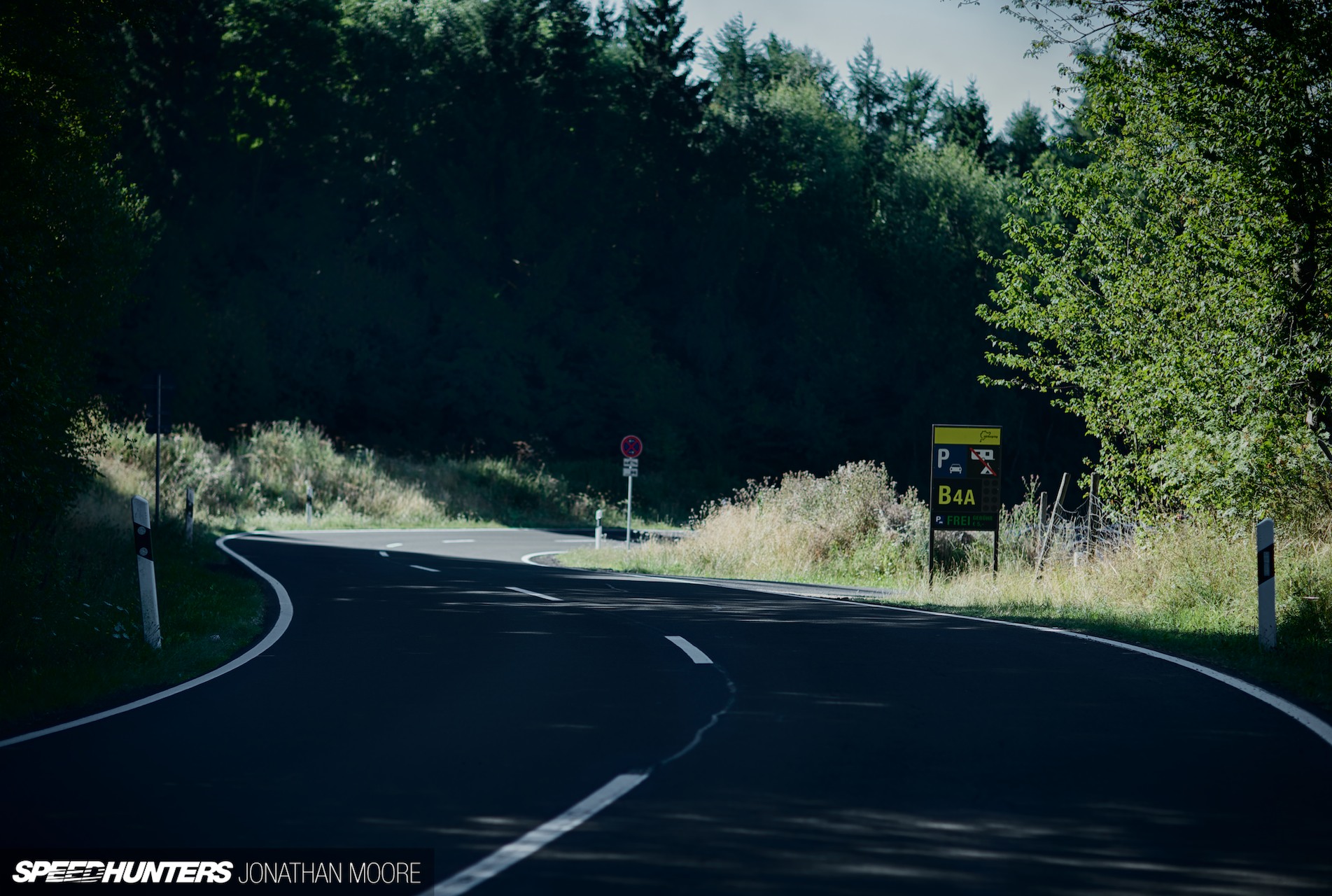
But again, as with the similarly erased Rouen, it’s still possible to get the feel of the track from the modern remake.
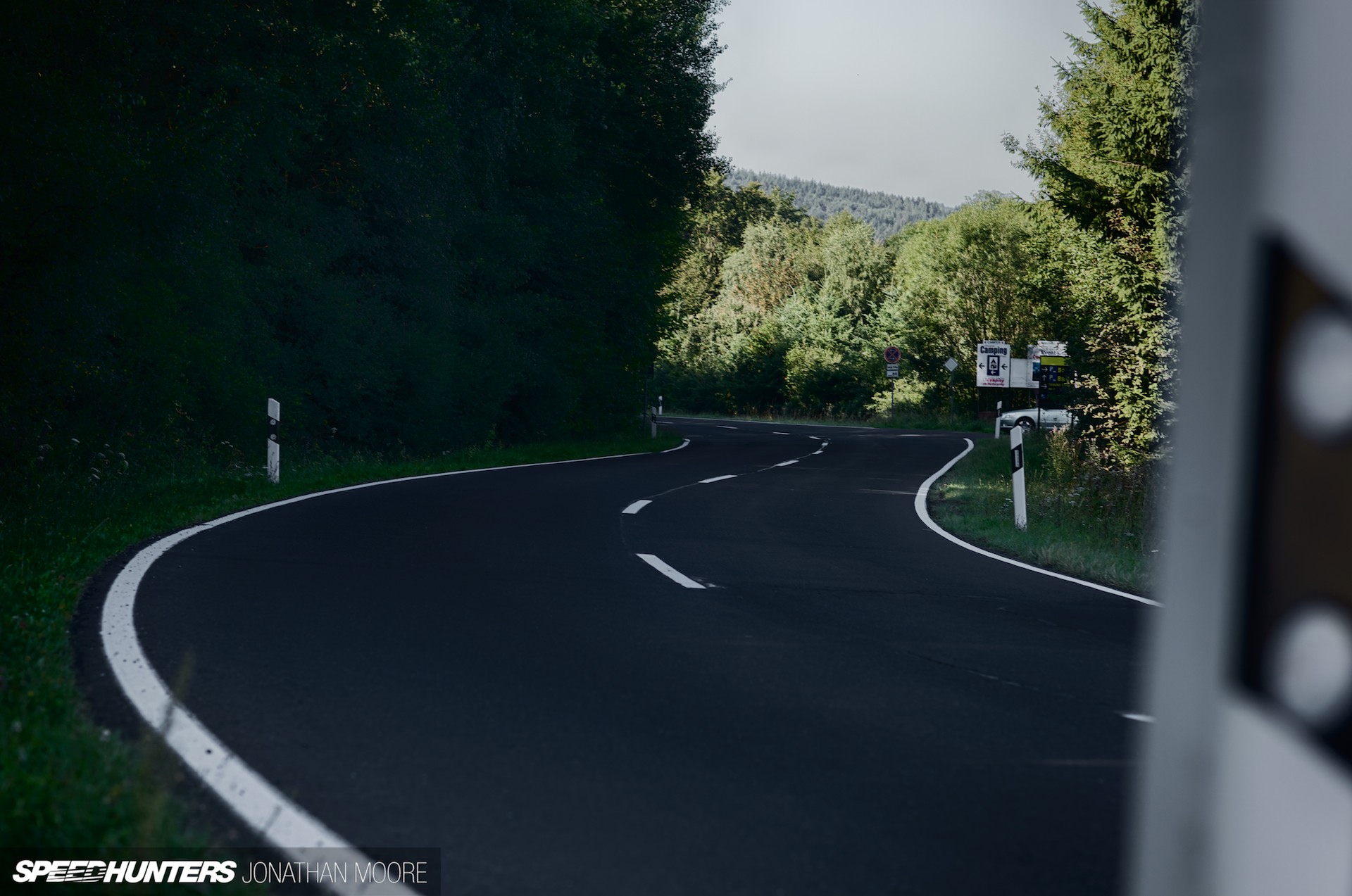
The road snakes downhill through a series of curves, first left-right, then right-left, then left-right-left through Bränkekopf.
A short straight then leads to an opening out of the corners, with the tighter apexes of the previous sequences turning into a faster flow.

Drivers cruising between the municipal camping and the local highways seem by and large unaware of the history of the road they’re traversing.
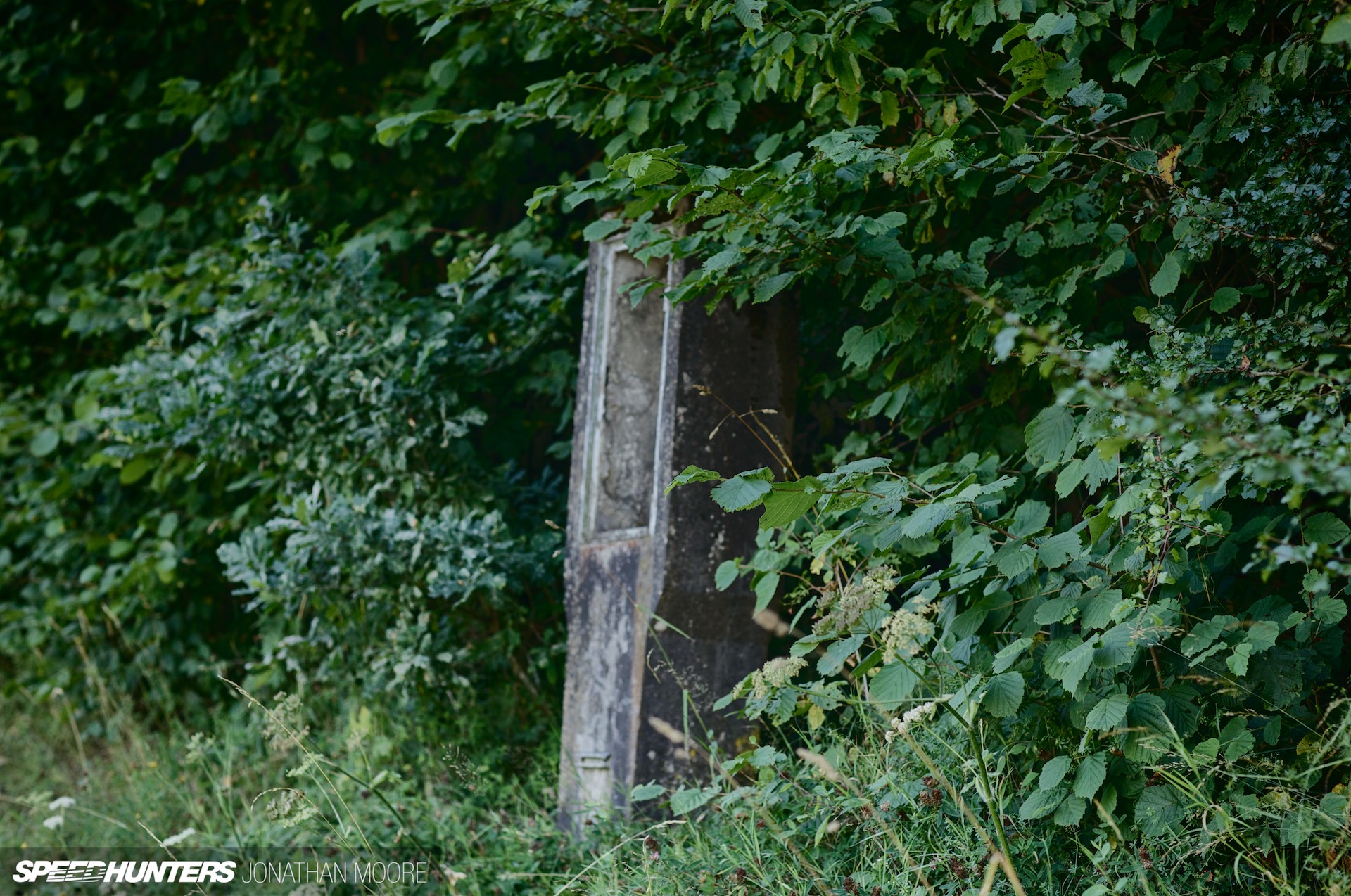
Opposite the campsite is one of the few overt surviving momentos from the racing era: a concrete telephone post that once stood by a marshal’s stand at the Aschenschlag corner.
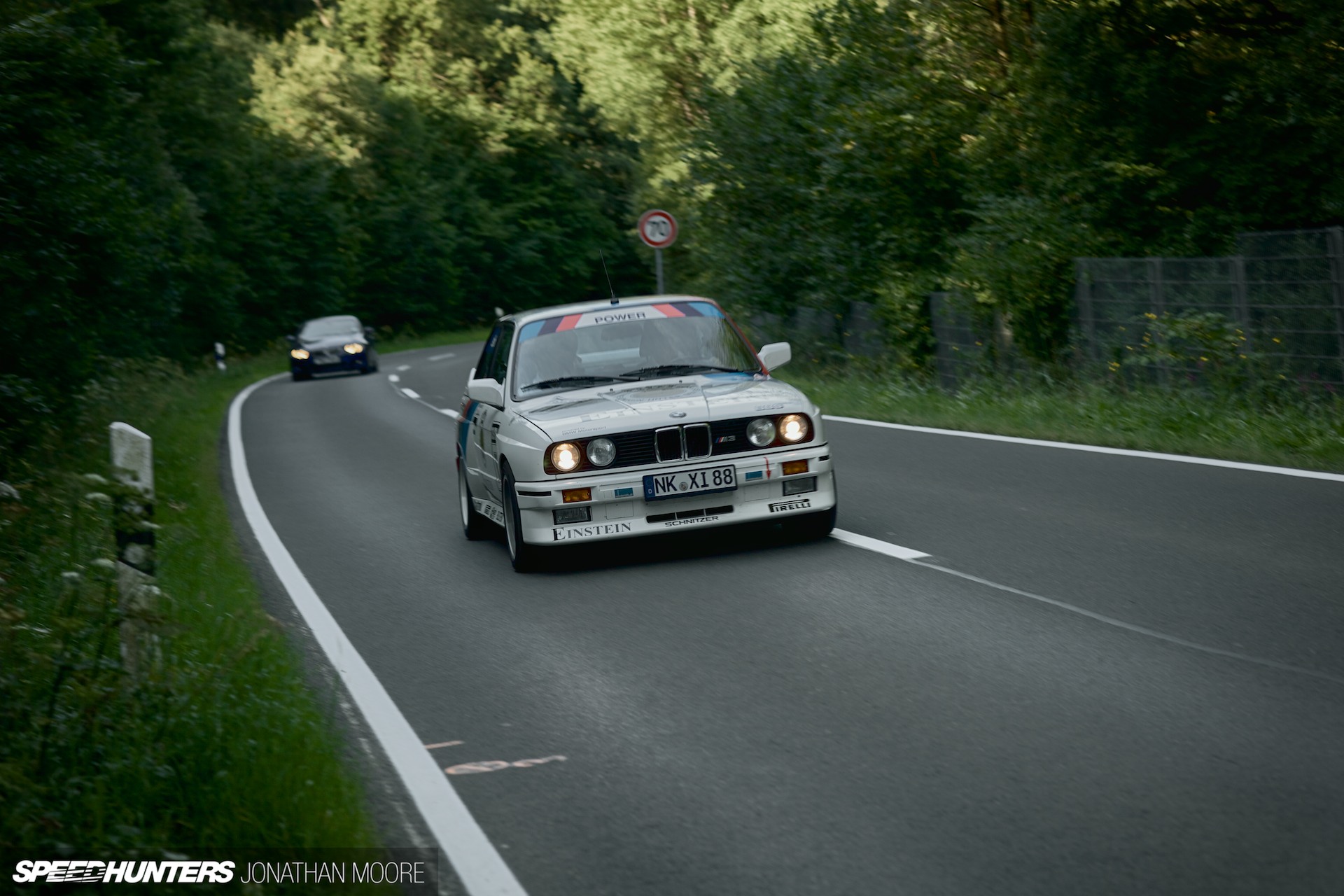
The odd passing car at least shares DNA with the racing predecessors who used to pound the same stretch of tarmac.

During major race meetings the interior of the Südschleife is used for parking (you can also see them in the Google Maps images towards the top of the article) and again, I’m sure the majority don’t appreciate the heritage.

The Seifgen sequence follows: an ever faster quartet of corners staring off with a shallow left.
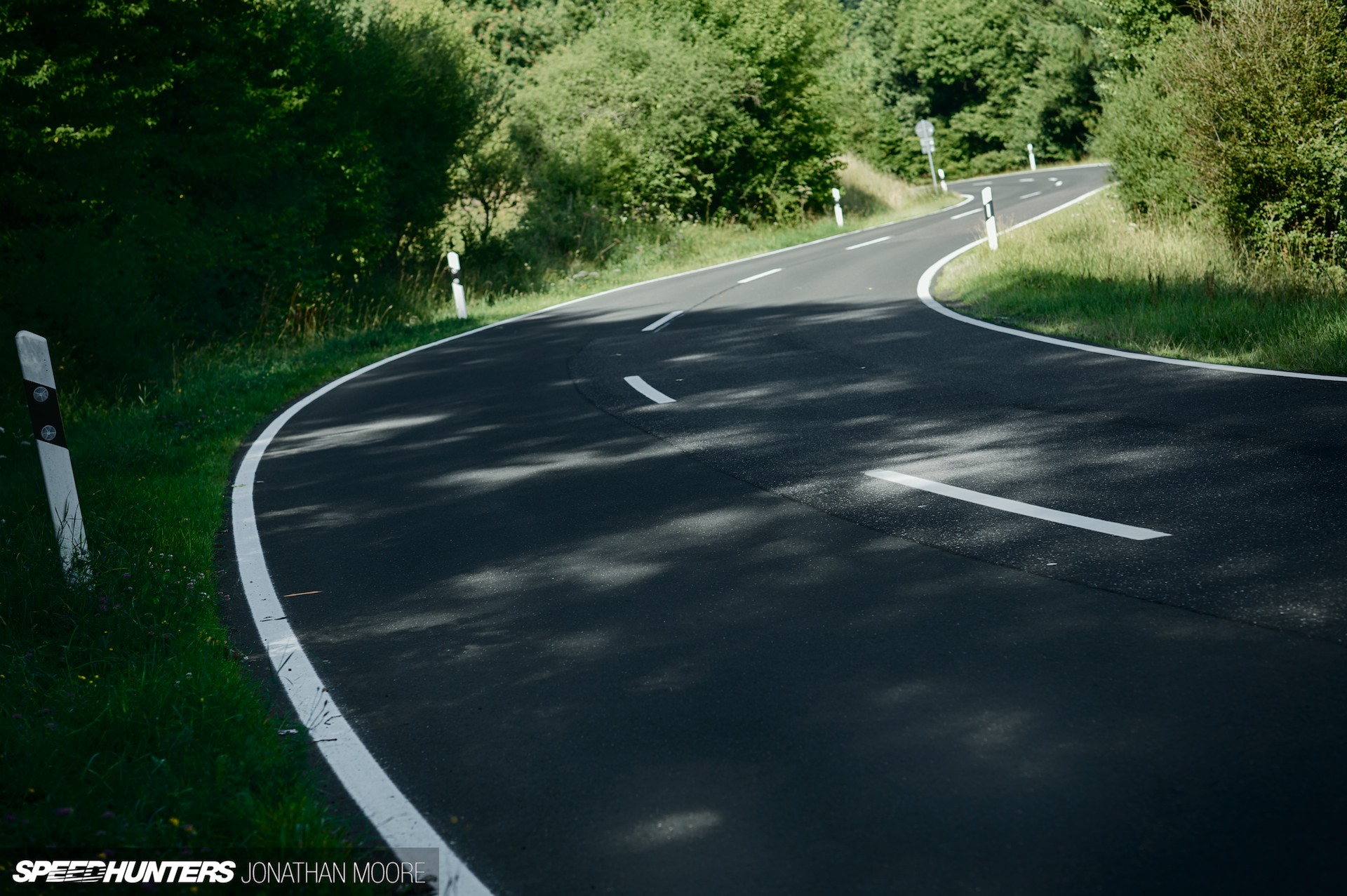
The left transitions into a harder right and quick double left before once again opening out. I would imagine that it was incredibly easy to lose track of which sequence you were up to during a race.
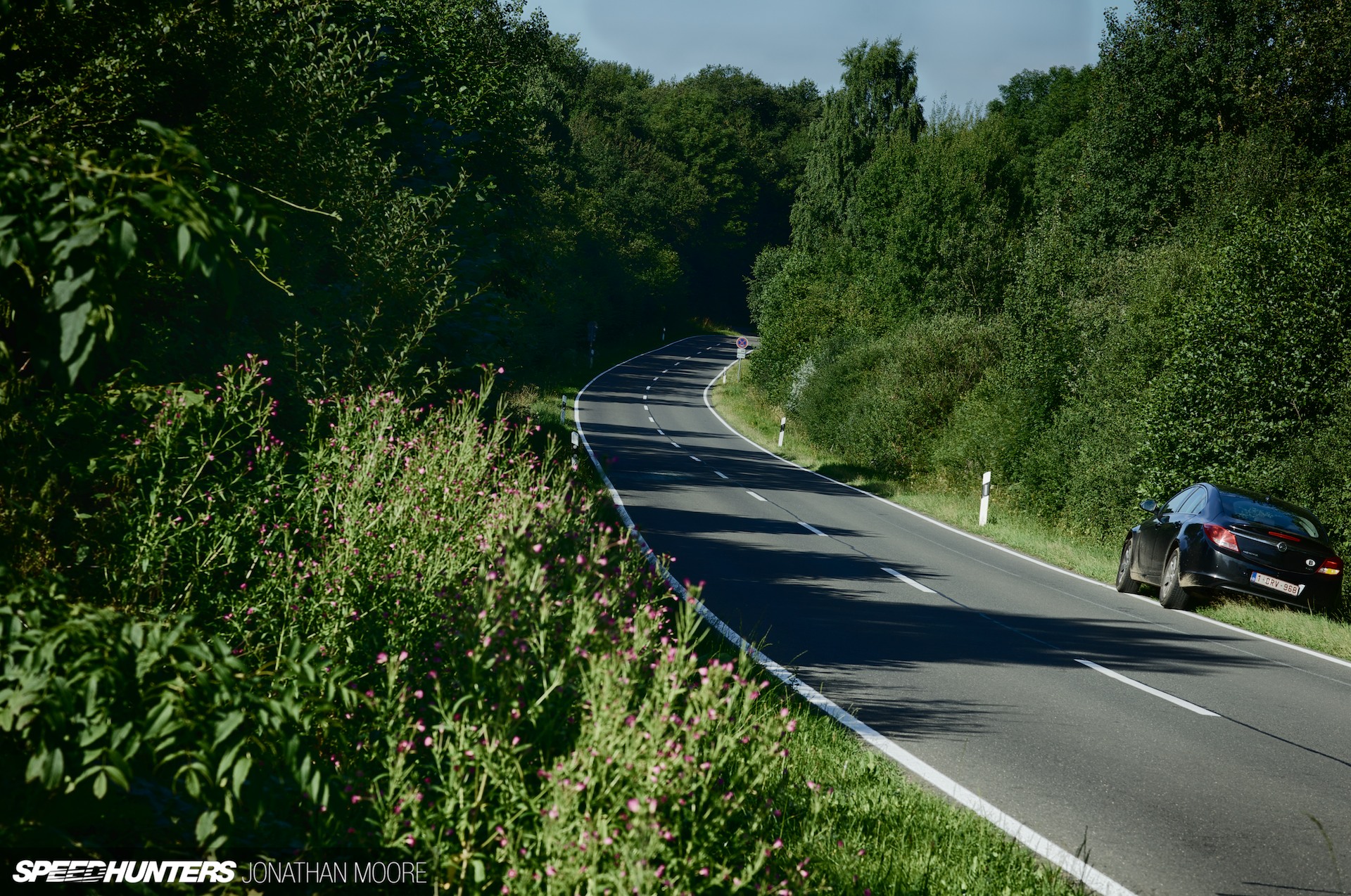
As the track reaches its lowest point, drivers were presented with the swooping challenge of Bocksberg. It’s the most southerly point on the track, five miles as the crow flies from the northernmost corner of the Nordschleife at Bergwerk.
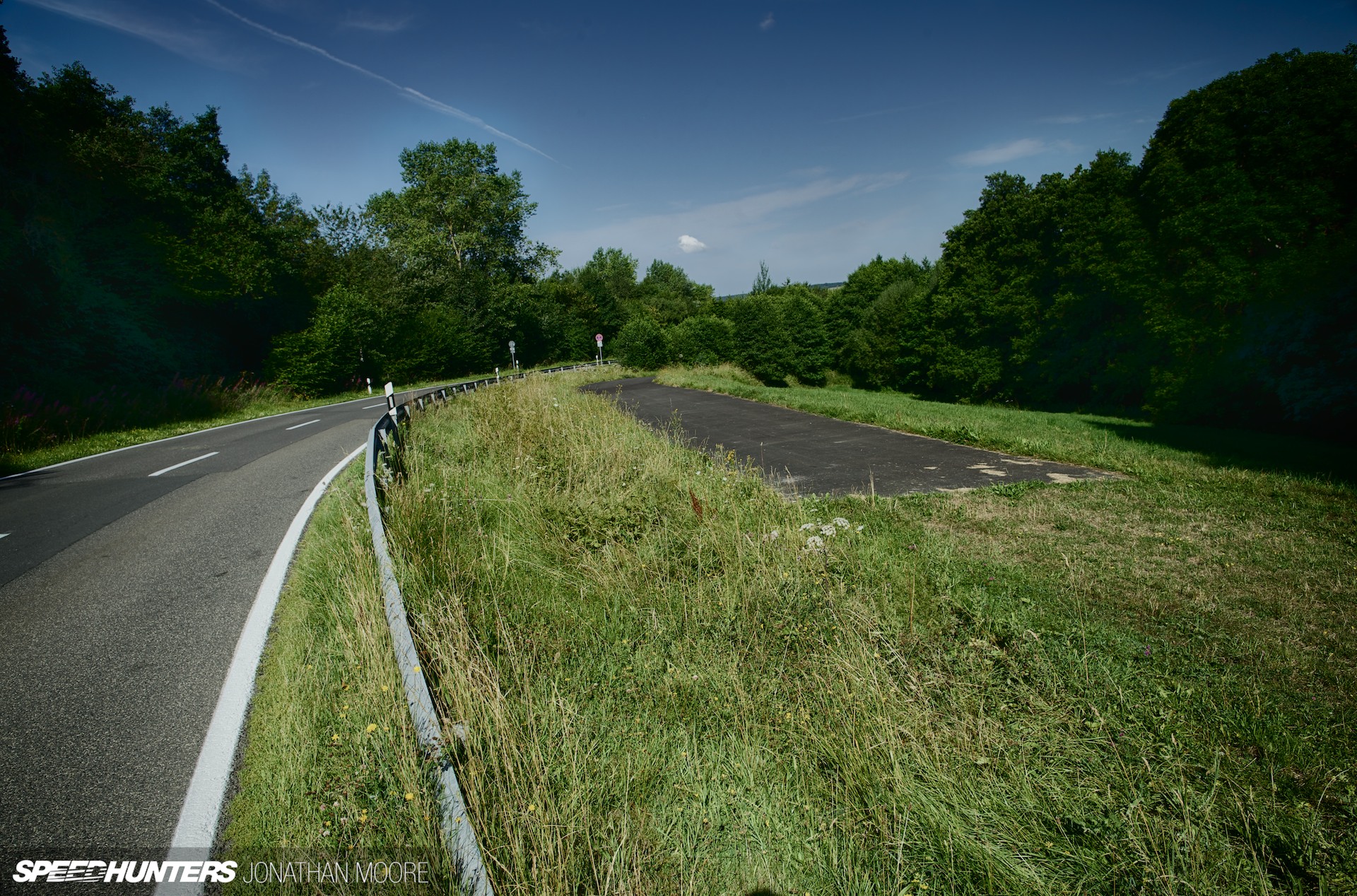
This is where it’s easy to get confused as to where the old track splits off. The modern road goes on ahead, bypassing the village of Müllenbach; a stretch of tarmac to the inside of the apex can lead you astray…
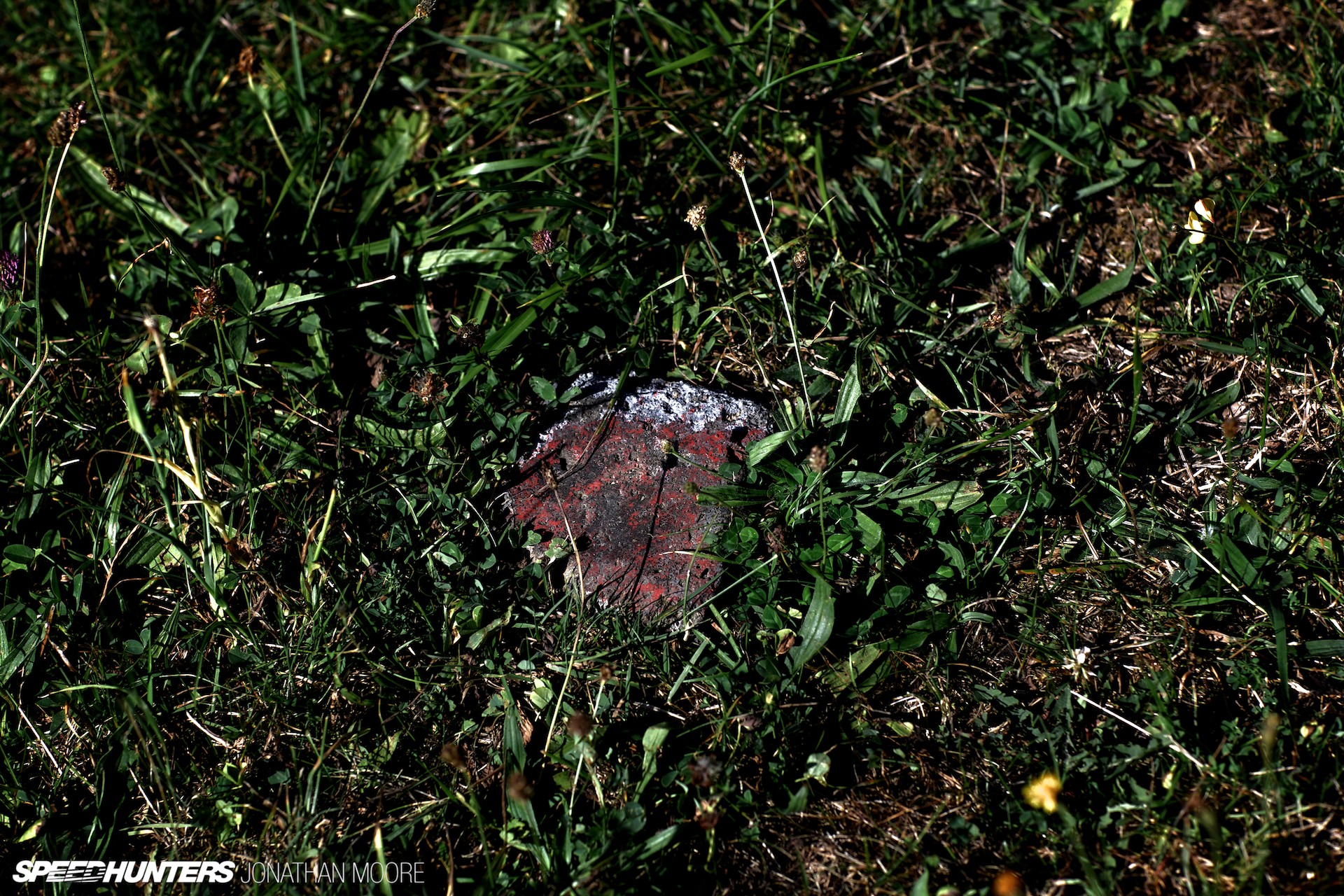
Not helping are pieces of coloured concrete lying in the grass there. Old sections of broken-up kerb perhaps? It’s easy to act like you’re an amateur archeological sleuth and be misled accordingly.
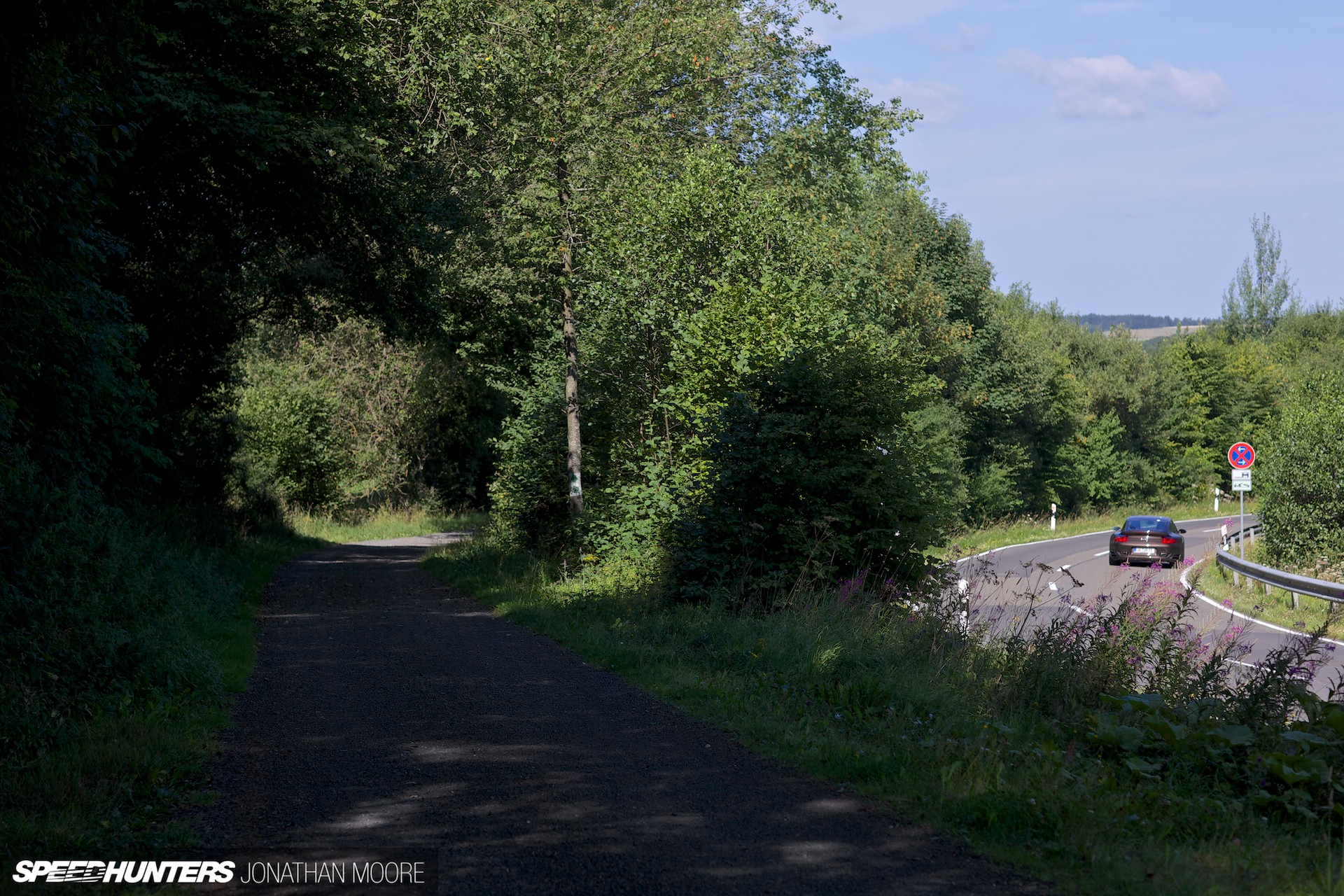
The Südschleife actually tracked a wider radius, heading off left down what is now a nondescript gravel track leading to an industrial estate on the edge of the village of Müllenbach.
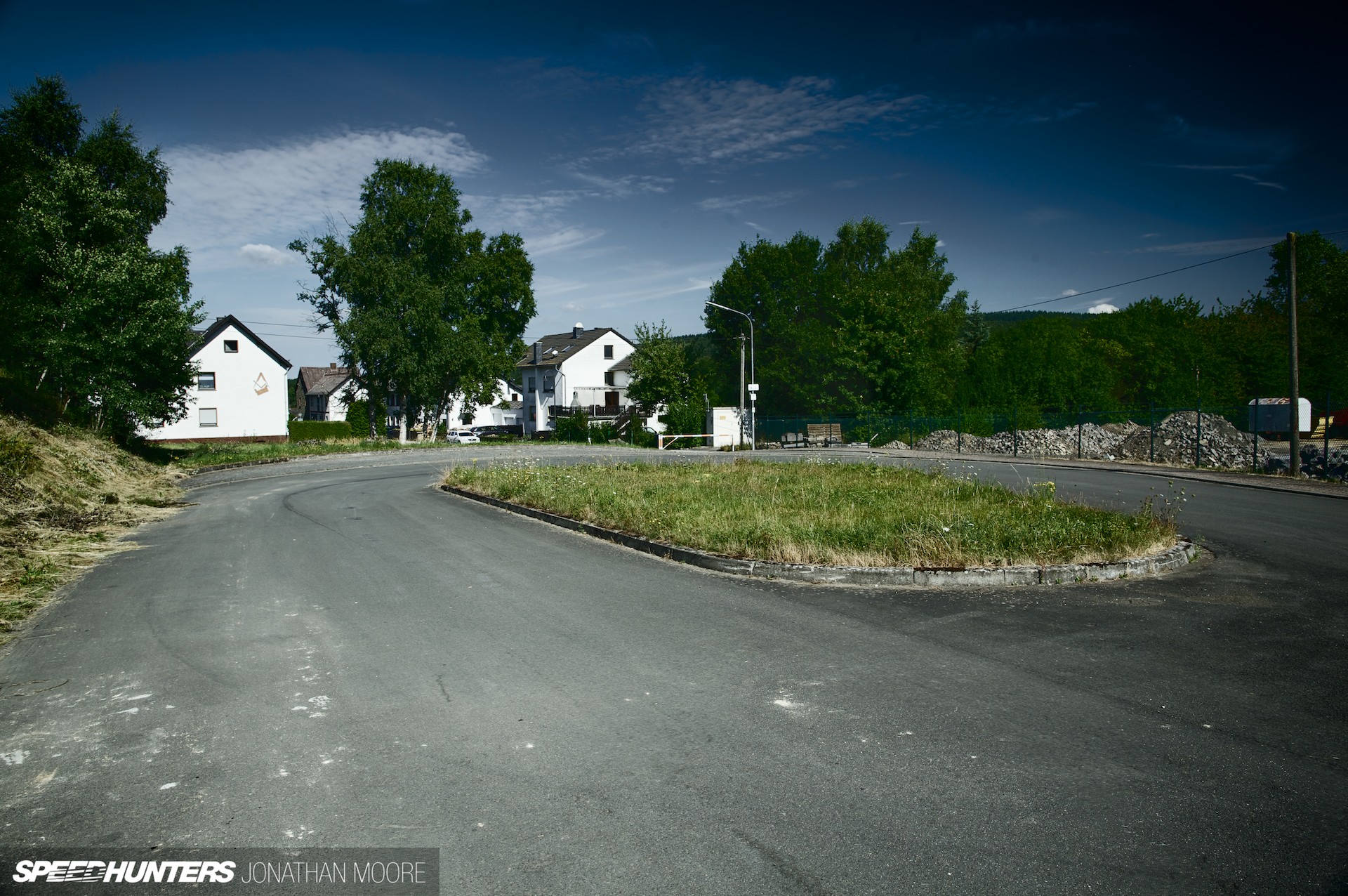
The gravel turns into a short stretch of tarmac. At the end, this anonymous cul-de-sac loop is all that marks the famous Müllenbach 90-degree corner, that saw the Südschleife turn north-east and uphill for the long return run to the finish line.
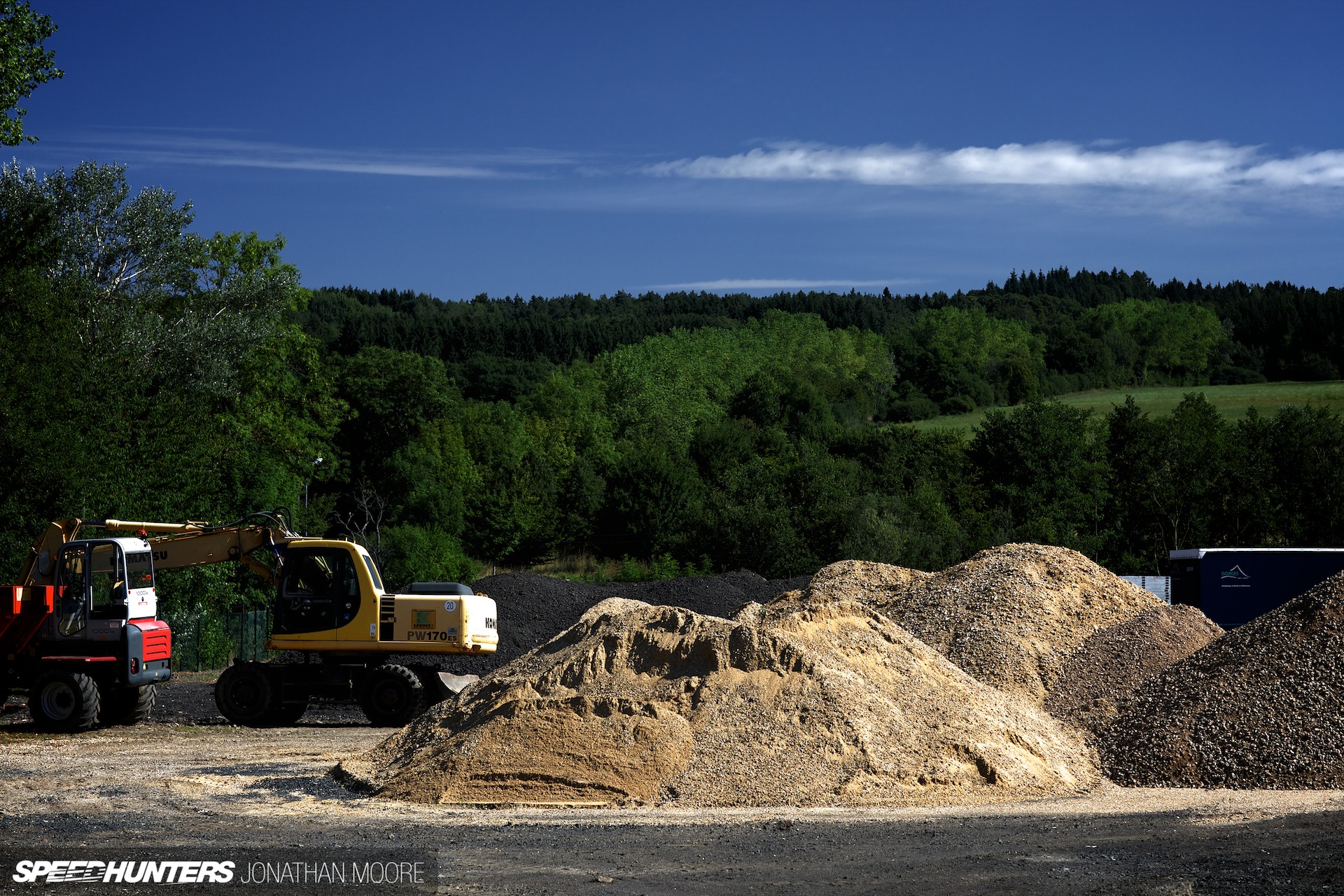
A construction site now sits atop where the track used to run, but the line of the circuit is visible in the ring lighter-colour tree-line in the distance.

This part of the track has all but gone, with just this small section possibly on the line of the original.
The trees are alive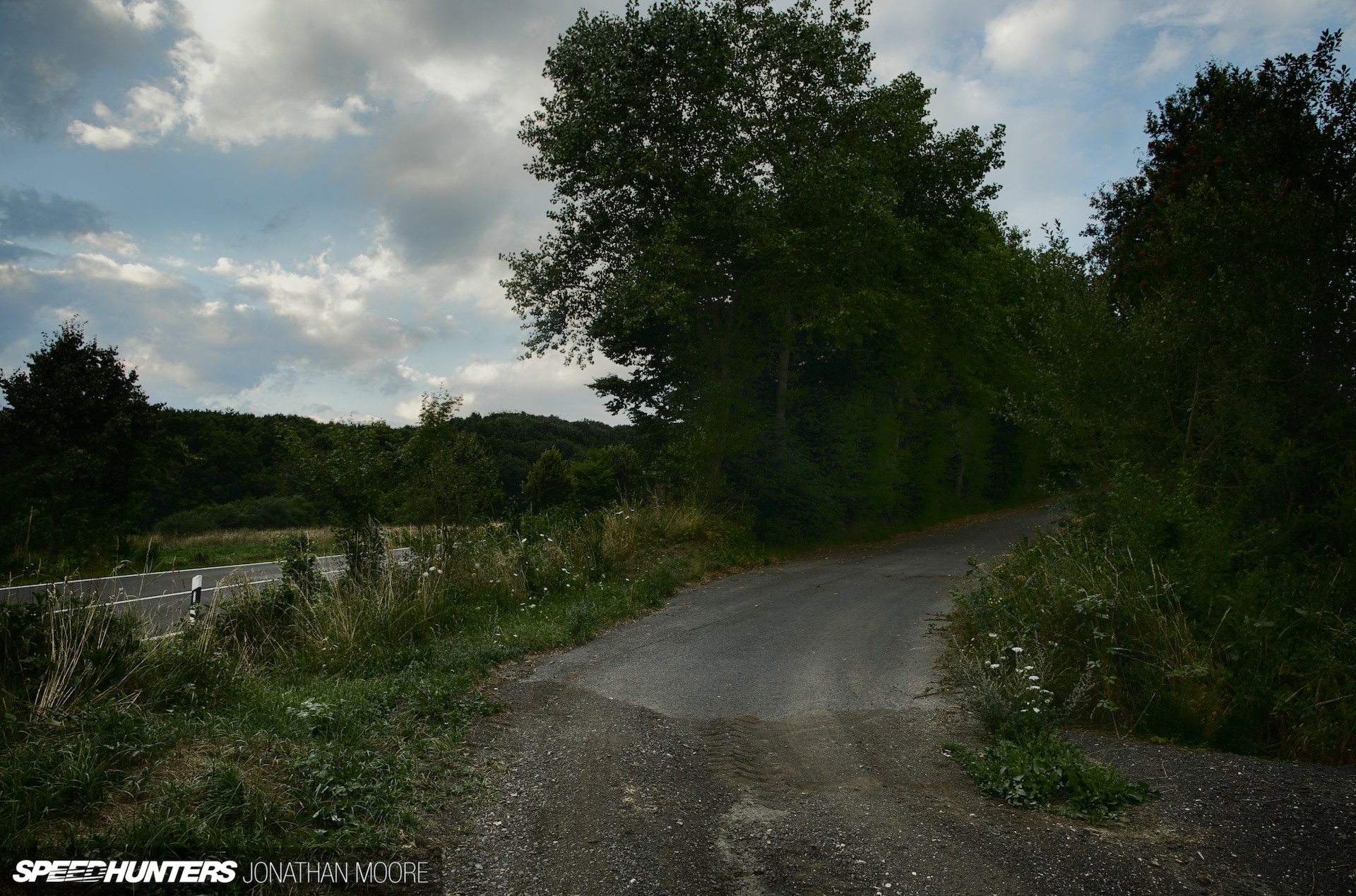
Crossing the main road, the next section is the where it all becomes worthwhile for the history buff with emotion to spare. It’s the high point in both the literal and figurate sense, where you get to walk on the crumbling, fragile remains of the real Südschleife track as it winds its way uphill.
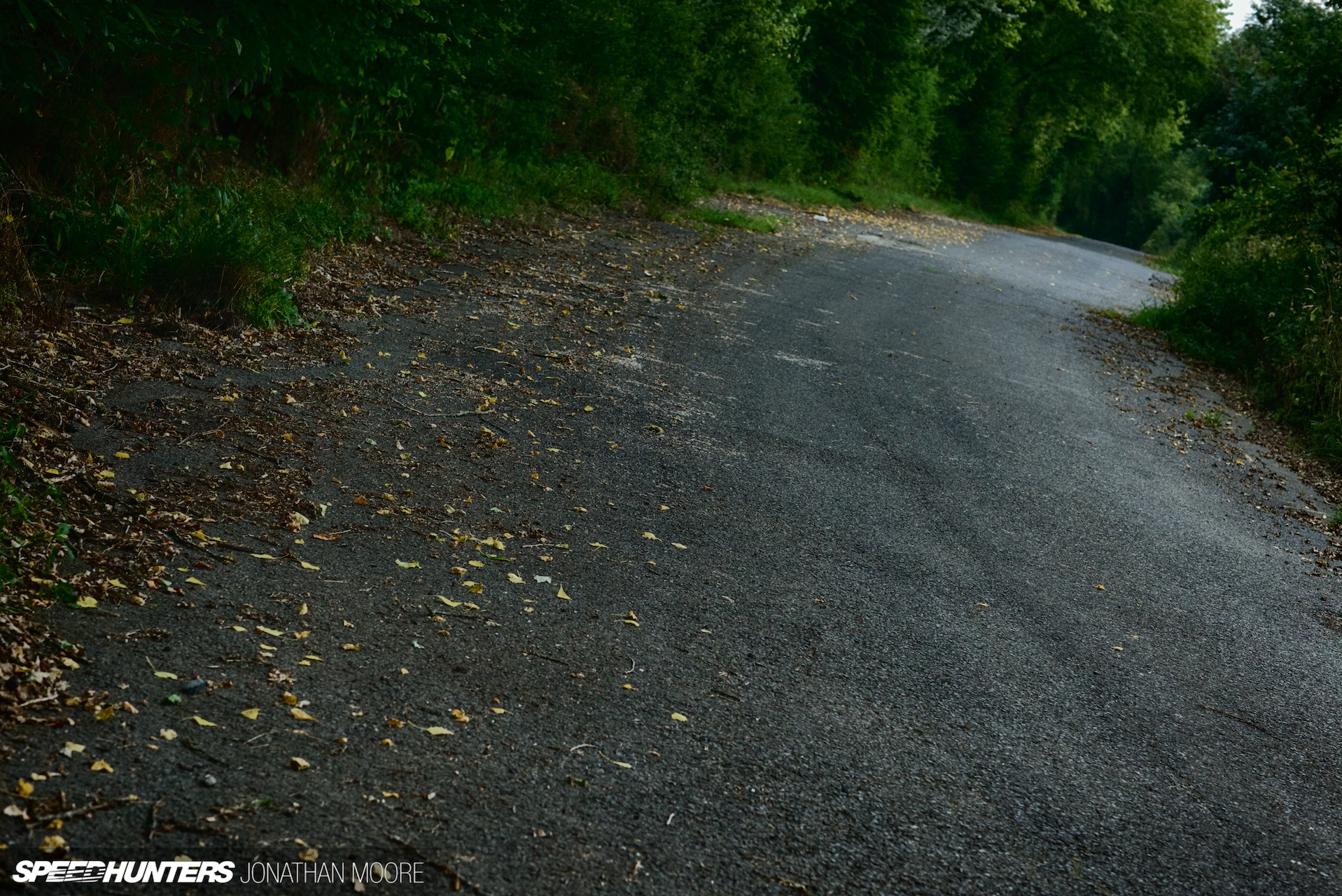
As cars pass by on the modern L93 road that runs outside the track and the sound of racing engines drift down from the modern Grand Prix track above, there’s time to enjoy the slow ascent and let your imagination run wild.

You can breath in the history of the racing that happened here: it’s in the trees and the grass as much as the concrete below your feet.
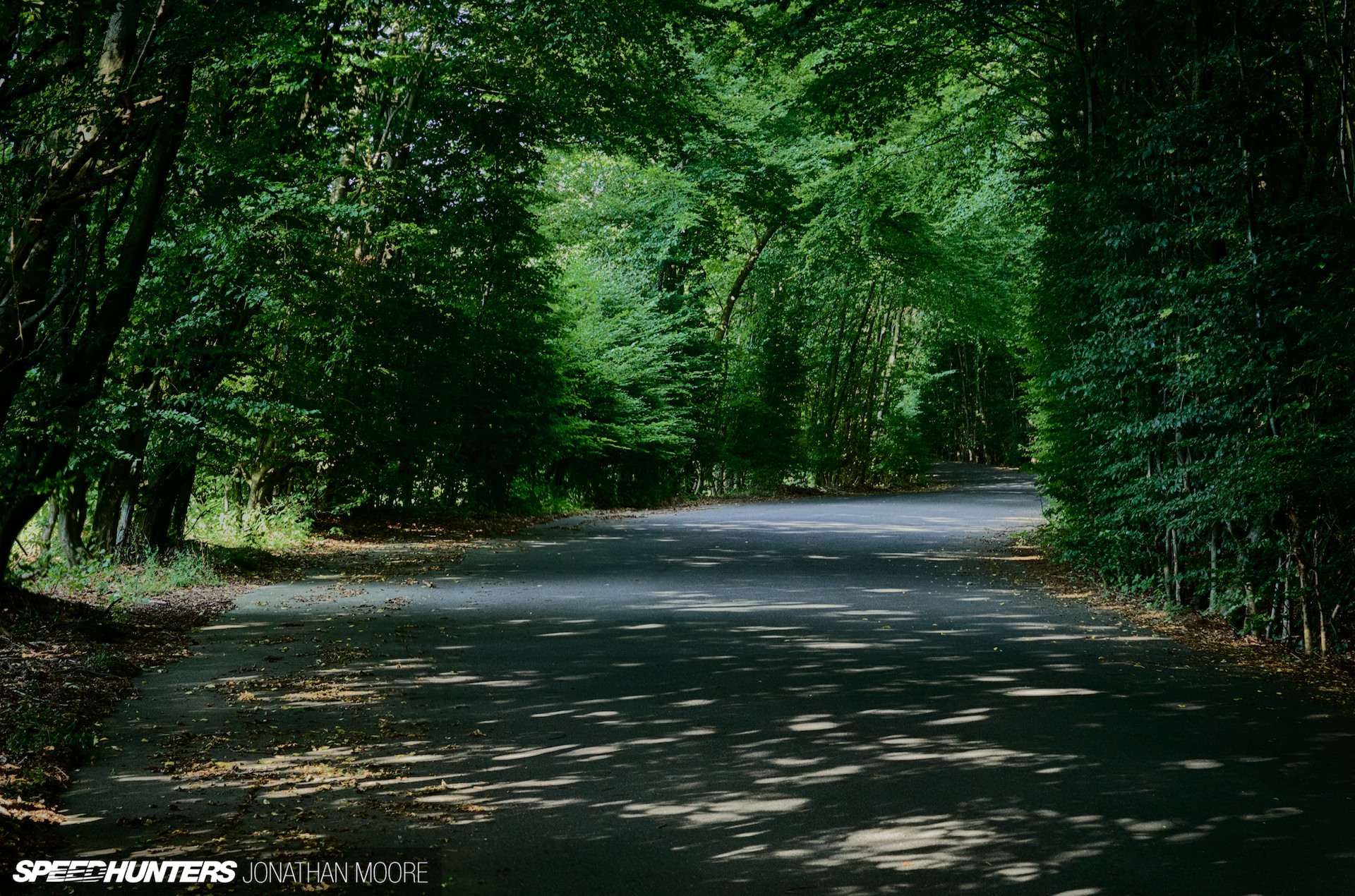
It’s a long way to walk – a mile or so – but your mind can wander during the uphill stroll. Ones enjoyment is directly correlated to the emotional freedom you allow yourself: you can seize on every small piece of exposed concrete or rut as having heritage. Did Caracciola drift through here in the ’30s, or Jack Brabham in the ’60s?
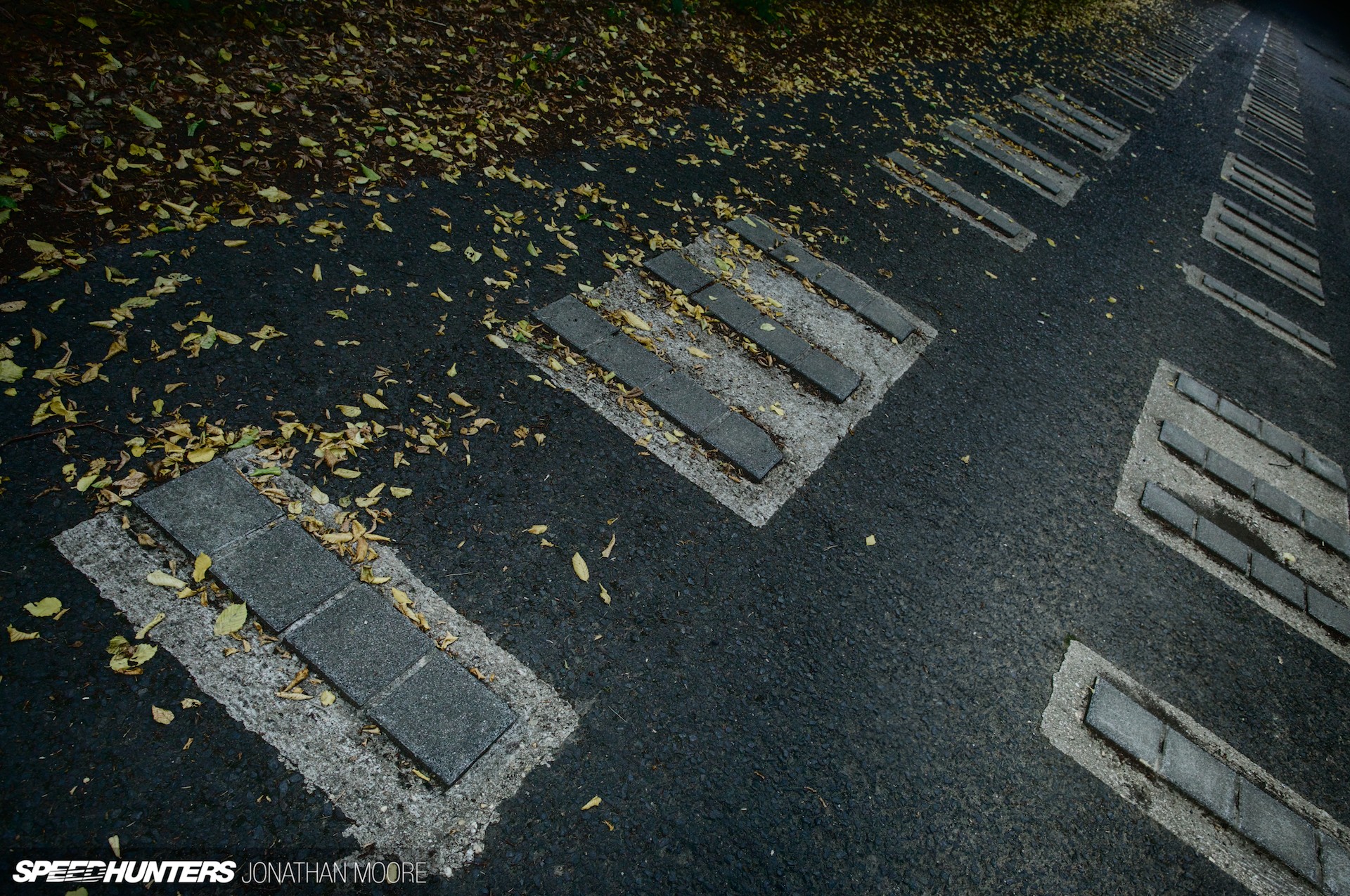
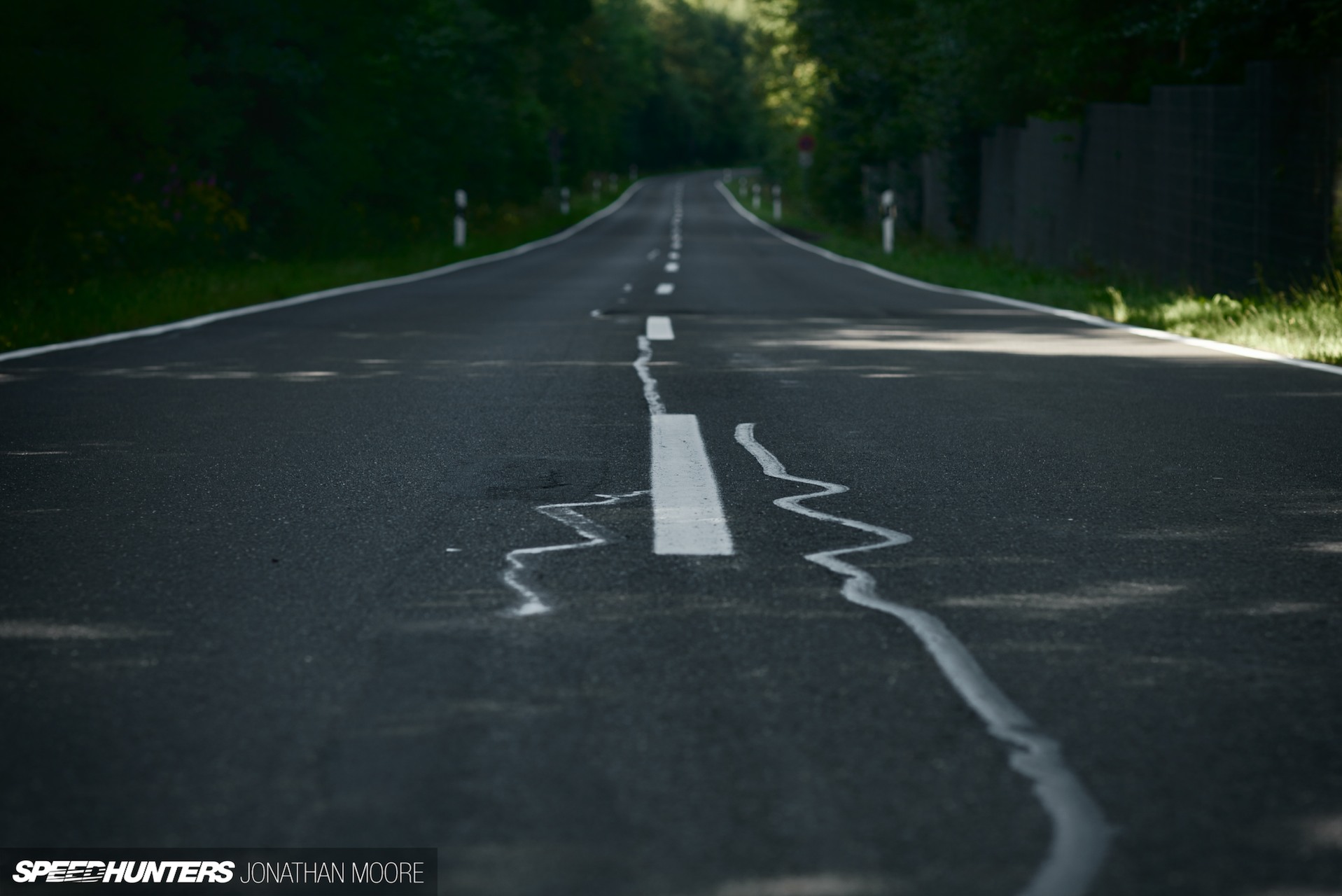
There’s even evidence of life post-racing, with auto testing taken to another level with the installation of rumble strips. At least, I assume they weren’t there in period… I wouldn’t be surprised in a way – this was seen as being ‘easier’ than the Nordschleife after all!
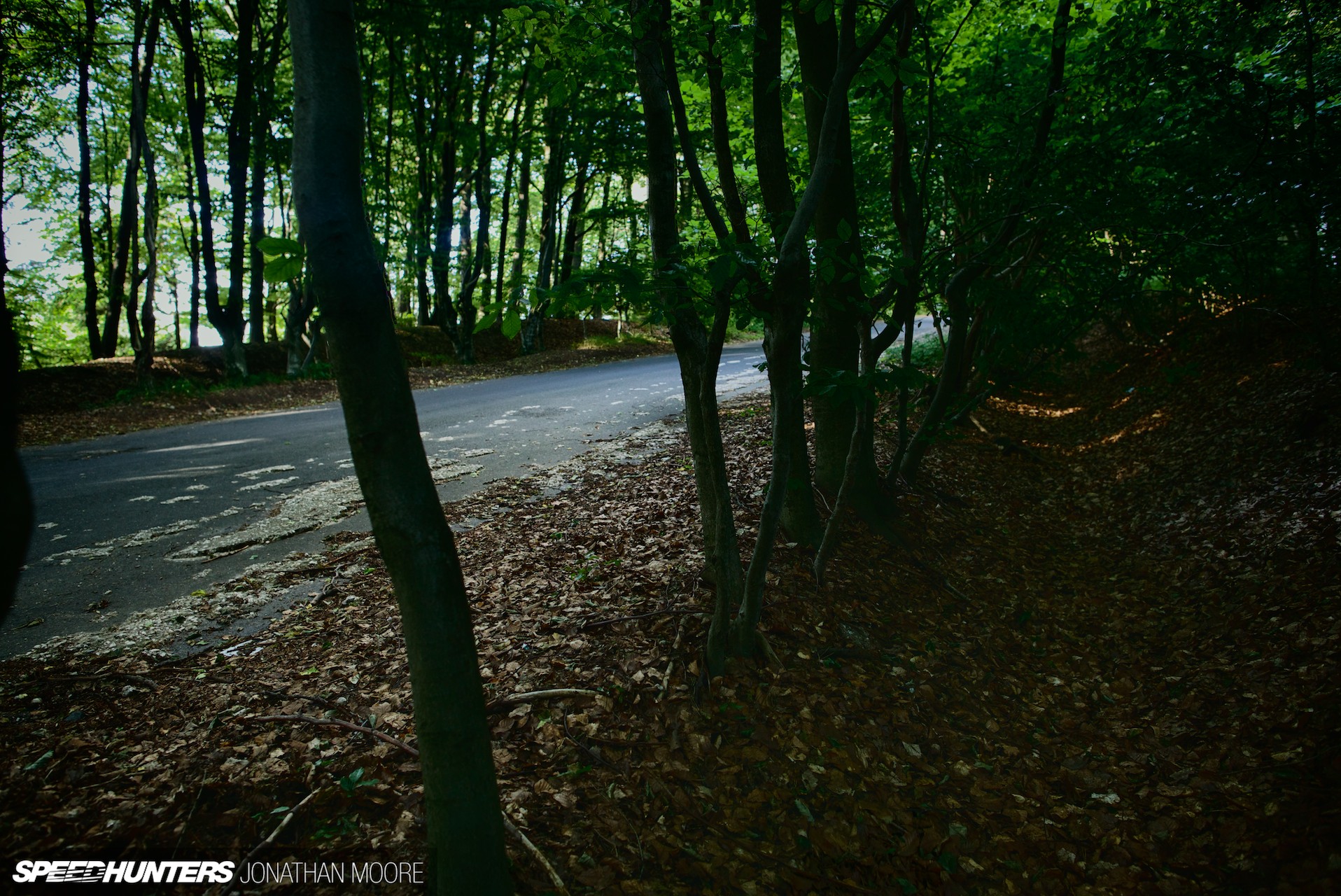
The track continues its relentless rise upwards, steeper than it looks. This is likely where the track appears the most real: the trees encroach on either side, with just drainage ditches where armco should surely have been had anyone thought it appropriate to invent at the time.
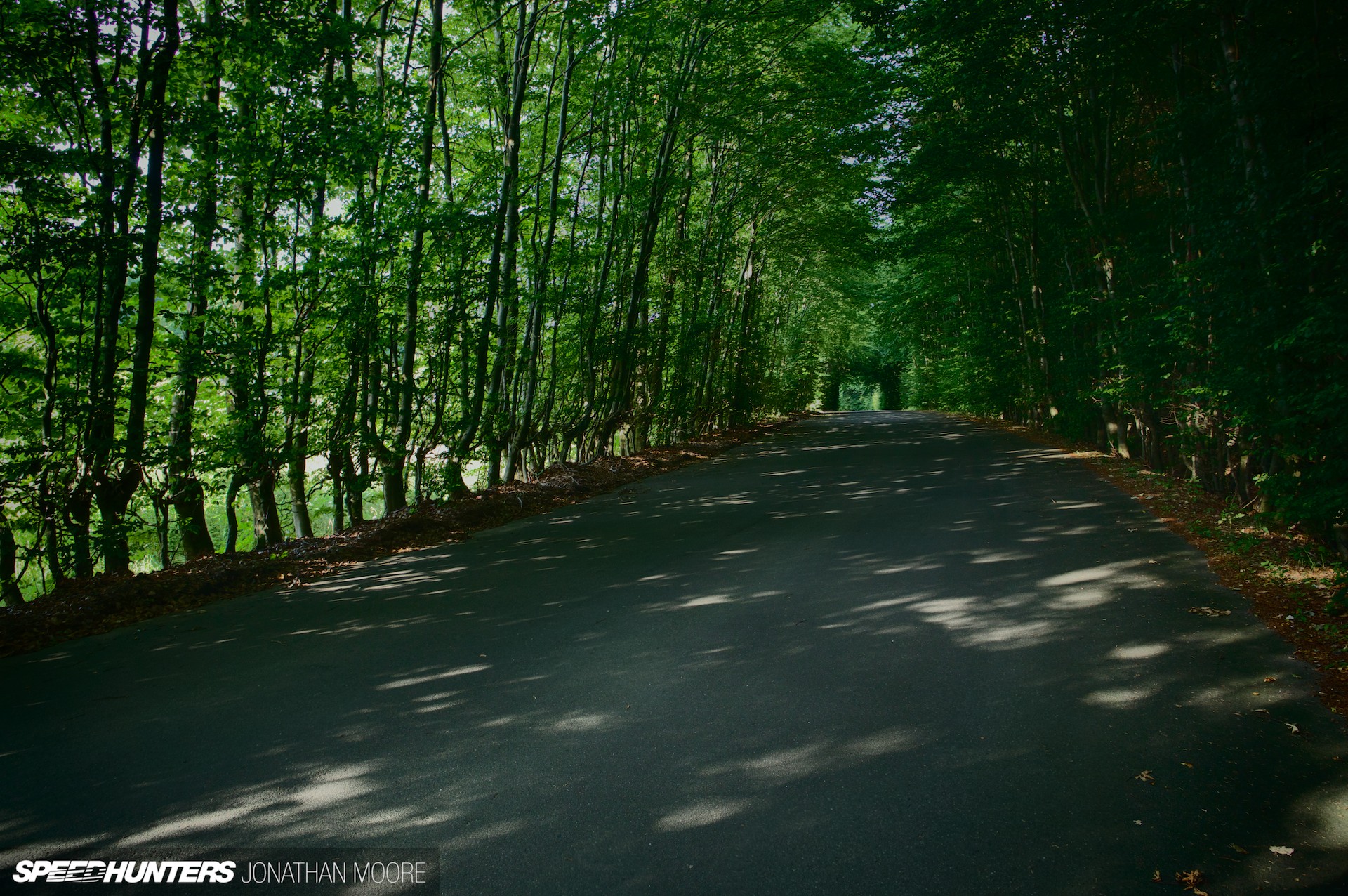
Looking at the track map, there appear to be few corners, but in reality the speed of ascent would have made every kink a journey into the unknown.
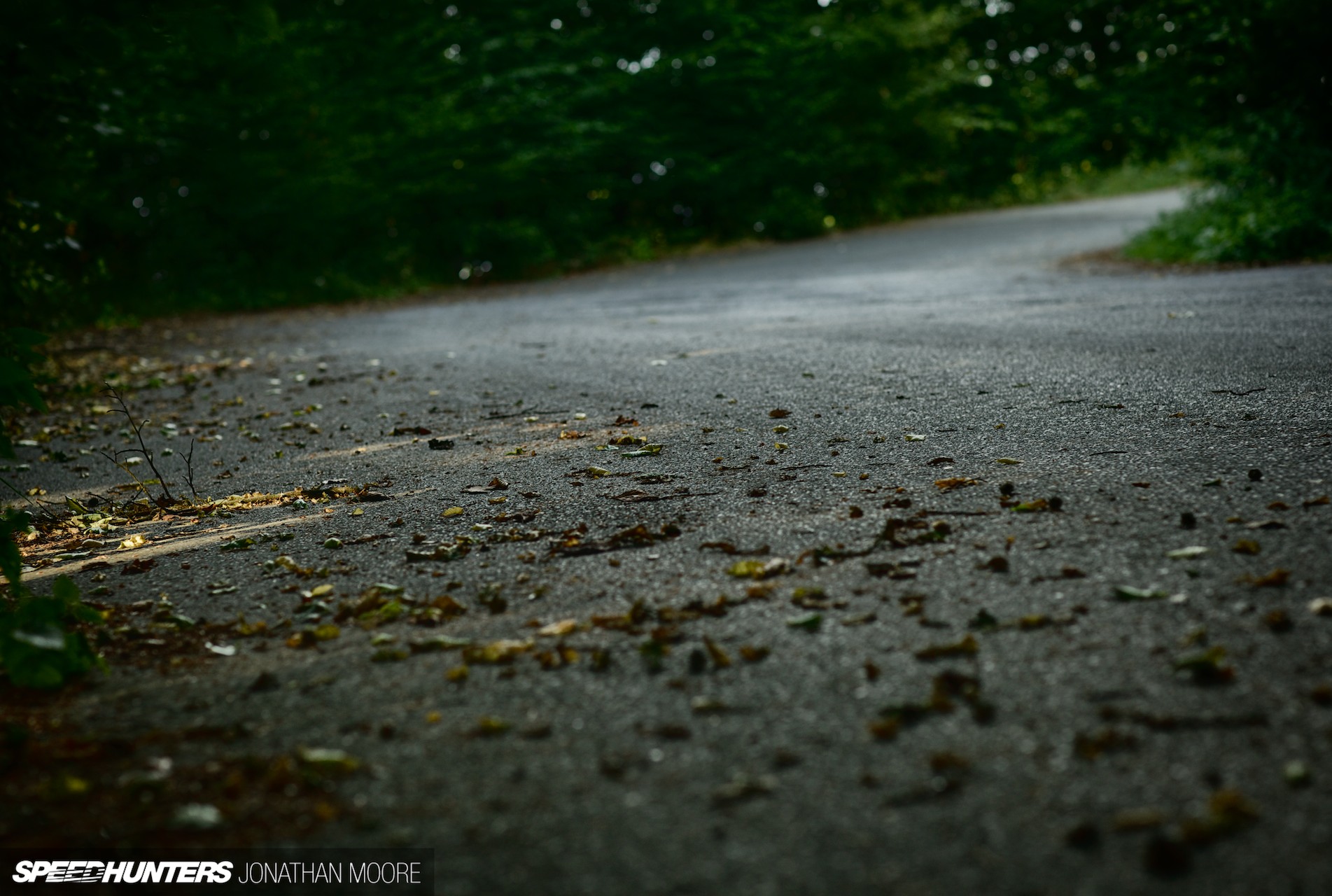
Finally the top of the hill is reached, with cars bursting out over the cambered, arcing crest only to be confronted with a sharp hairpin.

The track cuts back on itself before again reversing direction around the long, lazy carousel curve of Scharfer Kopf and onto the return straight.
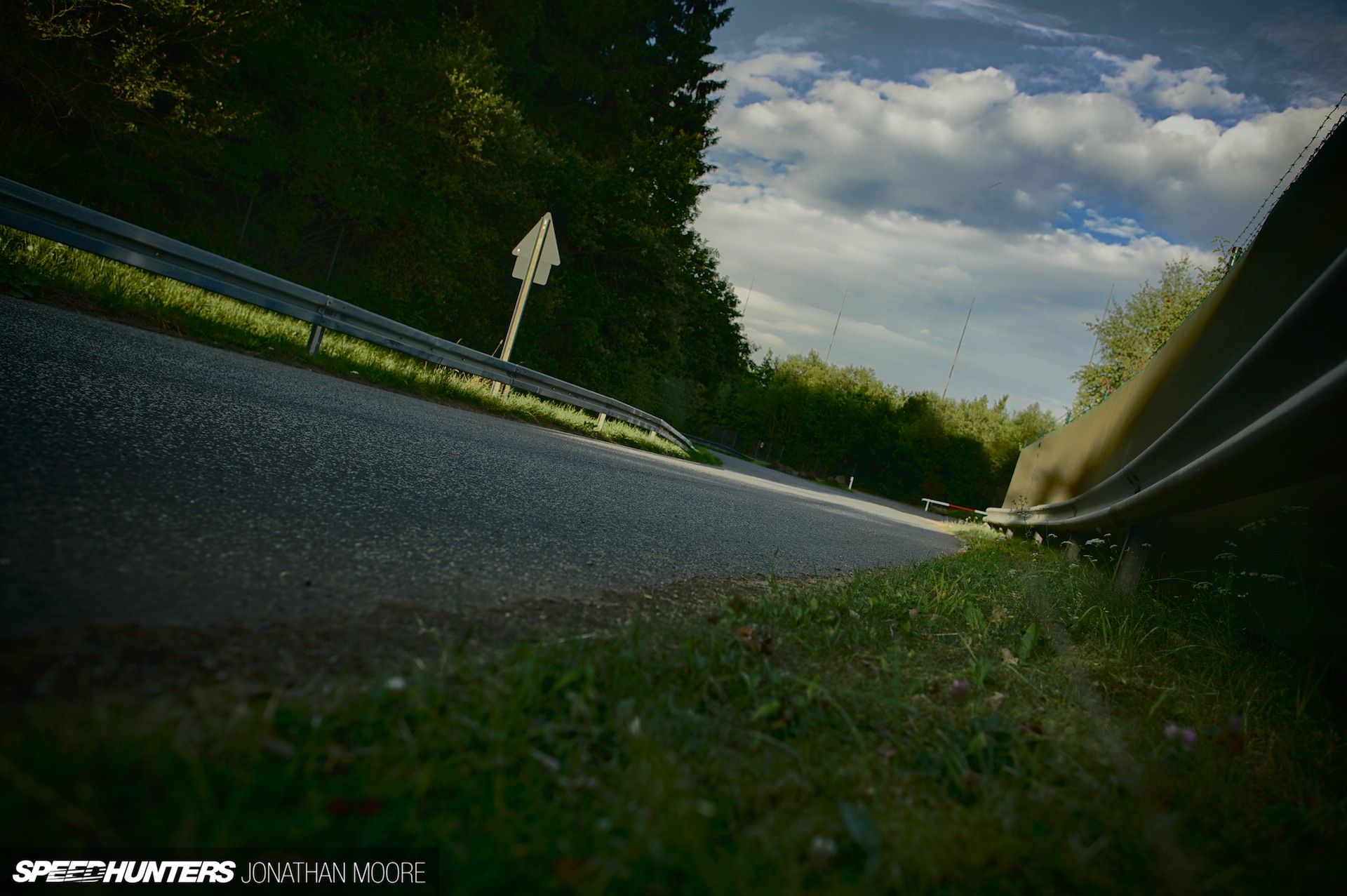
Here the old track is replaced by a modern access road, which opens out where Scharfer Kopf kept up its never-ending spiral.
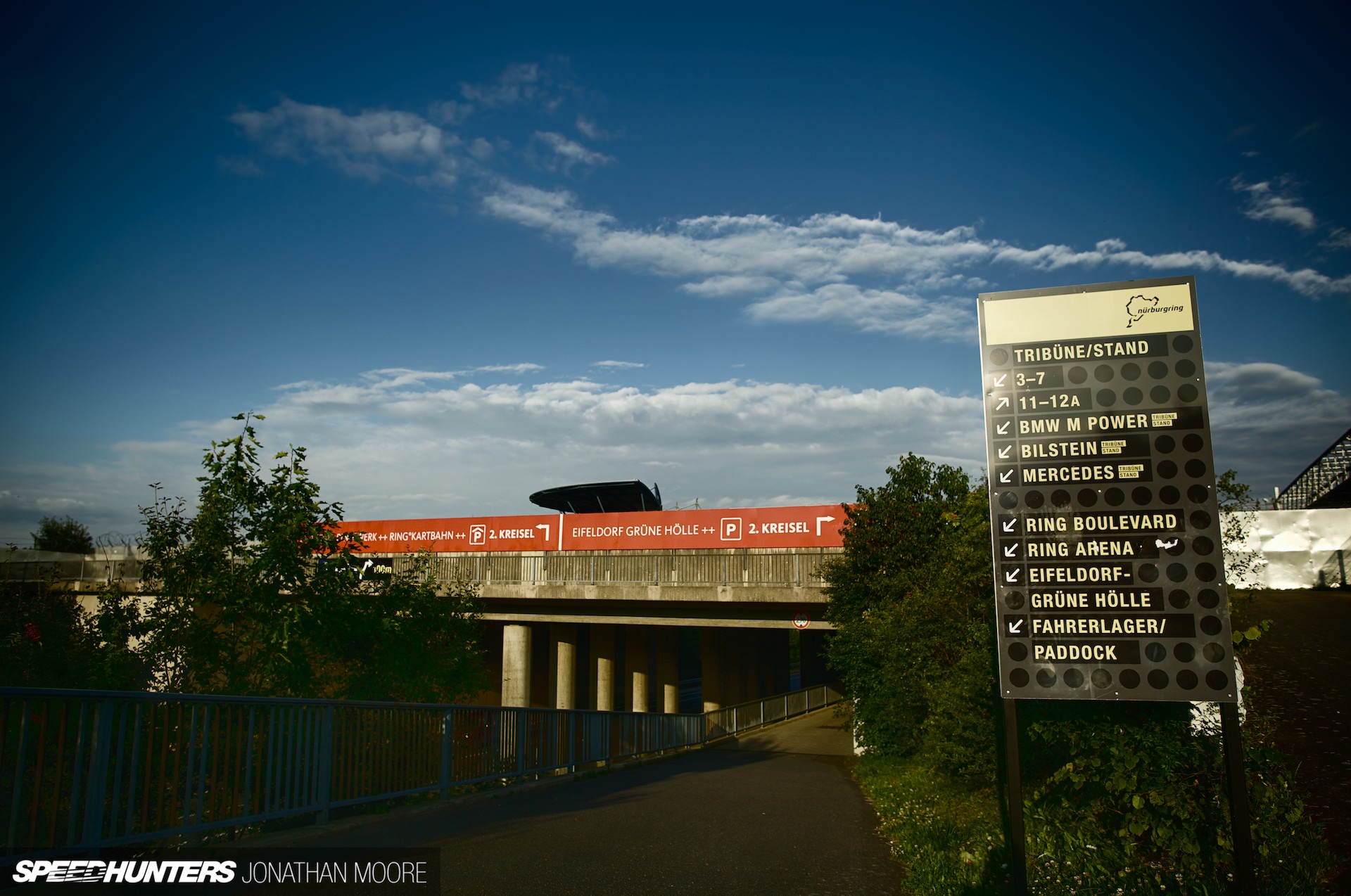
The slope is now cut through by the 258 main road that runs up parallel with Döttinger Höhe, running through the artificial crevasse that bisects the original course of the Südschleife, with the twin bridges above supporting the outward and return legs of the Grand Prix track.
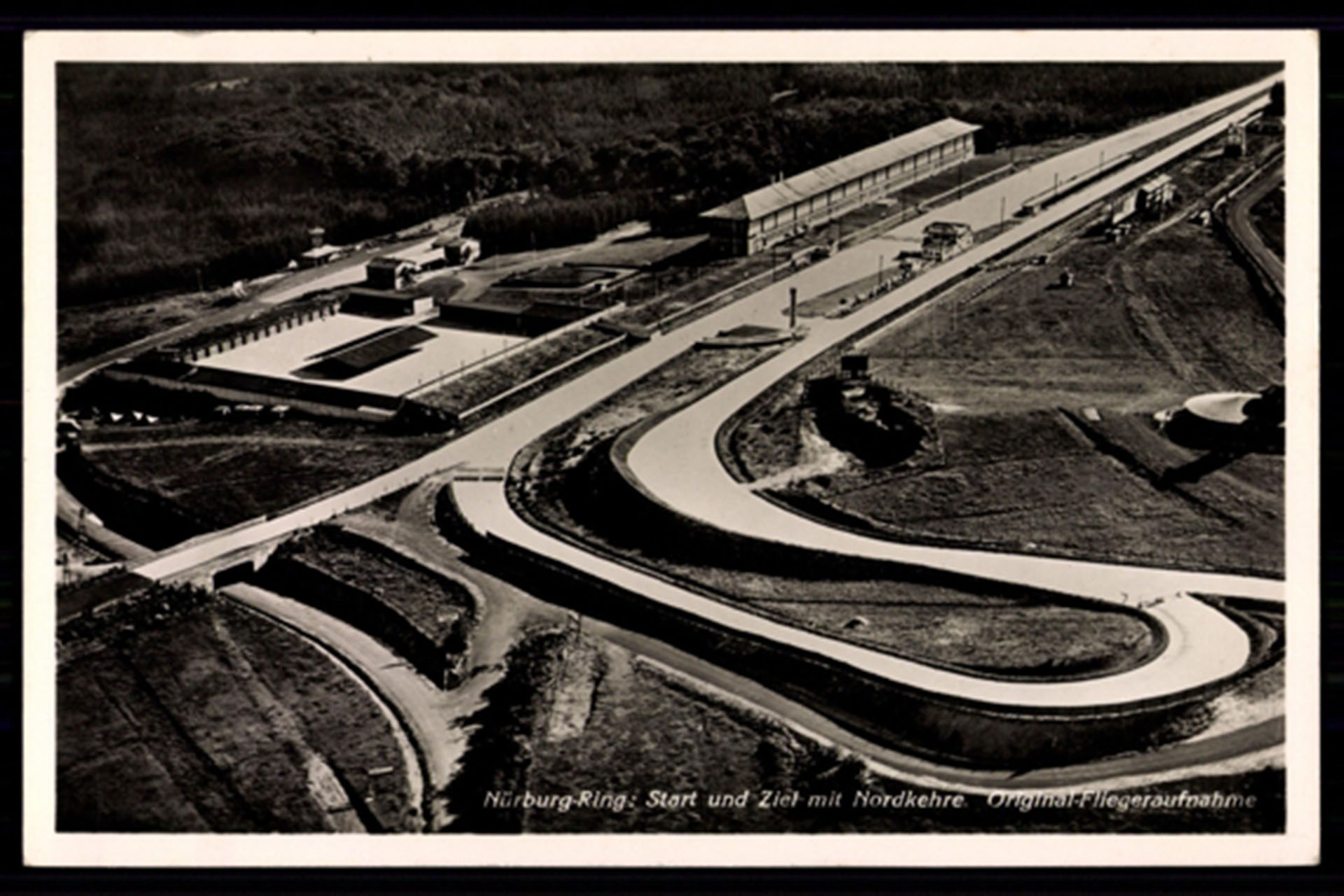
Like the outward run of the Start und Ziel Platz, the long parallel return is now buried under the paddock of the Grand Prix track – which is known derogatorily as the Ersatzring – and the Nordkehre loop at the top end is gone under a grandstand. This contemporary postcard shows what an impressive construction it was. Interestingly, the combination of the Südkehre and Nordkehre linked by the long parallel straights was also occasionally used in a layout known as the Betonschleife: a high speed track that aped Avus.
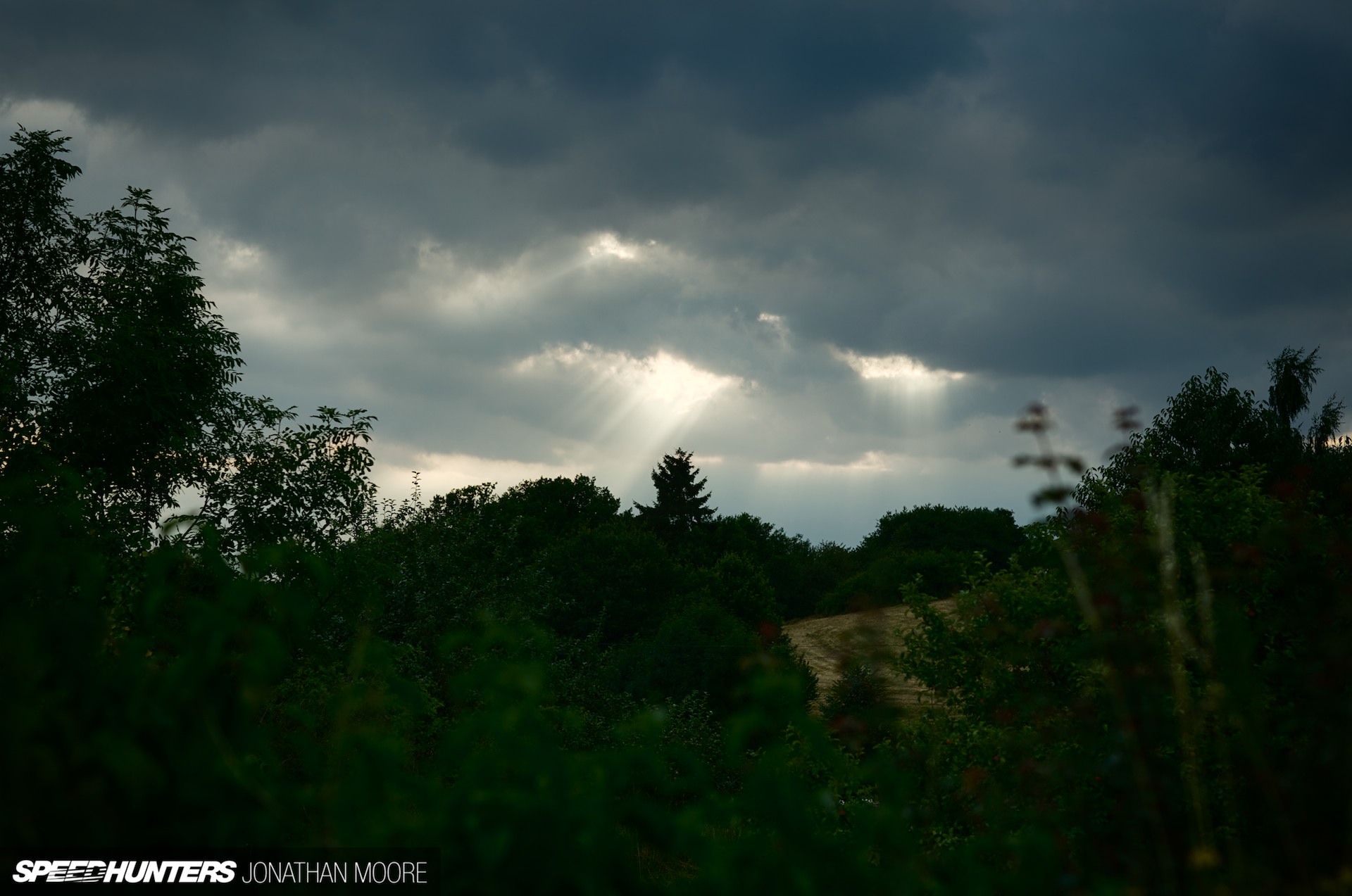
So there you have it. The dead track still sits there, gently decaying, draped around the valley surrounding the lower part of the infant Grand Prix circuit. I think it’s a mistake to think of the Südschleife as the poor relation of the better known Nordschleife: more it’s the unsung older brother. It complemented the northern section, making it even more impressive together than apart.
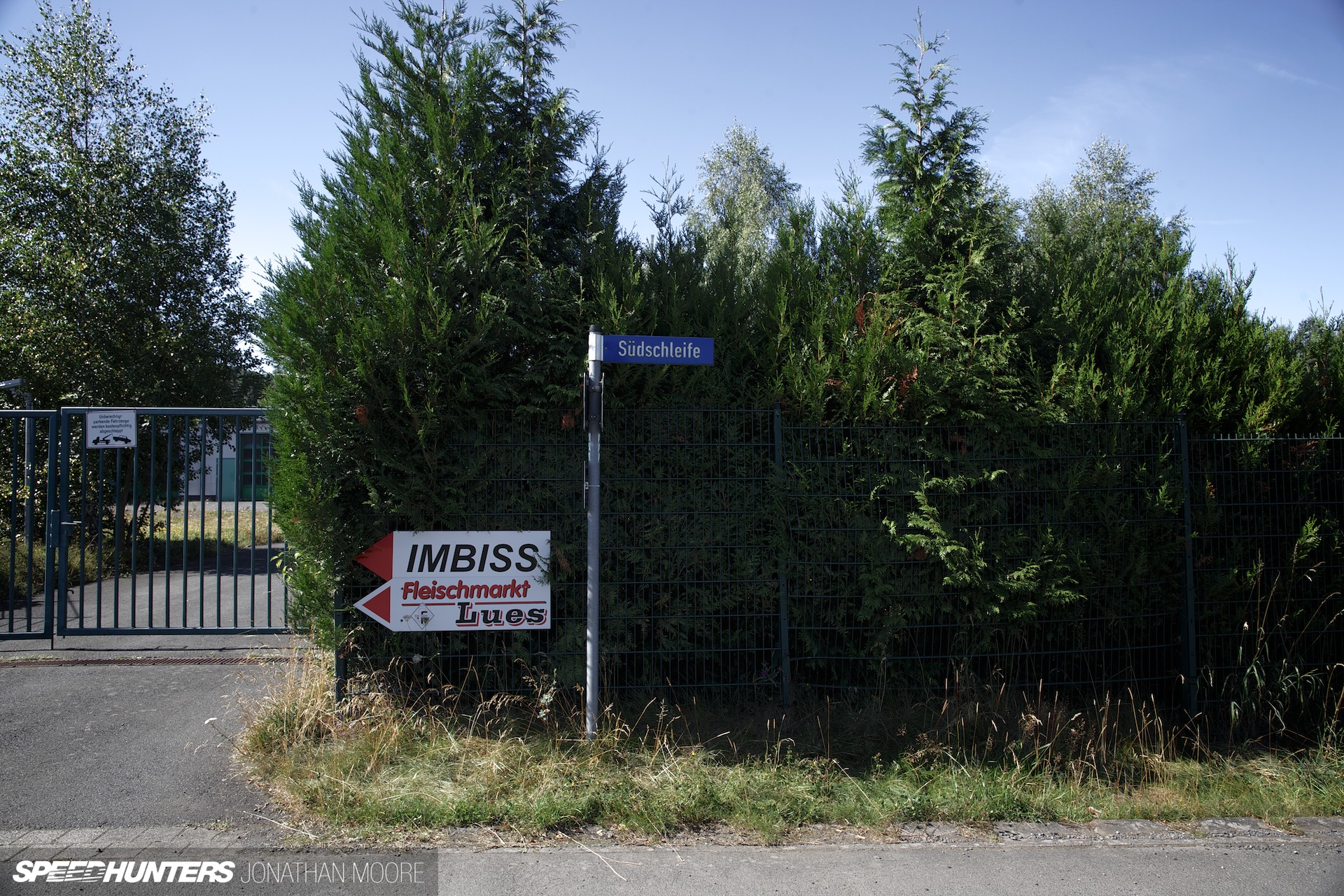
The lesson? The Südschleife is barely mentioned in histories of the track, and its name has been reduced to the title given to the 100 yard stretch of road in the industrial estate. It’s a salutary reminder that you can never be blasé about what we have: all it takes is the political wind to change or money to funnel in a different direction, and it could be the Nordschleife that we’re calling a lost track of Europe.

So visit the Nordschleife by all means – but don’t forget to pay your respects down south.
Jonathan Moore
Instagram: speedhunters_jonathan
jonathan@speedhunters.com