
No matter where we in the world we are, an amazing machine is never far from a Speedhunter’s camera viewfinder. And while we like to think that every car we feature, regardless of its direction or end use, has a certain x-factor, every now and then we come across innovation that simply blows us away.
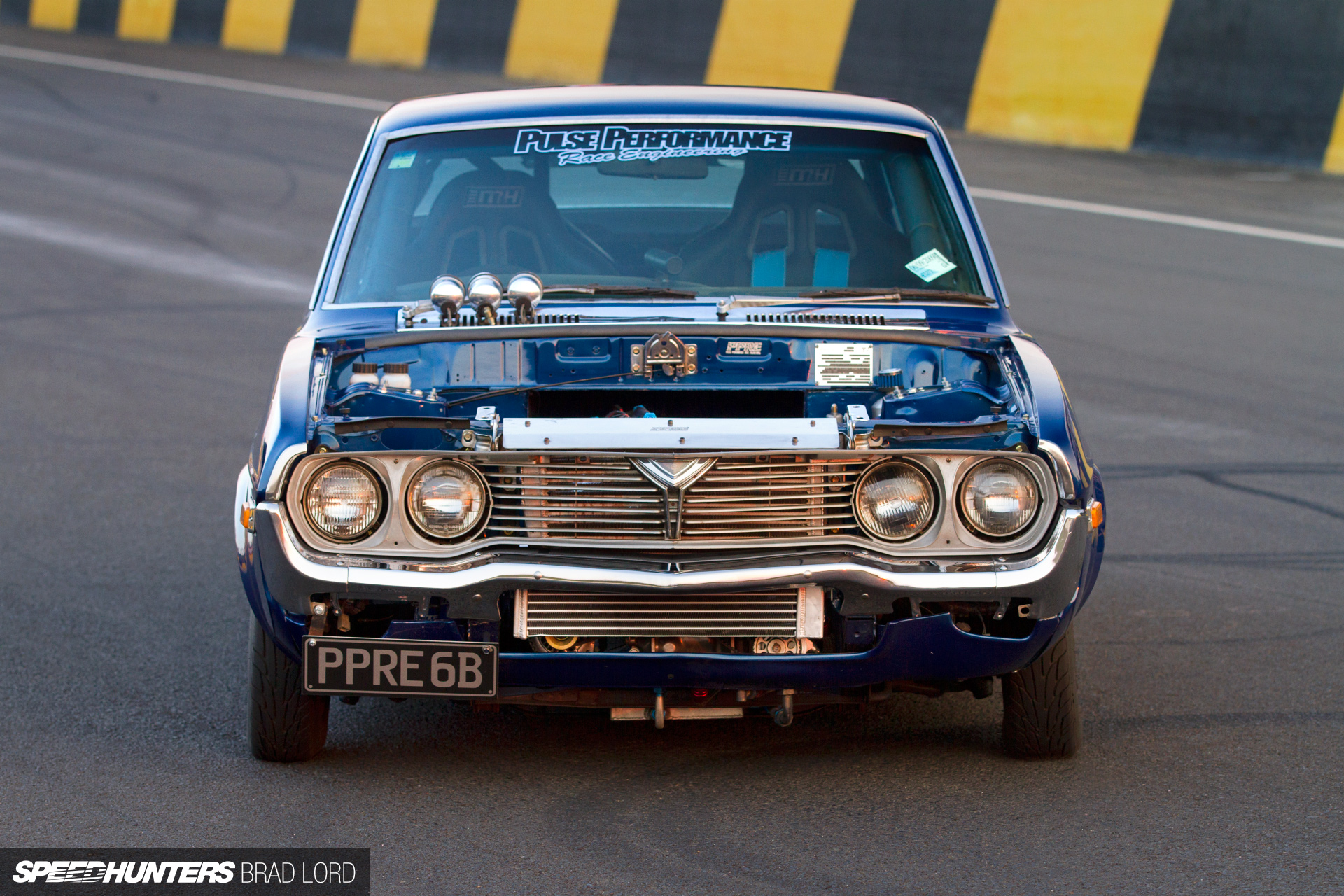
As we all know though, conjuring up an idea is one thing, but actually following through with it is something else entirely. This blue 1974 Mazda RX-4 from New Zealand proves that with a solid plan, the necessary skills and dogged determination even the wildest automotive dreams can come true.
Unless you are brand new to the interwebs, I’m going to assume that you’ve seen – and perhaps even heard – this one-of-a-kind feat of engineering before. The completed RX-4 might have only had its wraps officially pulled off earlier this year, but it was back in mid-2012 when its creator, Pulse Performance Race Engineering, announced via YouTube that it had been successful in building the world’s first six-rotor Mazda rotary engine.
Before I get stuck into some of the finer details of the ‘6B’ creation, I need to cover off the backstory. This largely revolves around two people: Warren Overton, the brains behind PPRE and its rotary engine building expertise, and his business partner and long-time friend, Alex Sigley. Essentially, Alex provided his RX-4 and the financial means to launch the project for its conceptual state, and Warren invested his time, energy and technical know-how to try and make it a reality.
Having owned the RX-4 before he was even legally able to drive, Alex had clear intentions for its ultimate build, and the idea of a six-rotor engine would be the pièce de résistance in the Pro Street theme. Prior to its metamorphosis the Mazda had gone through a number of guises, but before being stripped down to a bare shell for its latest and easily greatest incarnation, it was powered by a savage PPRE 13B drag package good for 700hp-plus on C16 race fuel.
Even though 13B would have easily provided the RX-4 with enough power to make proper use of drag-spec rear end, for Alex the idea of the Mazda rotary equivalent of a stroked, big block V8 held much more weight – even if a six-rotor engine was something that had never been seen before. But considering Warren’s background, and more specifically his pivotal role in the development of the New Zealand-made Precision Engineering eccentric shaft that has formed the backbone of every serious custom four-rotor build, he couldn’t have had a better guy in charge of the project. That’s something very evident in the finished car too.
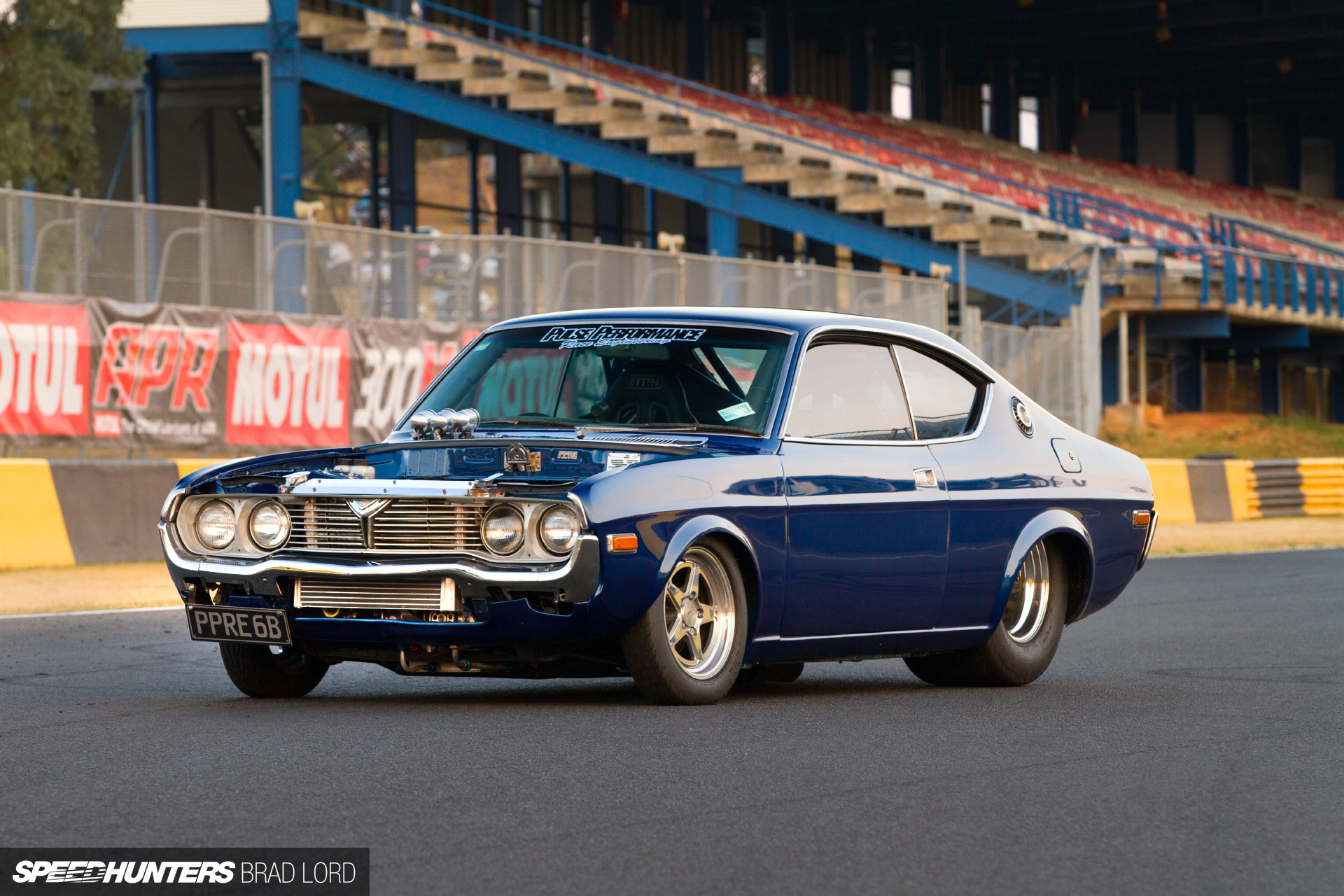
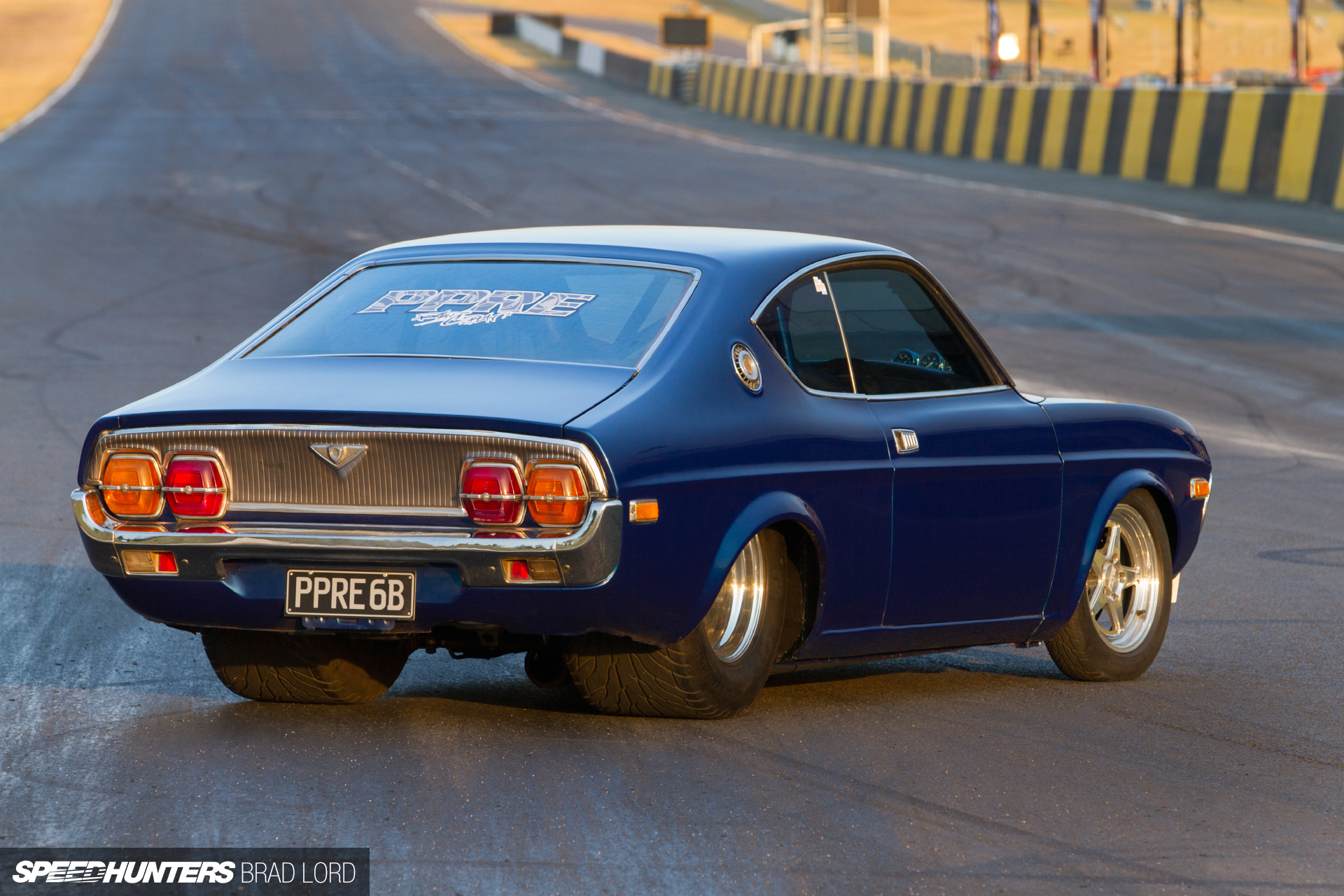
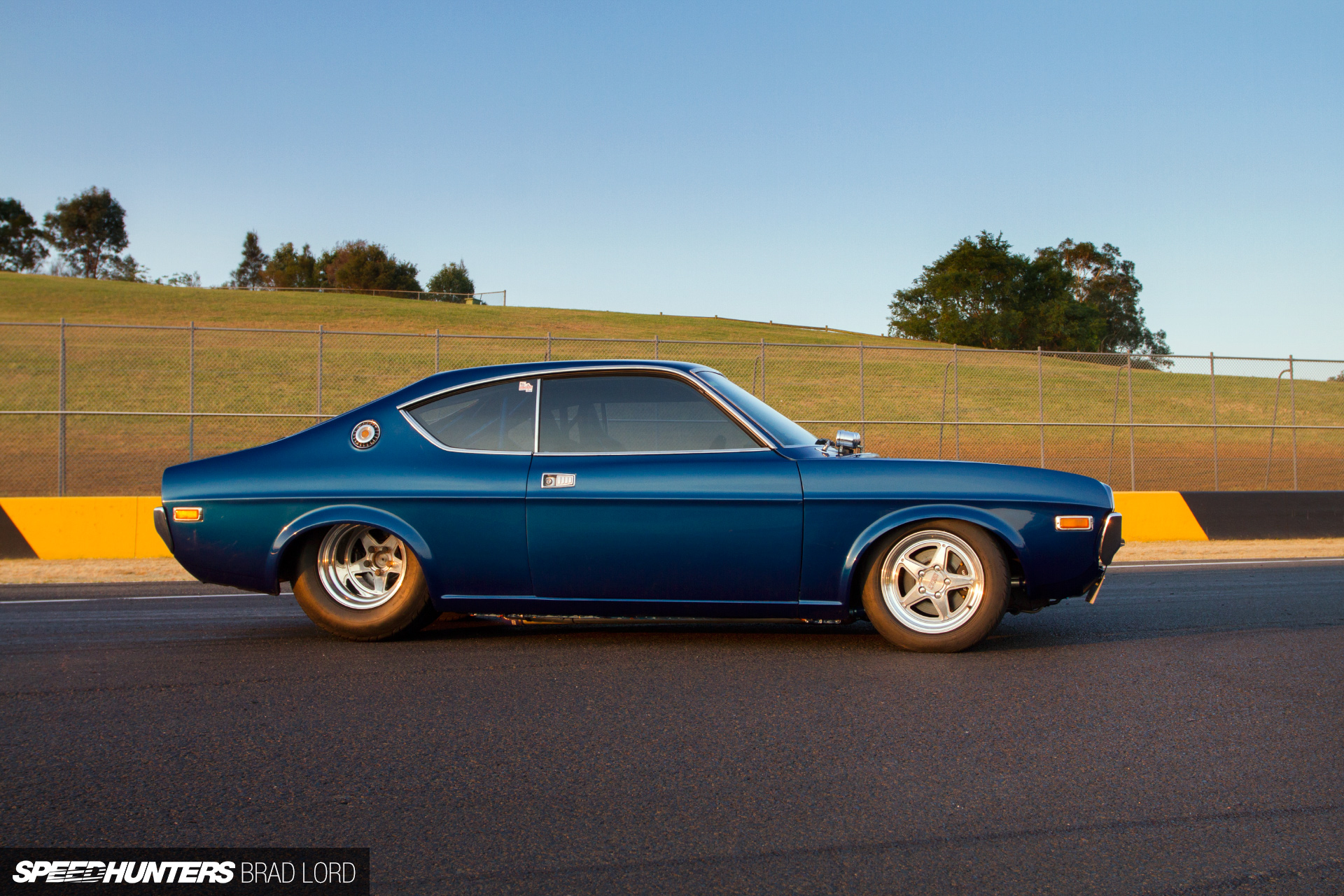
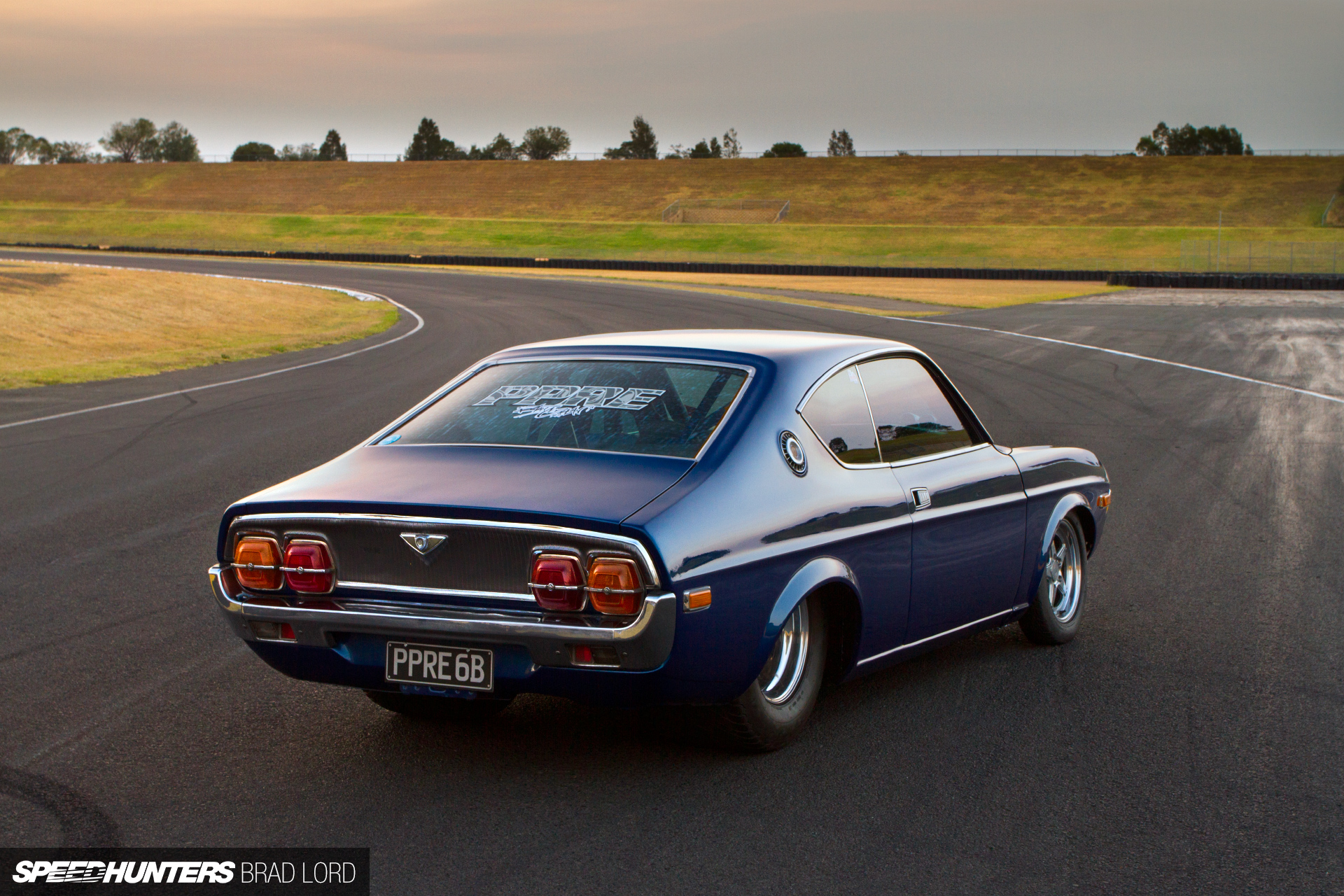
The RX-4 has never enjoyed the same following the RX-2 and the RX-3, perhaps due to the racing pedigree that the latter shared, but I’m not sure if anyone could not like the look of Alex’s coupe. The Pro Street approach might normally be reserved for American muscle cars, but given where the visual inspiration for Japanese performance cars in the early ’70s was drawn from, it’s an effortless match for the Mazda’s lines.
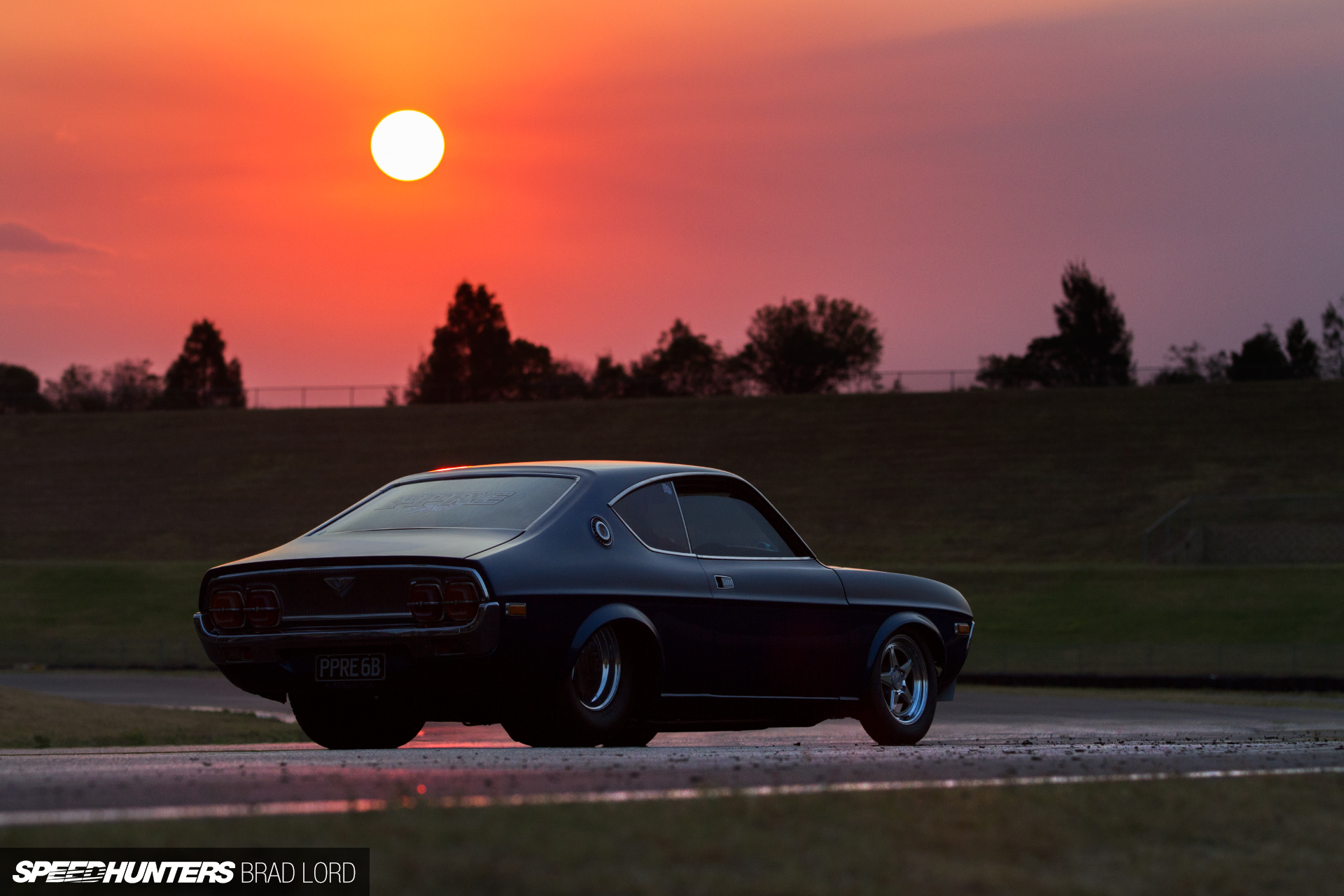
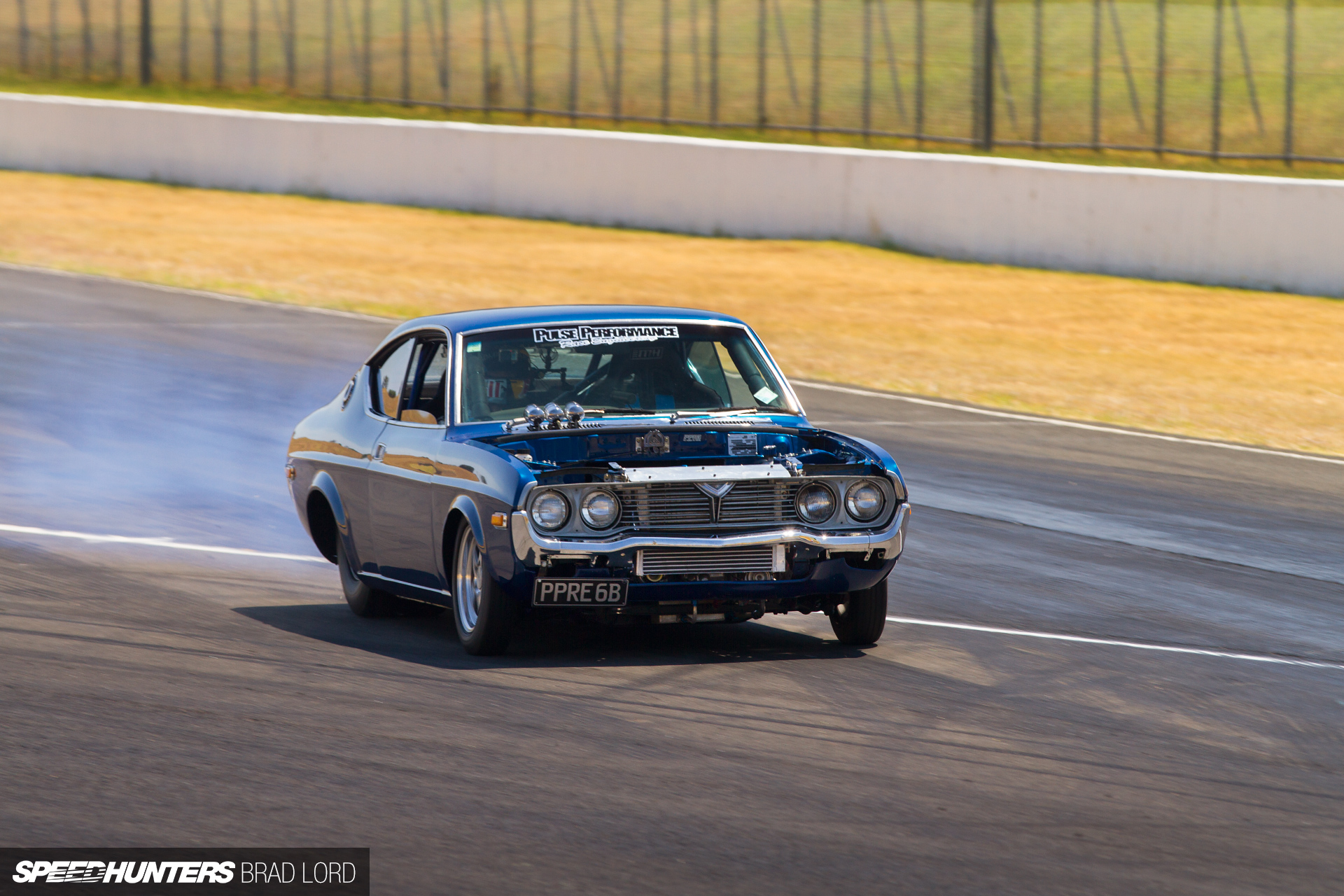
We’d been meaning to shoot the RX-4 for a while now, but once we heard it was going to be shipped over to Australia for last month’s Yokohama World Time Attack Challenge in Sydney, and that our very own Mad Mike Whiddett would be making a few demo runs behind the wheel during the course of the event, it seemed like the perfect opportunity to take a closer look over the car.
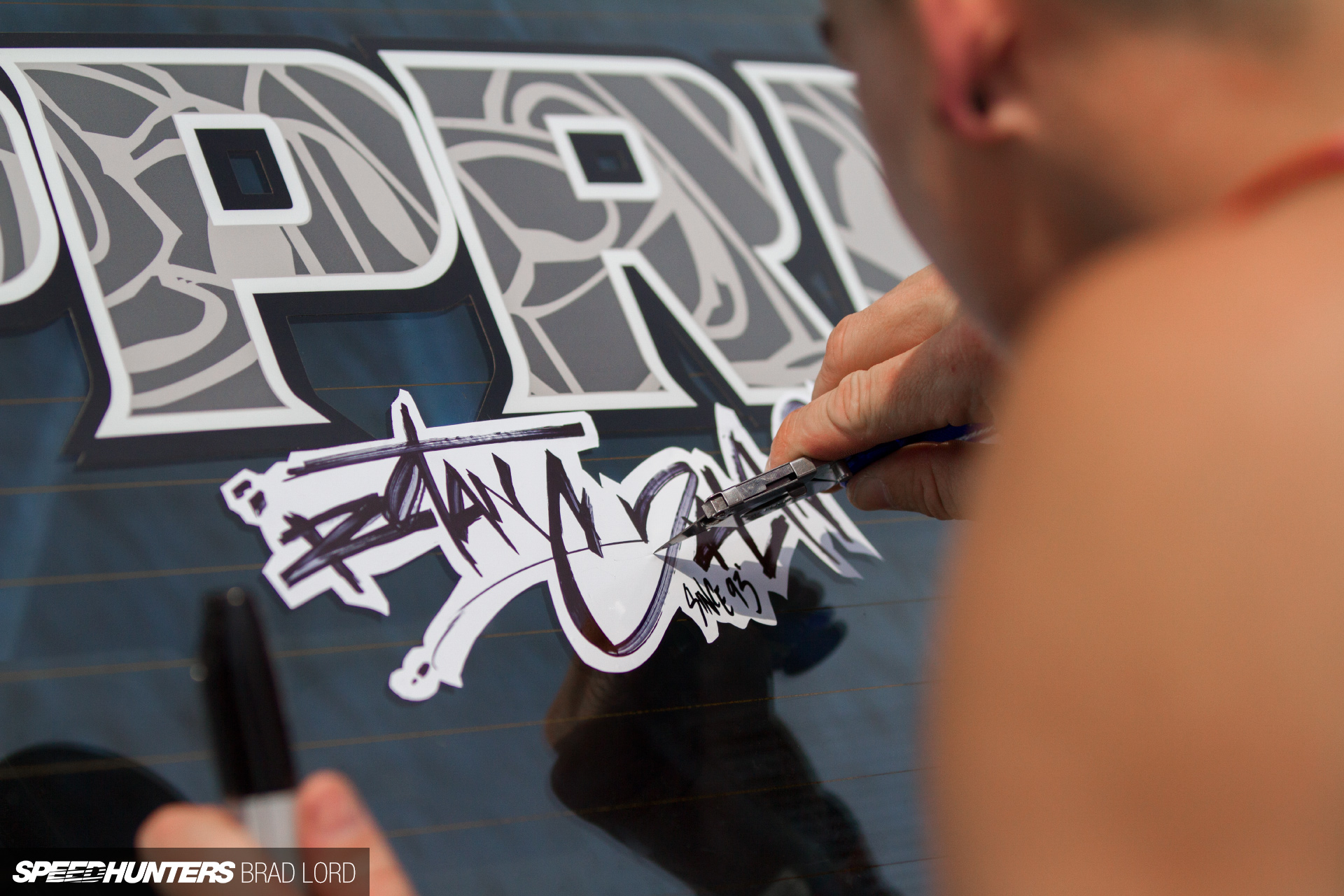
But only once Mike had officially inducted it – through some impromptu freestyle handiwork – into New Zealand’s famed Rotang Klan car club. It’s not by chance that he was tasked with driving the RX-4 either, but rather that Warren has been involved with the engine builds for Mike’s own cars right from the very beginning of his drift career. It should come as no surprise then, that both the four-rotor motor in MADBUL and the 20B turbo engine in BADBUL have PPRE’s name stamped on them.
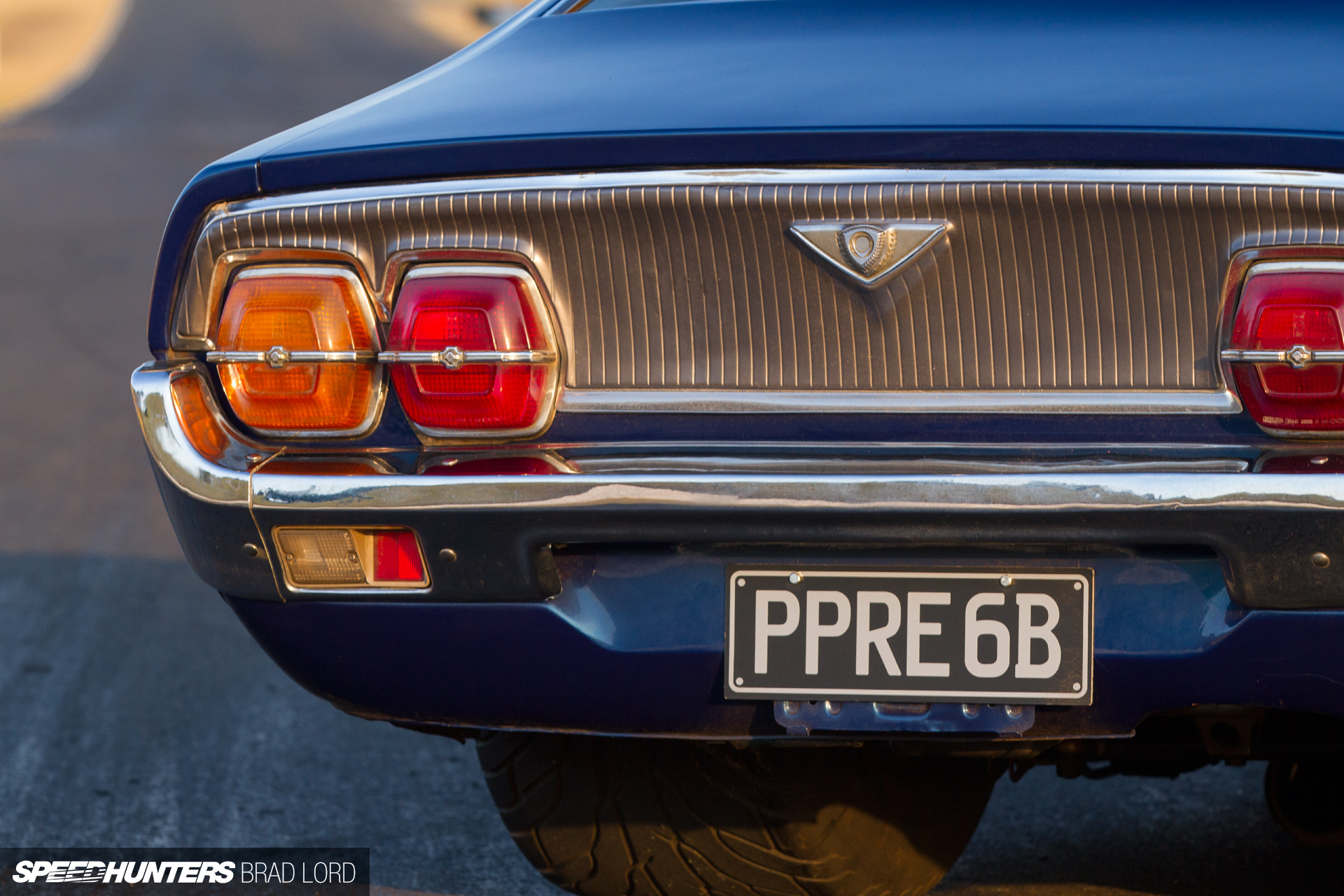
Mike’s going to be filling you in on his time at the controls of the RX-4 in an upcoming Speedhunters driver blog, so for now it’s probably best that I stick to the details. There’s really only one place I can really start. At the 6B.
Six-shooter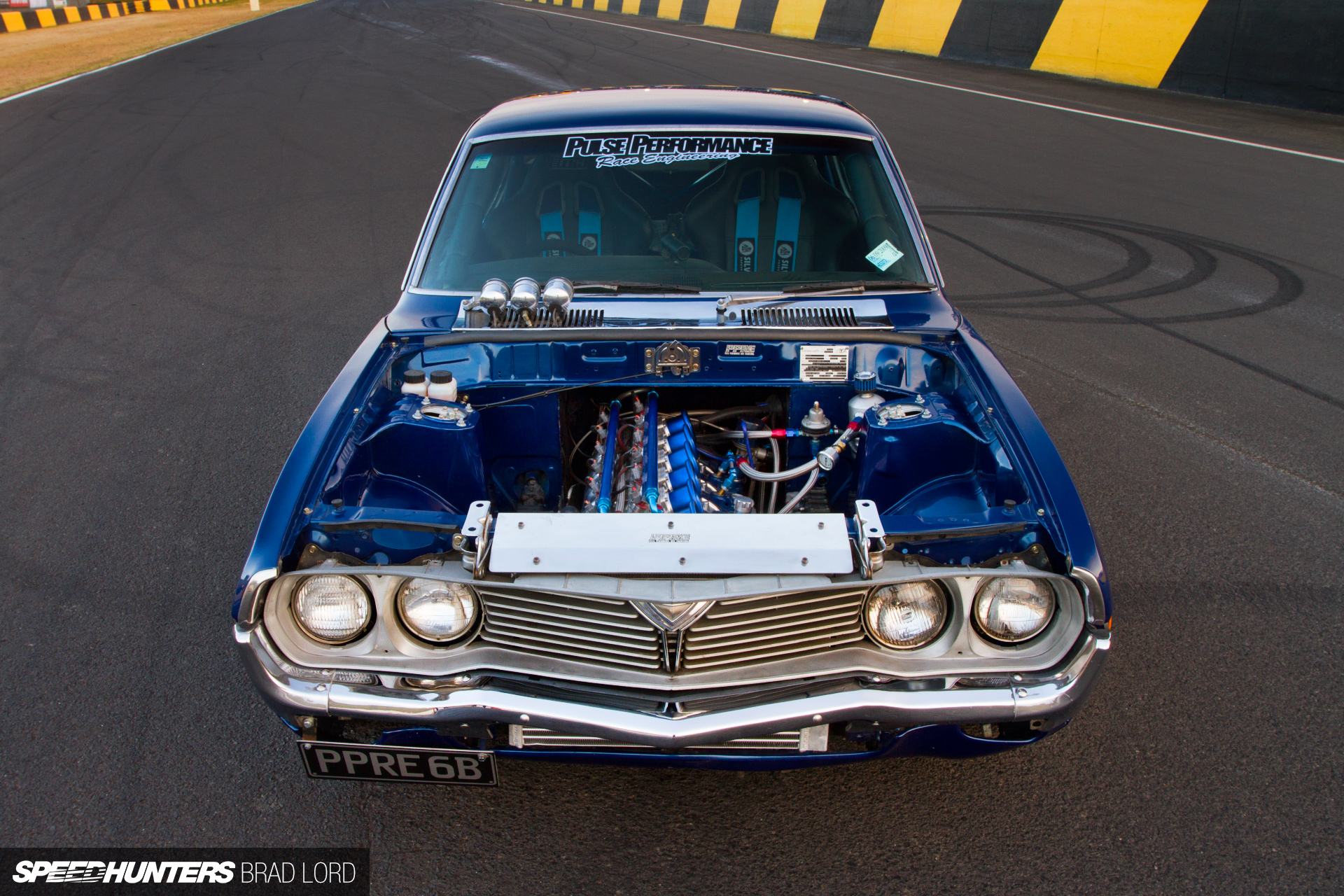
Let’s begin with the numbers first: 813hp at the wheels at 8,800rpm, 759Nm at wheels at 5,000rpm. No turbos, no nitrous, no methanol, just a bespoke 3,924cc peripheral-port rotary engine running on pump gas and breathing naturally.
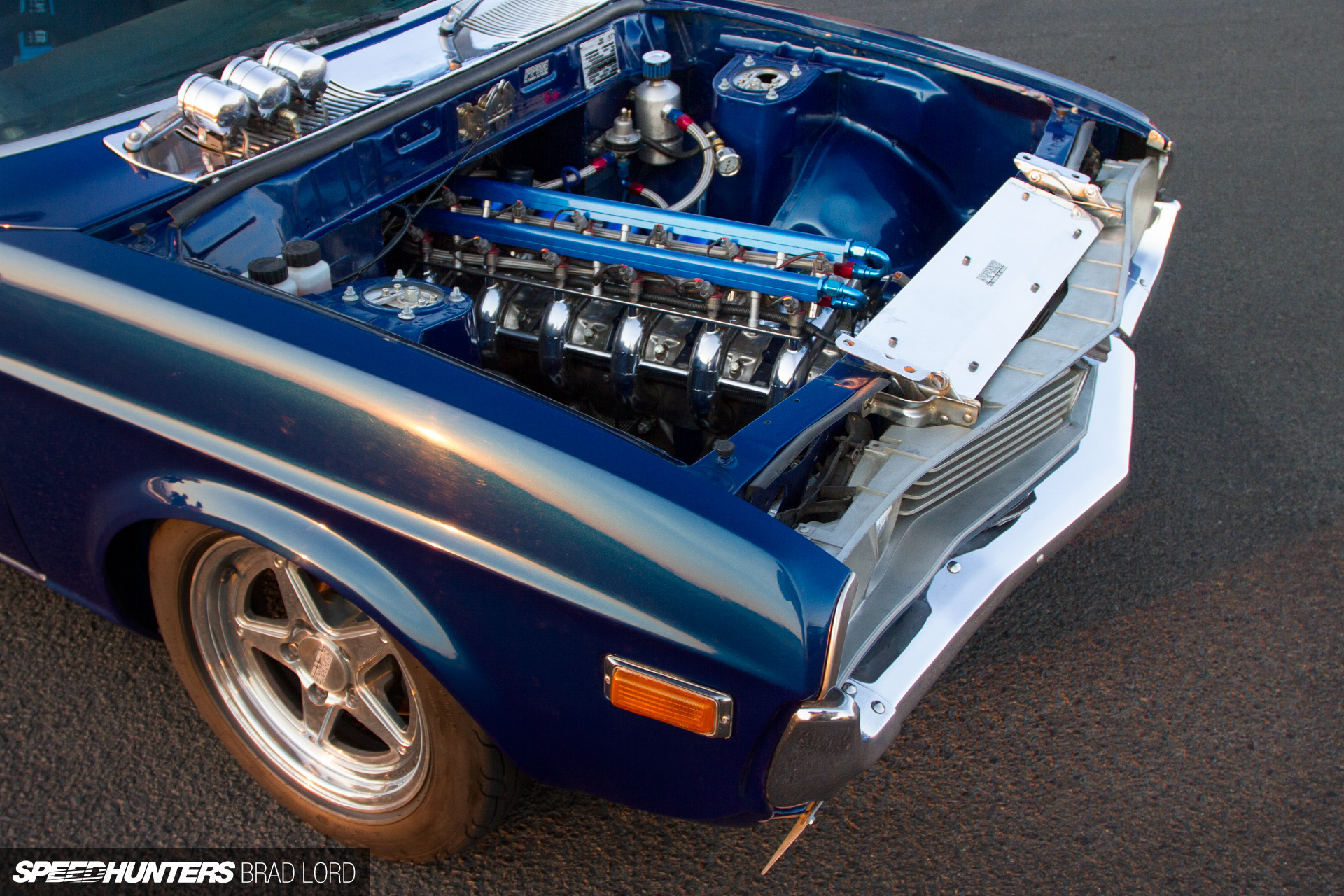
Modular by design, you could say Mazda’s rotary engine is infinitely upgradeable in size – in theory anyway. Unlike a regular piston engine which is bound by the confines of the walls of the block, building a bigger rotary engine is something that can be achieved by adding more rotor housings. But it’s certainly not as straightforward as it might first sound. Using the knowledge he acquired working on four-rotor motors and factory 20B three-rotor engines, it didn’t take long for Warren to work out what was required for the 6B build. The hard part, he says, was determining how to physically assemble the components together in the correct order.
At the engine’s heart is a handcrafted PPRE five-piece eccentric shaft. It’s been designed with the two central lobes being part of – and at the centre of – the main full-length shaft, plus four more lobes (two per end) which spigot onto the main shaft via a series of splines and taper locks, for a total of six. But that’s only half the trick. The other is a special modification that allows a front stationary gear and main bearing to fit inside a normal Mazda 13B side housing, in turn allowing the rotors to transmit their energy to the shaft.
For anyone not familiar with the inner working of a Mazda rotary engine that might sound complicated, but all things considered, the logic is quite simple. Rounding out the hardware, six FC3S-series four RX-7 rotor housings modified with 46mm peripheral ports are used and fitted out with RX-8 13B-MSP Renesis rotors equipped with PPRE apex seals.

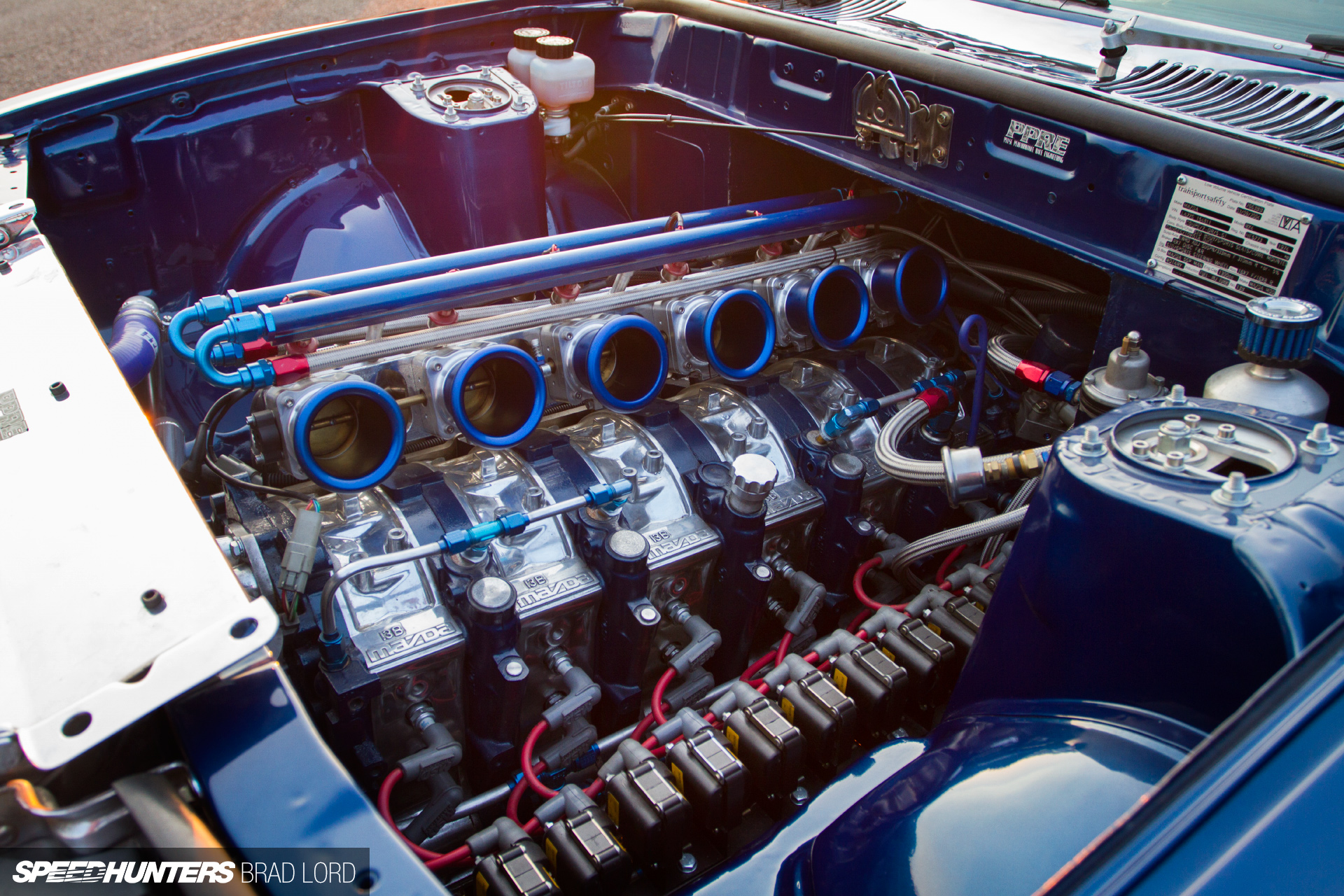
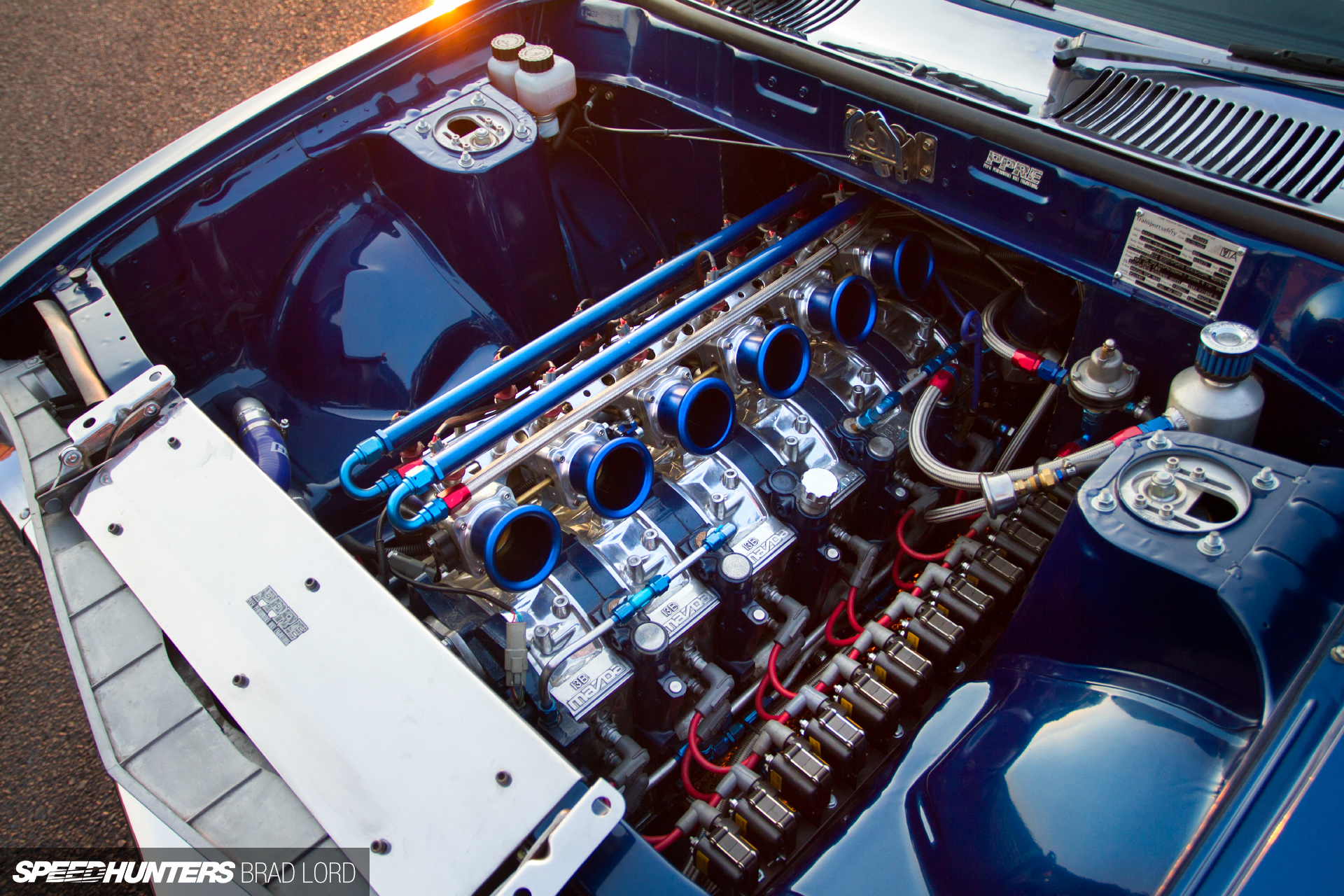
This angle gives you a good indication of just how long the engine is and the amount of modification to the firewall that was required to physically allow it to fit into the bay. It’s an extremely tidy job though, something that can also be said for the way the 6B has been presented. As the focal point for the whole car, just as much effort has gone into aesthetics as has ensuring the ancillaries work as efficiently as possible. Take the custom polished and tapered PPRE tubular intake manifold, for instance.
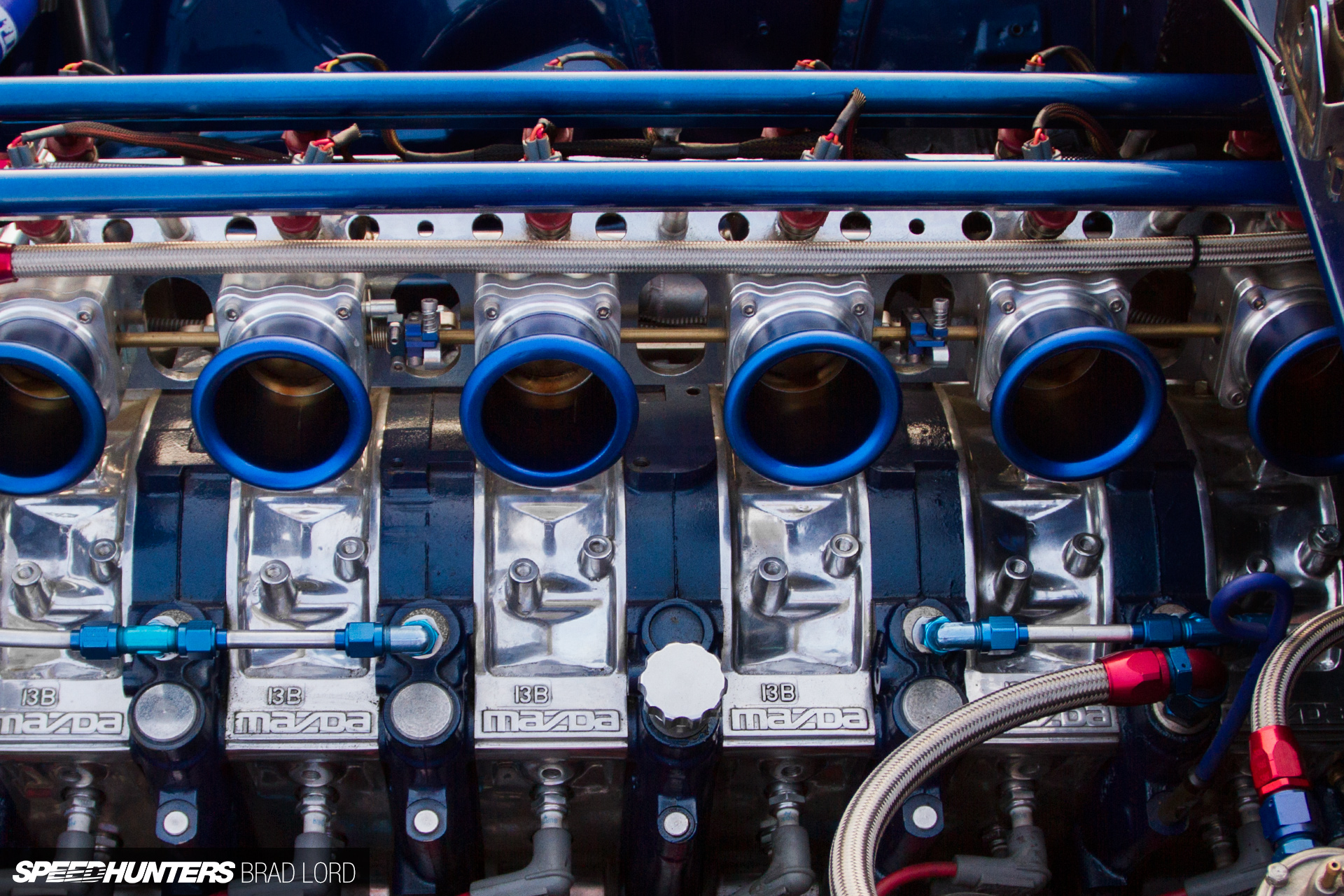
It wraps perfectly around the block in a symmetrical fashion, allowing the open tapered stacks of the six PPRE/EFI Hardware throttle bodies to draw air from the cooler side of bay.
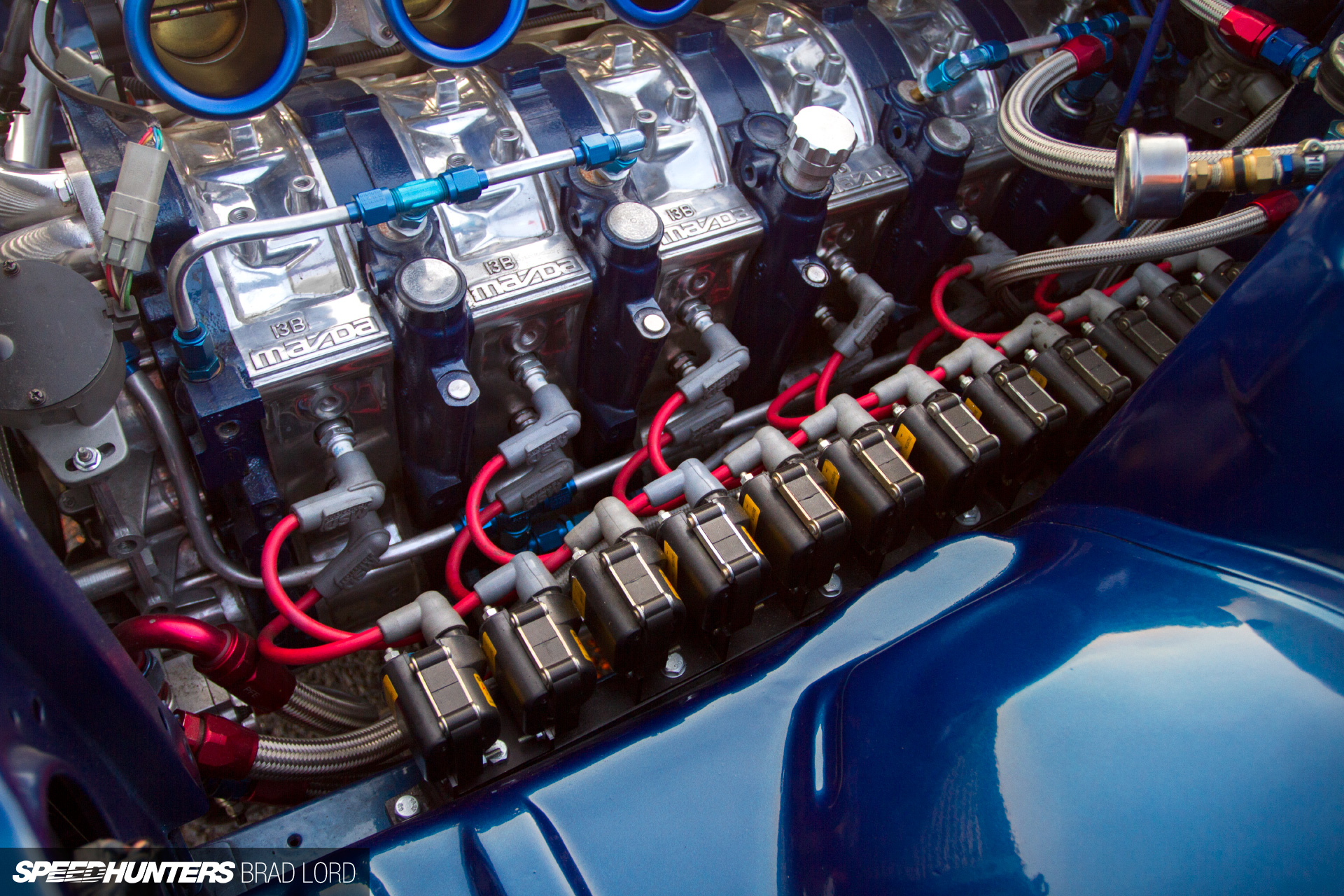
On this side of the engine you find an ignition system of even greater proportion. With two spark plugs per rotor, there are 12 MSD leads and 12 Bosch Tec coils lined up along the RX-4’s left side chassis rail. Spark come courtesy of twin MicroTech X6 igniter modules taking orders from a MicroTech LT-16C engine management system that was custom built for the application by its Australian manufacturer.
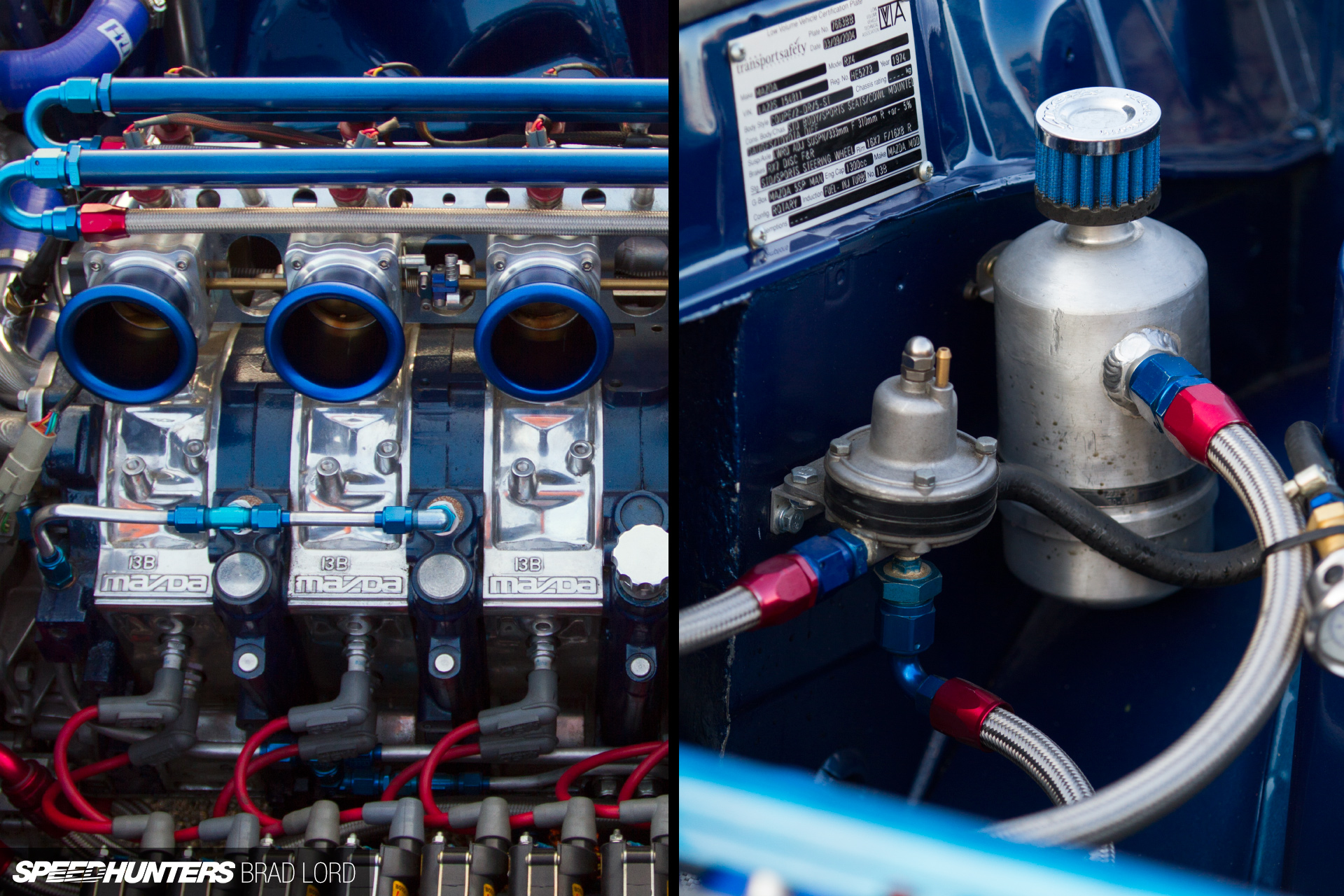
The fuel delivery system is somewhat impressive too, featuring a full dozen 550cc injectors fed through two custom rails. There’s a Malpassi adjustable fuel pressure regulator, a pair of Bosch Motorsport filters and braided stainless steel lines throughout too, plus an RCi fuel cell and twin Bosch Motorsport 044 pumps in the rear to quench the engine’s thirst.
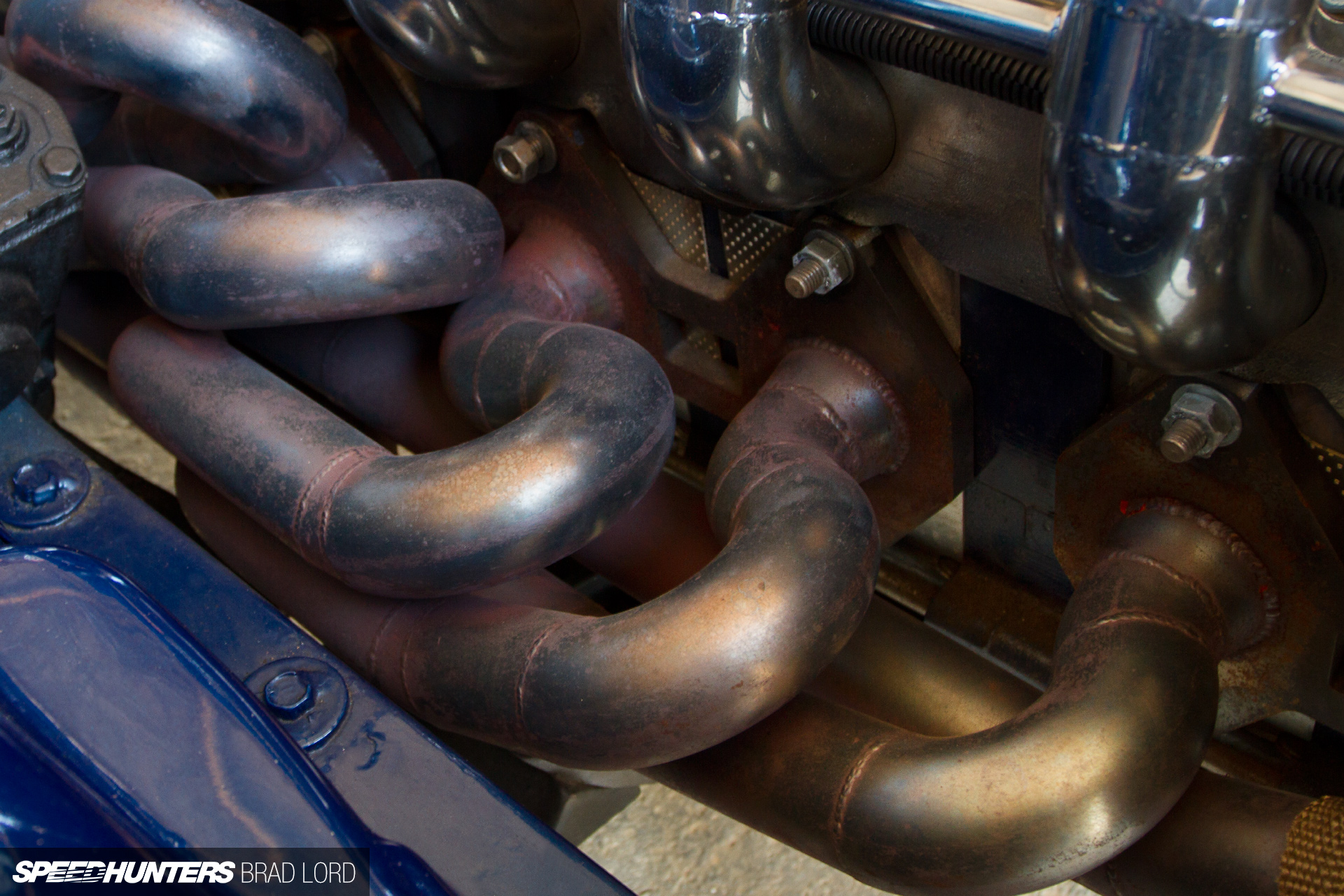
On the waste side, this one-of-a-kind engine called for a one-a-kind extractor-style header, which was fabricated in-house at PPRE and runs a six-into-two-into-one branch design. A street-friendly exhaust is still in the process of being built, so right now the RX-4 makes do with a short under-car exiting system that might not do much in the way muffling the noise, but it sounds so good.
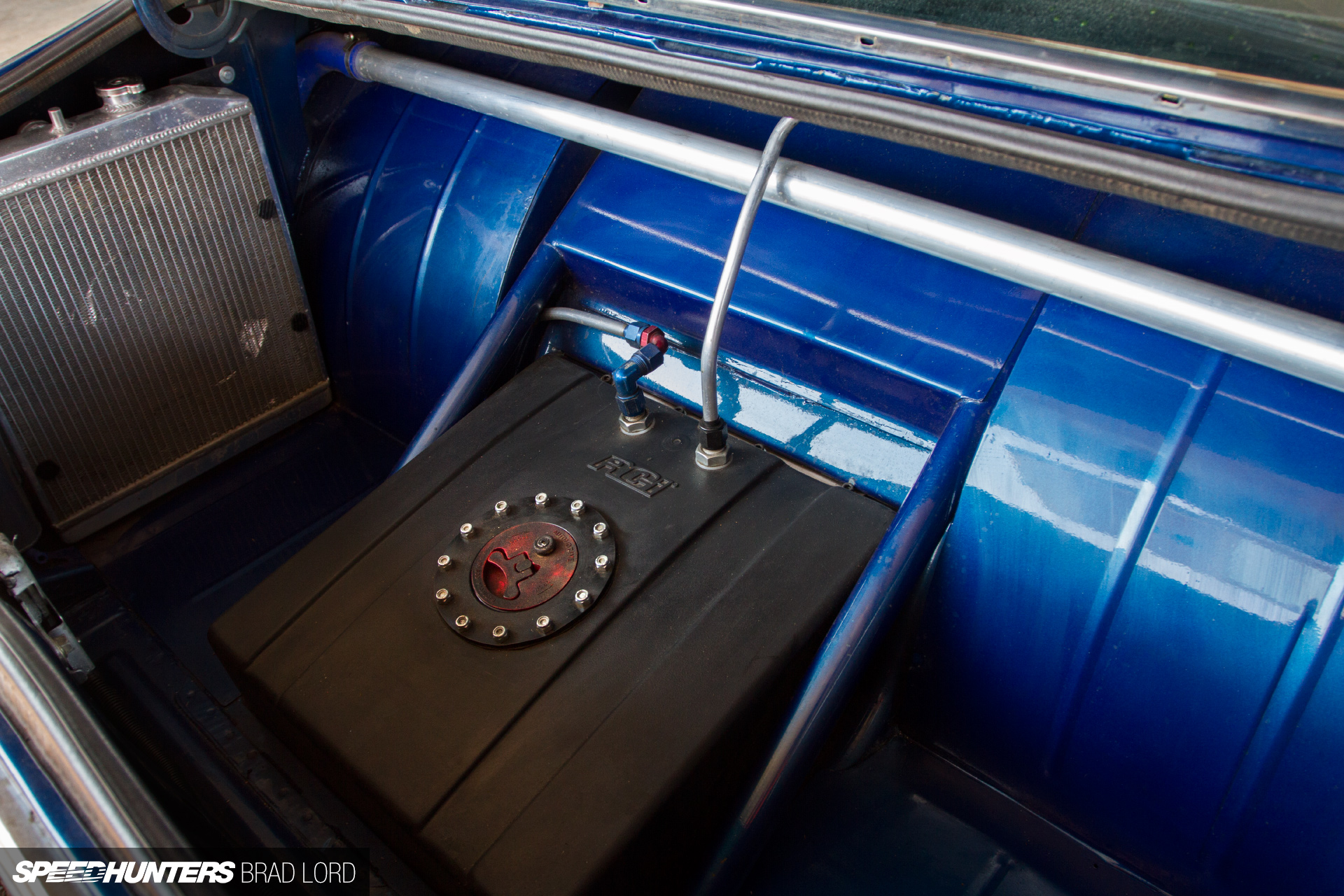
A project of this nature is always going to throw up challenges, and one of the biggest ones PPRE had to work around was an adequate cooling system for the engine. Because there wasn’t a lot of room left at the front of the engine bay, a large conventional-style radiator would not physically fit. And even if it could, the length of the engine and the fact that the front rotor housings would have run cooler than the rear could have presented its own problems.
The answer? Two radiators in the boot and a rear-mounted Davies Craig electric pump system, plus a modified intercooler core behind the grille, all working in unison. Although the setup works fine on the street, a little refinement is still required for racing. At present the boot latch has been modified so that the closed lid can remain ajar from the rear panel to allow hot air to make its escape from the cavity, but a proper extraction system is next on the cards.

There are definitely no issues in the driveline department though. In preparation for eventual quarter mile jaunts, top-shelf gear has been used throughout, including a Tremec TK600 five-speed manual gearbox with a 7.5-inch Tilton triple-plate clutch and a custom PPRE flywheel hanging off the back of the engine. Out that back you’ll find a PPRE-engineered driveshaft running into a Moser nine-inch rear end with 4.1:1 gears, and Moser gun-drilled 35-spline axles to put the power to the ground.
Street regal
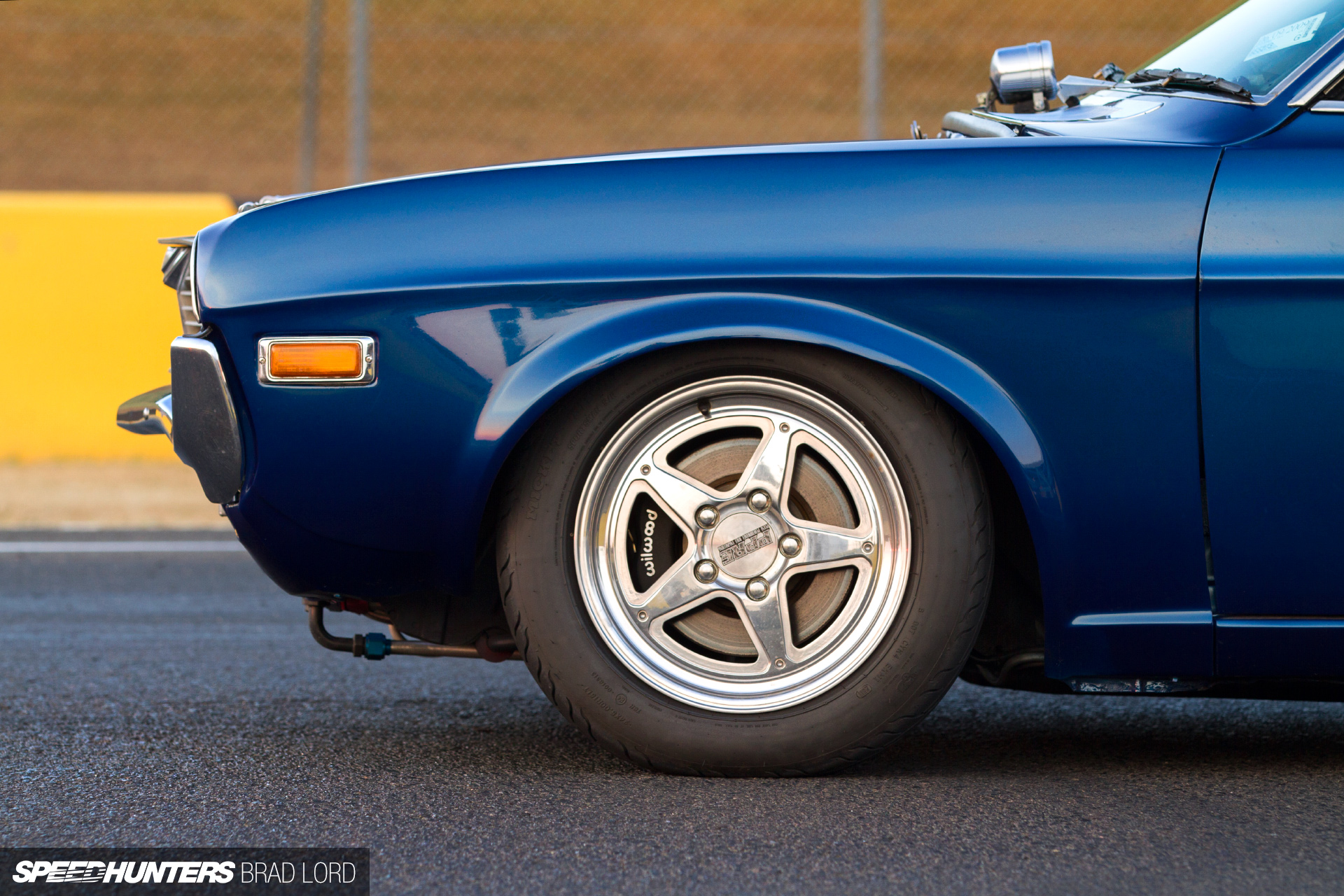
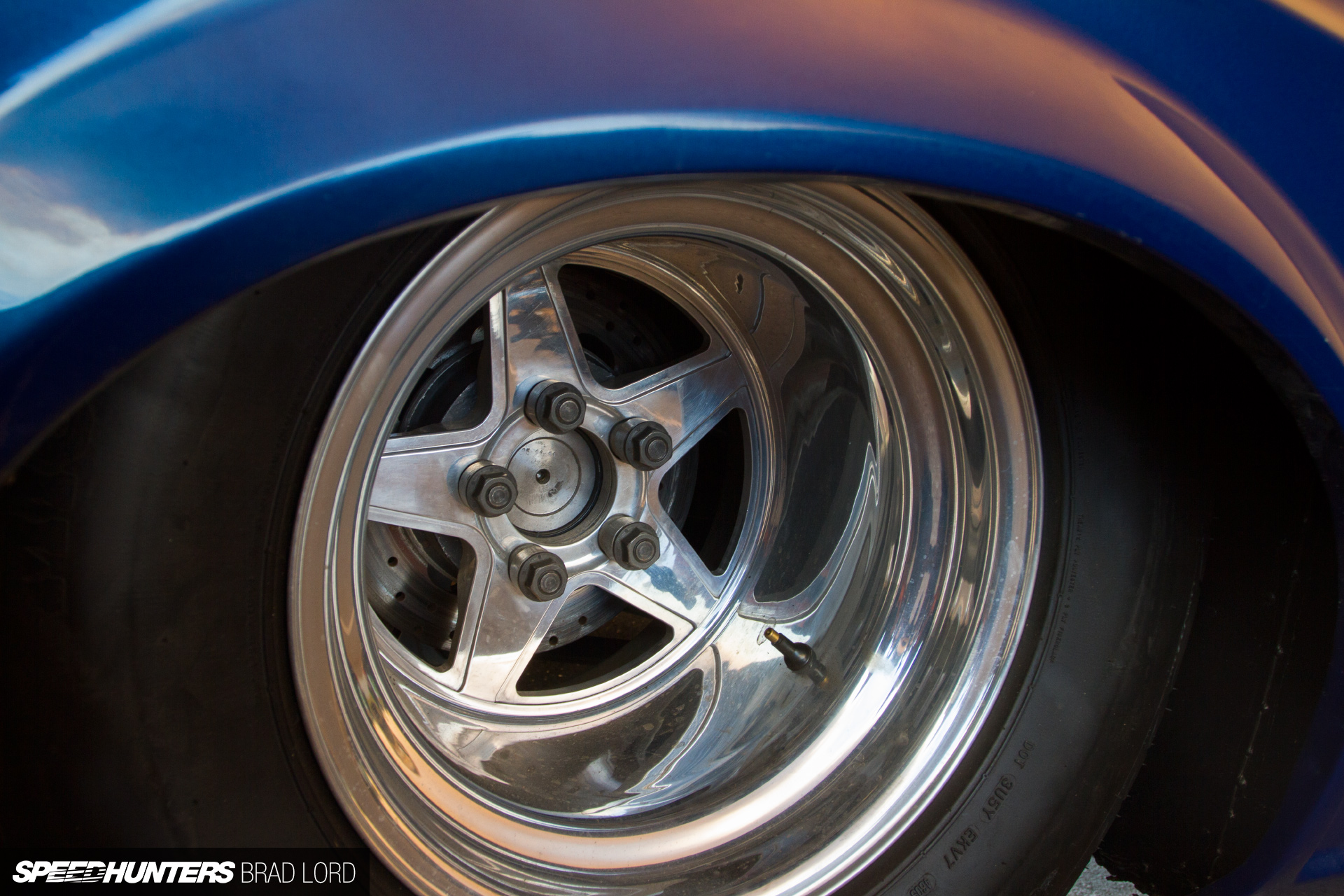
The suspension setup is custom-modified for the street/drag application too, with QA1 coilovers holding up the custom four-link arrangement in the rear, and Konis at the front. Combined with the large rear-wheel tubs, which allow the Mickey Thompson-wrapped Weld AlumaStar alloys to sit well up into the body, there’s a four-inch ride height drop that equips the Mazda with its oh-so-sweet stance. With more than half of the engine’s weight ahead of the front towers and limited steering angle, high speed cornering is certainly not the Mazda’s forte – but that was never the point.

The interior fit-out, while basic, does a nice job in retaining a number of the RX-4’s original features, including the ’70s-standard issue dashboard and door panels. As untamed and hard to control as this animal is, I’m going to assume the suede-wrapped SAAS steering wheel has been with the car for a long time too. The raised transmission tunnel gives you some idea of amount of custom tinwork that was required to allow the gearbox to physically fit into the equation.
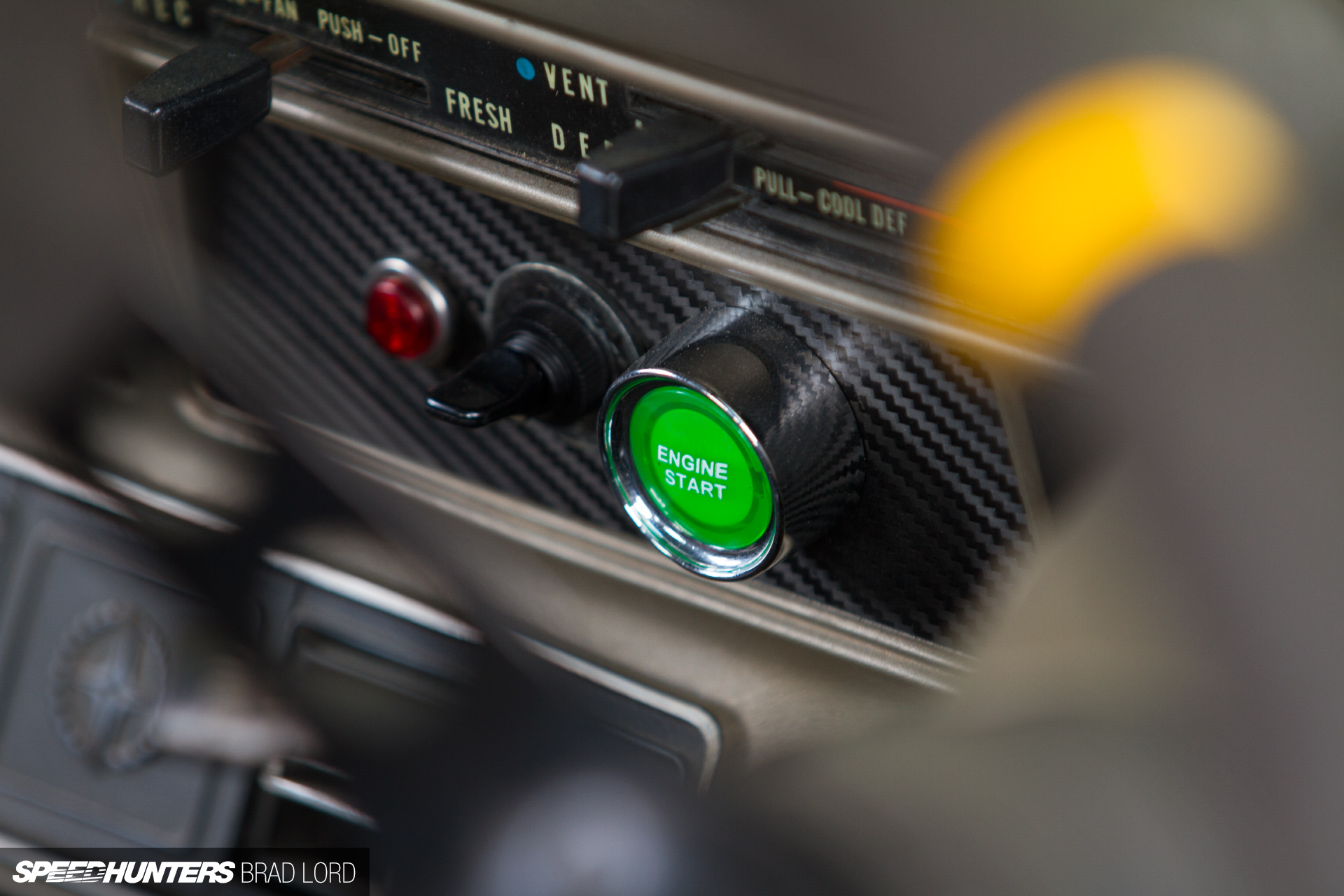
Carbon fibre-style trim and a modern engine push-start button amongst the sea of brown plastic are nice details.
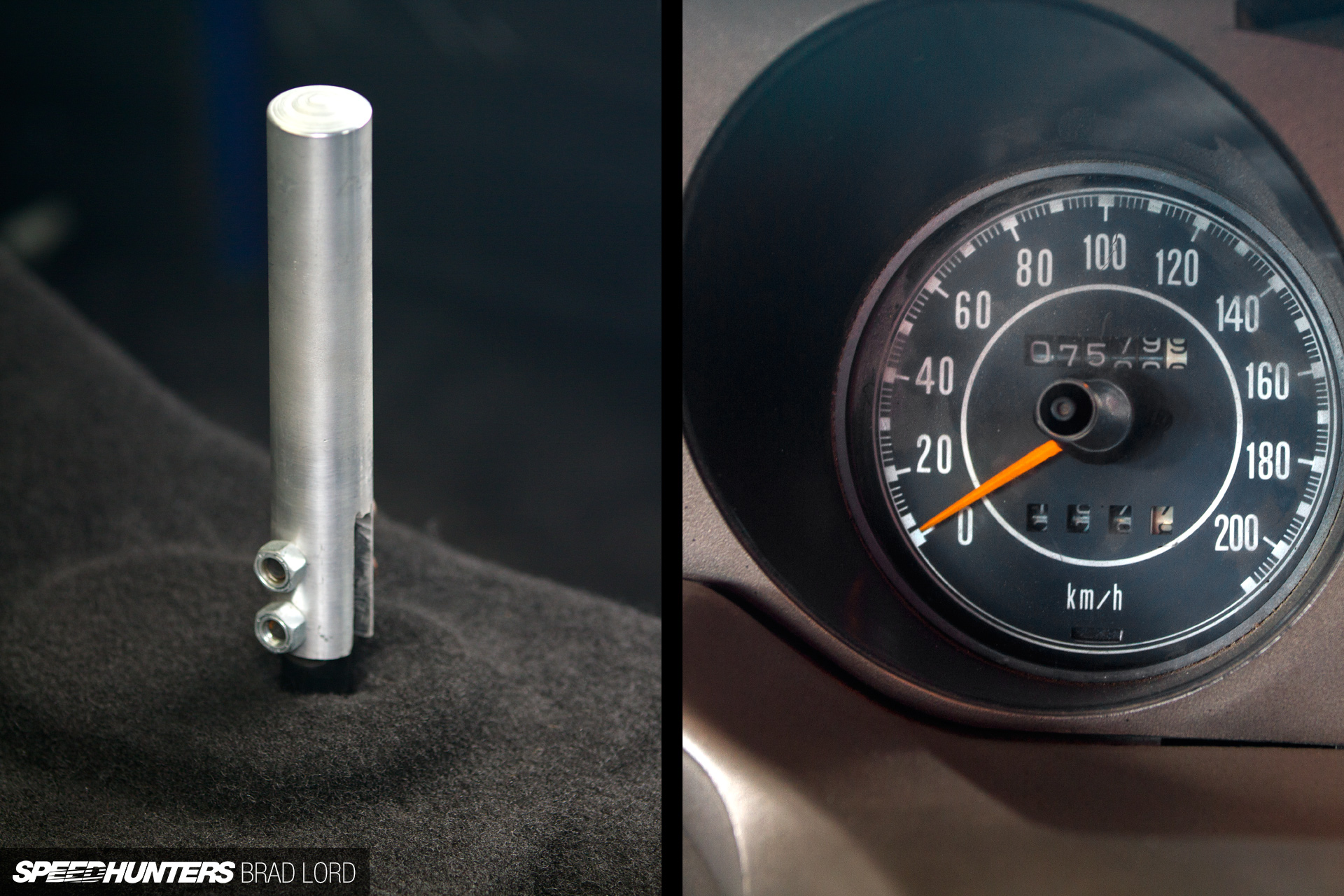
But there are not nearly enough numbers on the factory speedometer dial considering what the six-rotor and its supporting driveline are capable of.
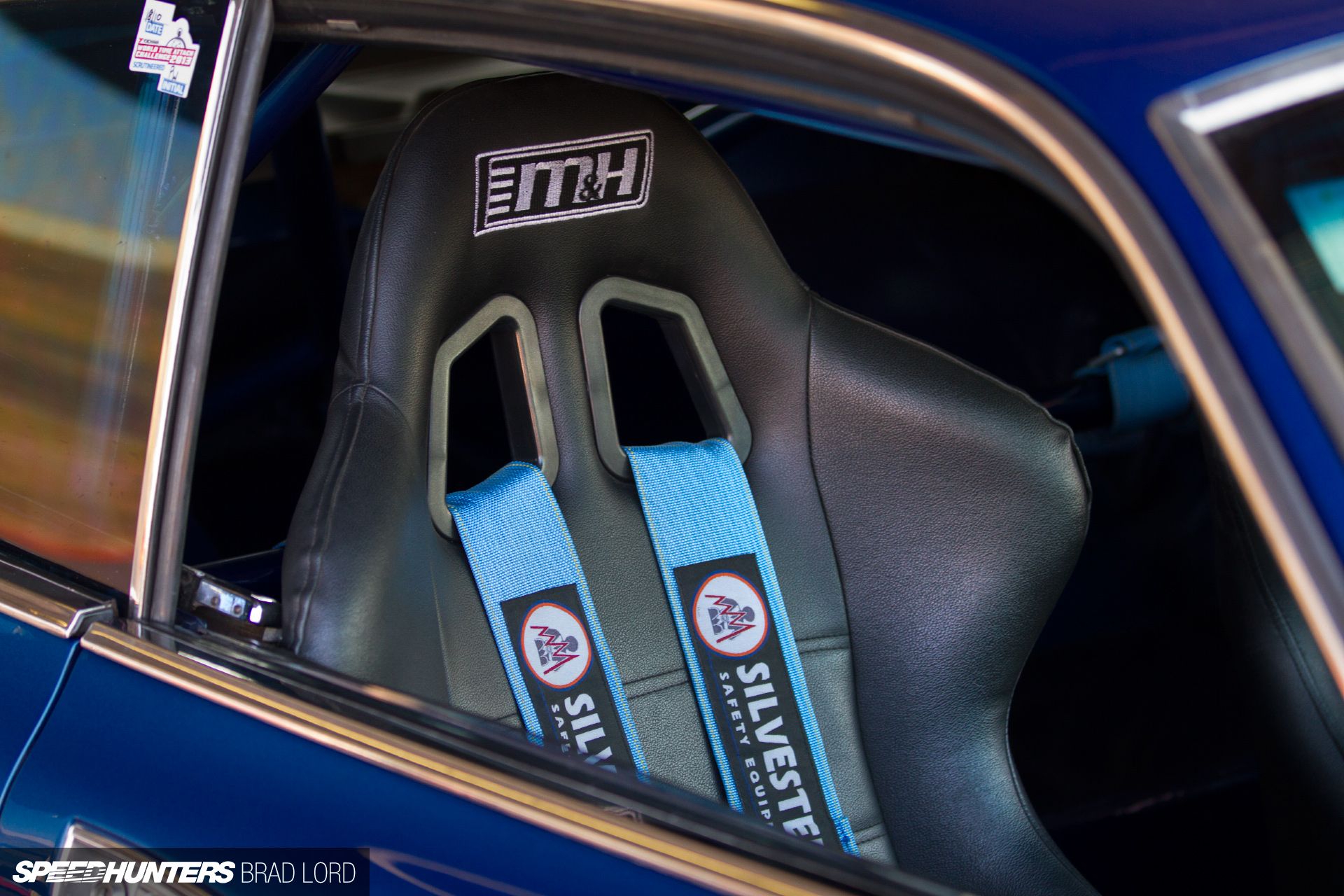
But even though the RX-4 has been primed for straight-line competition it’s still very much a street car. There’s no need to be uncomfortable, right?

Given the magnitude of this build, and the fact that no one really knew what to expect when the six-rotor was fired up for the first time, I think it’s remarkable how it all came together – and in the space of just 12 months no less.
Harmonic imbalance in the engine was one of the biggest concerns for Warren, but it ended up never being an issue. That’s good news too, considering what PPRE has in store for its 6B in years to come. And yes, a forced induction build is on the cards.
Given what the engine has been put through so far, including the recent stint in Sydney with Mike, Warren has no reason to question its strength. With the exception of two extra rotors in the mix, there is not a lot of difference to PPRE’s four-rotor motor, and that design had proven reliable with turbochargers and outputs exceeding 1,300hp for some time now.
For the RX-4 at least, the naturally aspirated six-rotor isn’t going anywhere anytime soon. With the current driveline and suspension combination, the chassis has proven in testing that it hooks up well, leading Warren to make no bones about its eight-second strip potential on slick tyres. And he should know too, having built and piloted a similarly-quick, yet 13B turbo-powered RX-7 in the past.
Perhaps the coolest thing of all is the fact that the build attracted the attention of Mazda USA, which has pledged to lend any technical support to the ongoing project should PPRE require it. For now though, Alex and Warren can be safe in knowing that what they’ve managed to create in a little country at the bottom of the world isn’t just a world first, but one of wildest and most innovative rotary-powered machines in the history of the engine itself.
Thanks to Sydney Motorsport Park for allowing Speedhunters special access to the circuit to shoot this car.
Brad Lord
brad@speedhunters.com
More feature cars from New Zealand on Speedhunters
Pulse Performance Race Engineering Mazda RX-4 6B
Numbers
813hp at wheels at 8,800rpm, 759Nm at wheels at 5,000rpm
Engine
3.9L PPRE custom 5-piece eccentric shaft, 6 x Mazda 13B FC3S S4 rotor housings, PPRE custom 46mm peripheral ports, 13B-MSP Renesis rotors, PPRE apex seals, PPRE custom modified stationary gears, FD3S 6-windowed bearings, PPRE/EFI Hardware throttle bodies, PPRE custom tapered intake, custom 6-2-1 header, custom exhaust system, 12x 550cc injectors, 2x Bosch Motorsport 044 fuel pumps, Malpassi adjustable fuel pressure regulator, Bosch Motorsport fuel filters, 2x MicroTech X6 igniter modules, 12x Bosch Tec coils, 3x radiators (two in boot, one behind front grille), Davies Craig electric water pump, Peterson external oil pump, custom built MicroTech LT-16C engine management system
Drivetrain
Tremec TK600 5-speed gearbox, Tilton 7.5-inch triple-plate clutch, PPRE custom flywheel, PPRE custom driveshafts, Moser 35-spline axles, Moser aluminum nine-inch diff with 4.1:1 final drive
Suspension/Brakes
Coilover modified strut casings, Koni dampers, 600lb springs (front), custom four-link, QA1 adjustable coil-overs, custom PPRE sway bar (rear), Tilton adjustable pedal box, Wilwood four-pot calipers, Mazda FC3S S5 rotors (front), two-pot Wilwood calipers, Wilwood rotors (rear), Wilwood Street Performance pads (front/rear)
Wheels/Tyres
Weld AlumaStar 15×5.5-inch wheels, Mickey Thompson Sportsman S/P tyres (front), Weld AlumaStar 15×12-inch wheels, Mickey Thompson 26×15 tyres (rear)
Exterior
Factory RX-4 bodywork; custom Midnight Blue Pearl paint, Auto-Gauge water temp, oil temp, oil pressure meters
Interior
Six-point NZDRA-spec roll cage, custom rear wheel tubs, STA seats, Sylvester four-point harnesses; SAAS steering wheel; PPRE gear knob; Auto Meter Shift-Lite