
The new GT-R has arrived! Well, new in the sense of a refresh at least, but this is the car that Nissan is using to ‘fill the gap’ until the much-rumoured real replacement arrives in around 2020. Given that the R35 has been in production for close to nine years now, and throughout that period has had to fight off competitors’ cars that continue to get faster and better with every iteration, Nissan really has its work cut out.
After the 2017 GT-R’s launch at the New York International Auto Show the other week, I received an invitation from the kind folks at Nissan Japan for the domestic unveiling of the car. Given that it’s essentially an update version and I already knew what to expect, it was nothing to get overly excited about, but what I wanted to do is gauge for myself if the changes made to Nissan’s flagship machine really do manage to keep it current in the supercar genre.
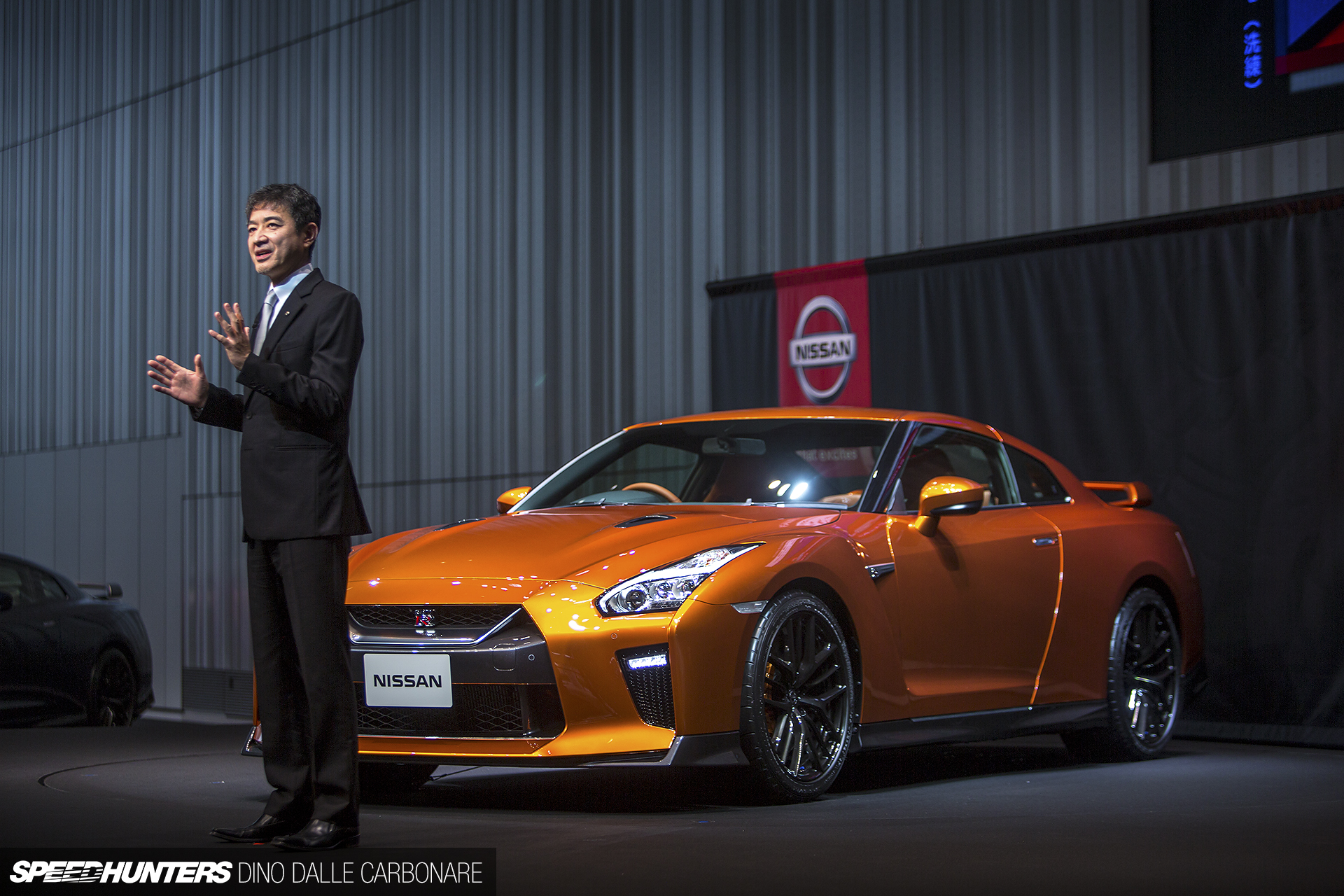
With Mizuno-san now retired from Nissan, it’s up to Hiroshi Tamura to ensure the GT-R continues to entice enthusiasts for years to come, and I honestly think there could be no better man for the job. This is the guy that was behind the R34 close to 20 years ago, and is a true petrol-head who has a tuned GT-R of his own. But he’s got a tough job ahead, as despite probably wanting to build a wide-body, all-carbon 800hp beast to destroy everything out there, he must align his ideas to that of a big company preoccupied with making soul-sucking, CVT-equipped hybrid transportation devices. But what sets Nissan aside from some other Japanese automakers, is that it knows the GT-R must exist; it brings strength to the brand and allows it sell commuter cars that turn profits.

What really helps Nissan out with this refreshed GT-R model, is that the R35 was so good back in 2007. In other words, it still has potential to be exploited – at least mechanically. I think that’s why no significant changes were made in the powertrain this time around; all of the attention was given to the areas that really needed it. The look has been sharpened up with a new grille design that aids in both cooling and aerodynamics, and the addition of small lateral side intakes.
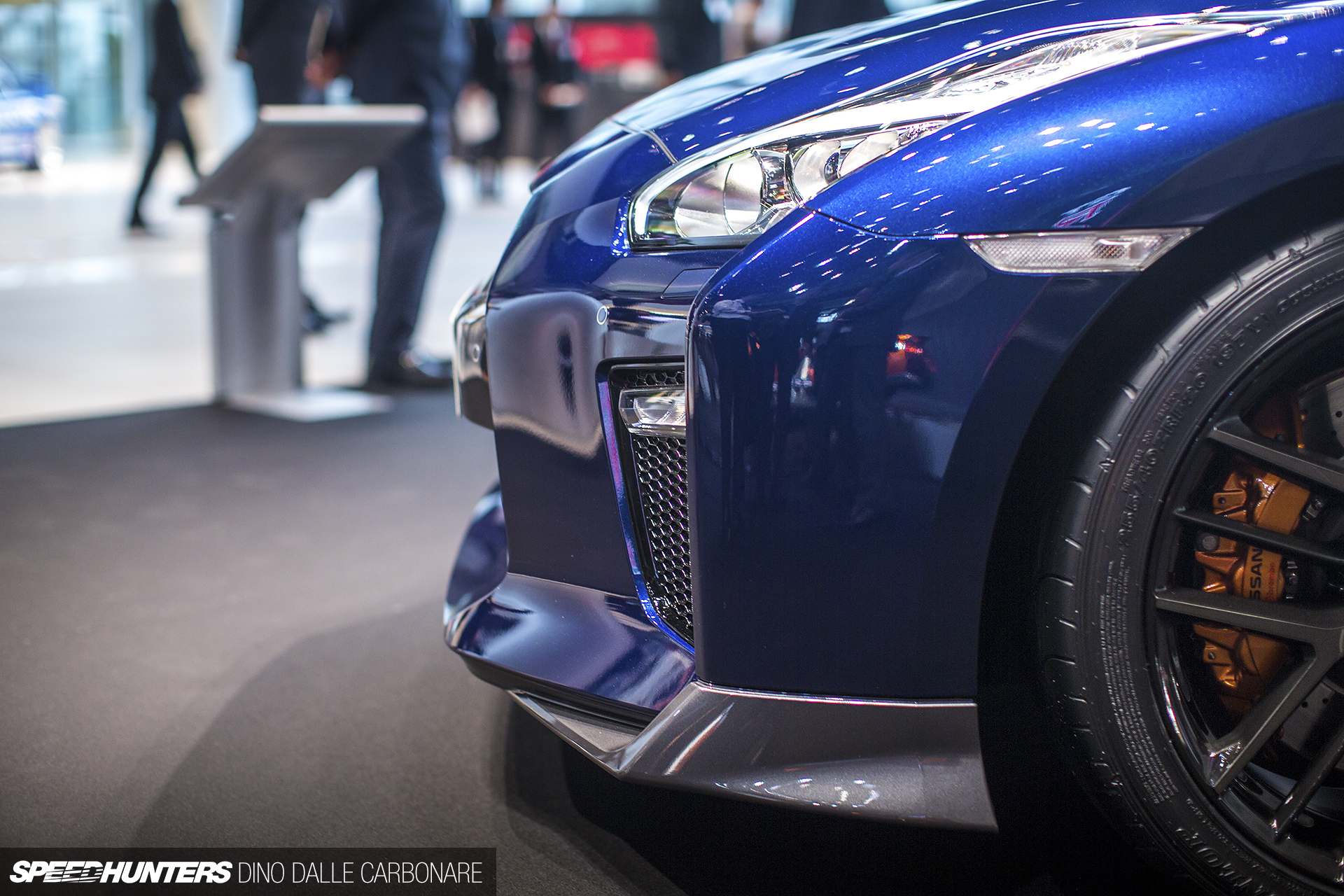
There’s a more profiled edge to the sides of the nose and a redesigned lip spoiler design that’s then carried over to the side skirts.
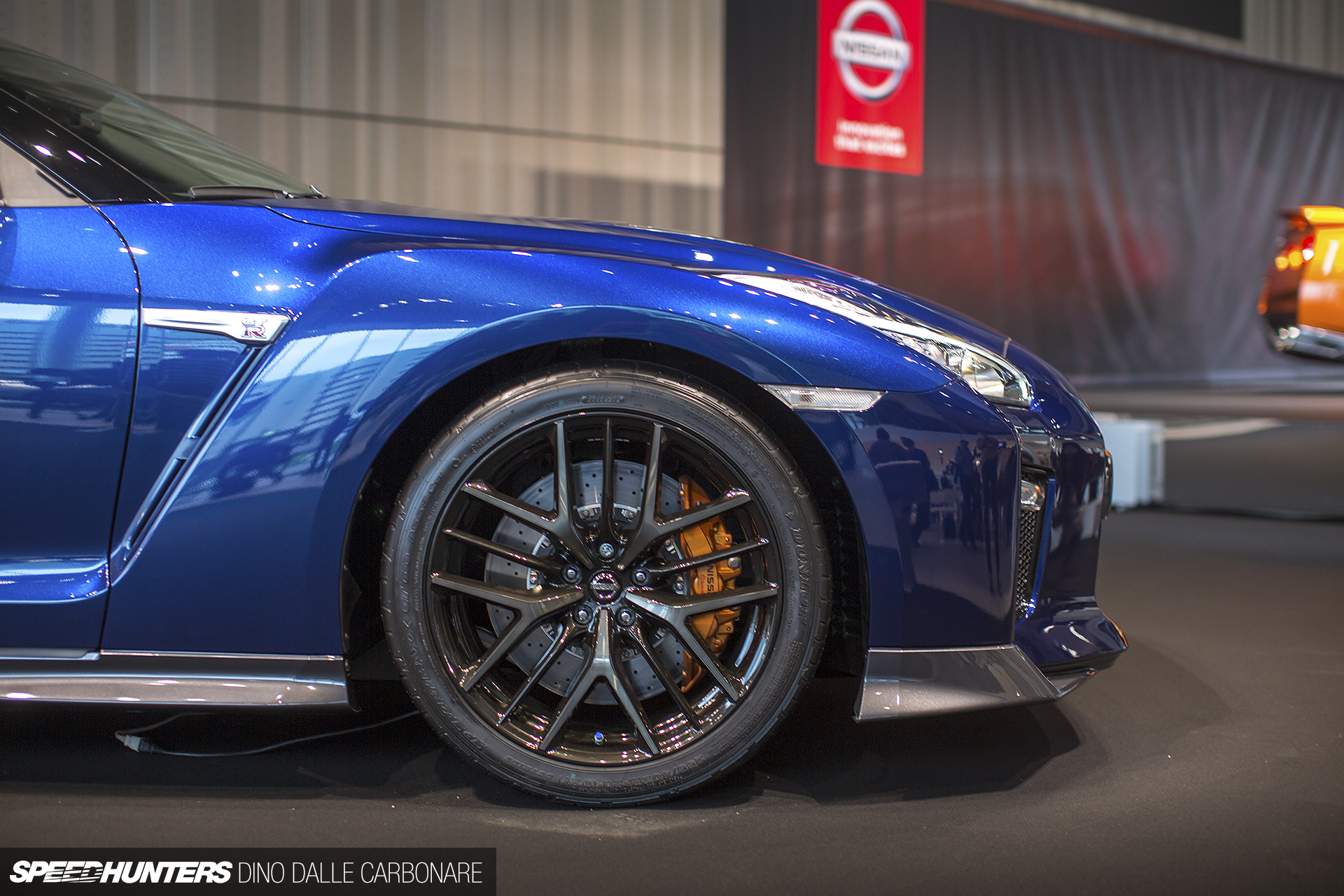
The 2017 R35 also receives redesigned wheels, but they’re nothing too mind-blowing. Nissan probably knows most people fit aftermarket wheels anyway.
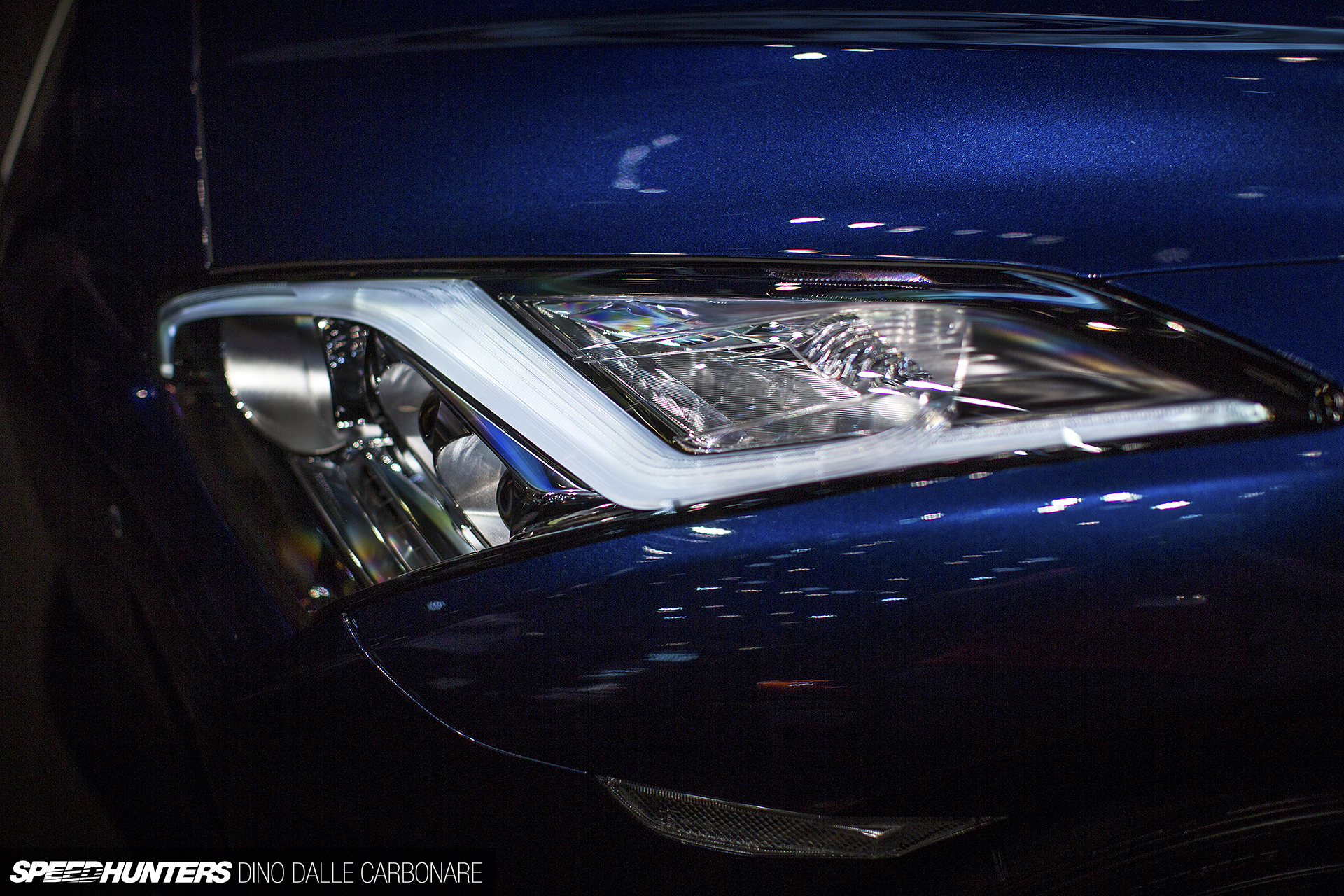
The back-lit blades running through the headlights that were first introduced in the last revision remain, albeit now joined by a more compact LED DRL setup in the front bumper’s side intakes.
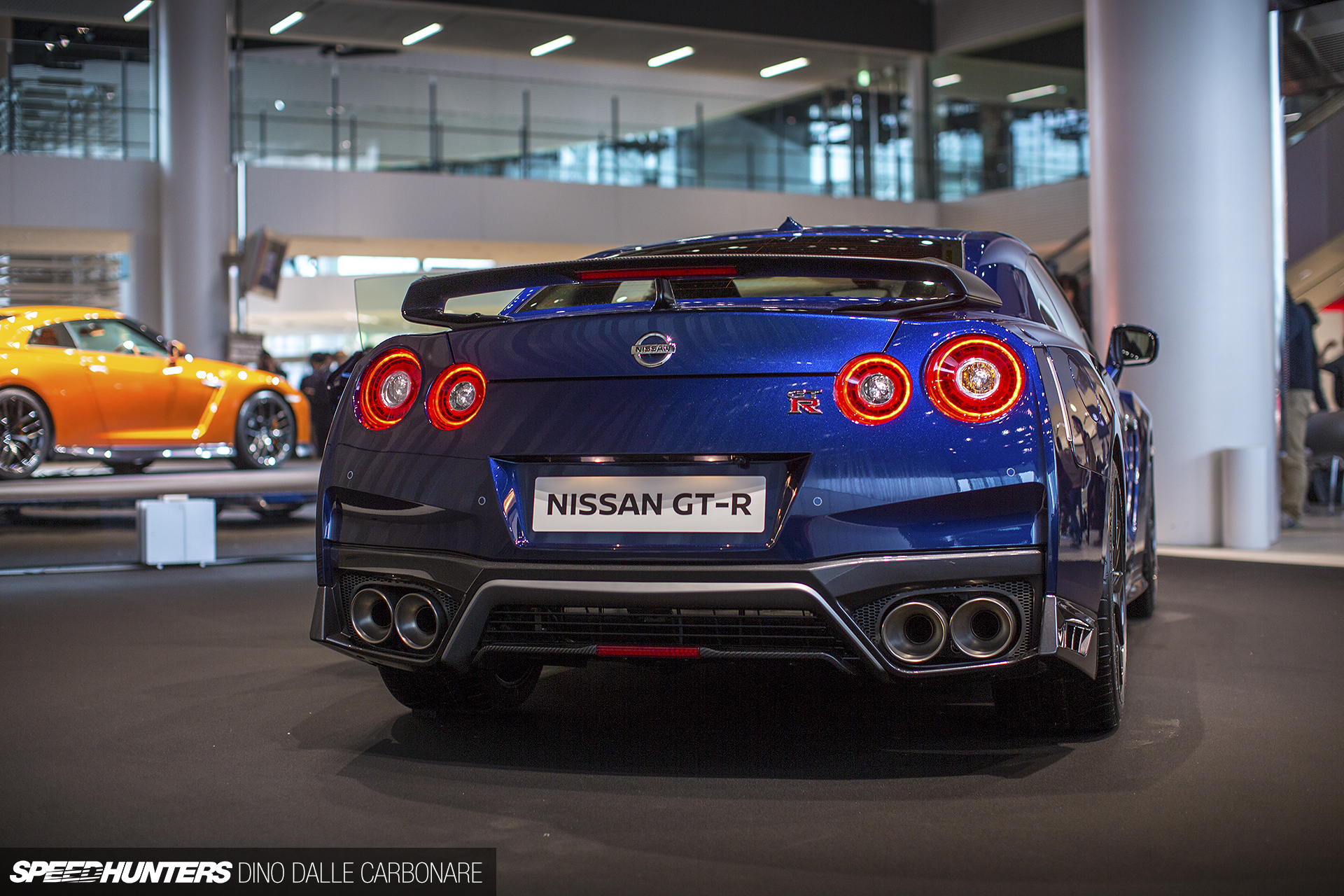
The rear end borrows its bumper from the Nismo version and features extended edges to help clean up the air flow.
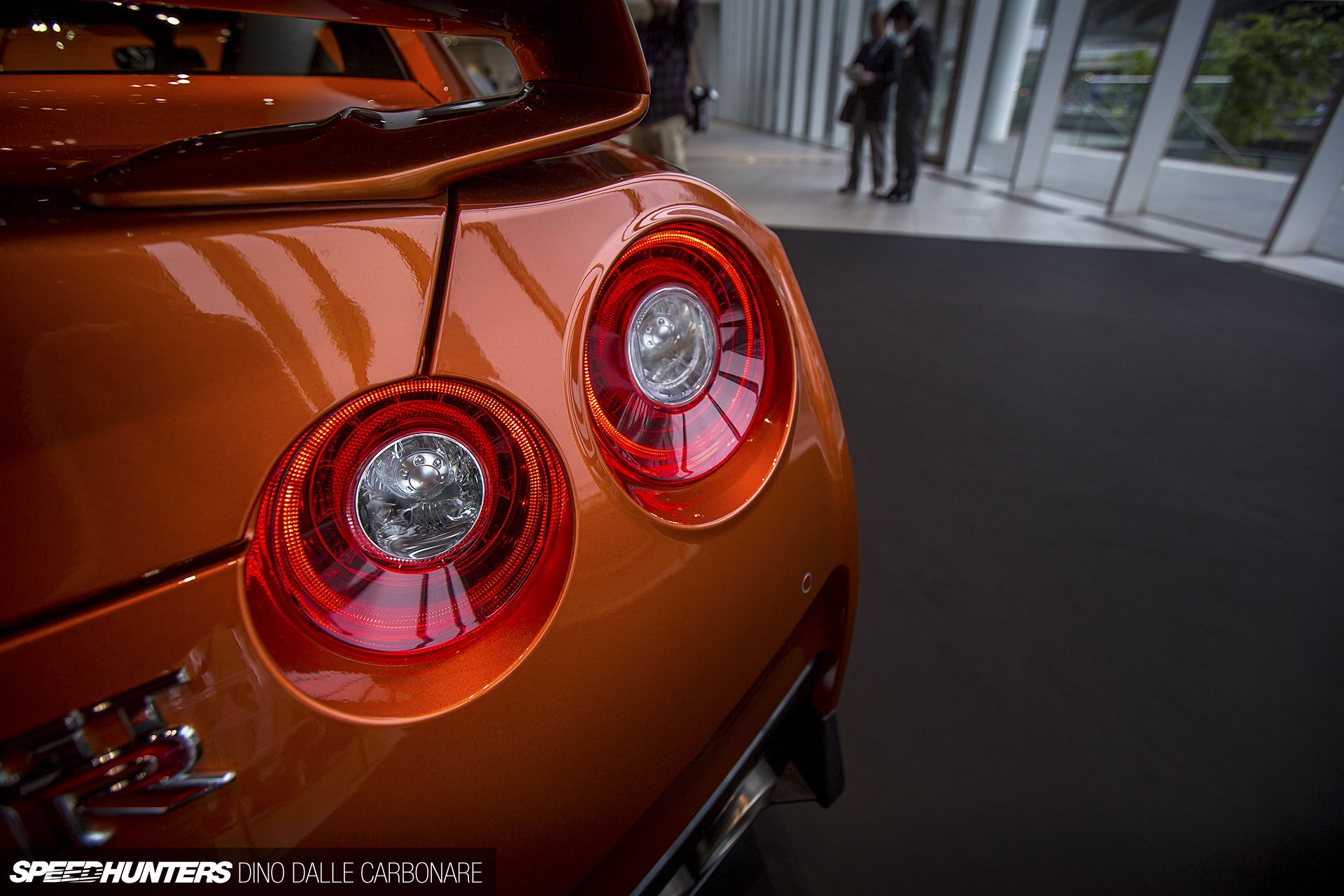
You can get a better idea of what that looks like from this angle. The afterburner taillights are a carryover from the previous refresh.
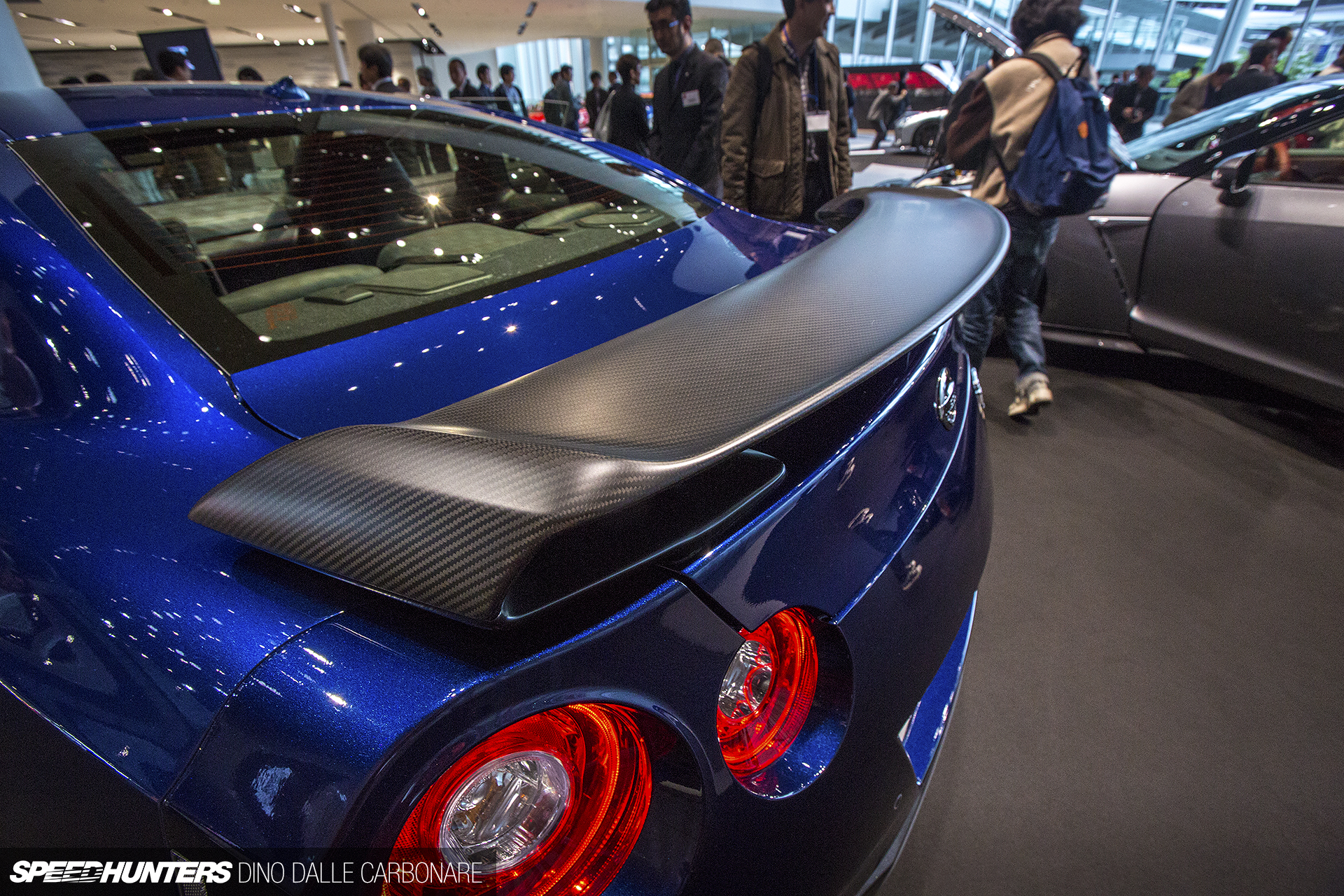
The metallic blue car was also fitted with the optional carbon spoiler; a very nice touch but one that’s been on offer for some time.
A Breath Of Fresh Air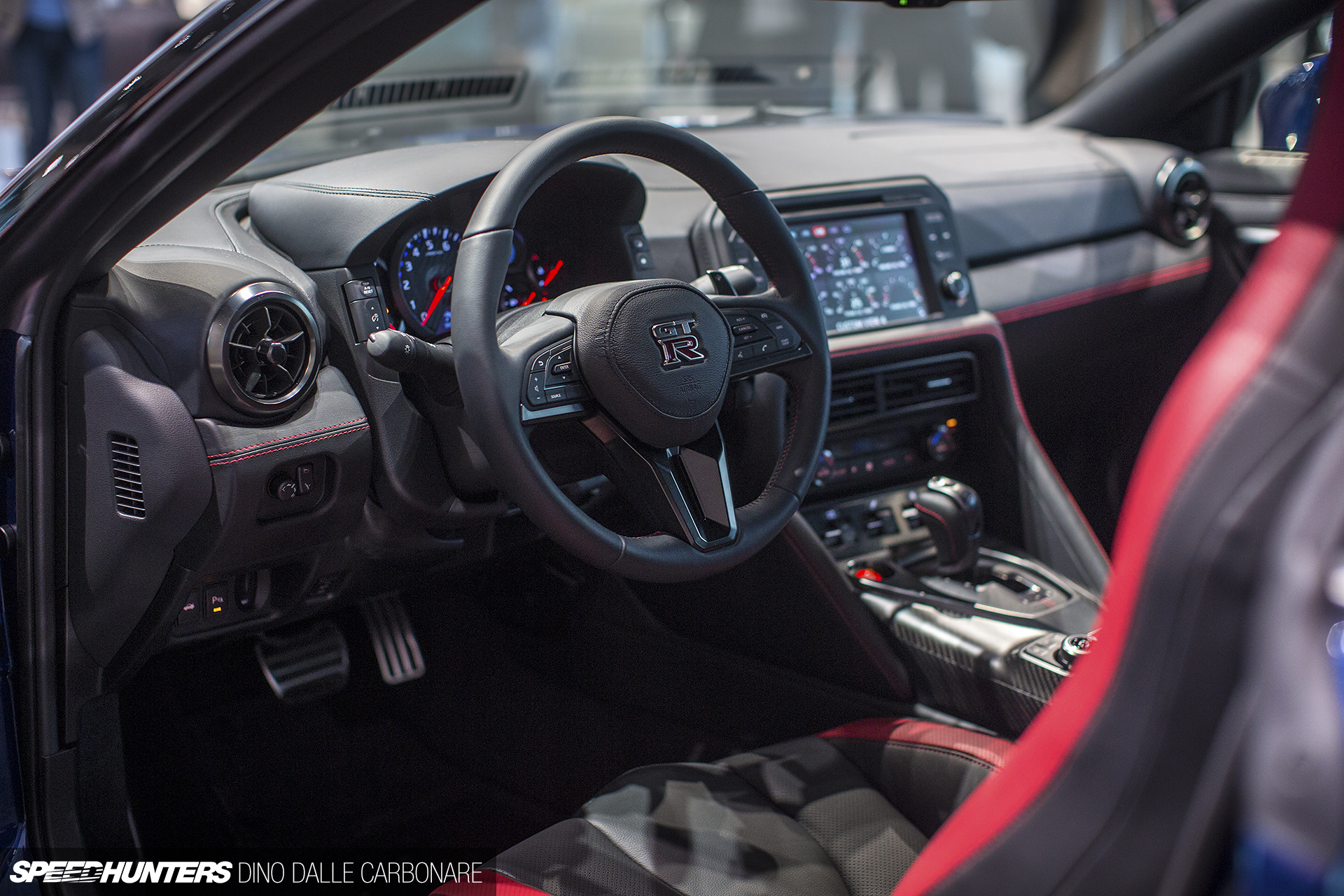
While the exterior upgrades are nice, it was the interior I was most interested in. This is where Nissan really spent most of its development money – and it really shows. The redesigned steering wheel, now with paddles that move with it rather than being fixed, as well as an updated center console and transmission tunnel design pretty much transform what had become a very dated-looking cabin.
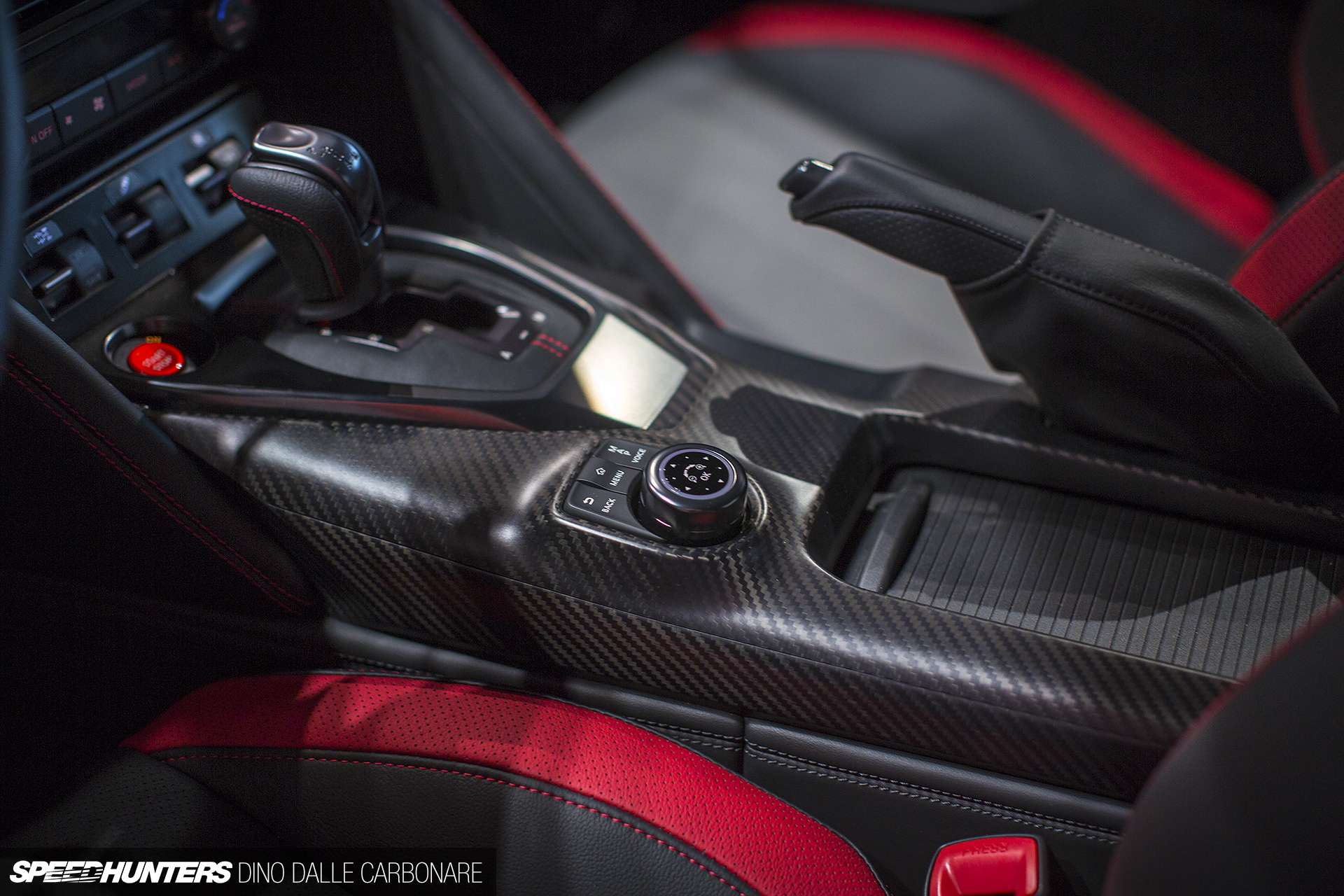
The overall feeling I got from the interior was that it just felt far more upmarket and modern in layout, with better ergonomics and higher quality materials. Plus, lots of carbon fiber always works!
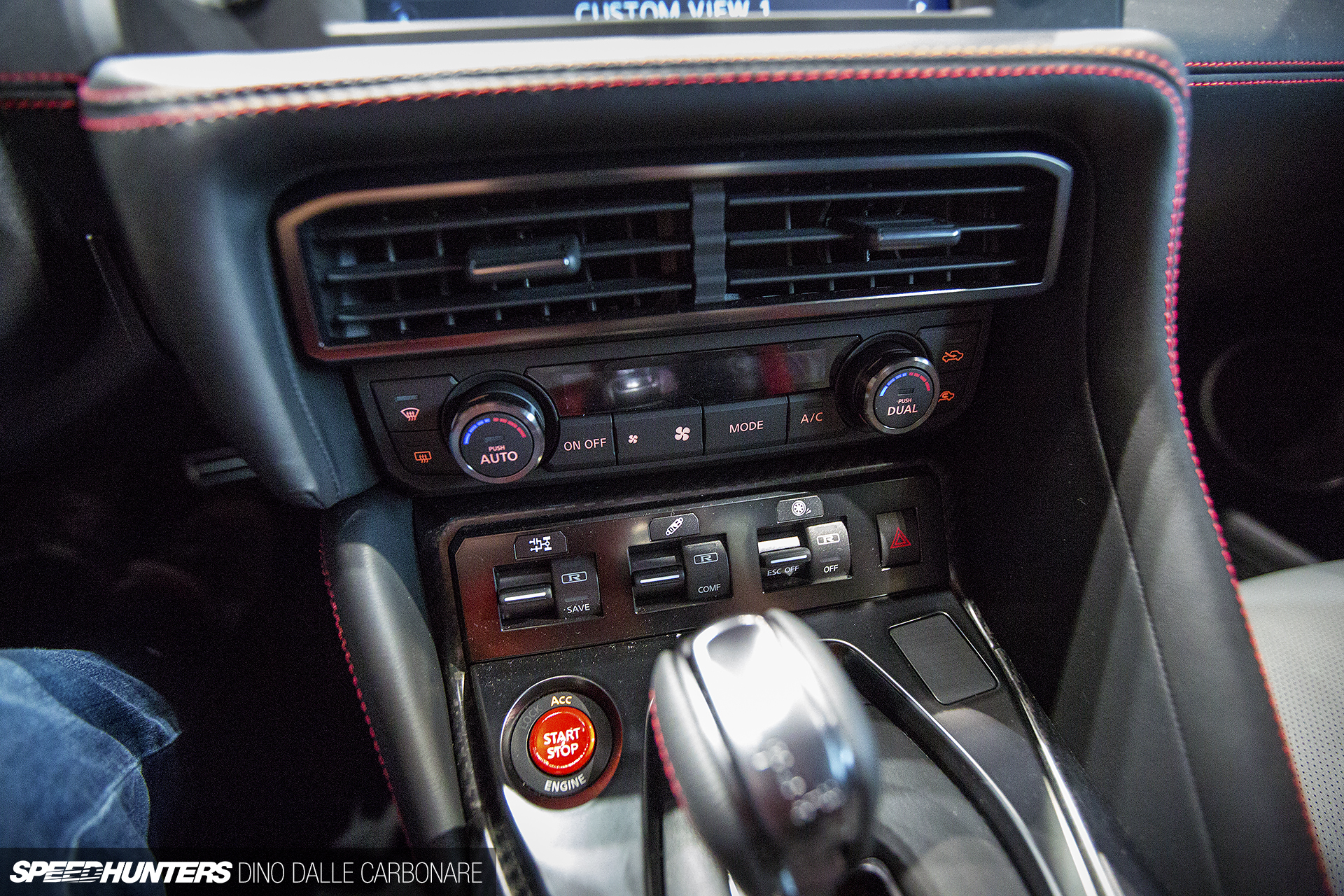
The center console has been cleaned up significantly; the vents and A/C controls actually remind me of the ones used in the the R34. Tamura-san at work here, maybe? Good man! The start/stop button is the same, just relocated in a more intelligent position. It’s the same story for the drivetrain, suspension and stability control toggle switches, which also benefit from a more modern fascia.
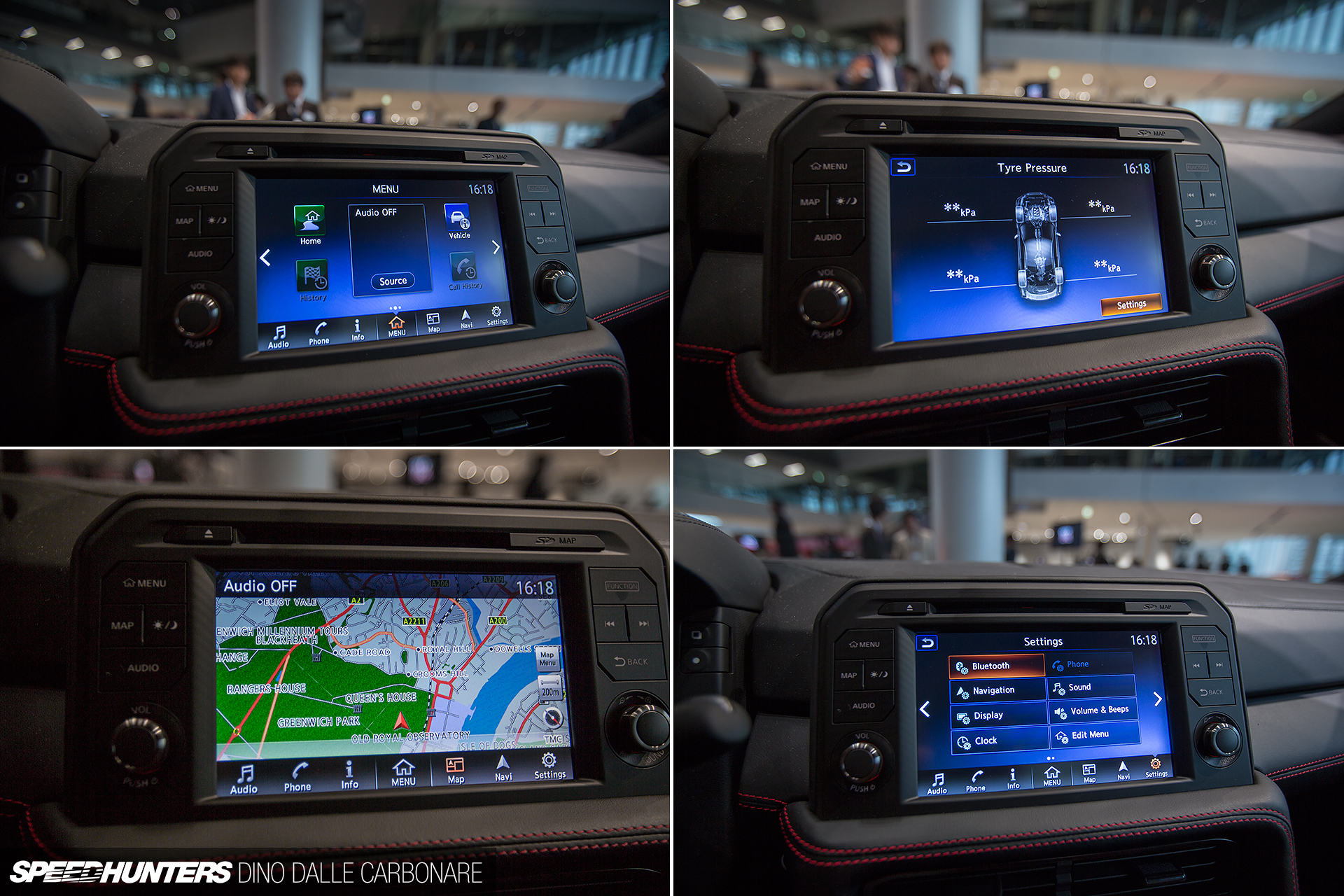
The LCD monitor that since the BNR34 have defined the GT-R’s interior has been updated with cleaner and more easy-to-read buttons and knobs. Curiously, apart from the car on stage, this domestic market launch didn’t have any right-hand drive cars, and the navigation systems seemed to think that Yokohama was central London! I had a play through the various menus once I exited the gauge section of the display, and it all looks much better laid out and intuitive, bringing it in line with the newer models in Nissan’s line-up.
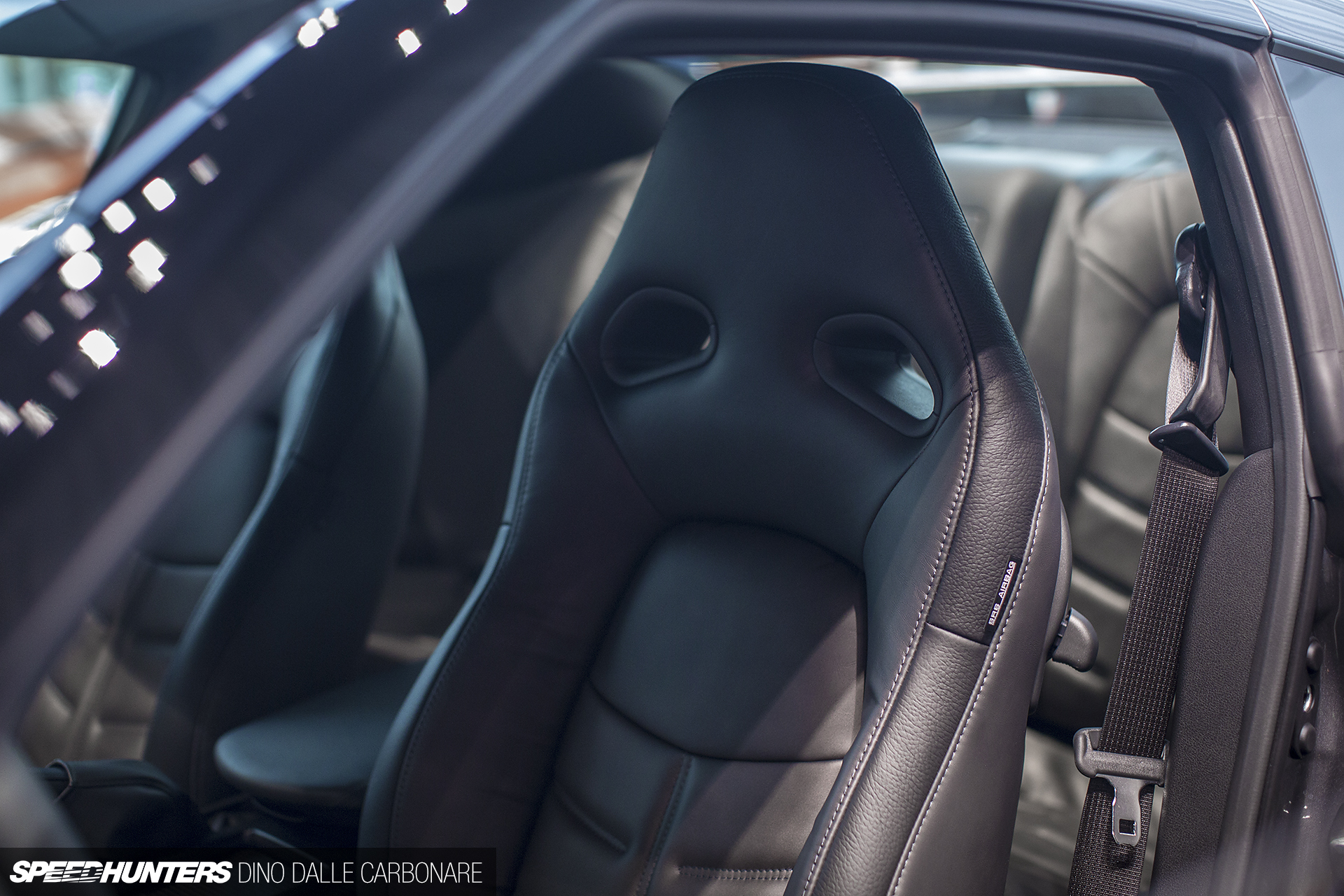
The seats have a new stitching motif, but they remain the same, and unfortunately still mounted far too high for tall people to get comfortable ‘in’ the car, as opposed to feeling like they’re sitting on it. Hopefully Nissan doesn’t make the same mistake with the R35 replacement.
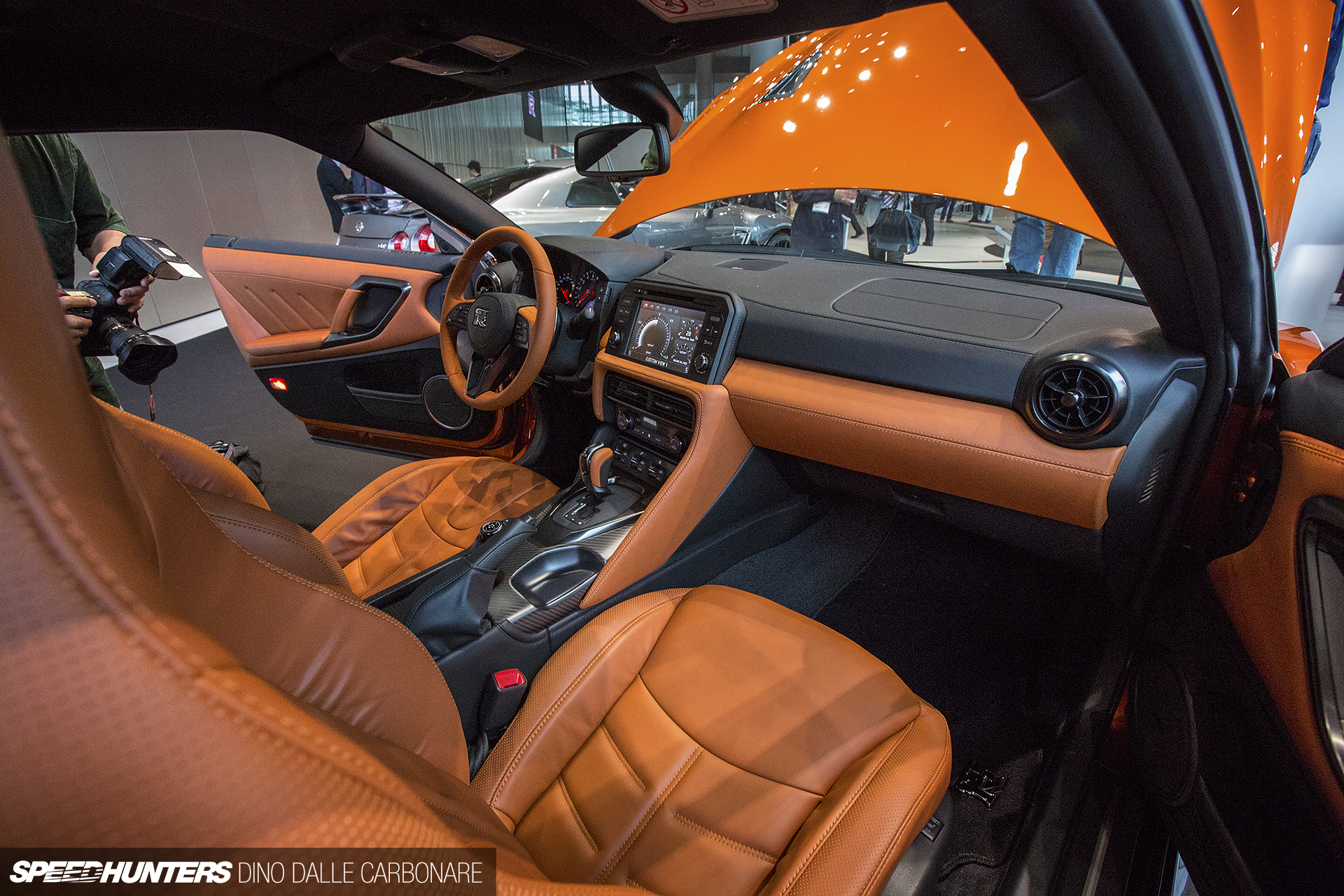
Color-wise, interiors can be specced in a few ways: from the more sedate black and black/red leather, to this new brick tone which looks really striking up close. It’s very much in line with the whole push toward refining the driving experience and making things more comfortable.
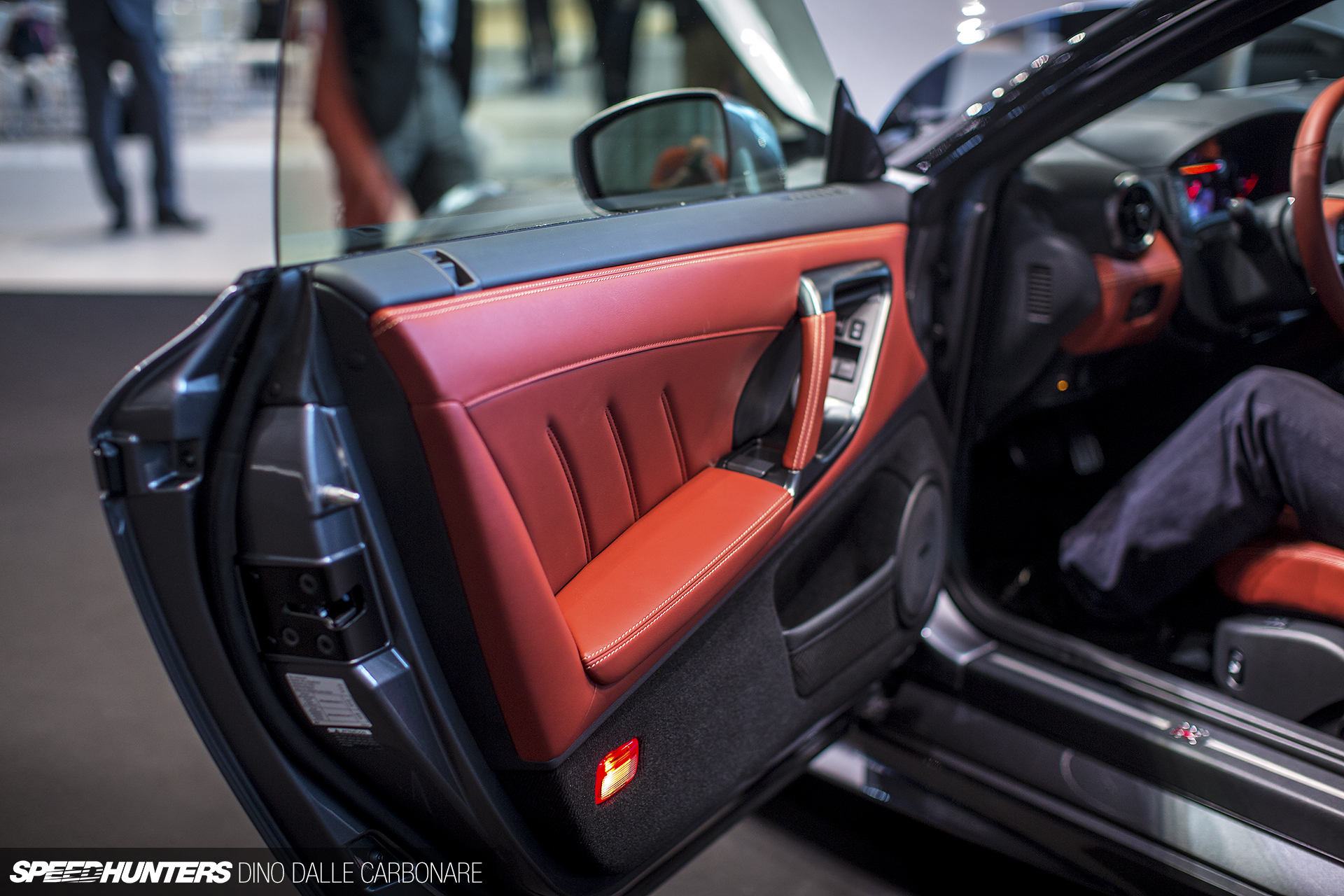
Door cards are something that I’ve always thought Nissan has really nailed, and here’s why. The lower carpeted section is a must-have on any car I think, but especially so on coupes with massive long doors that always force you to run your shoes against them as you get in and out of tight spaces (i.e. everywhere in Japan).
Lineage Counts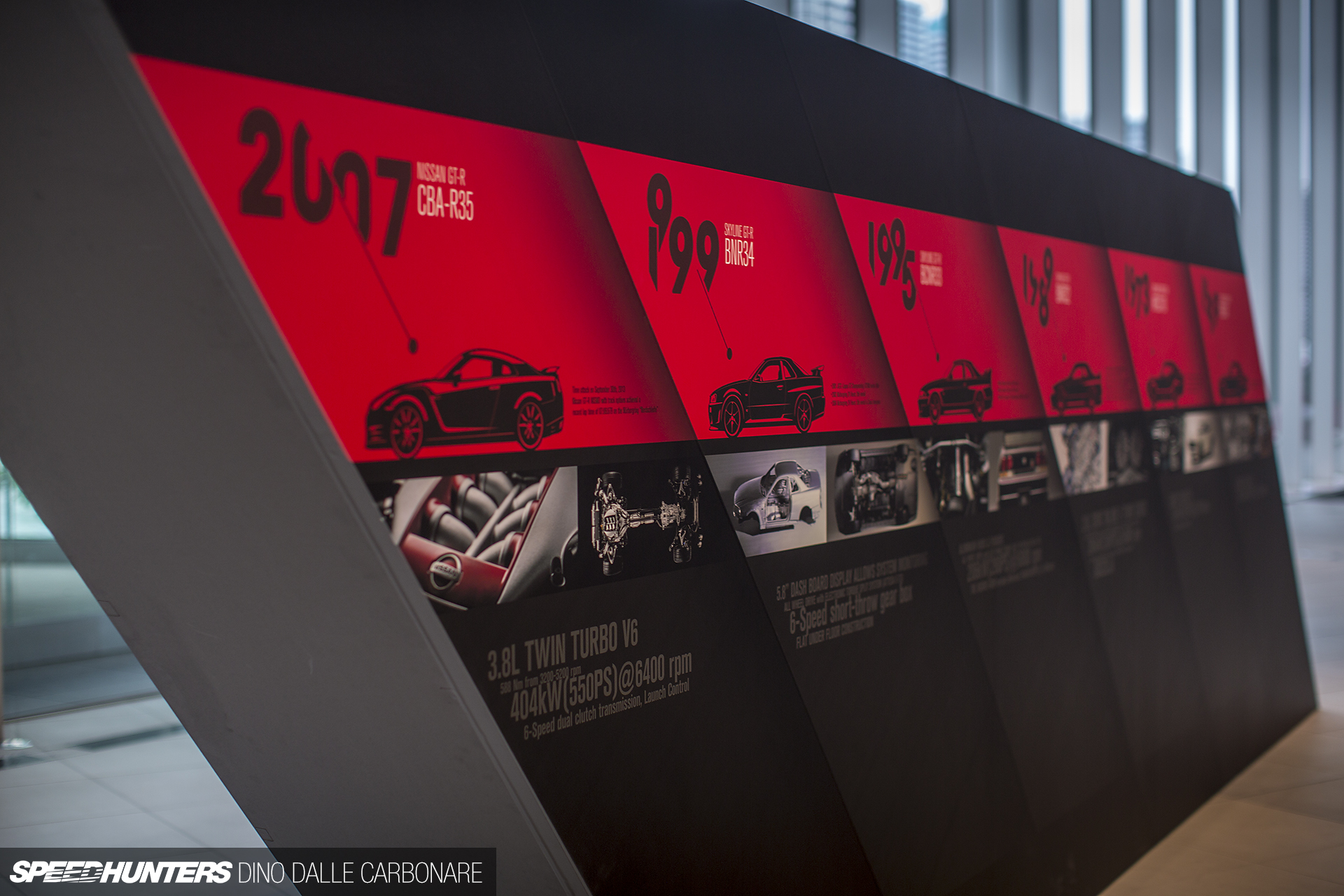
The GT-R’s lineage was nicely laid out on this display board that highlighted the main points of each of the six GT-Rs since the very first in 1969.
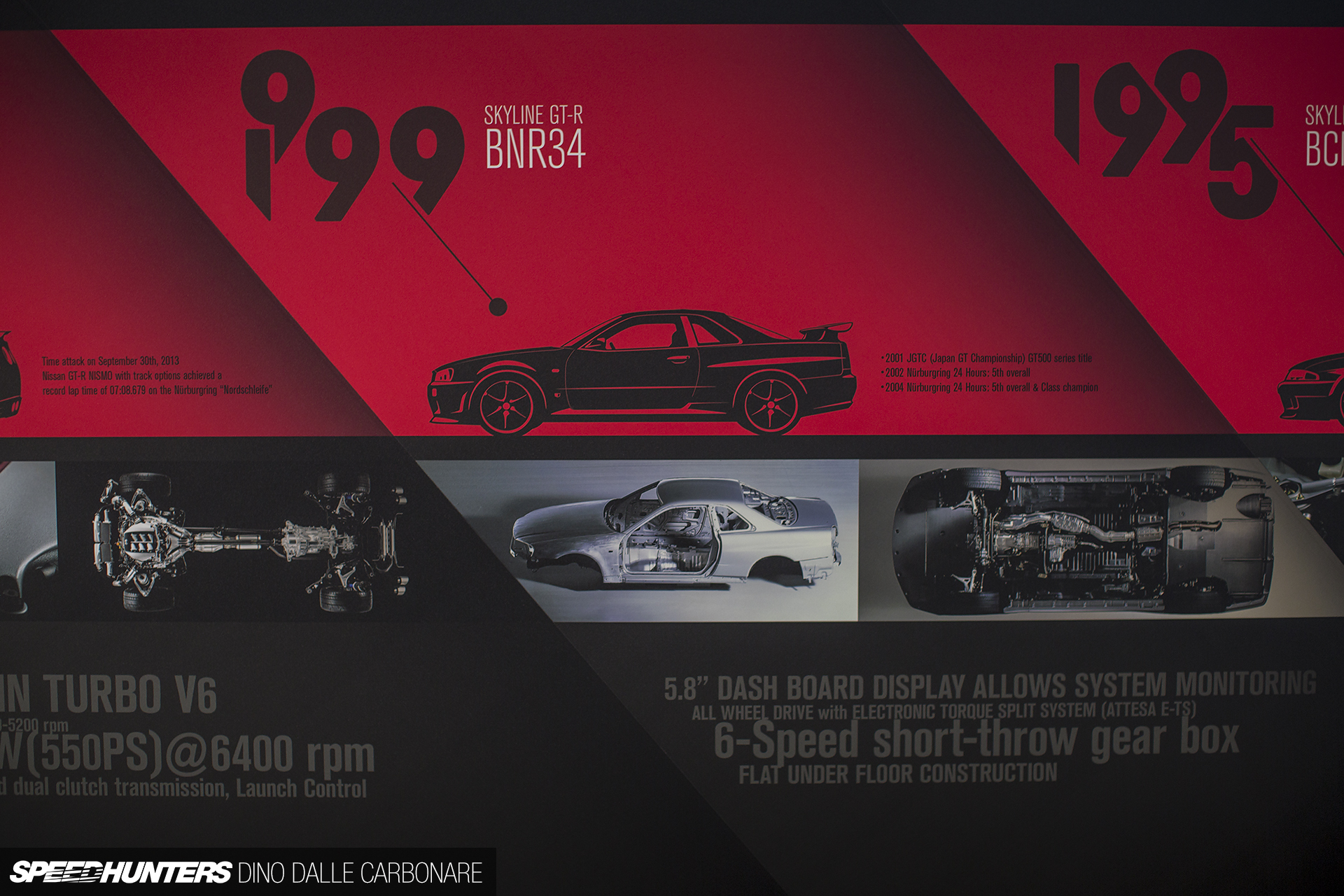
Can you guess which one I liked the best?

Overseeing the whole presentation were two important race cars, serving to highlight that all-important motorsports link the GT-R has always had.
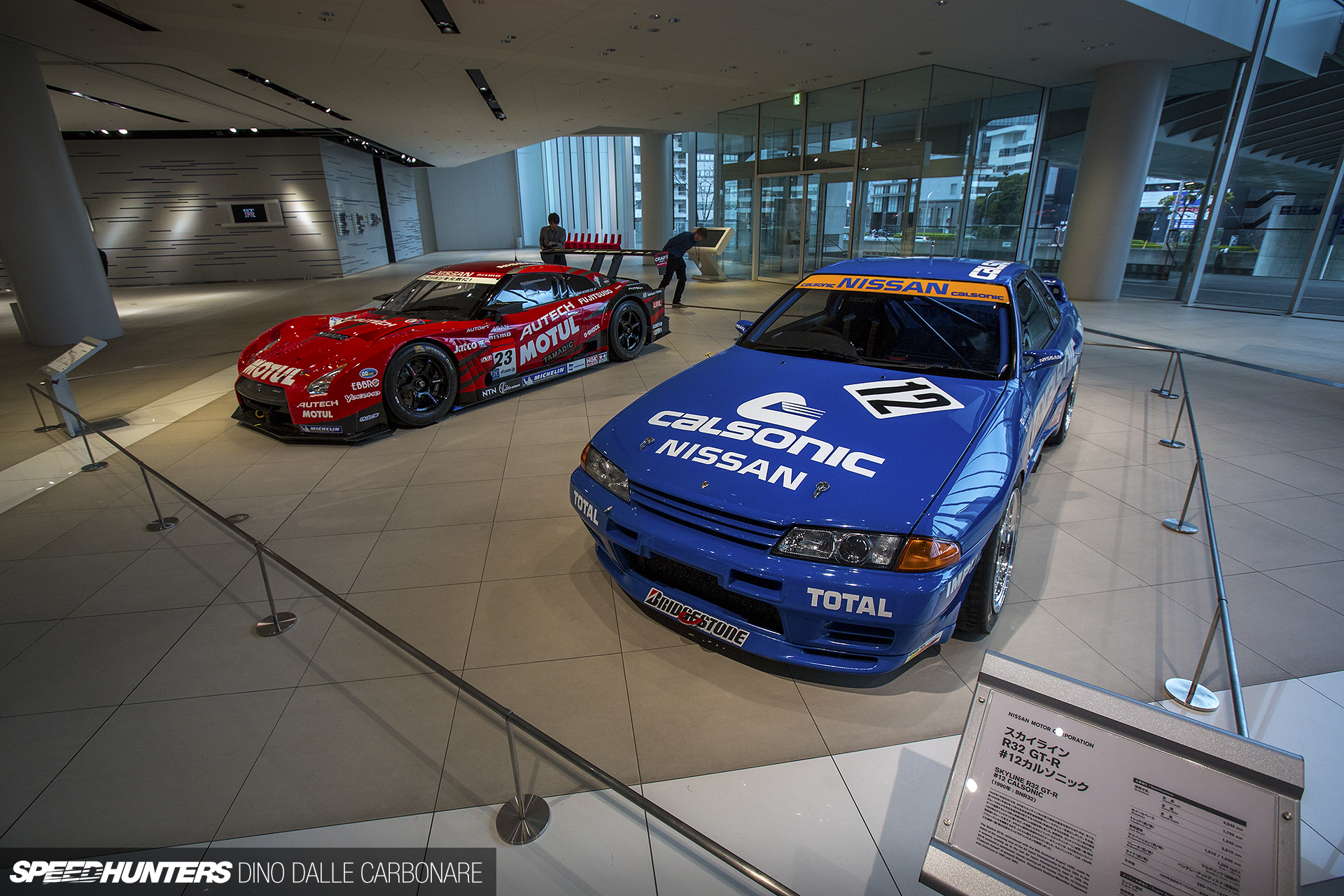
The R35 Super GT car was great and all, but the legendary blue Impul-Calsonic BNR32 Group A racer is what most members of the Japanese press were identifying with.
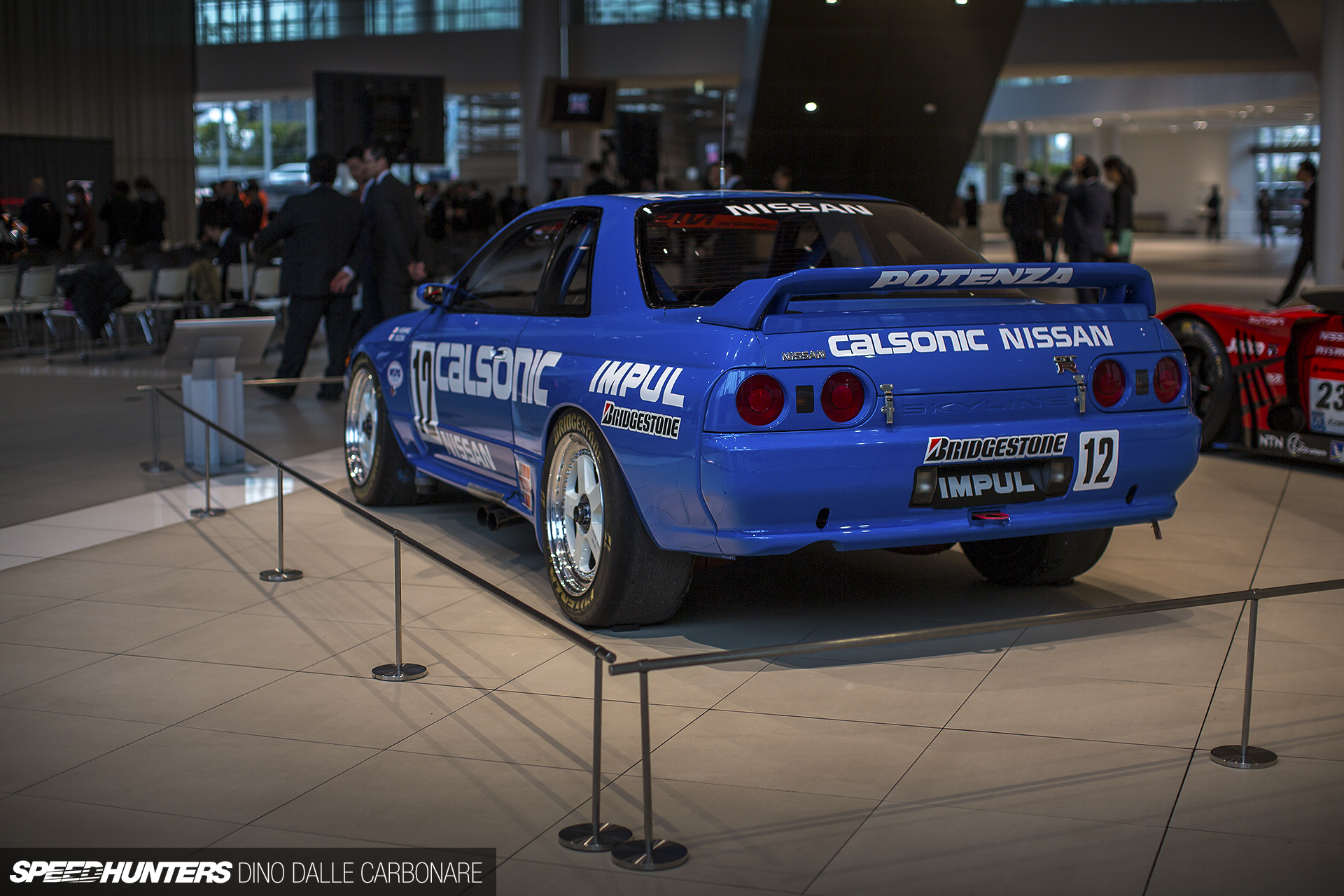
Look at this thing! It’s just so brutally aggressive; a completely stock body, but totally functional with big slicks barely contained at each corner by the pumped arches. And that crazy negative camber up front: onikyan what?!
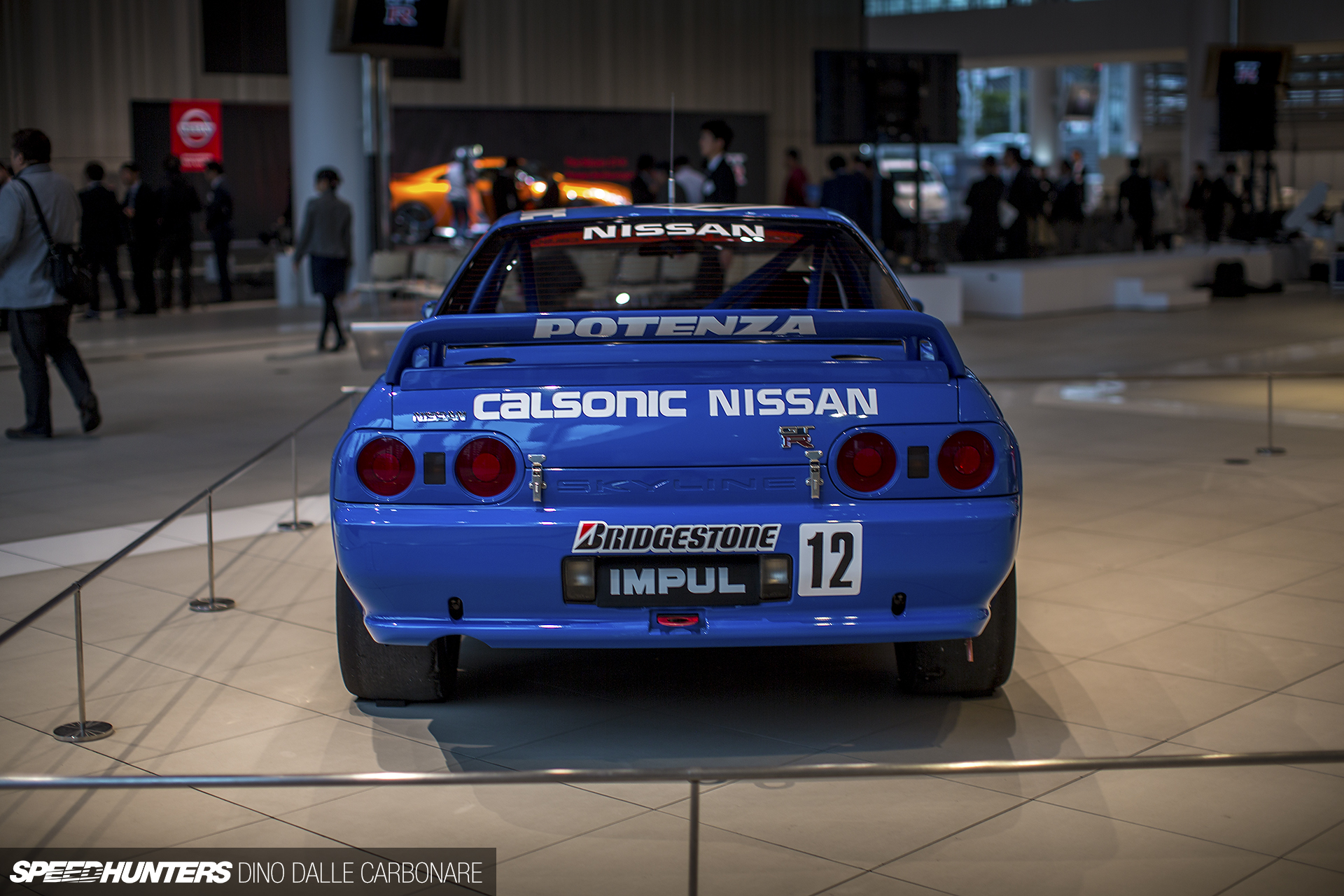
The R32 iteration is the one that turned the GT-R from a sports car into a true supercar-slayer, and the rest is history.
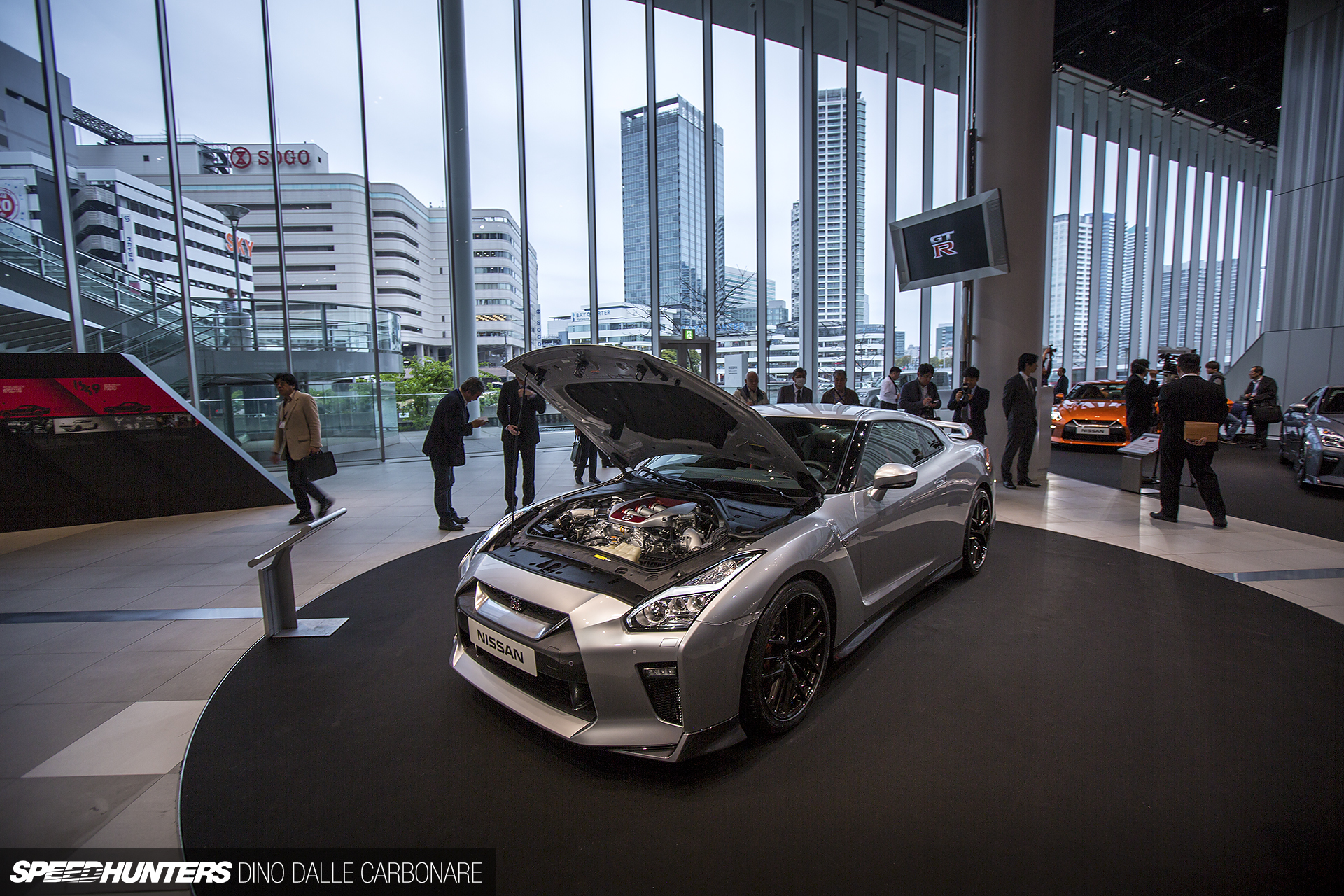
But what about the ‘new’ GT-R’s performance? Will it be able to fence off rivals for years to come? That’s something that remains to be seen, because its 565hp is deployed in such a physics-defying way that the R35 is much more capable than what the figure suggests.
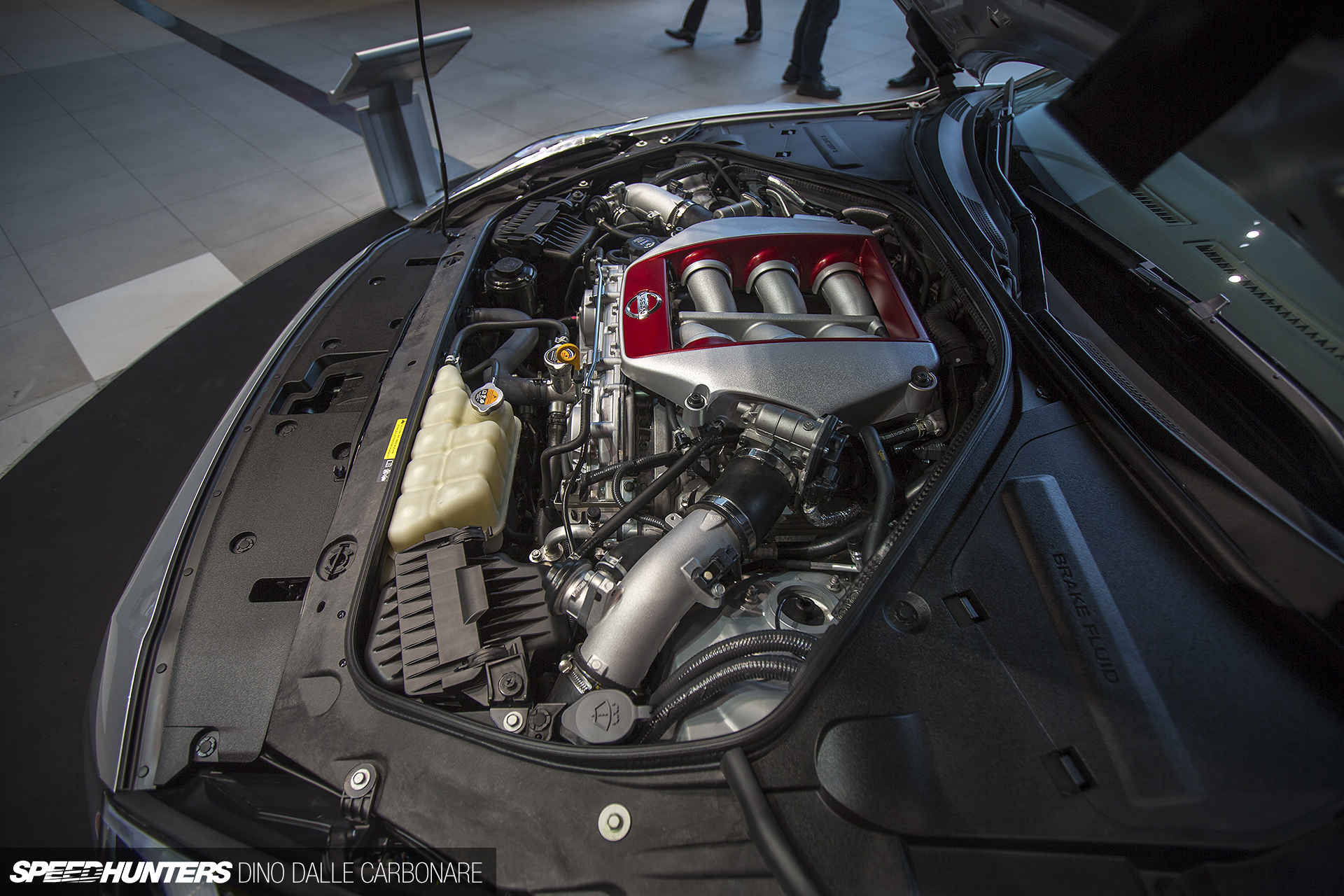
Absolutely nothing has been changed under the hood – visibly at least. The VR38DETT has mustered up a tad more power and torque thanks to a little more boost and a refinement in engine management, and it also exhales through a titanium exhaust which apparently sounds better. However, Nissan still saw the need to add Active Sound Enhancement, which is precisely what you think it is. On a GT-R… It doesn’t say much for the VR38’s V6-drone-like sound, does it? The system also nulls harsh frequencies in the cabin, so it does have its place I guess.
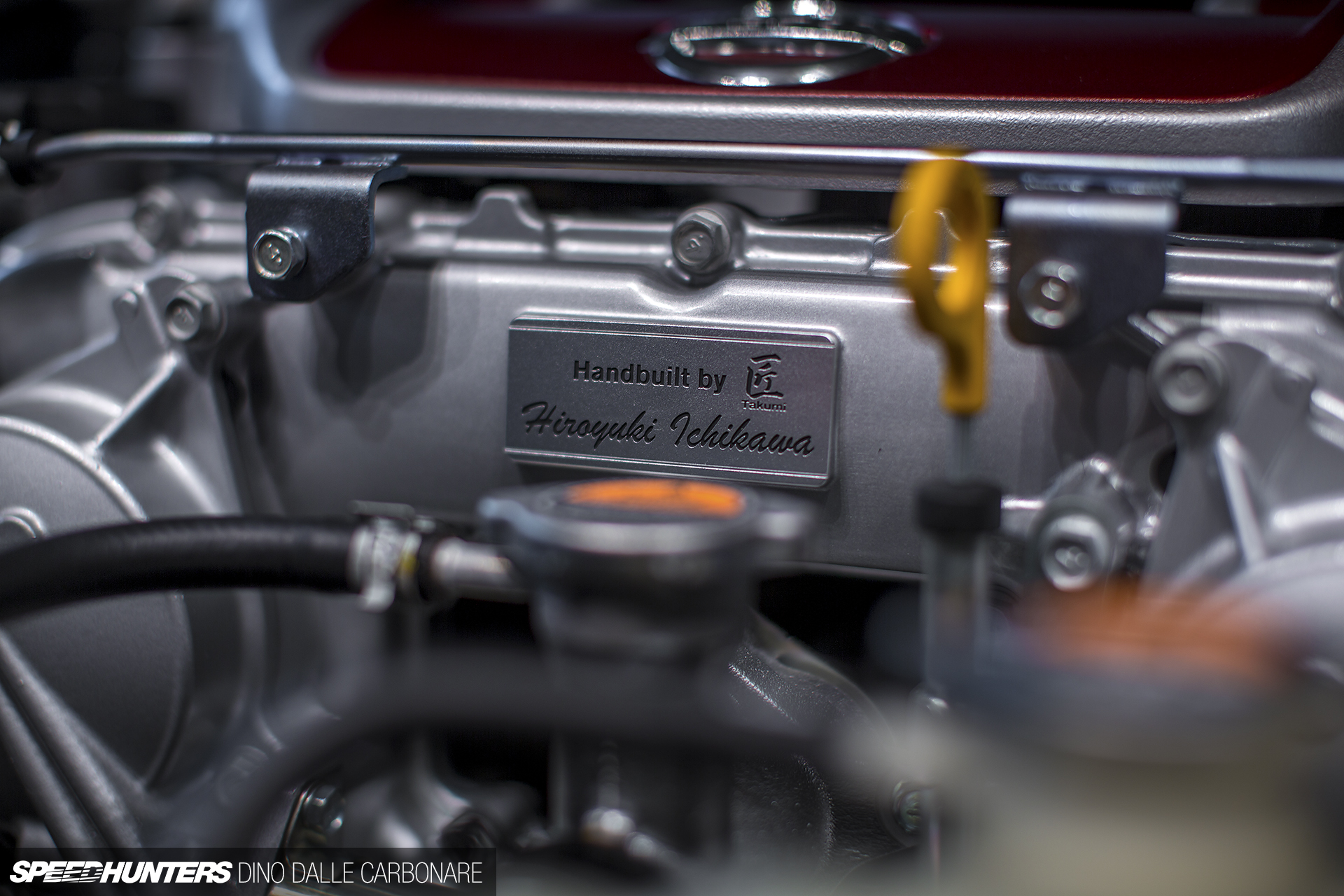
Sorry , there is one new addition to the bay: AMG-esque tags for the artisan that hand-build the car’s engine. There has also been some refinement in the transmission apparently; previously the one aspect that made the GT-R feel very ‘last generation’ compared to fresher dual-clutch transmissions from BMW and Porsche. Shifts are smoother and some of the clunks that the transaxle has become famous for have been quietened down. Mind you, that’s what Nissan has said with every update since 2007, and I’ve never felt any negligible difference myself.
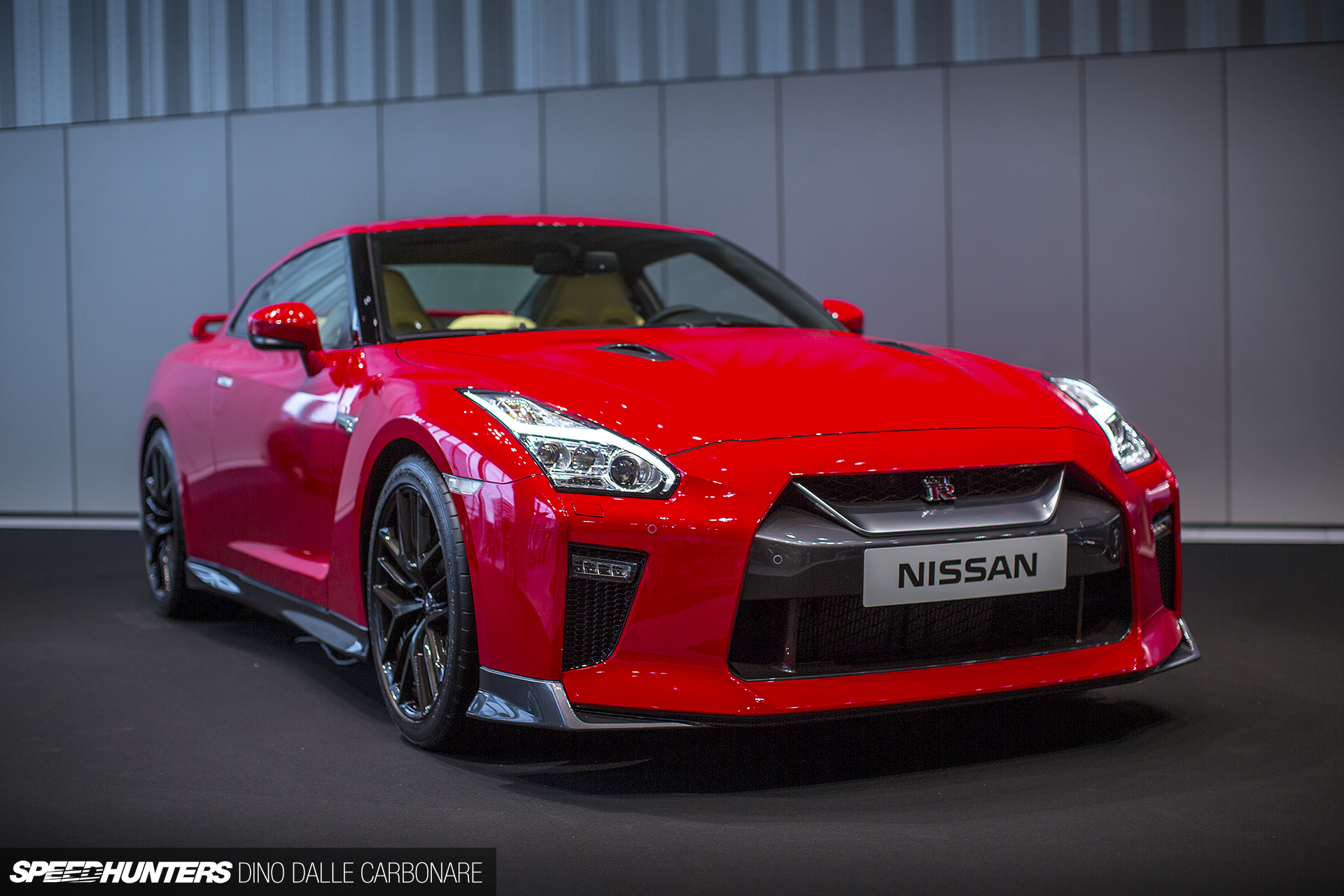
I’ll be able to give you more info on that once I get to sample the car later in the year, but right now all I am thinking about is what the Nismo version will be like. With a push to make the base car quieter, more refined and overall nicer to drive on a daily basis, surely there is now a more defined space for a focused Nismo car? I certainly hope so. I know Tamura-san knows it too. Only time will tell whether or not he’s been able to sell idea to the members of the board at Nissan…
Dino Dalle Carbonare
Instagram: speedhunters_dino
dino@speedhunters.com