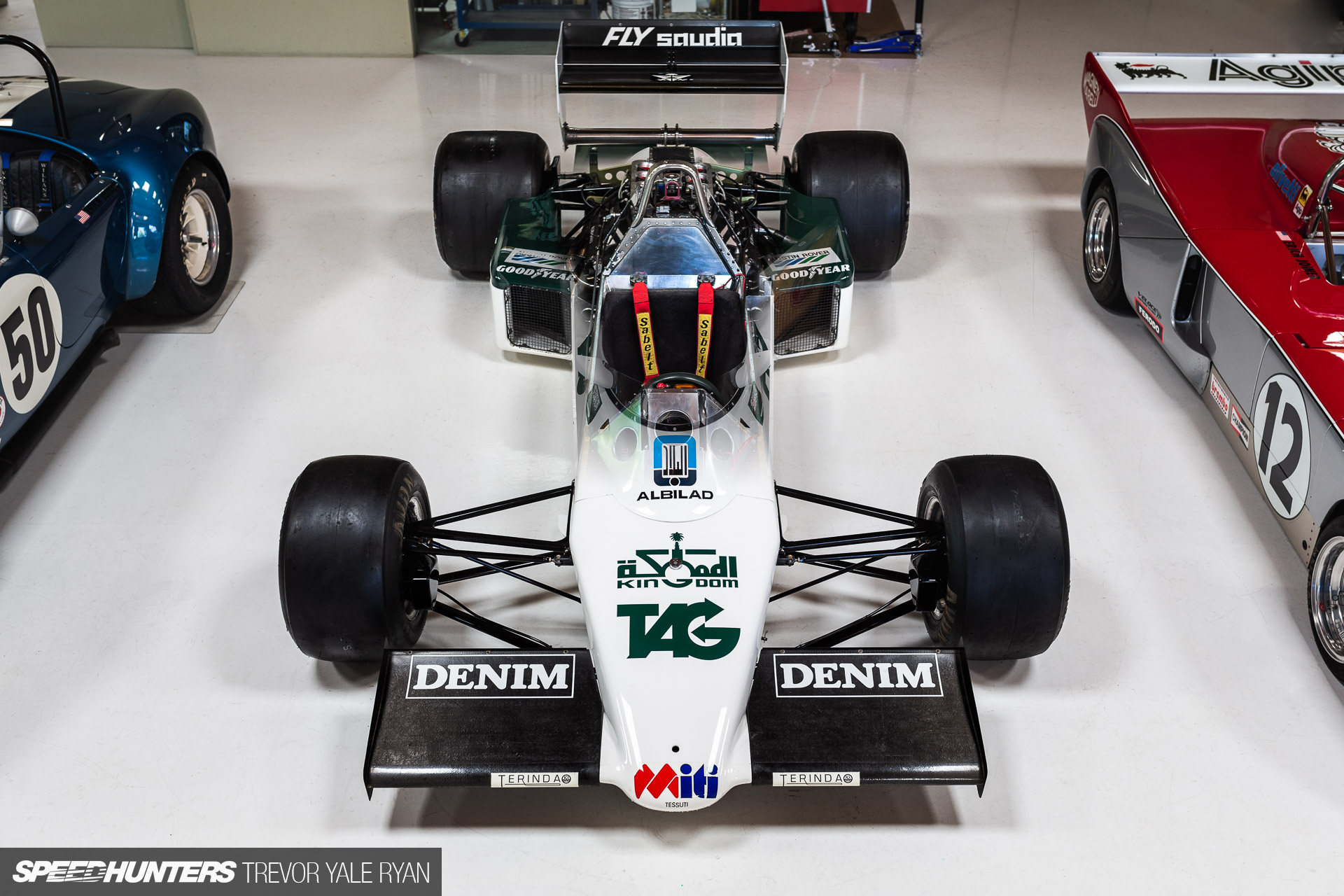
The year is 1983. Imagine, for a moment, that you are the Formula One champion of the world.
You own a Learjet, a penthouse in Munich, a country mansion in England, a chalet in Austria, and a villa on Ibiza. To earn the world championship title you drove every lap absolutely flat out in an era where safety just meant sacrificing speed. To get into the series in the first place, you earlier became a Finnish kart champion, and then did so again four more times. But that wasn’t enough, so you went on to earn karting titles throughout Europe, too.
Then, moving through multiple racing series around the globe and seeing massive success, you found yourself in Formula Two, Formula Atlantic, and Formula Pacific where you ended up first place the season before hopping into an F1 car.
However, it wasn’t until seven years later that you found true success here, when the stars aligned and dropped you into the TAG Williams Racing Team.
Keijo ‘Keke’ Rosberg didn’t need to imagine this. This was his reality, a reality of which he was very aware of: “I’m a cocky bastard and I know it,” he famously once said.
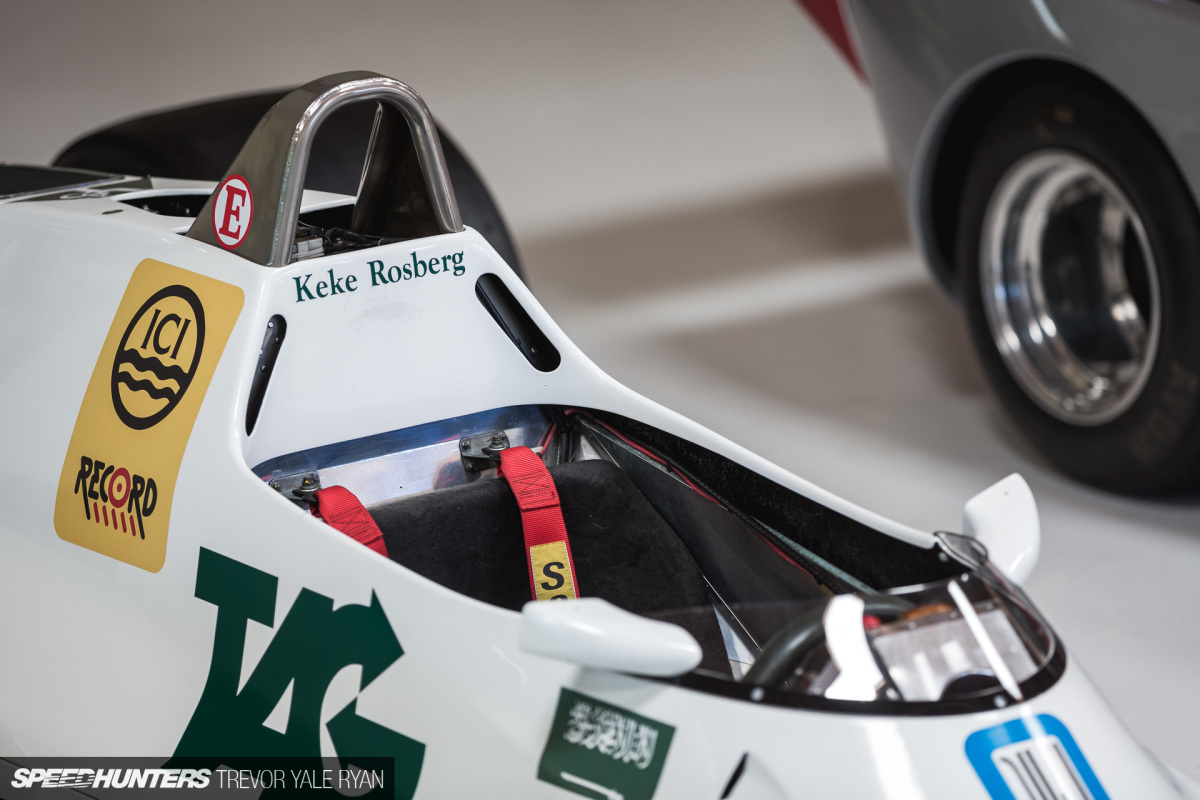
In an era where reliability was nearly non-existent and guts got you the glory, Rosberg took the title in 1982 with a single grand prix win and five separate podiums. He earned points (which were only awarded to the top six) in all 16 races he finished that year but one; he finished 8th in Monza. Rosberg tallied 44 points over the season, ending just a nose ahead of Didier Pironi and John Watson, both of whom were sitting on 39.
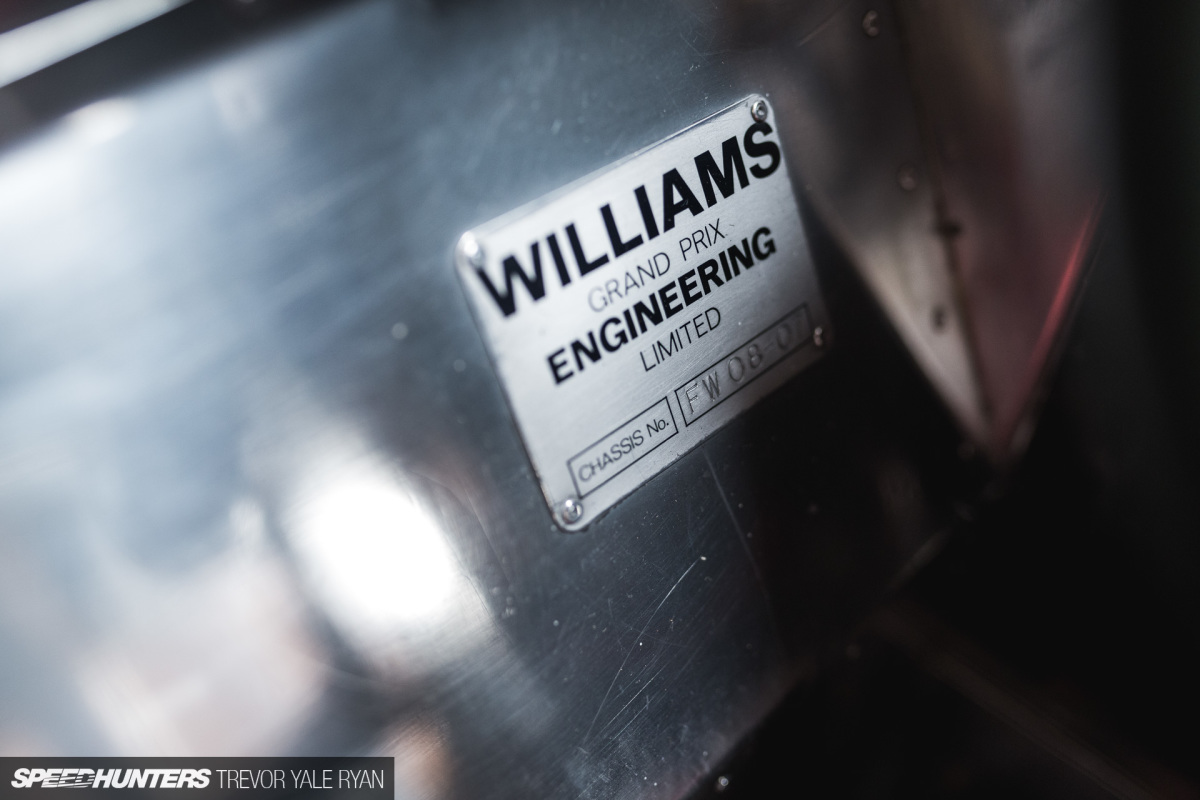
The following year, this very chassis was the car that Rosberg drove — at least for the majority of the season. Although he couldn’t muster a second championship, Rosberg did pilot FW08-07 to a win at the Monaco Grand Prix.
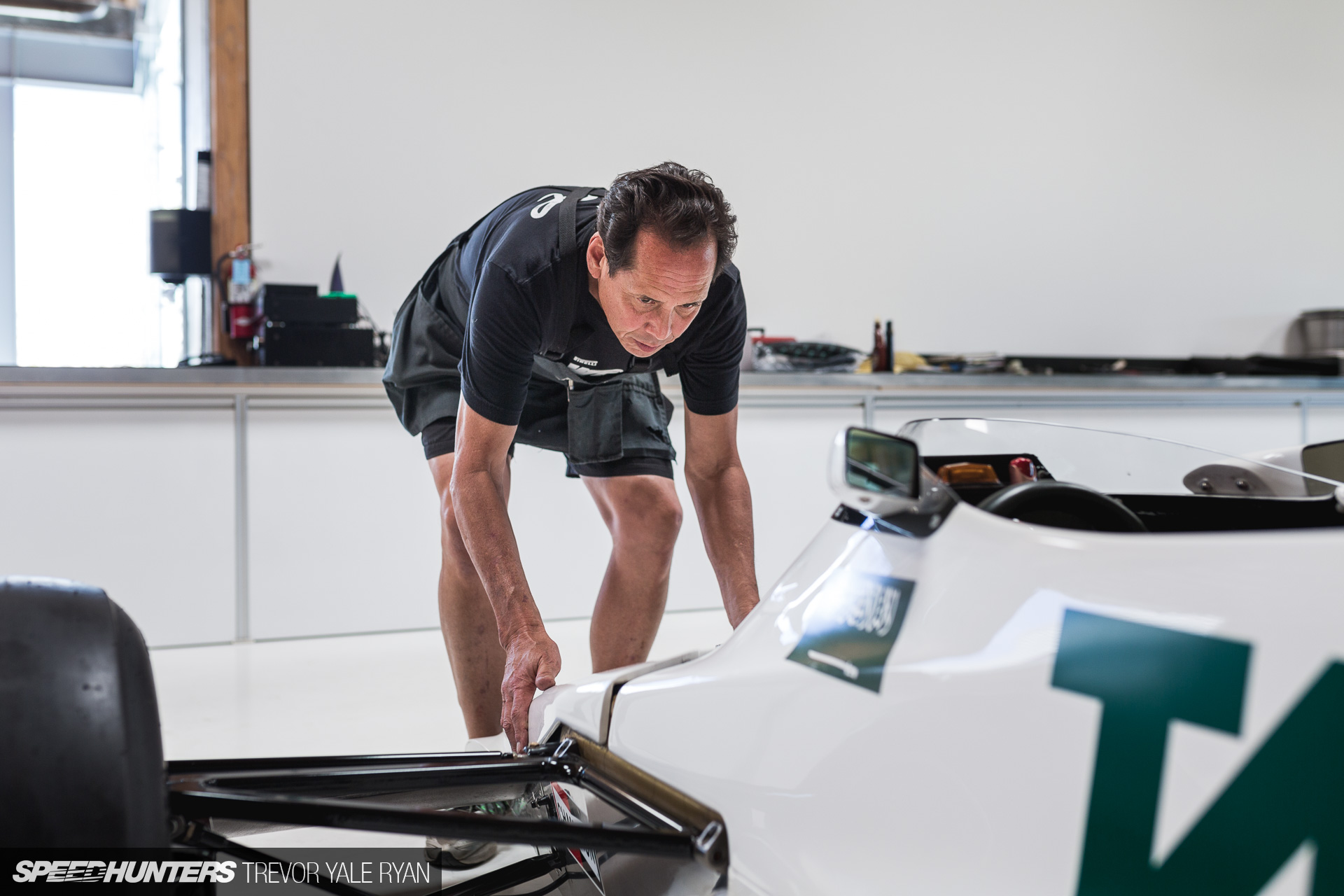
Williams FW08-07 is now owned by Erich Joiner and my tour guide for the day was TJ, the mechanic in charge of maintaining the impressive fleet that lives in the shop that was once Vasek Polak’s.
TJ is an old school guy who is quick to tell you anything and everything about the cars that Erich owns and races; in other words, he’s the perfect one to show me around the very special Williams.
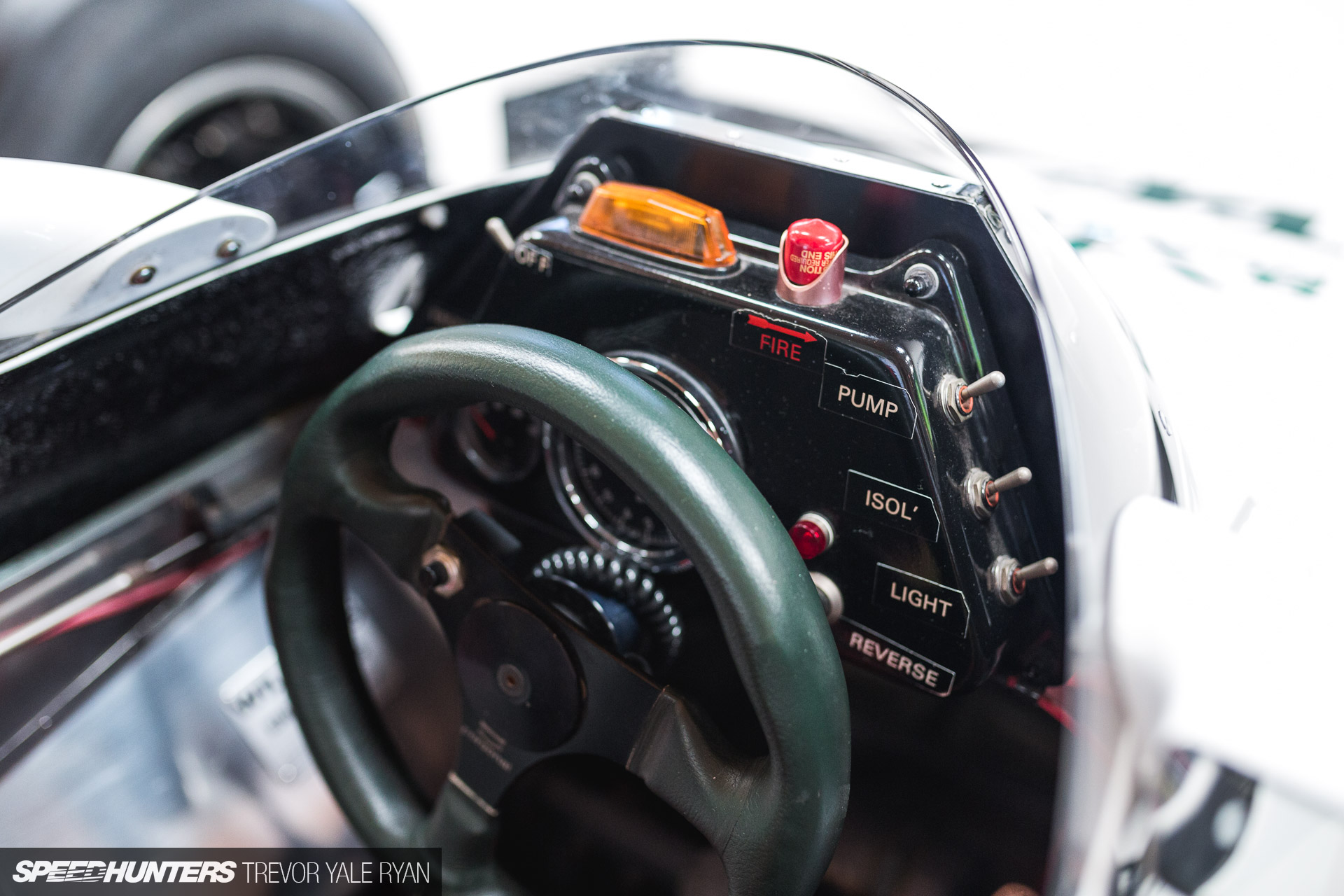
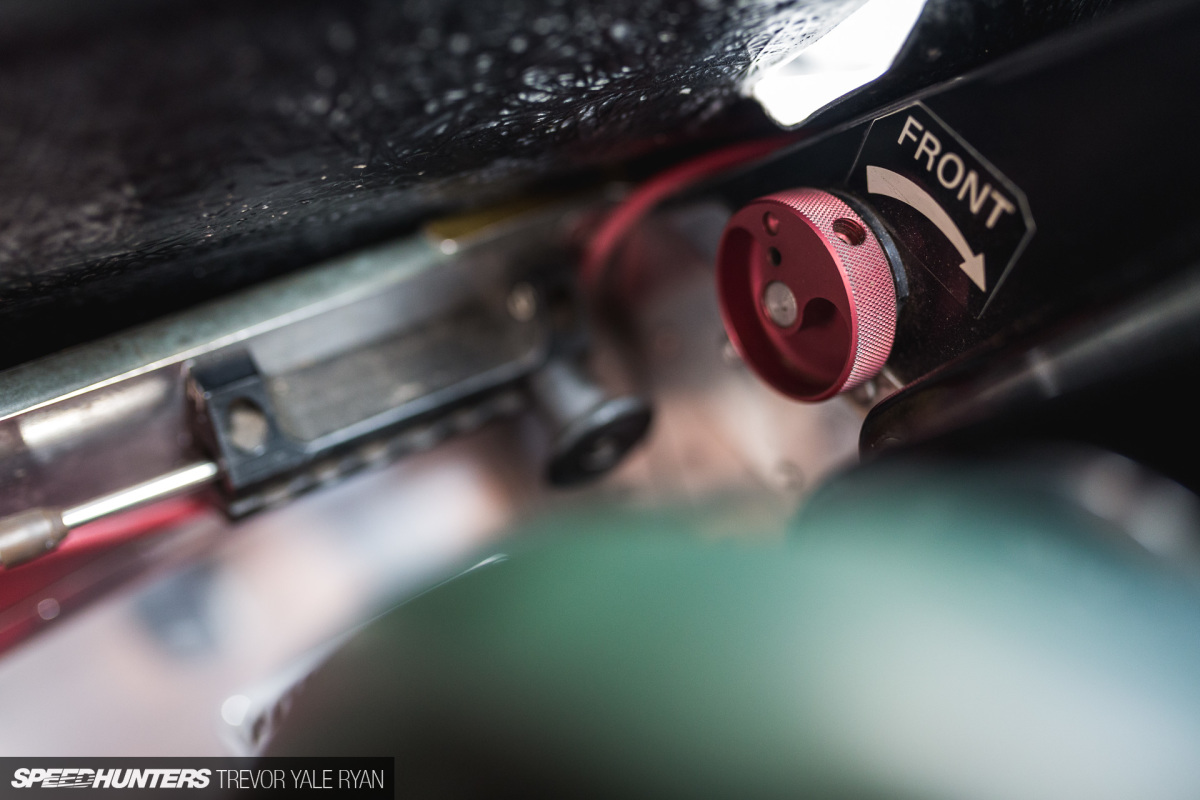
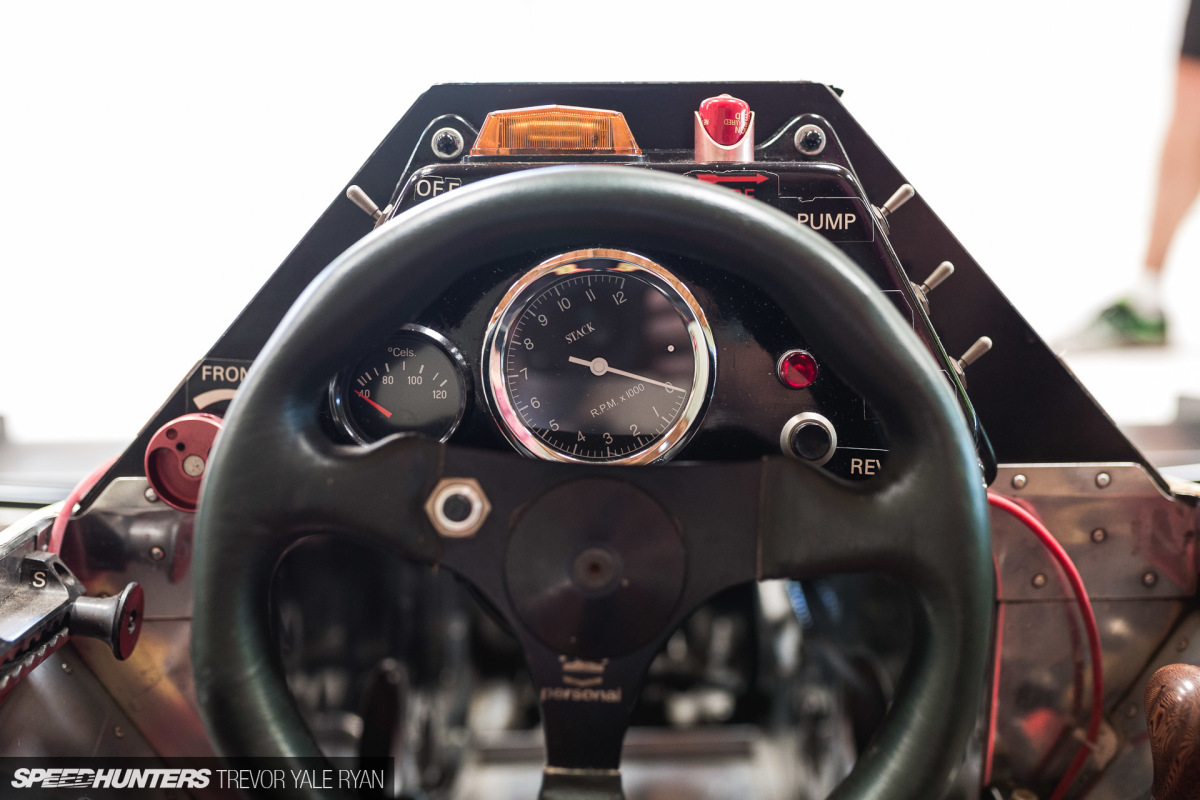
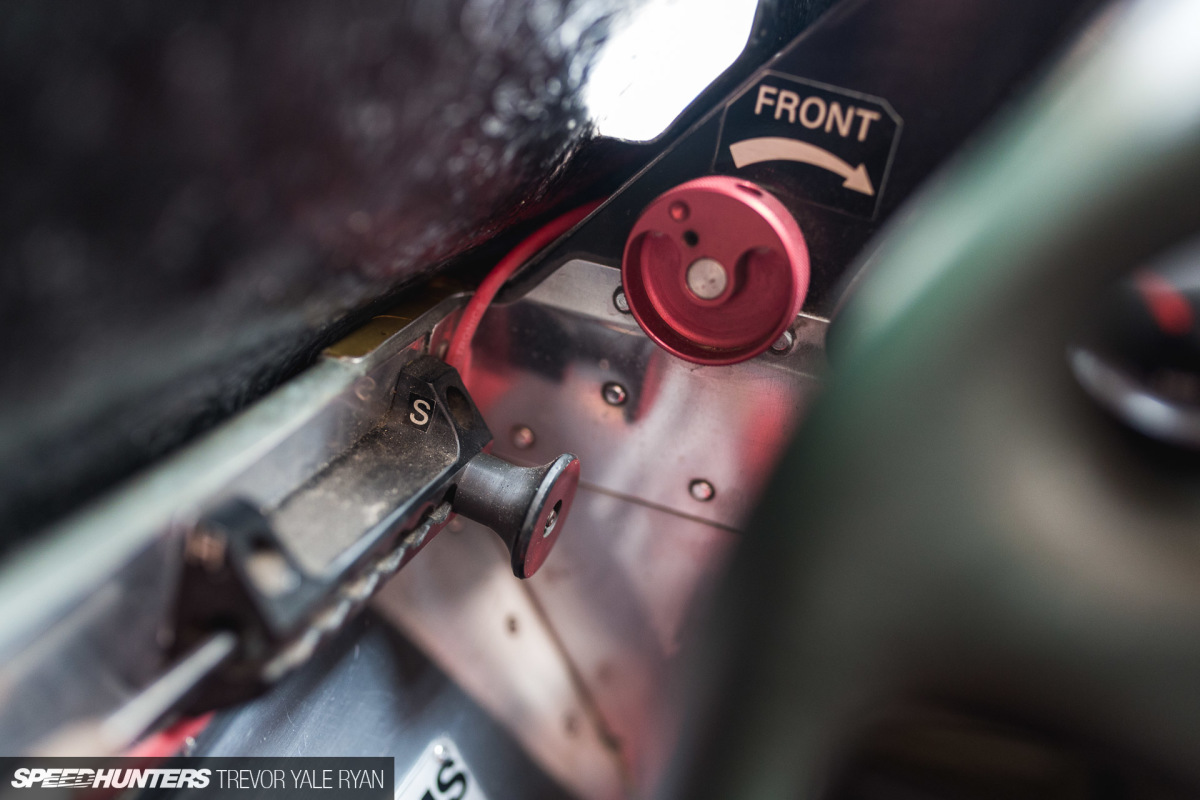
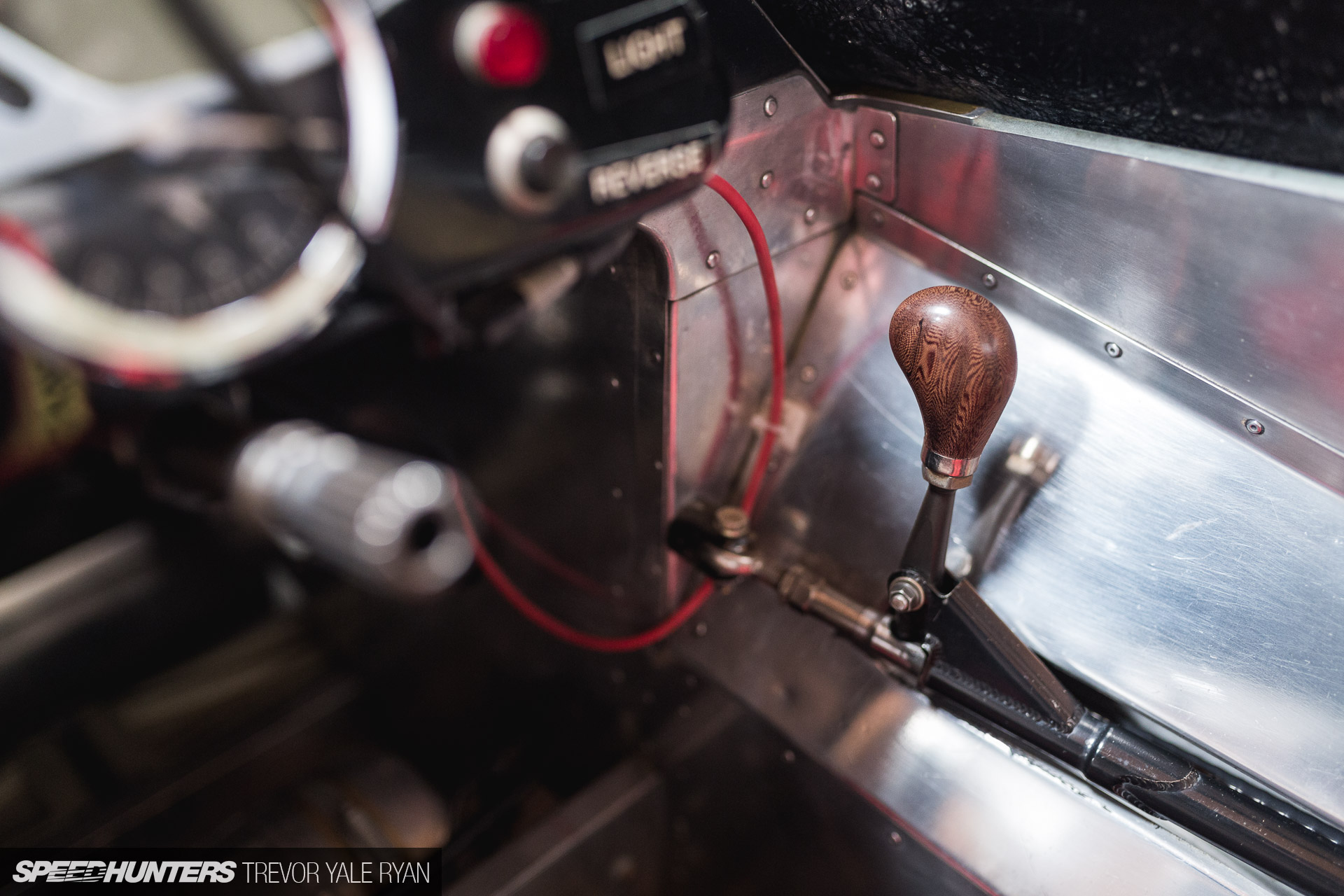
I started with the parts that didn’t need much explaining, peeking first into the aluminum-framed cockpit. In contrast to today’s top-level formula cars, the ’83 Williams is elegantly simple, complete with a wood-grain shift knob tucked over to the right side.
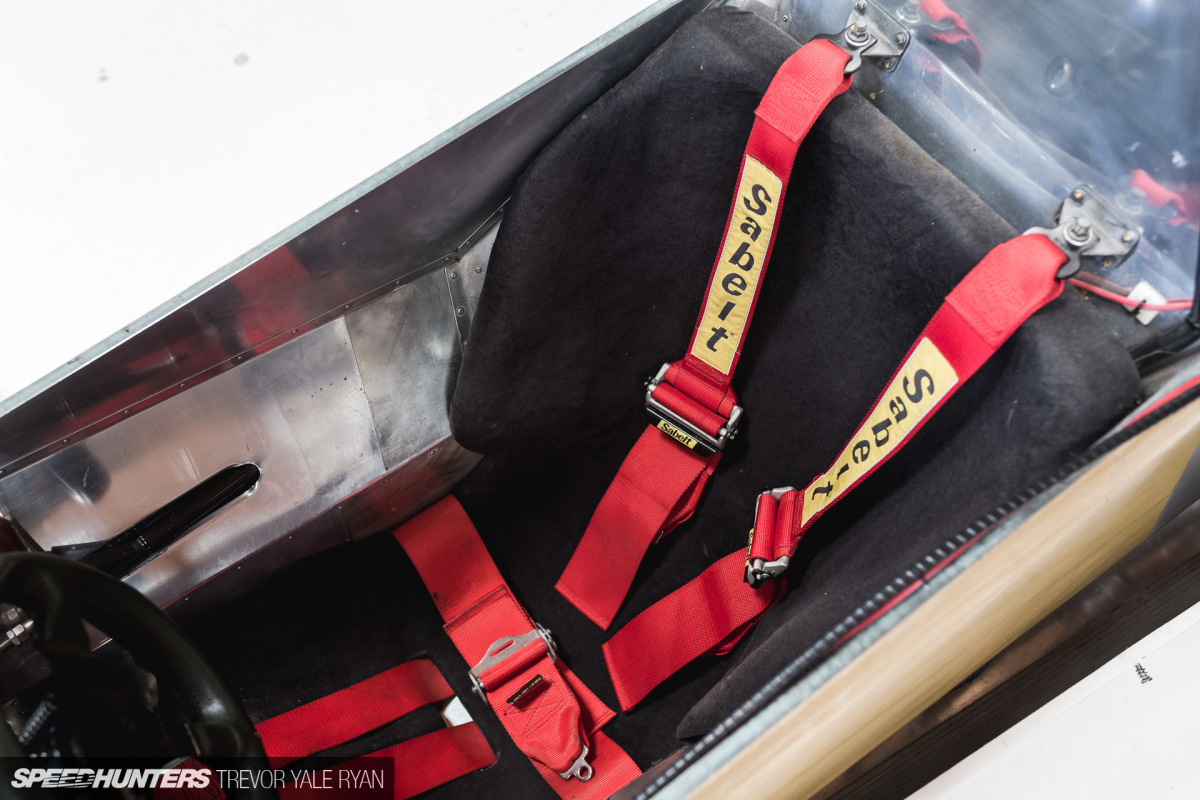
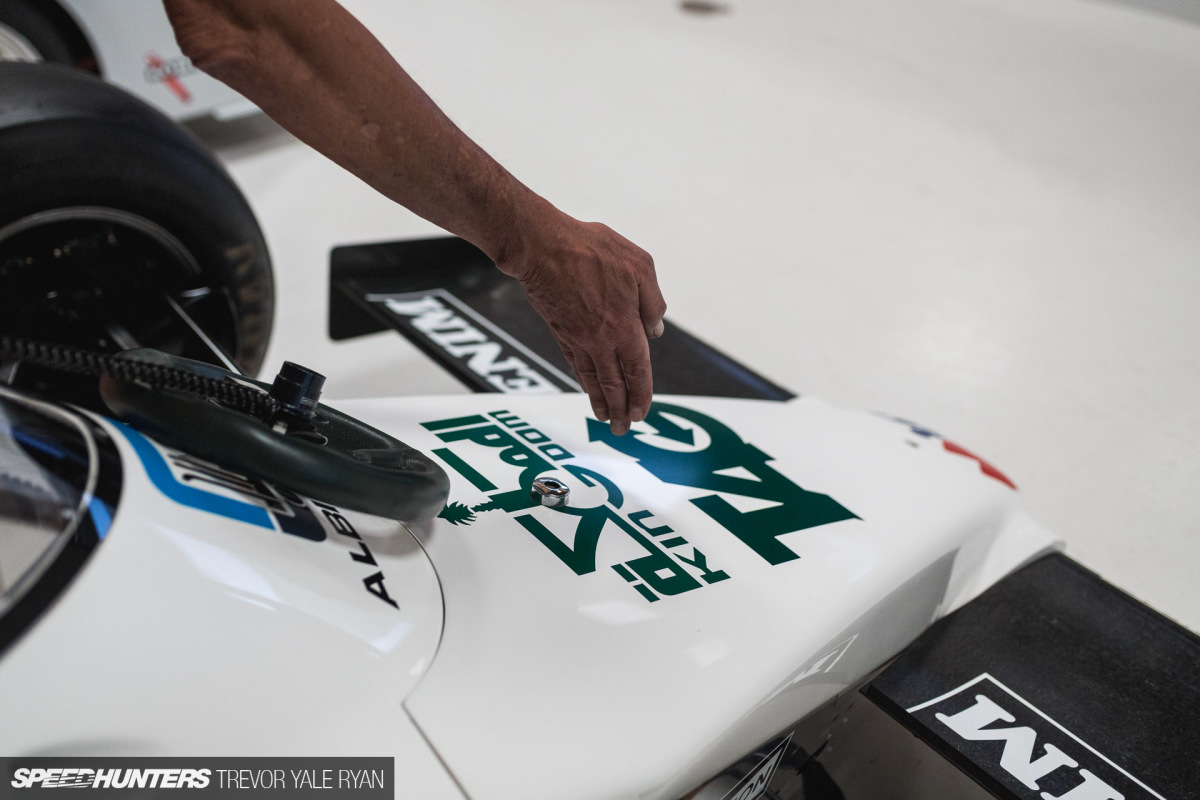
It’s obvious that seating was tight and crumple zones didn’t yet exist, and to further this observation TJ showed me the point on the chassis where the pedals sat, an area suspiciously close to where the spindly double wishbones are located. With a big laugh and a sly grimace, TJ asked if I’d ever heard of the ‘Lola Limp.’
I hadn’t, but there’s probably enough context here to figure it out if you’re the same…
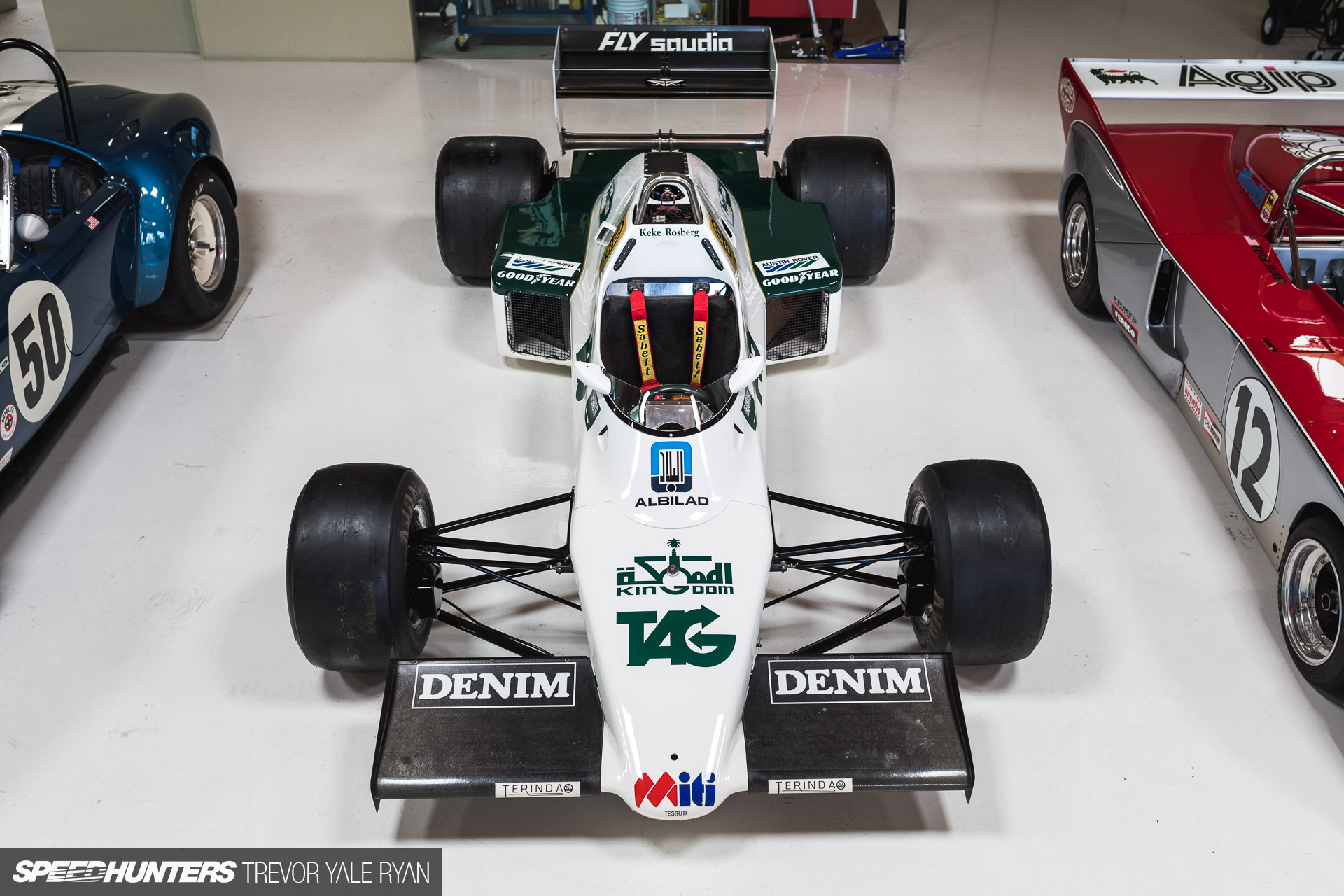
The result of this dangerously functional design is a car which is far more compact – and beautiful – than those that race today.
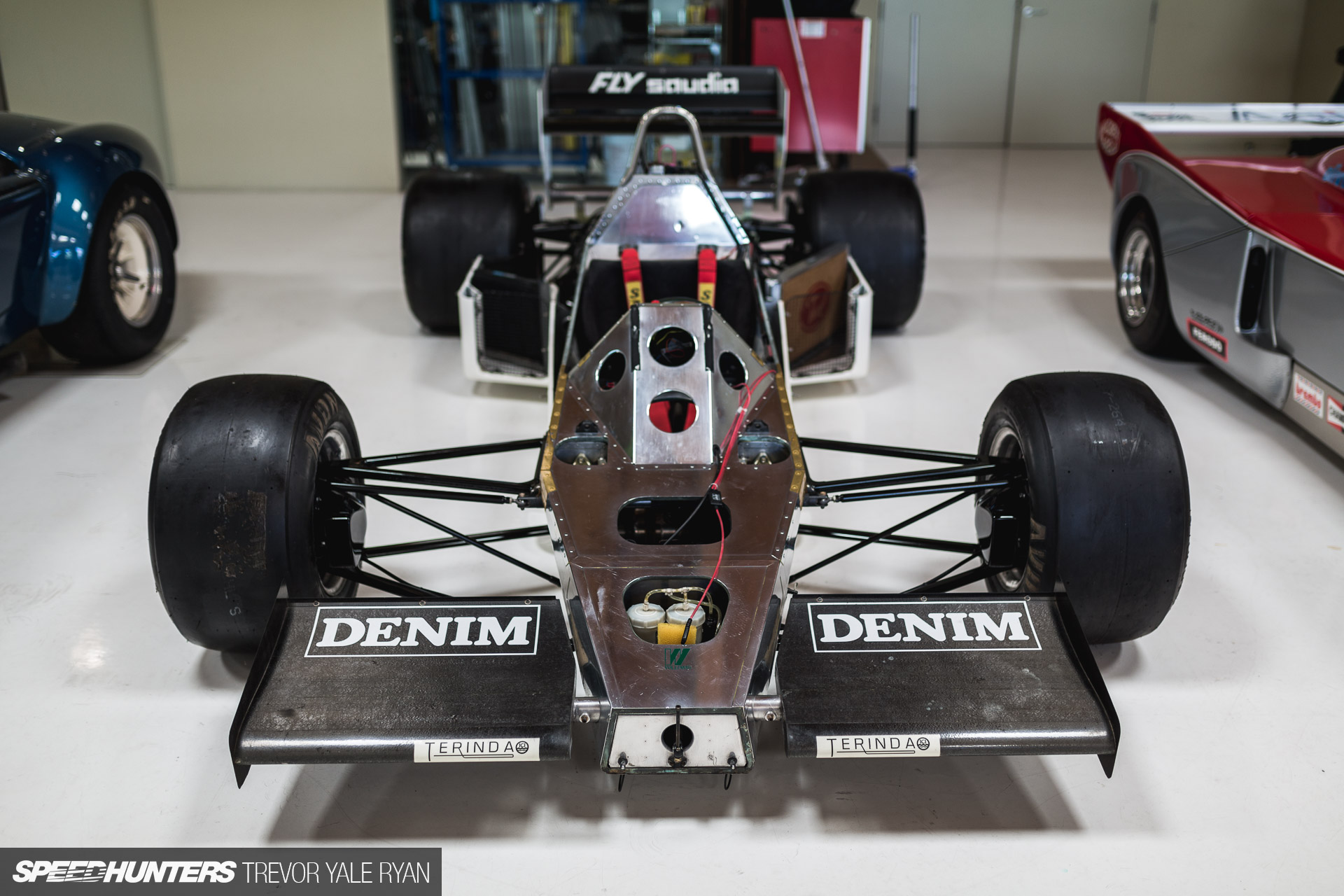
With a full aluminum monocoque — or aluminium in Oxfordshire where the car was designed — the FW08C weighed in at just under 1,200lb (540kg) but managed to produce 530 horsepower to the wheels.
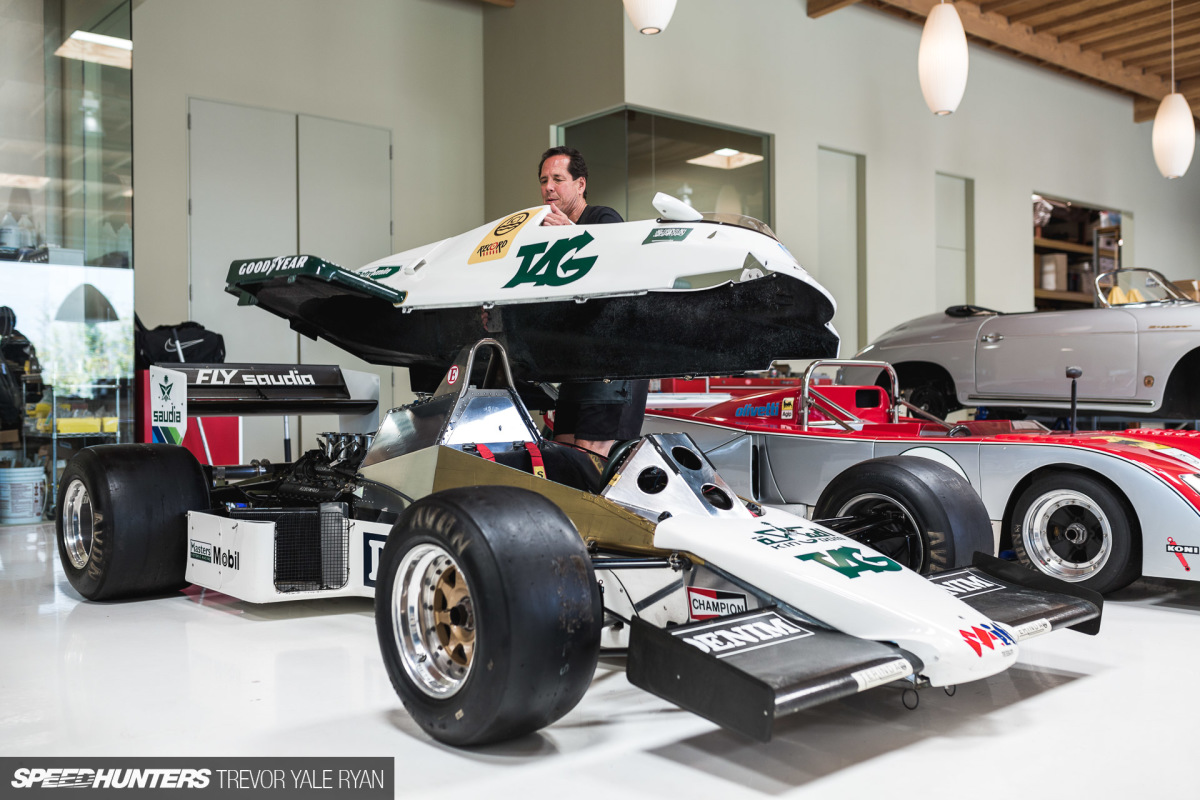
Of course, what I was most interested in was where this power came from, so off came the bodywork.
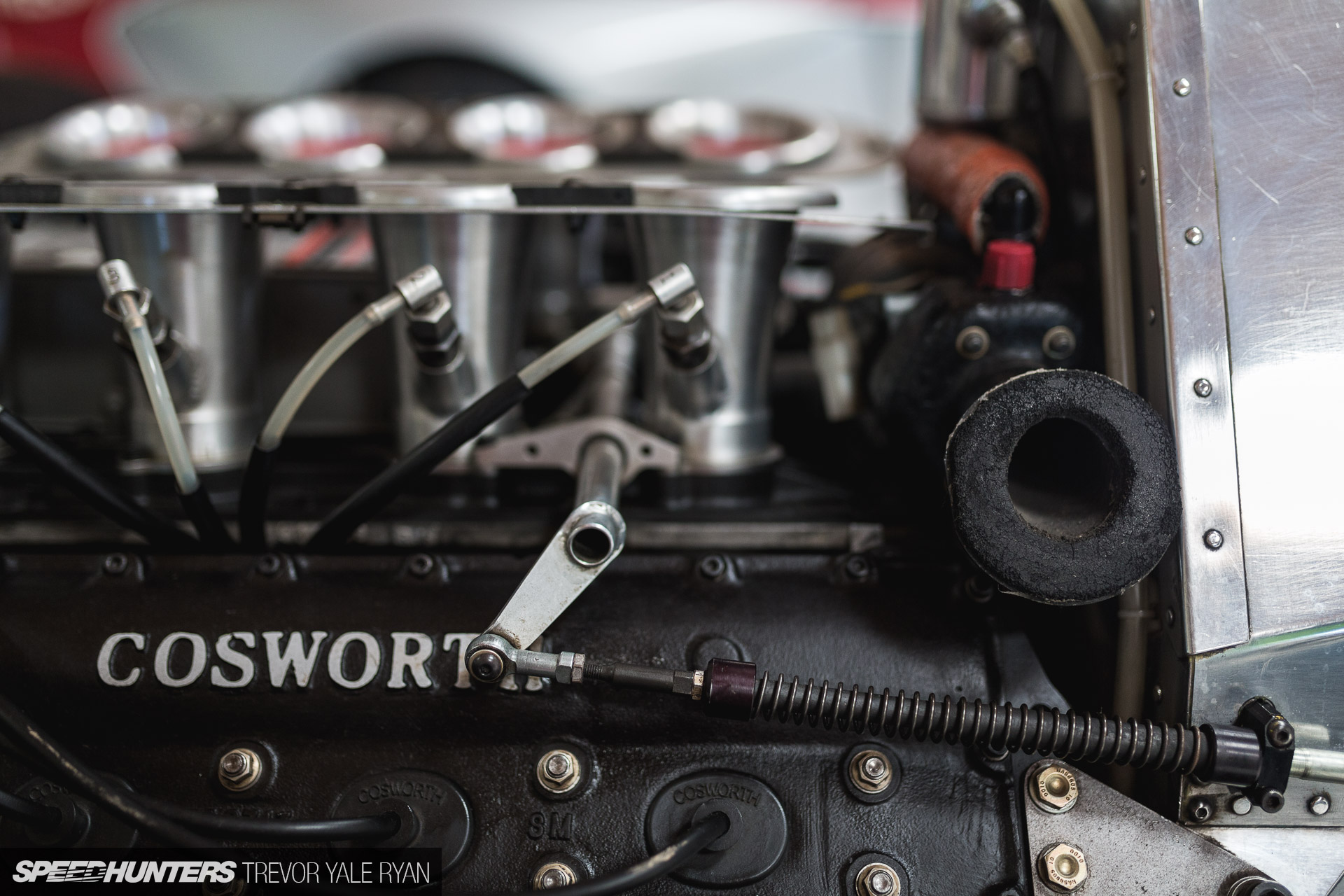
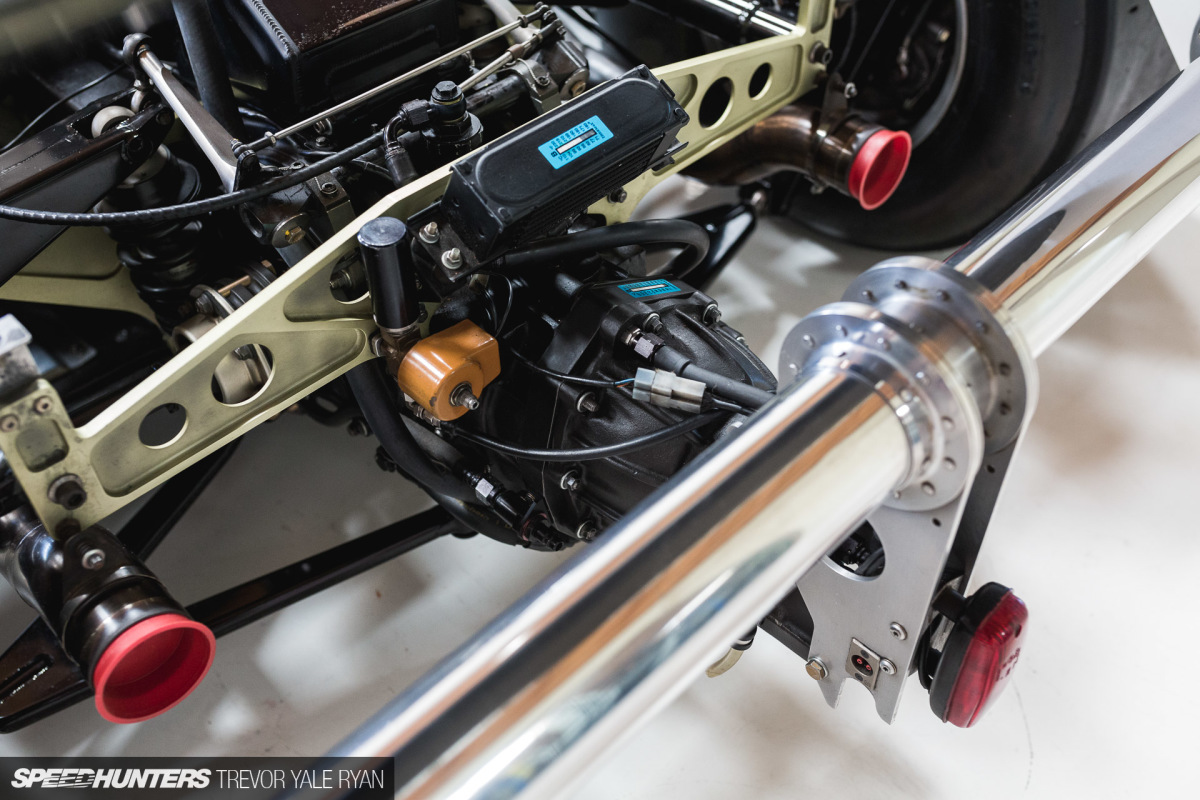
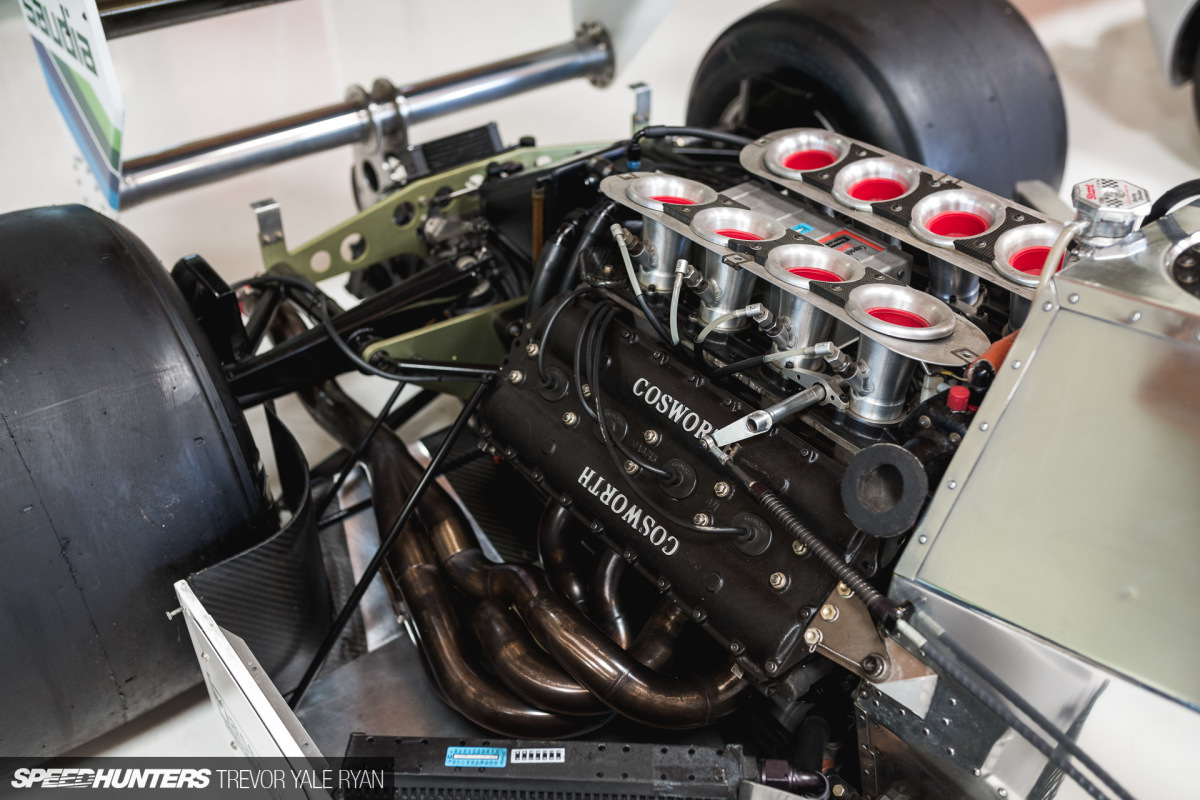
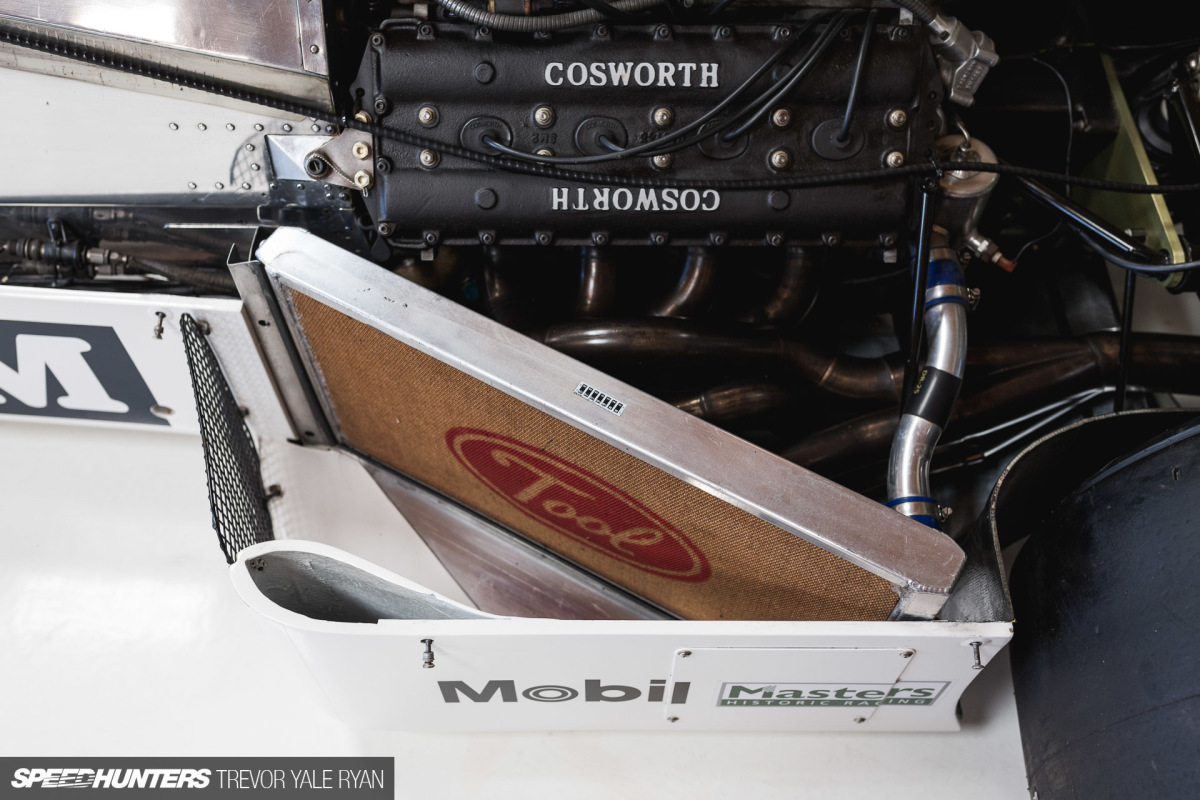
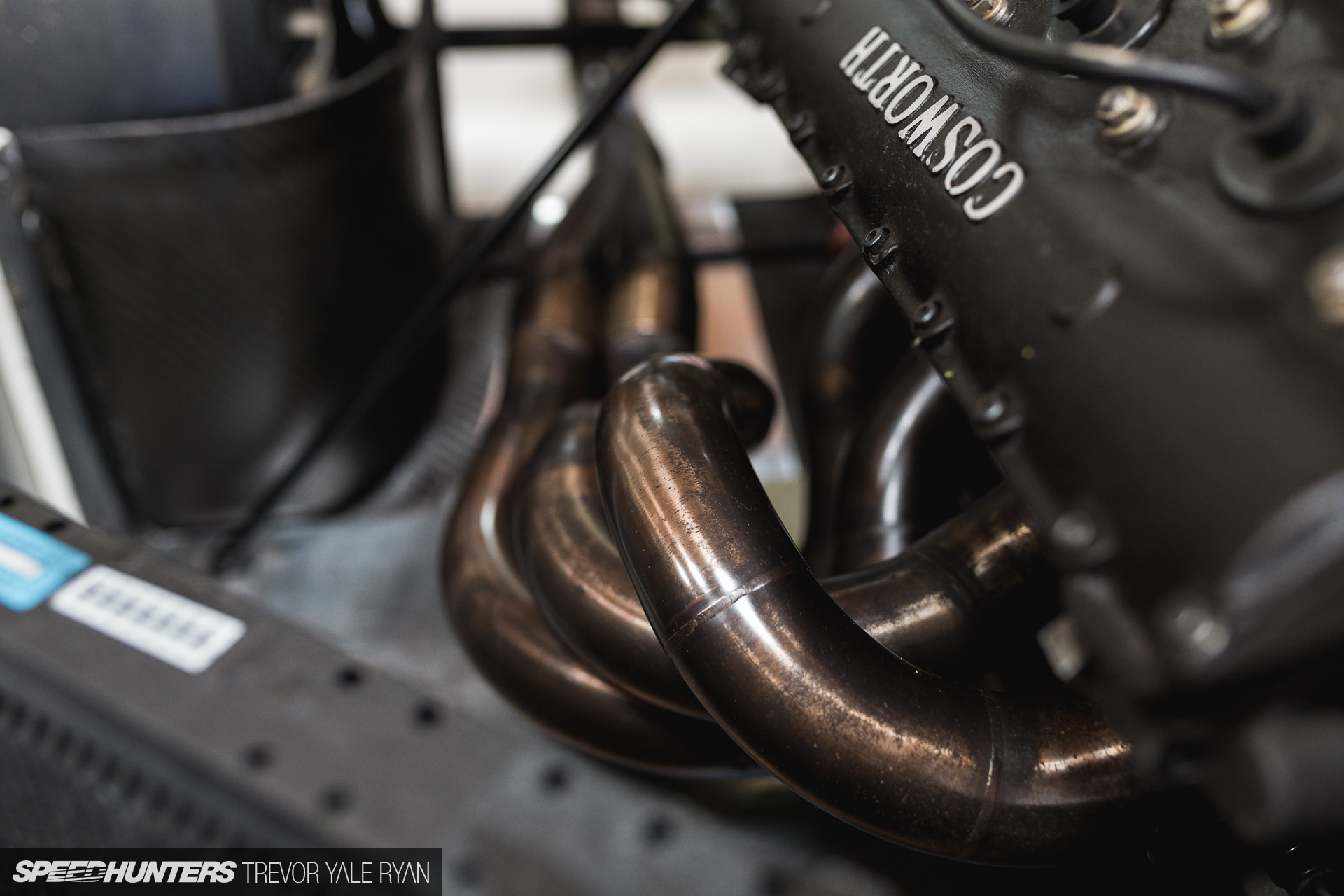
The 2,993cc Ford Cosworth is a 90-degree V8 DFV-based engine, upgraded to DFY specification which encouraged quicker revs and a higher redline at 11,600rpm. Rife with sunning details and incredible simplicity, the naturally aspirated Cosworth power plant is as much a work of art as the rest of the car.

It’s also notable that the engine block itself was a stressed member of the chassis, a necessary design decision to vastly increase the stiffness of the frame while keeping weight to a minimum. This extra stiffness was required as suspension rates were increased in efforts to provide more grip in the wake of the outlawed ground effects techniques of ’82.
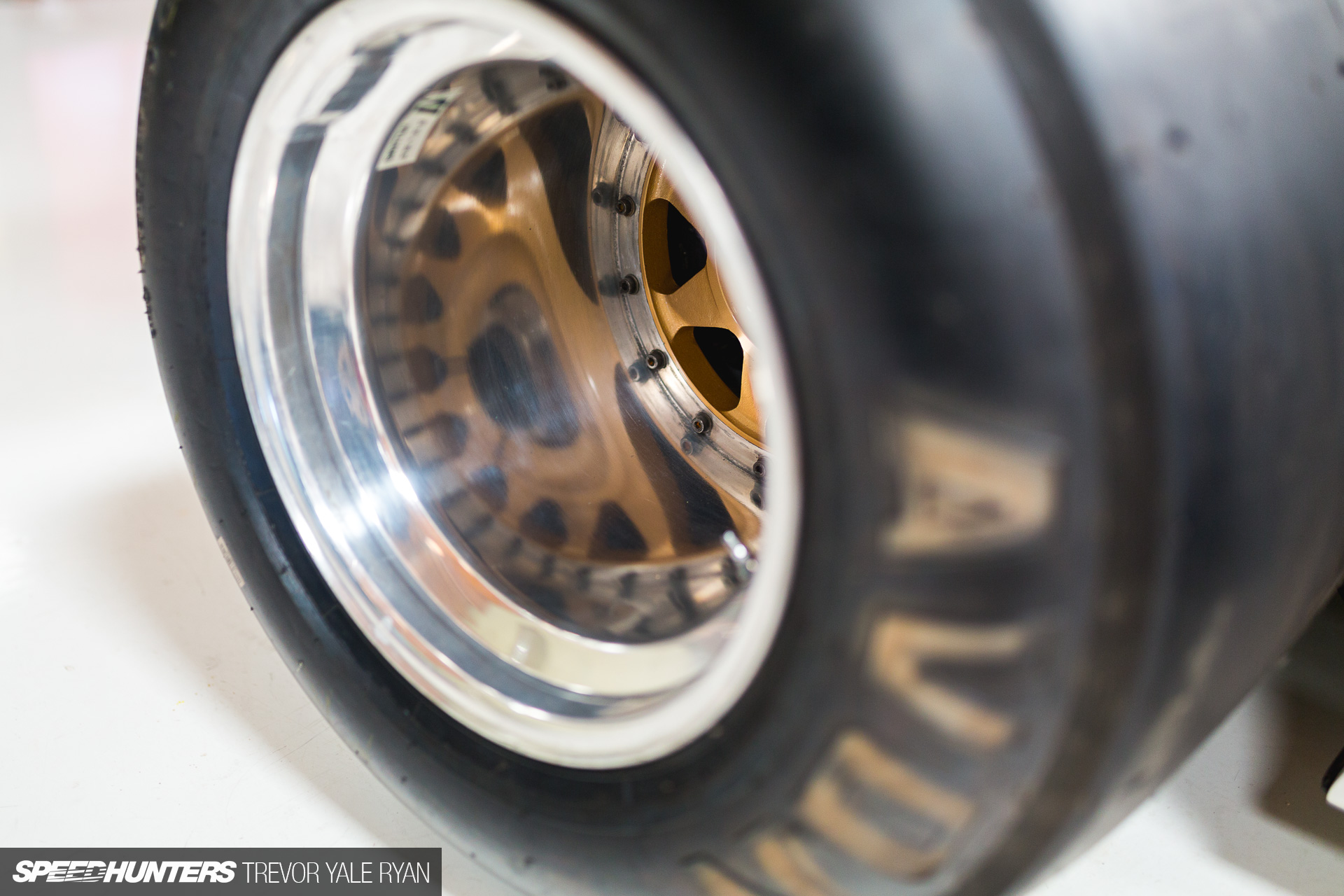
Producing 177 horsepower to the wheels per liter of displacement – again, 530whp – meant that the FW08C would have nearly 1 brake horsepower per kilogram it had to push around (1bhp/2.2lb). This power was delivered through massively wide wheels which measured 16 inches in the rear (and 15 inches wide up front).
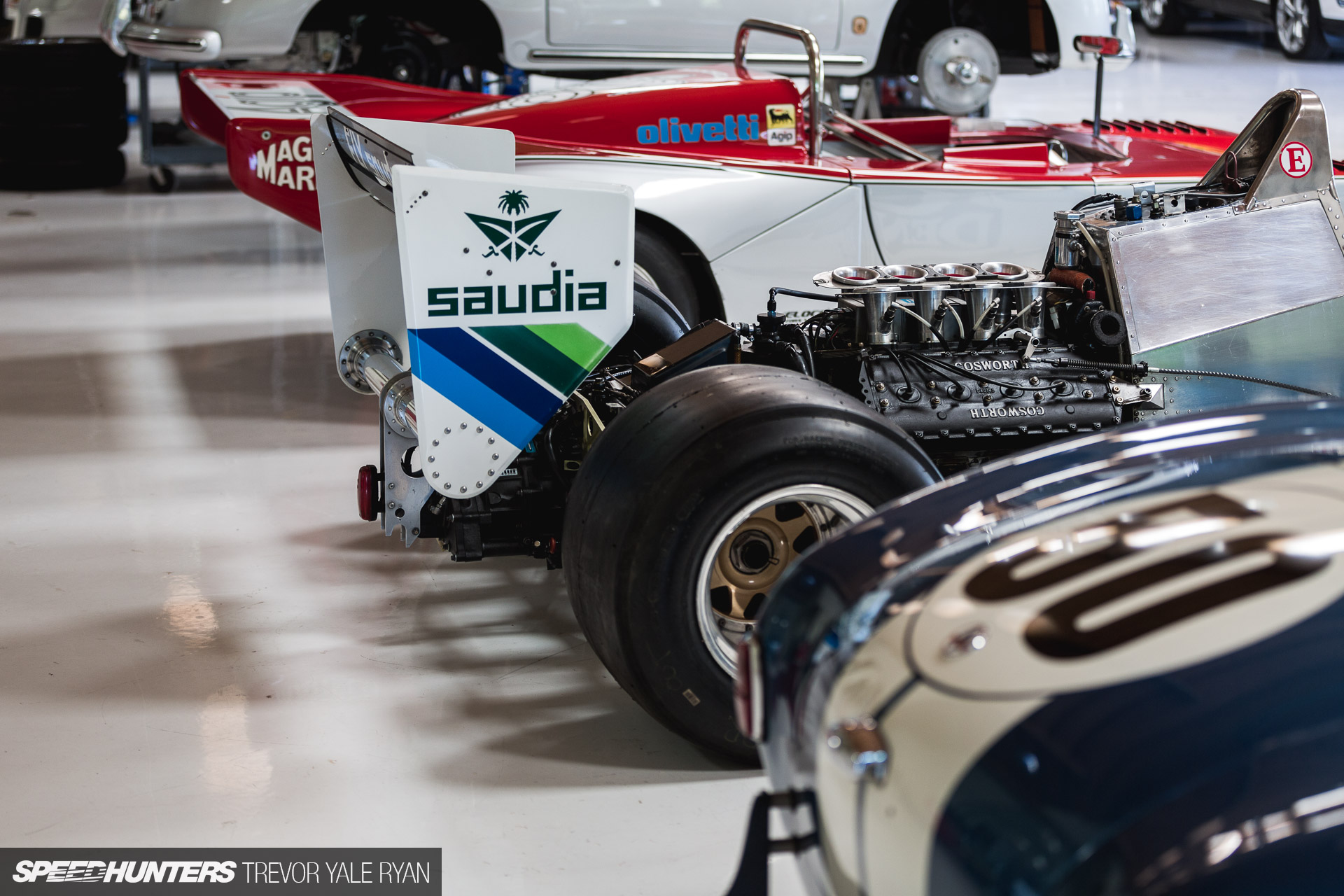
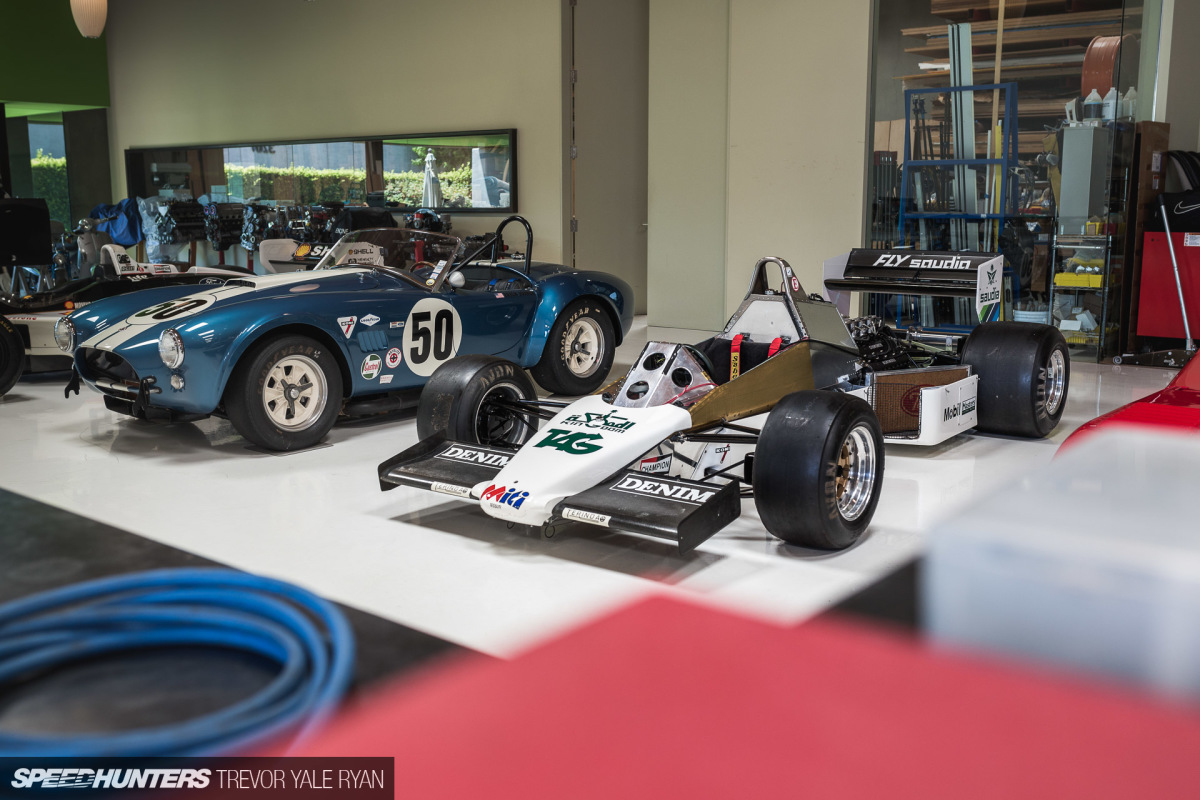

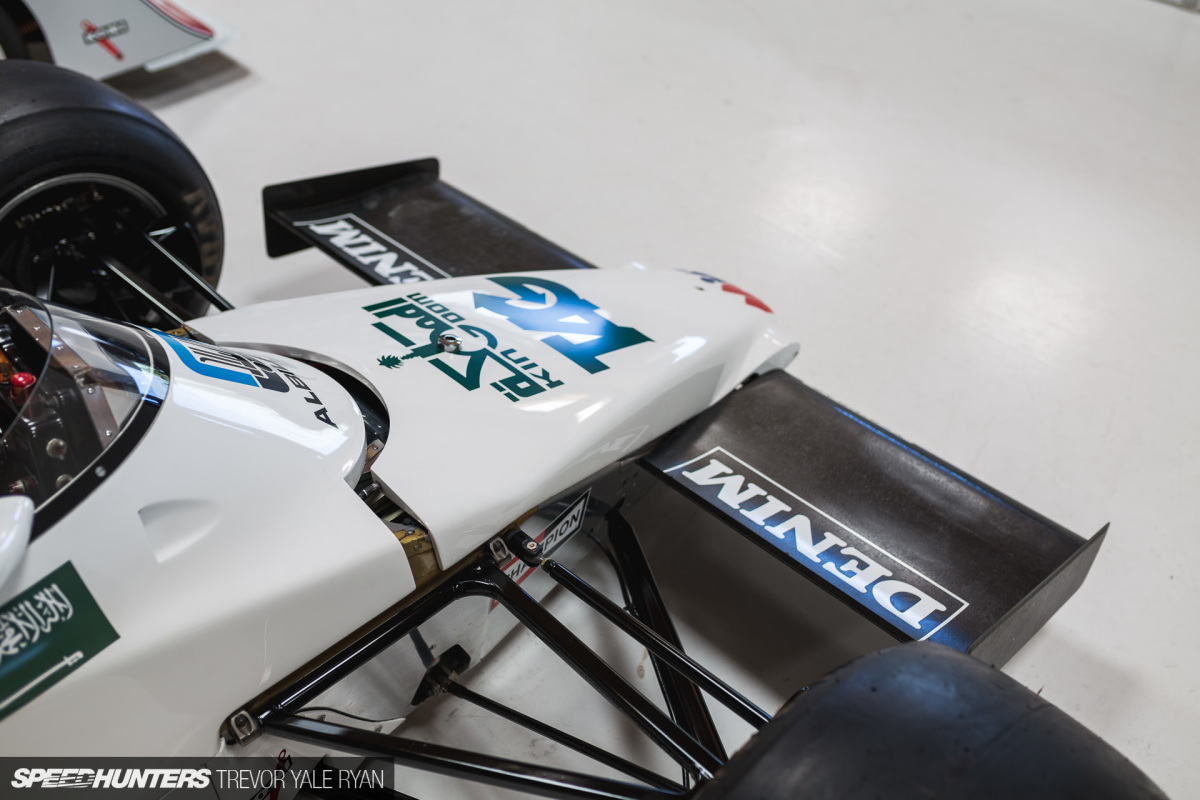
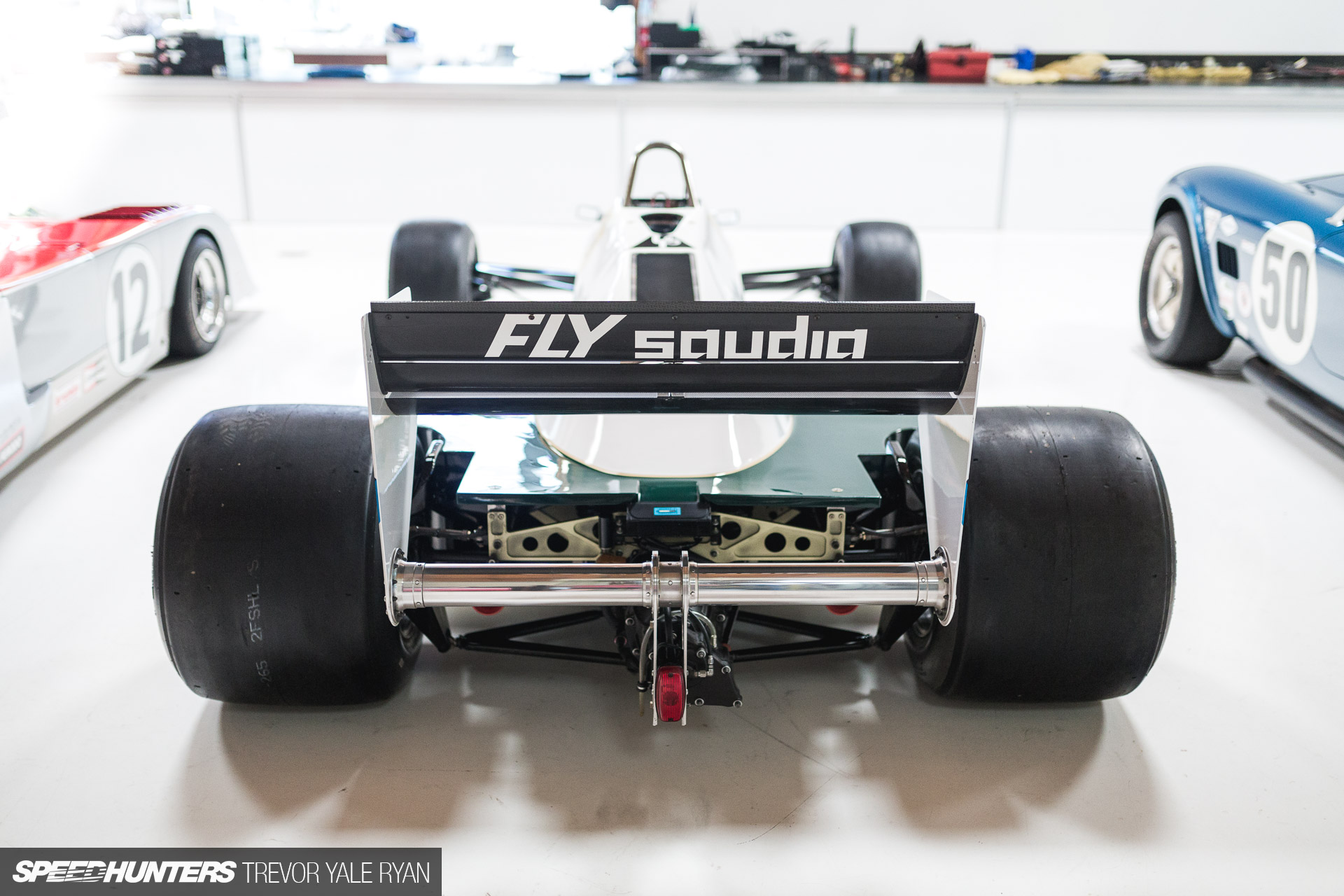
While this chassis, 07, is the more significant car having the race win at Monaco with world champion Rosberg behind the wheel, a sister chassis, FW08-09, has an interesting story to tell as well.
During a test, 09 was the first F1 car that Ayrton Senna drove, and although Senna was reportedly faster than both Williams drivers, Williams was contractually bound to Rosberg and Jacques Laffite.

It seems impossible, but with now ROKiT Williams Racing seemingly treading on thin ice after falling from roughly third to dead last in the standings since 2015 — and with two out of 10 Formula One teams changing ownership this year — someday all we may have of the once-great Williams F1 team are their successful cars of years past.
Not large in stature, the FW08C is an absolute monster of a car. The last of the naturally aspirated Williams Formula One racers of the era, it’s thanks to collectors like Erich who bring these cars out to historic races that we still get to hear the glorious sound of that 3.0-litre Cosworth V8.
Although, you won’t catch the “cocky bastard” of a world champ behind the wheel anymore…
Trevor Yale Ryan
trevor@speedhunters.com
Instagram: tyrphoto
TYRphoto.com