
So, as we all know, the new Supra doesn’t go on sale in Japan until October this year.
If, however, you’ve been following the right social media channels over the last 10 days or so, you may have come to a different assumption. No, the Supra still hasn’t been released in Japan, but two pre-production models have already been well and truly engine-swapped.
Below, is the story of one of these two cars…
About two weeks ago, I got a call from HKS. Any call from HKS usually means something cool is going to go down, but this was all about a project I’d been hearing about since January. In fact, it’s probably the most exciting project of the last few years, even more so than any carbon fiber time attack car HKS has built, simply because it was all based on the new Supra.
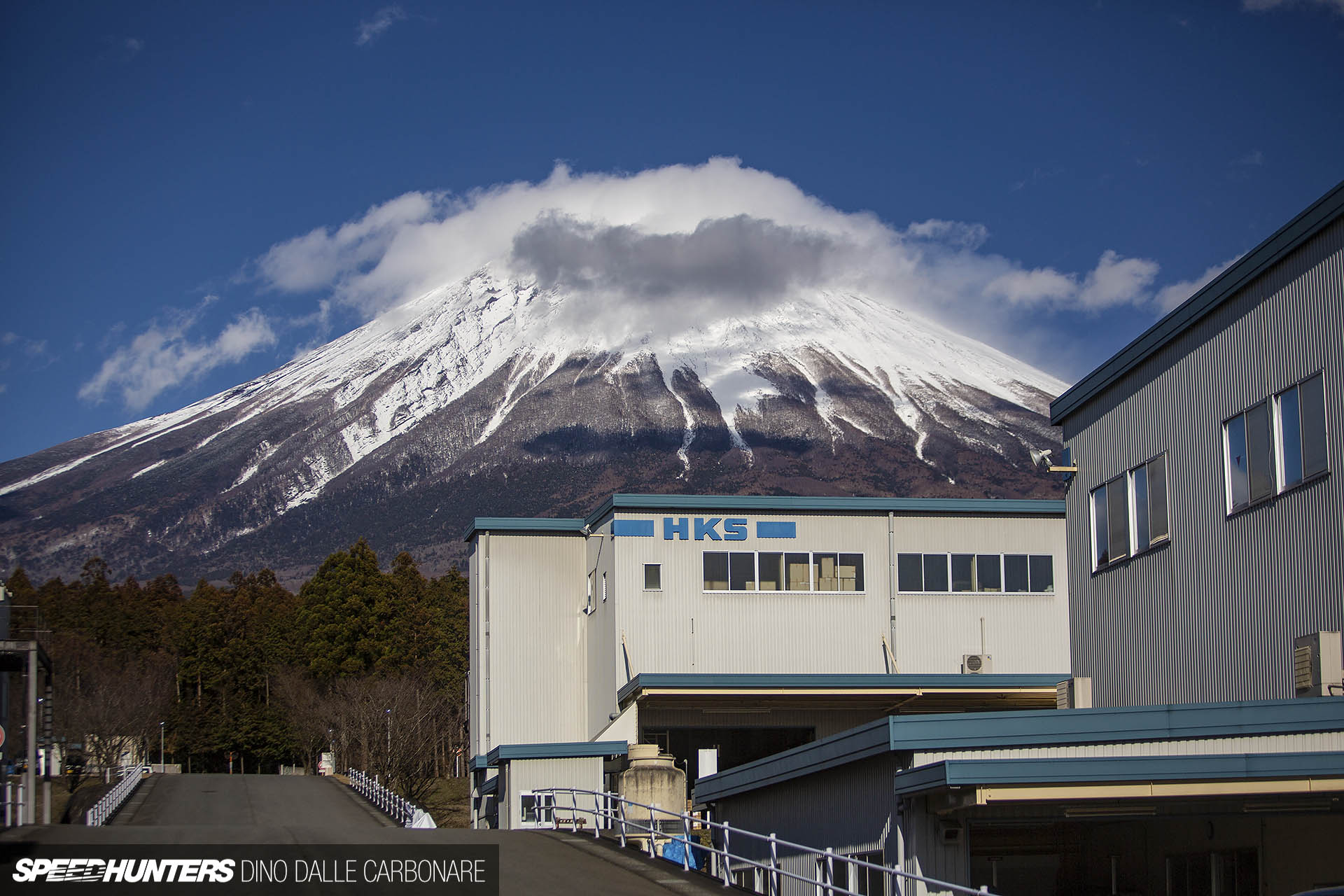
With a gentlemen’s Non Disclosure Agreement agreed – and I have to thank HKS for trusting Speedhunters and myself not to let the cat out of the bag before today – I made the two and a half hour journey to HKS’s massive headquarters in Fujinomiya, right at the foot of Mt. Fuji.
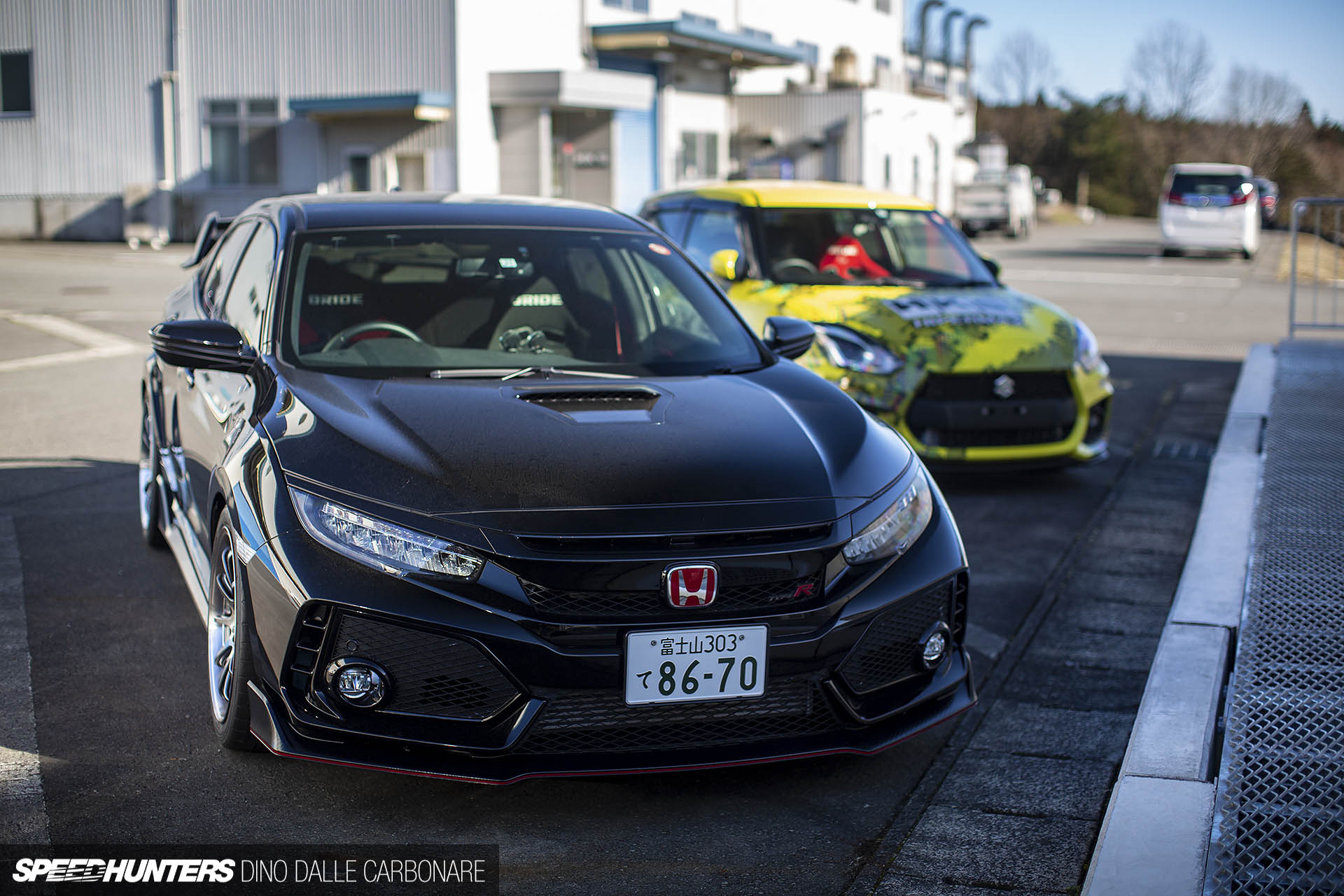
An idillic location to say the least, and one I’ve always loved visiting over the years as it’s without fail jam packed with interesting stuff to see (which sometimes is too secret to photograph). Nonetheless, a visit here is great to feed my inner enthusiasm for Japan’s tuning word.
I was there to see the yet to be completed Supra that Daigo Saito built with HKS’s support. The mechanical side of the car had been finished the day before, and it was ready to be put on the dyno for a full tuning session in advance of being tested at Fuji Speedway by the man himself the next day.
It turned out to be a long wait before the blue shutter of the R&D workshop slowly began to rise. There were some last minute issues with the car and it took a few hours to sort them out and get it 100% ready for some full throttle runs.
The First Glimpse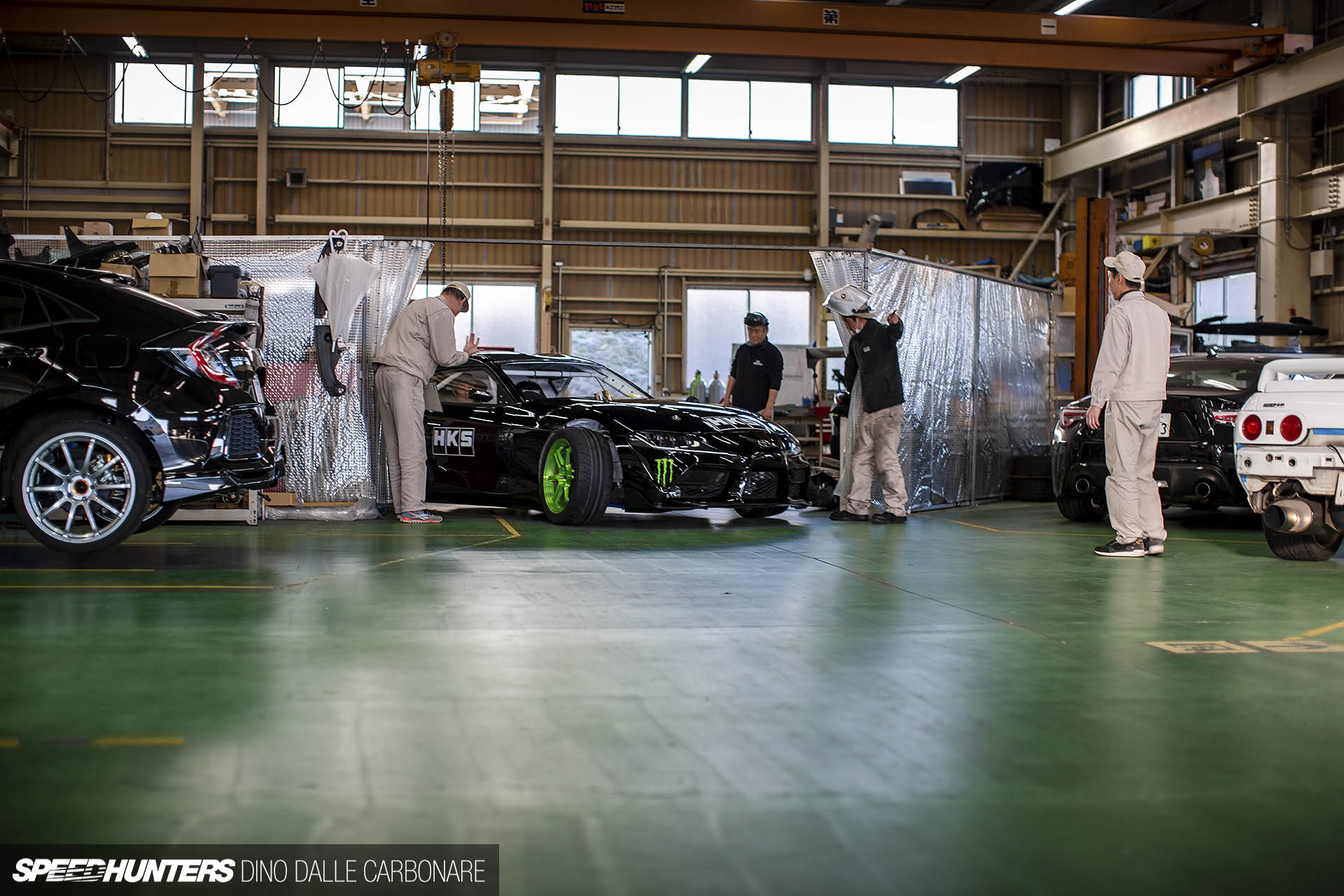
I wasn’t allowed to shoot behind the drapes that closed off the bottom portion of the garage, as the Supra was sitting next to something very top secret. After pacing up and down outside taking countless looks at the Civic Type-R and Suzuki Swift Sport demo cars outside, the whole workshop started echoing with the very familiar sound of an unsilenced 2JZ.
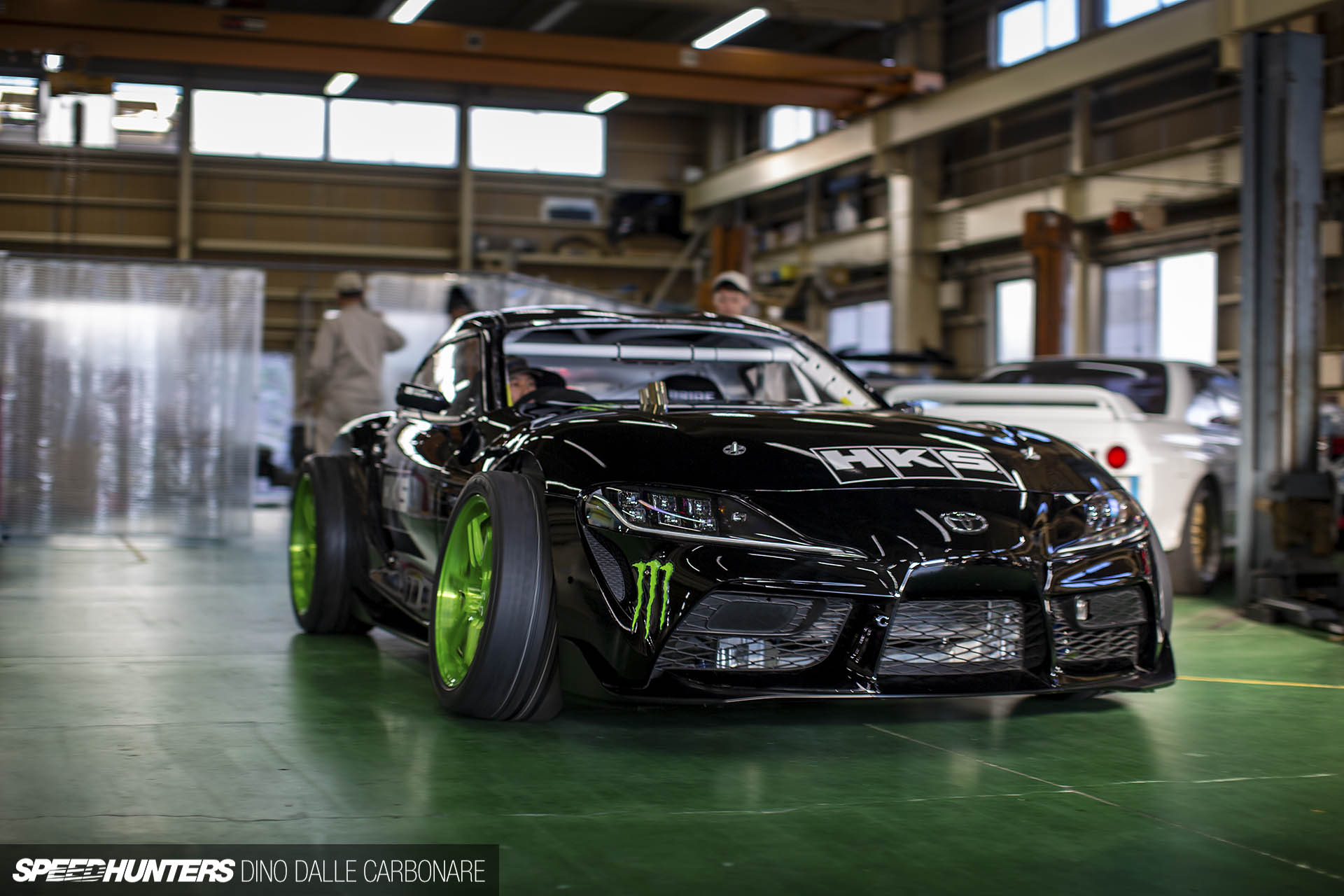
The car was ready and it quickly drove outside, looped around and lined up to enter one of the two dyno cells that HKS has.
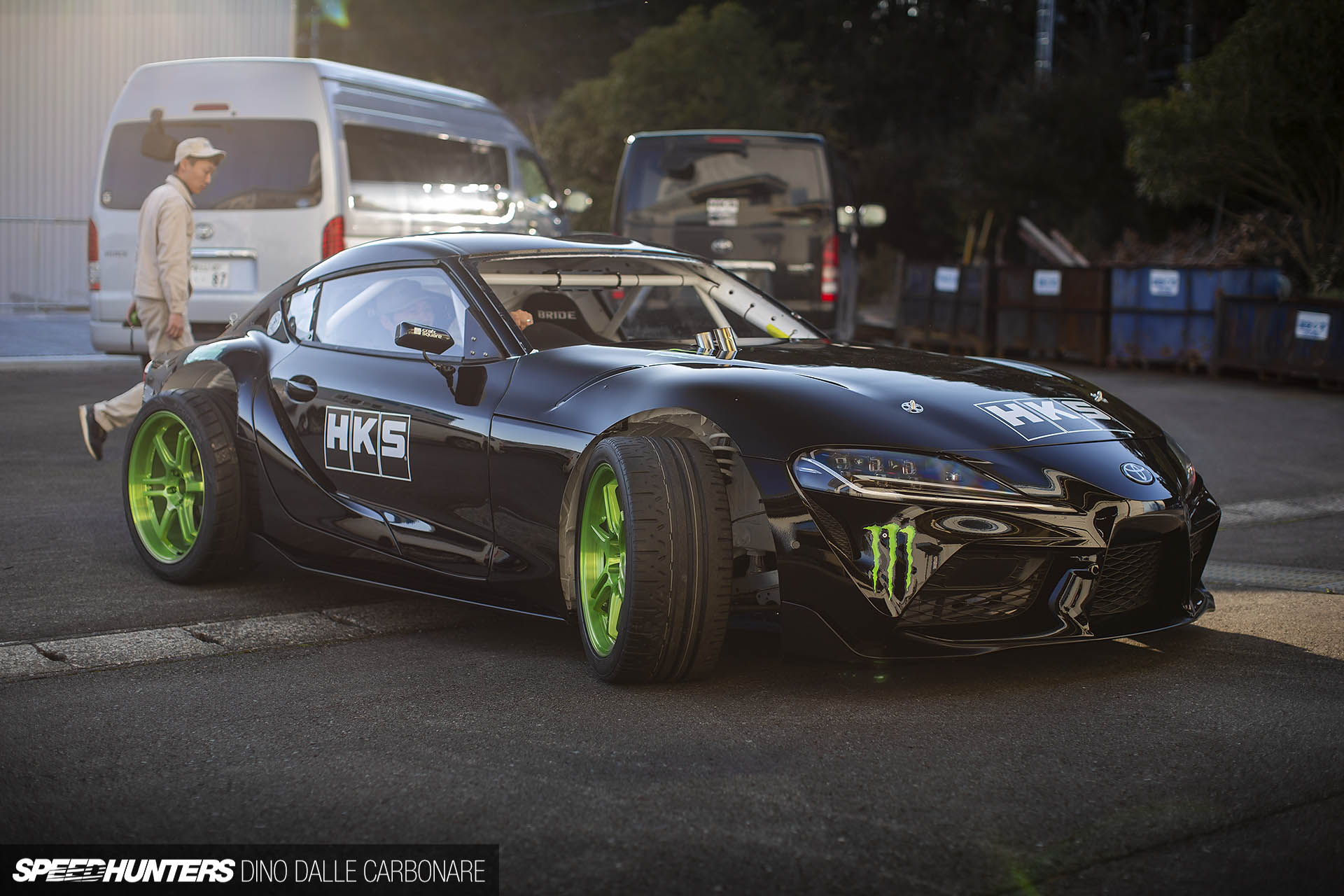
It was a funny situation because despite this being the first time I laid eyes on an unmasked GR Supra, just minutes before Daigo posted a gallery of images of the car on his Instagram page which, as you can imagine, set the internet ablaze.
Despite this unplanned embargo break, the word from Toyota was still to keep the images that I was to get that day offline until the 23rd of March – the day the finished car would be presented at the D1 Grand Prix Exhibition in Odaiba.
I wasn’t too fussed, as it’s far more important for us here at Speedhunters to generate our own unique content and present that wrapped up in a story, crafted directly from our own experiences.
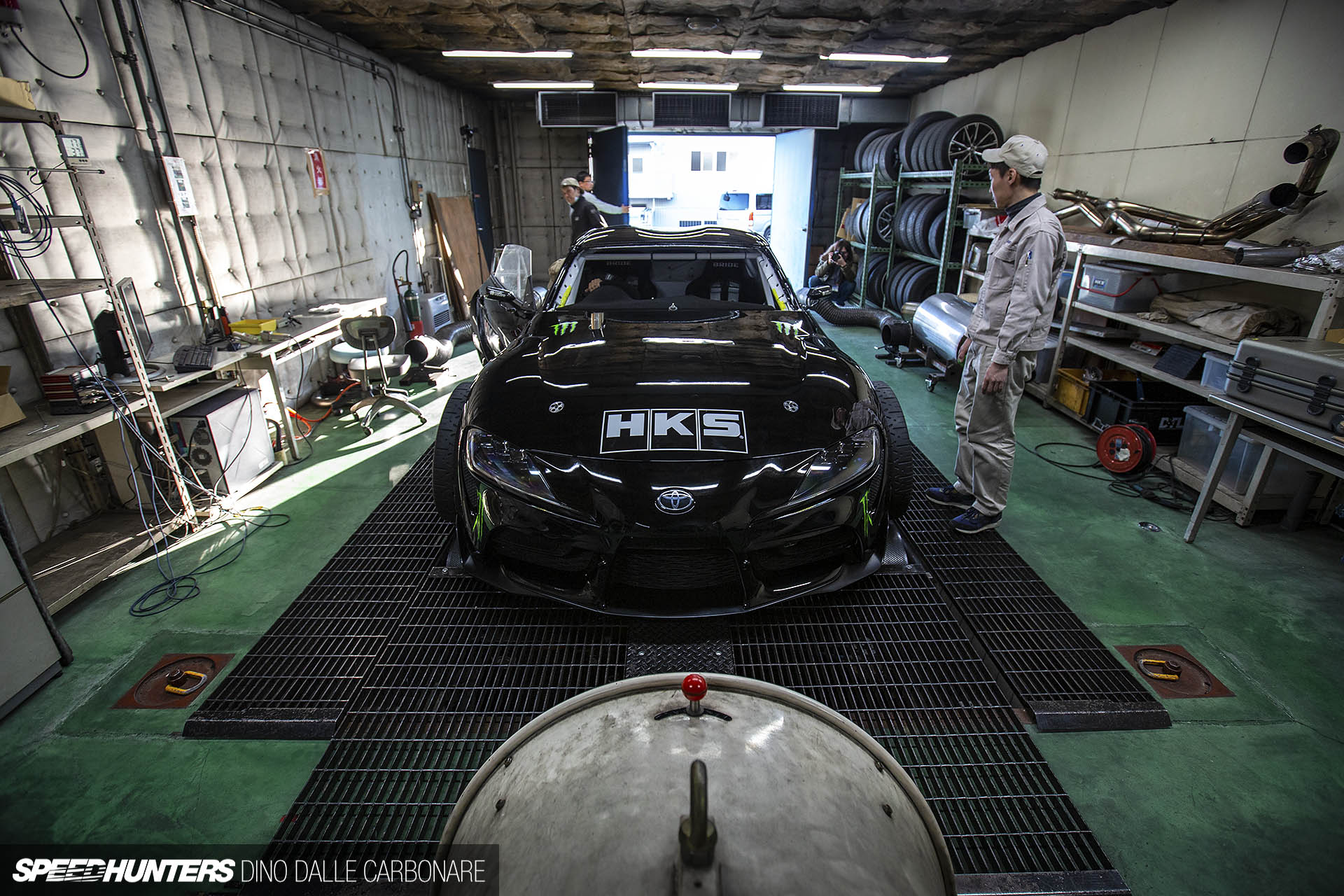
Leaving the reposting of square Instagram images to other outlets, I continued with the task at hand, indulging in this amazing moment that was unfolding in front of me.
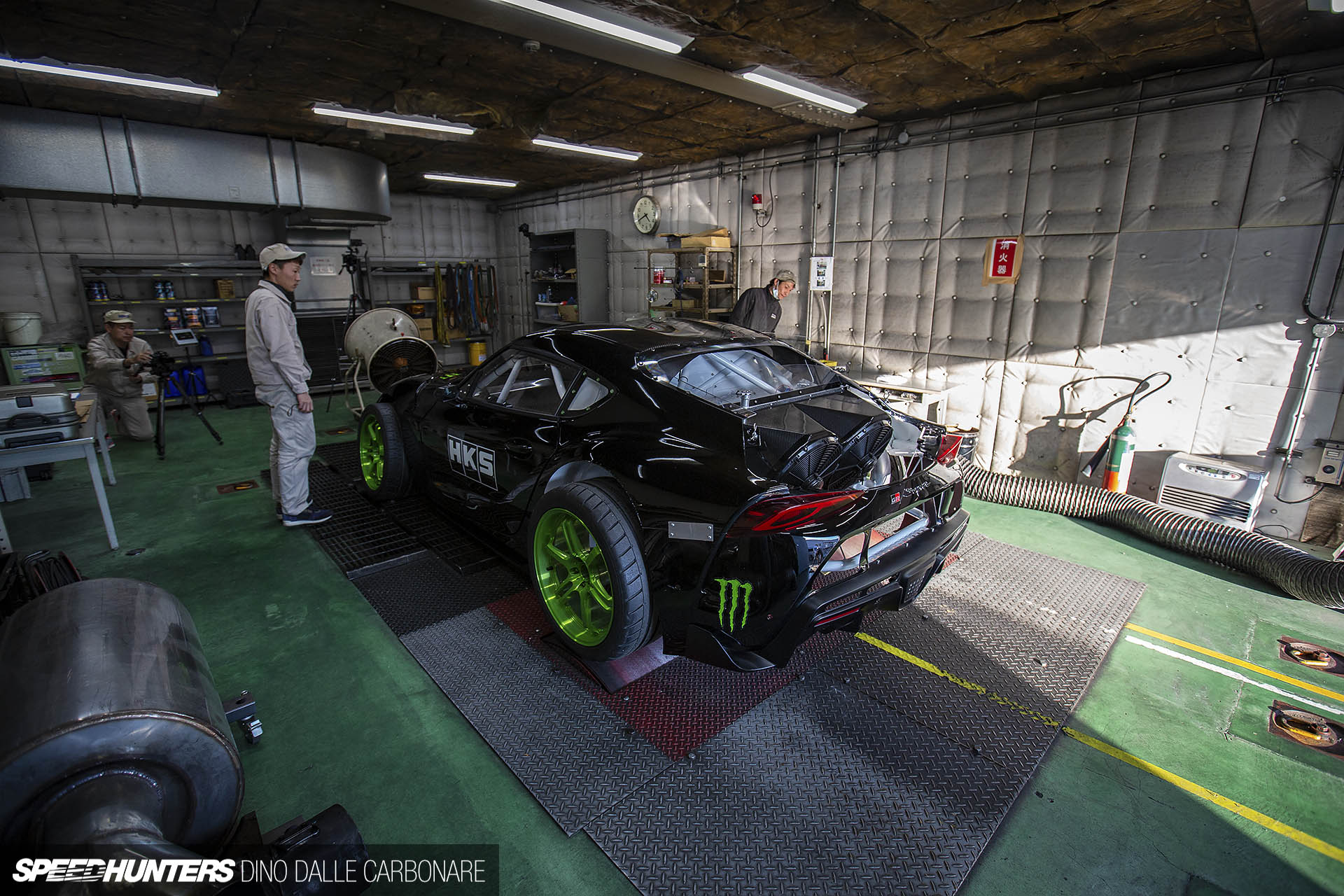
I mean, if you think about it for a second; away from the criticism that the A90 has received over its co-development with BMW, this is one of the most anticipated Japanese sports cars of this generation, right here in front of my eyes, running a highly modified 2JZ swap.
I may have got all emotional for a second.
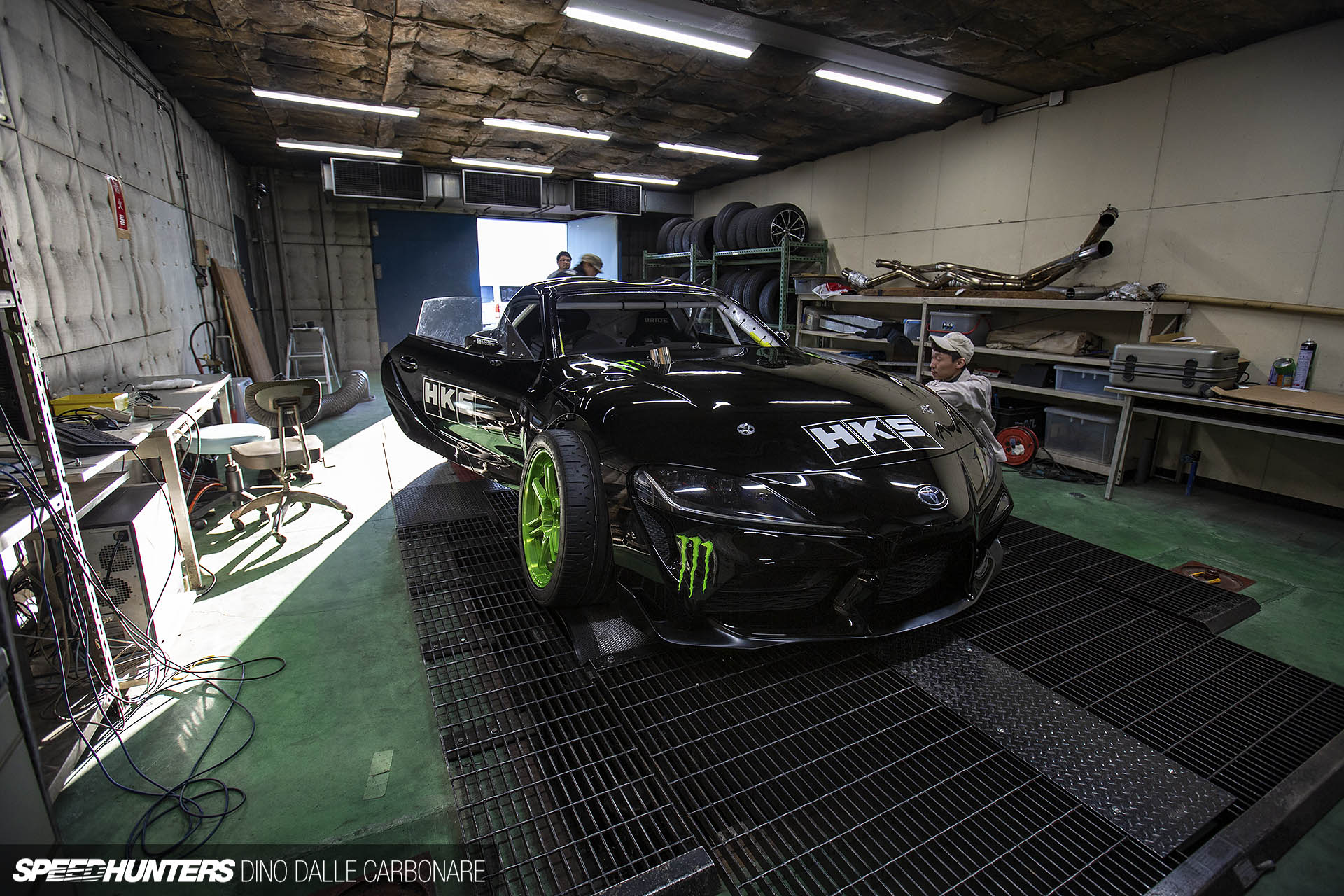
Let’s address what you are seeing first, shall we? Yes, the car was still sporting its stock body, or shall I say, whatever was left of it after Daigo attacked it with a grinder.
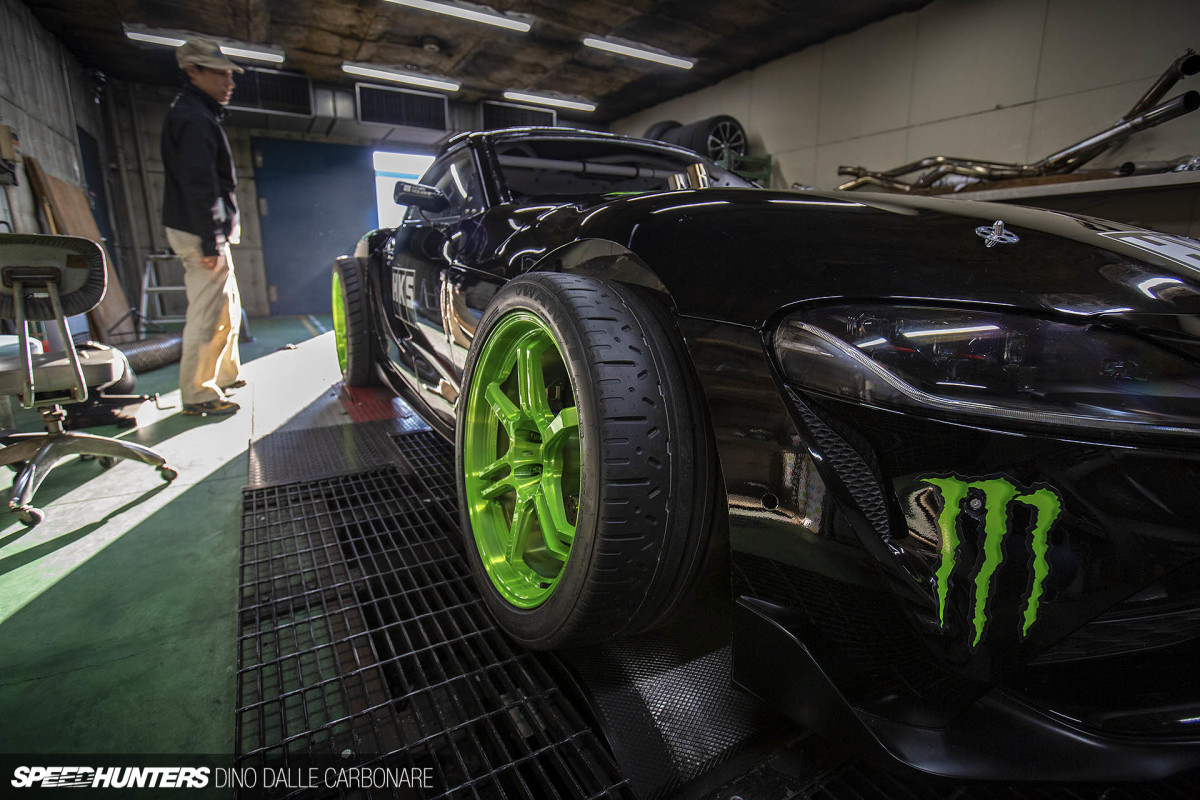
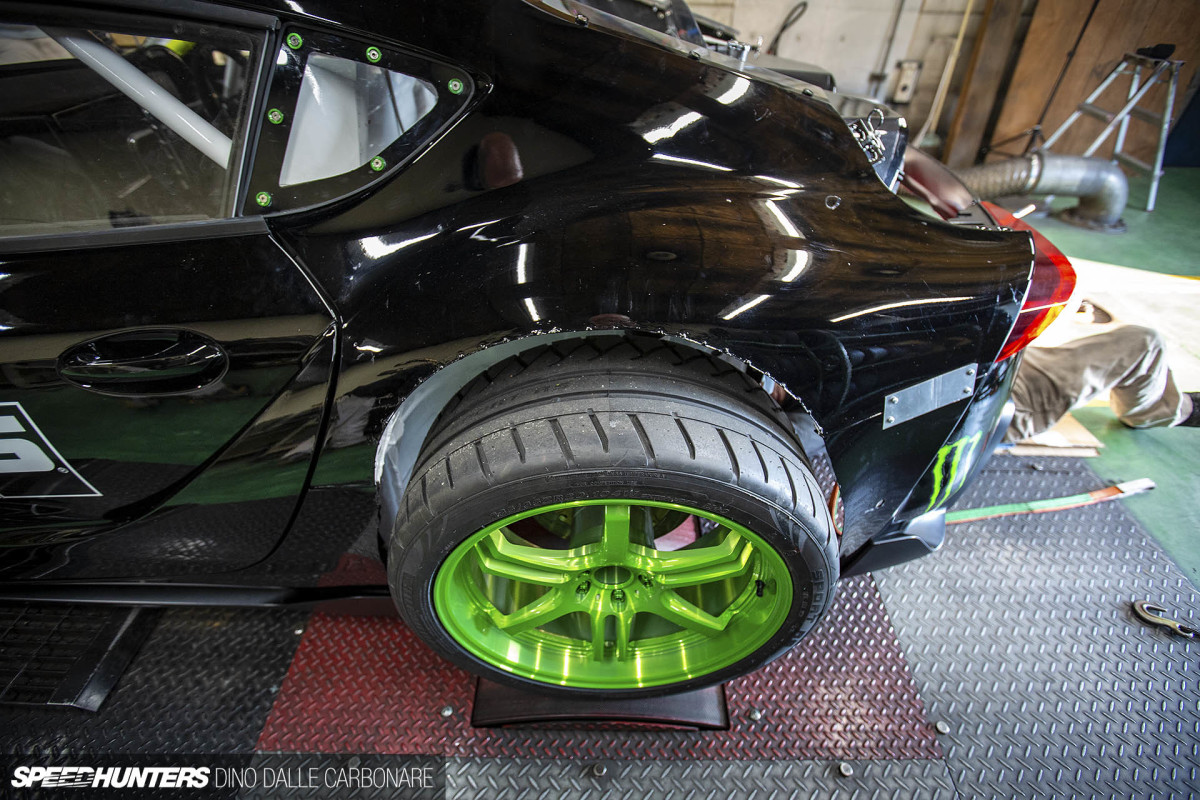
The increased radius of the wheel arches is to allow clearance for the significant increase in front and rear track, the larger wheel and tire package (Daigo will run Wanli 275/35R19 front & 285/33R20 rear rubber) and of course to allow full steering articulation.
As you’ll be seeing at today’s D1 exhibition in Odaiba, the car is now fitted with the complete Pandem kit, with the overfenders – barely – swallowing up Daigo’s setup.
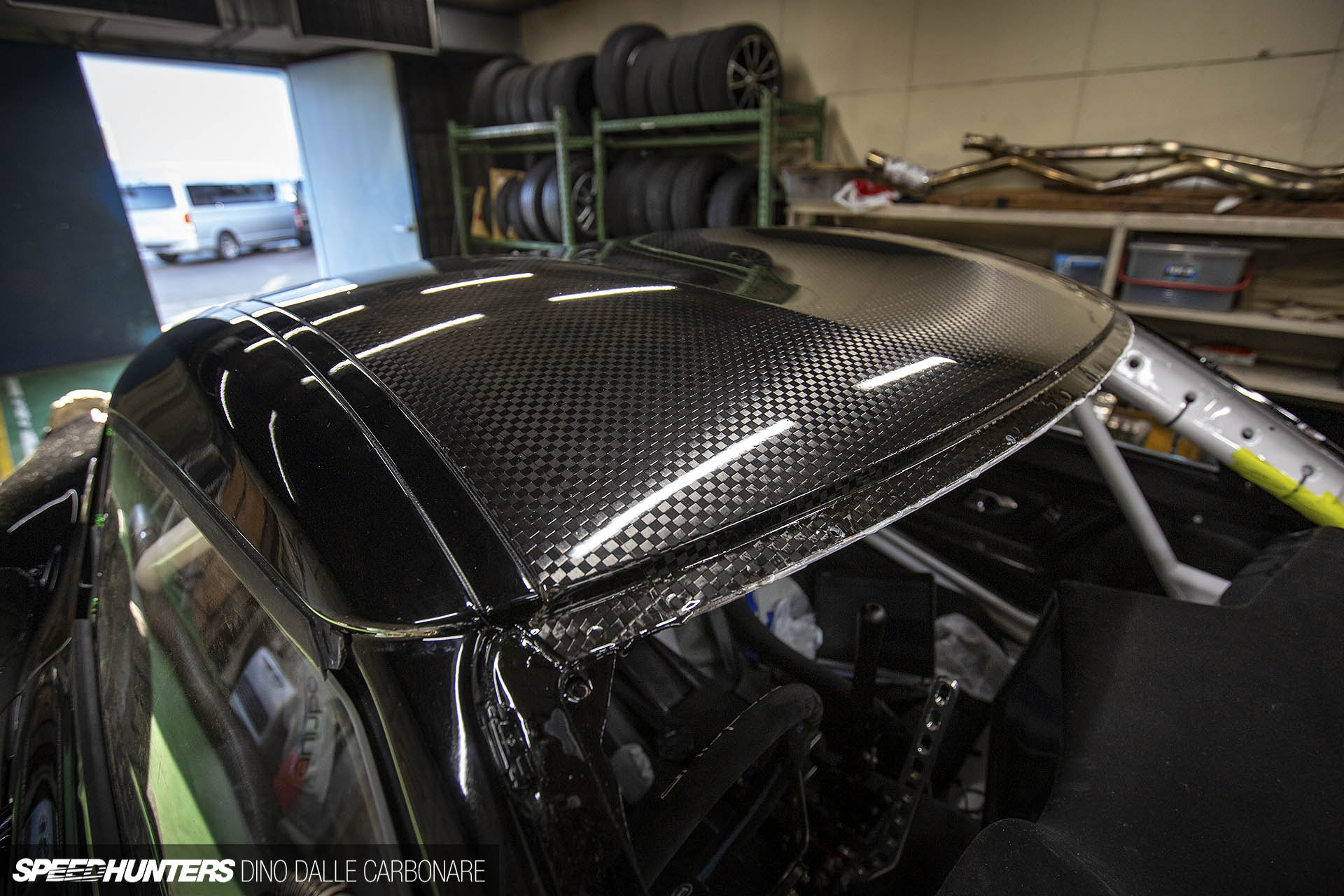
The more I looked at the car in its entirety, the more I was impressed. Toyota supplied the pre production chassis in January and it’s been a scramble to get every little detail on the car right.
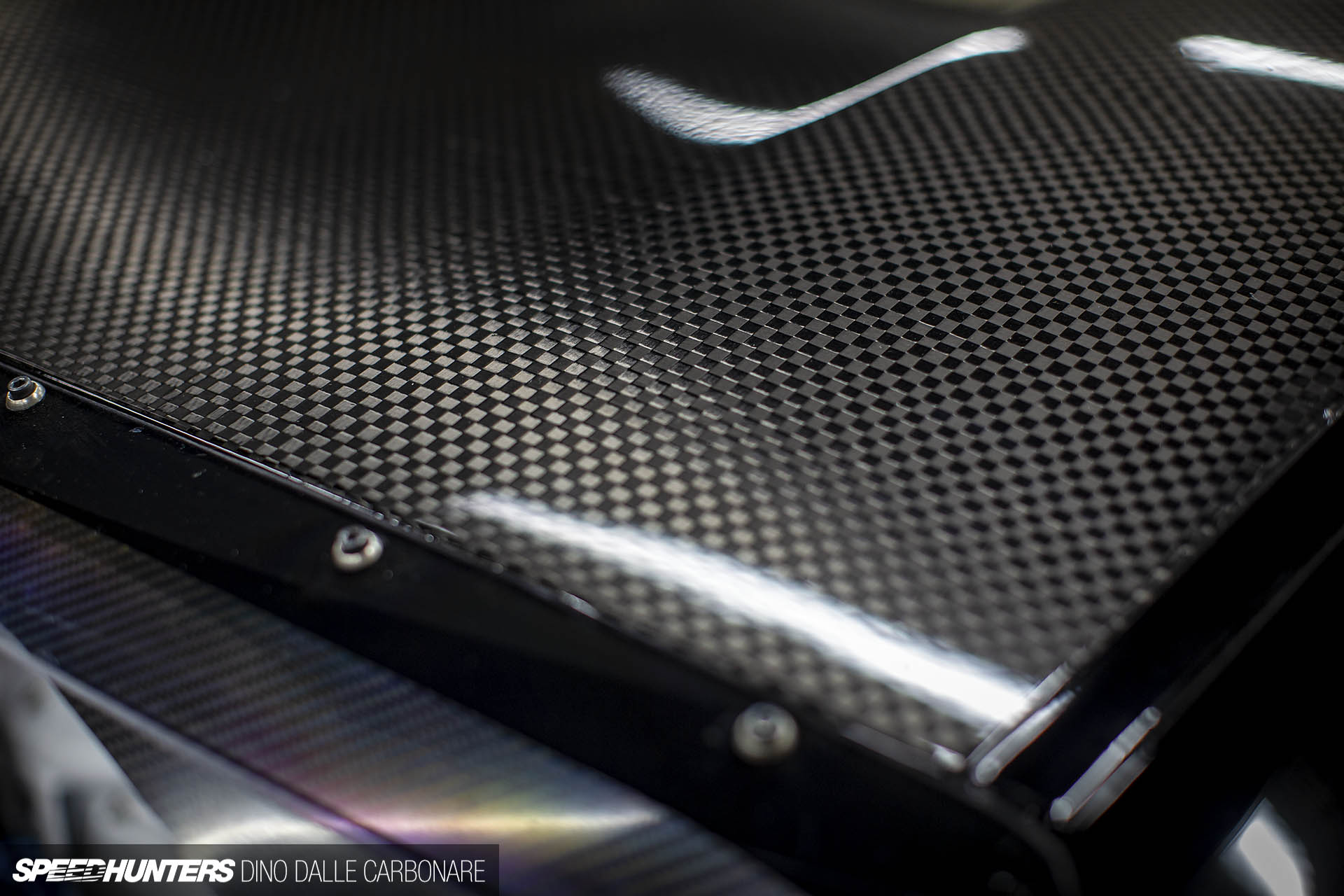
This being a totally new car it’s not really a question of looking up a catalogue and ordering parts, you actually have to allow time for stuff to be custom created, much like the thick gauge carbon fiber roof.
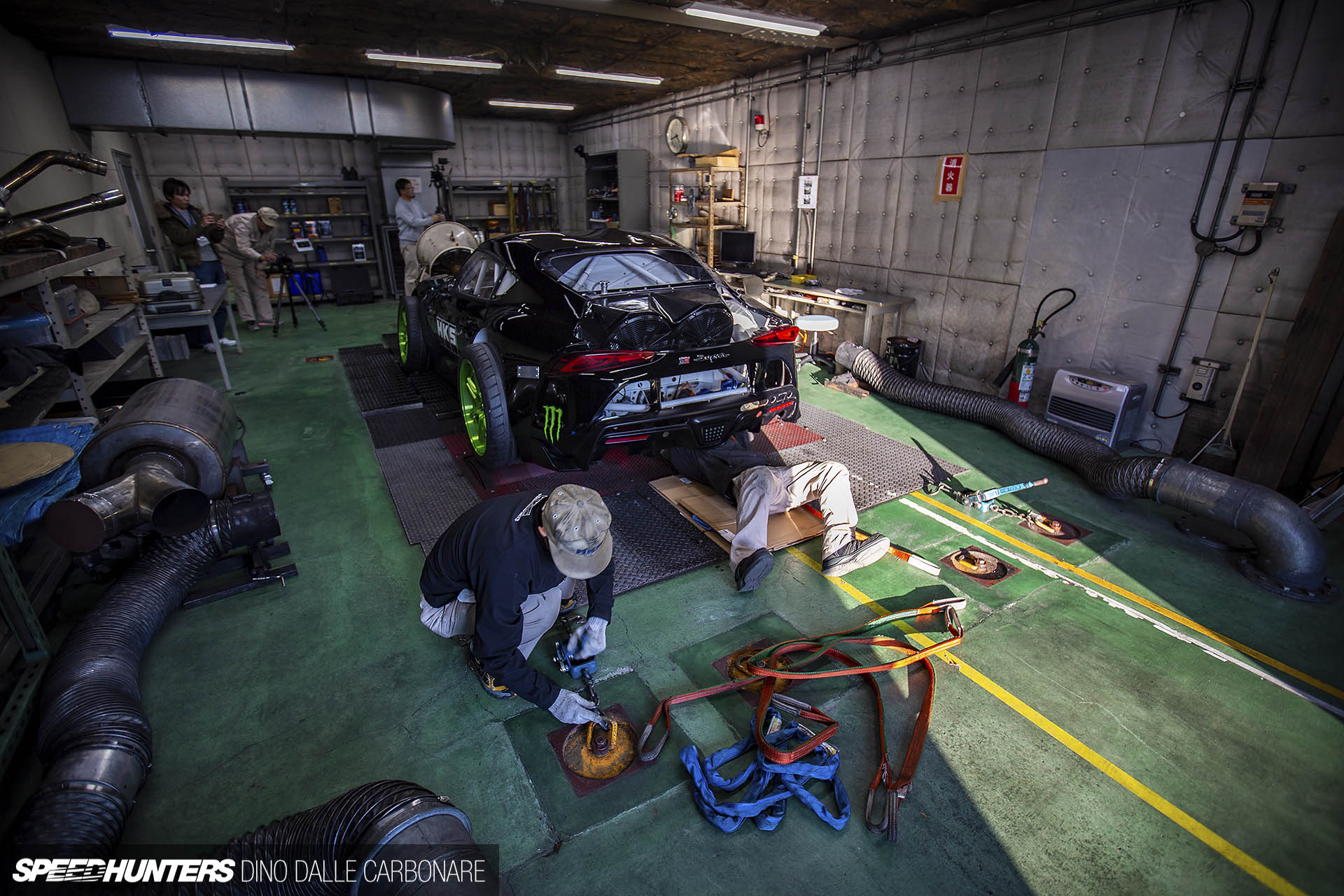
The car was still being strapped down on the rollers at this point, so I had plenty of time to take in the details.
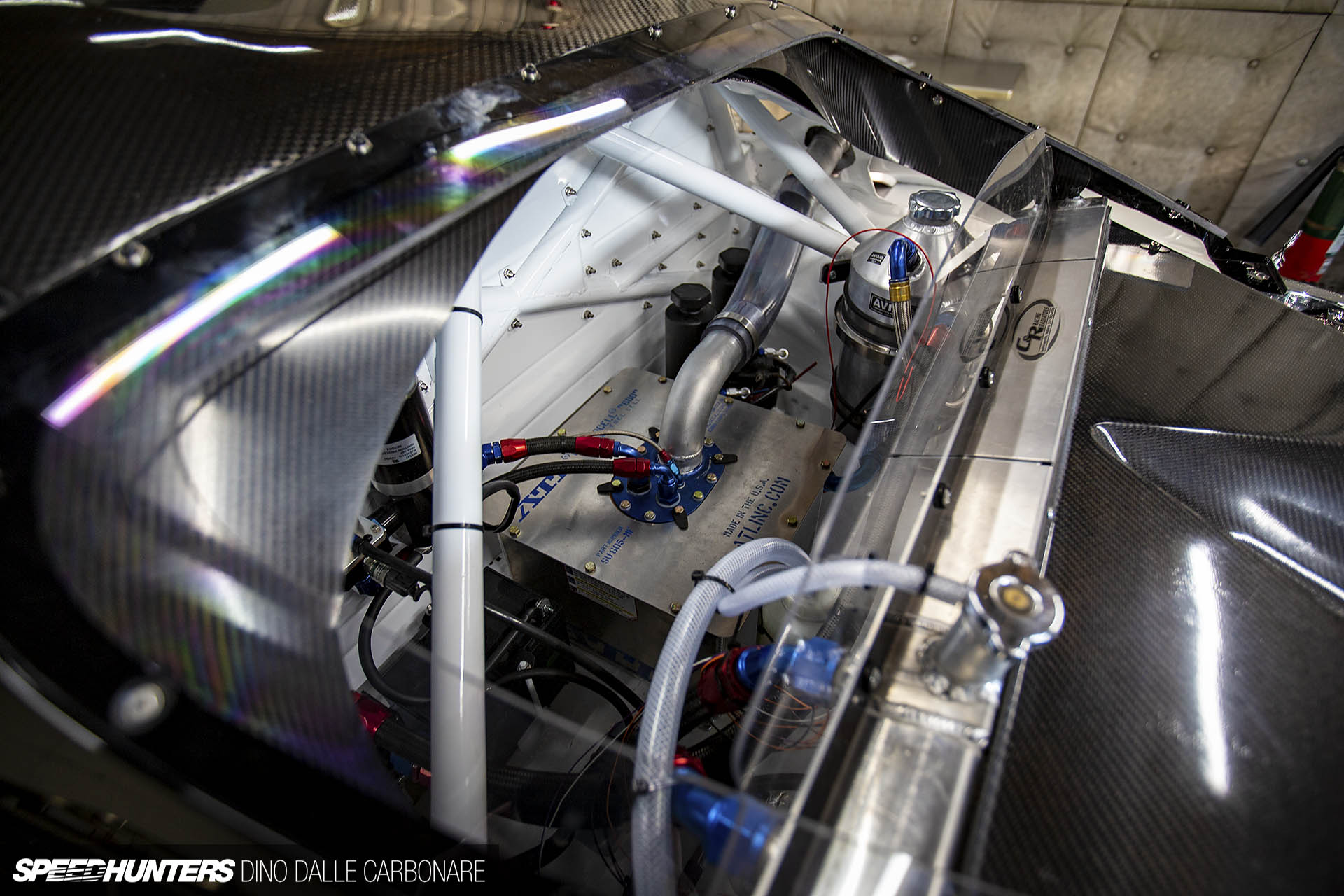
Like the majority of modern day pro-drift cars, the cooling system lives in the rear, or in this case, under where the glass of the rear hatch would normally be. There are a pair of extractor fans neatly cowled in a carbon fiber shroud to keep air moving when needed.
This caged up zone of the chassis also houses the relatively small ATL fuel cell, other components of the fuel system and a large oil tank for the dry sump lubrication.
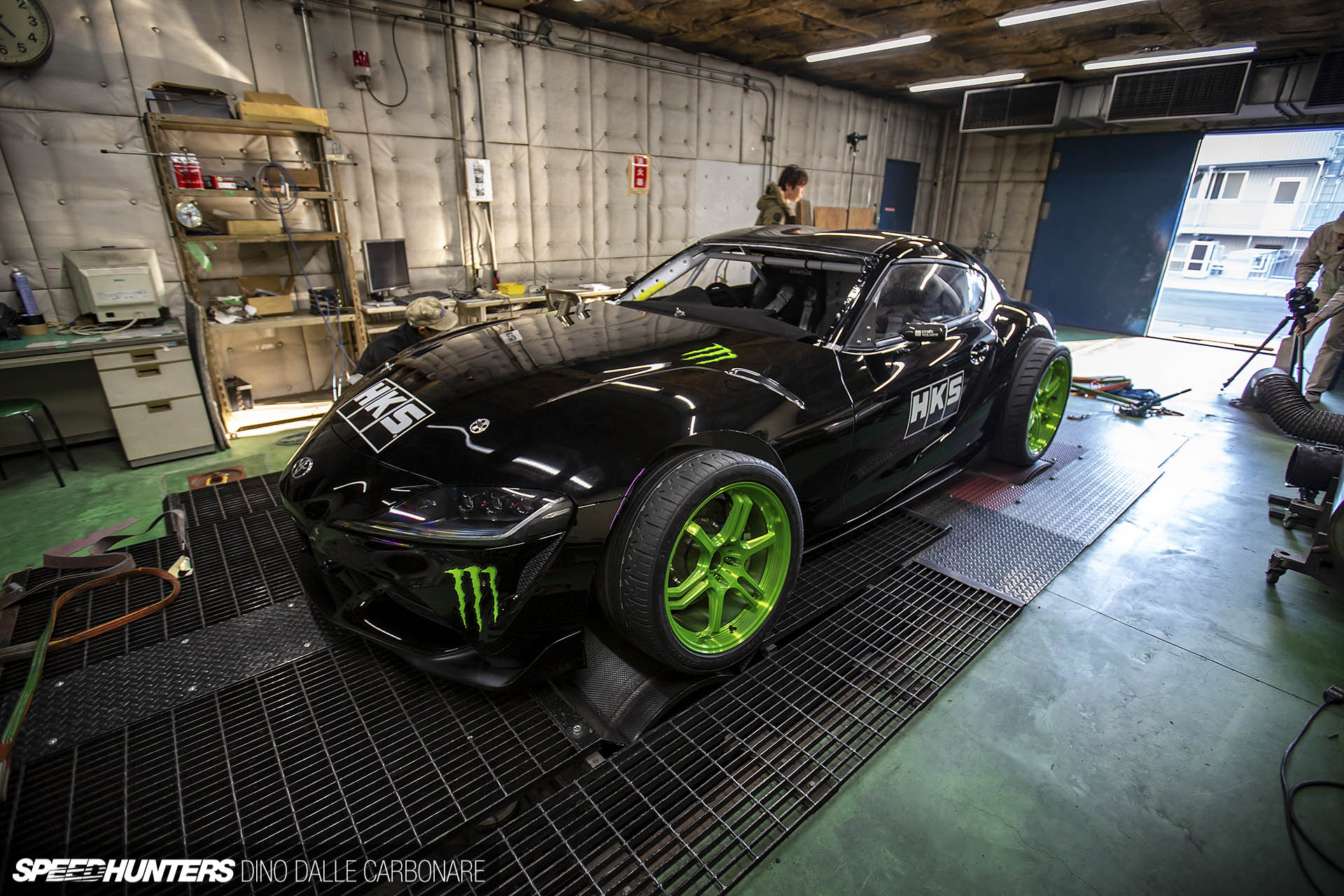
Craft Square mirrors replace the bulky stock items and even in this halfway state, it wasn’t hard to imagine what a beast it would all look like once completed.
It’s All About The Motor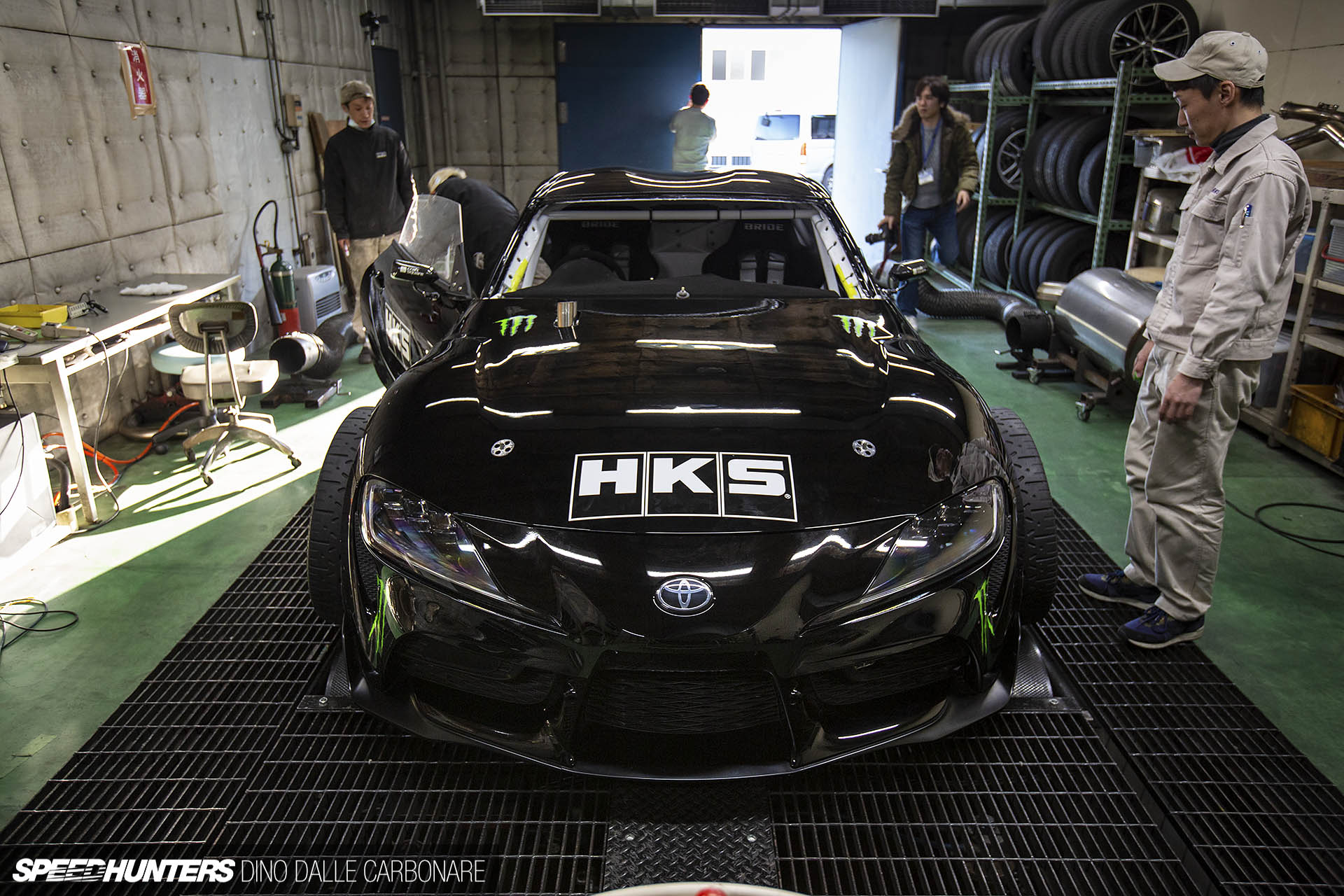
So, let’s move to what you cam here to see: the engine.
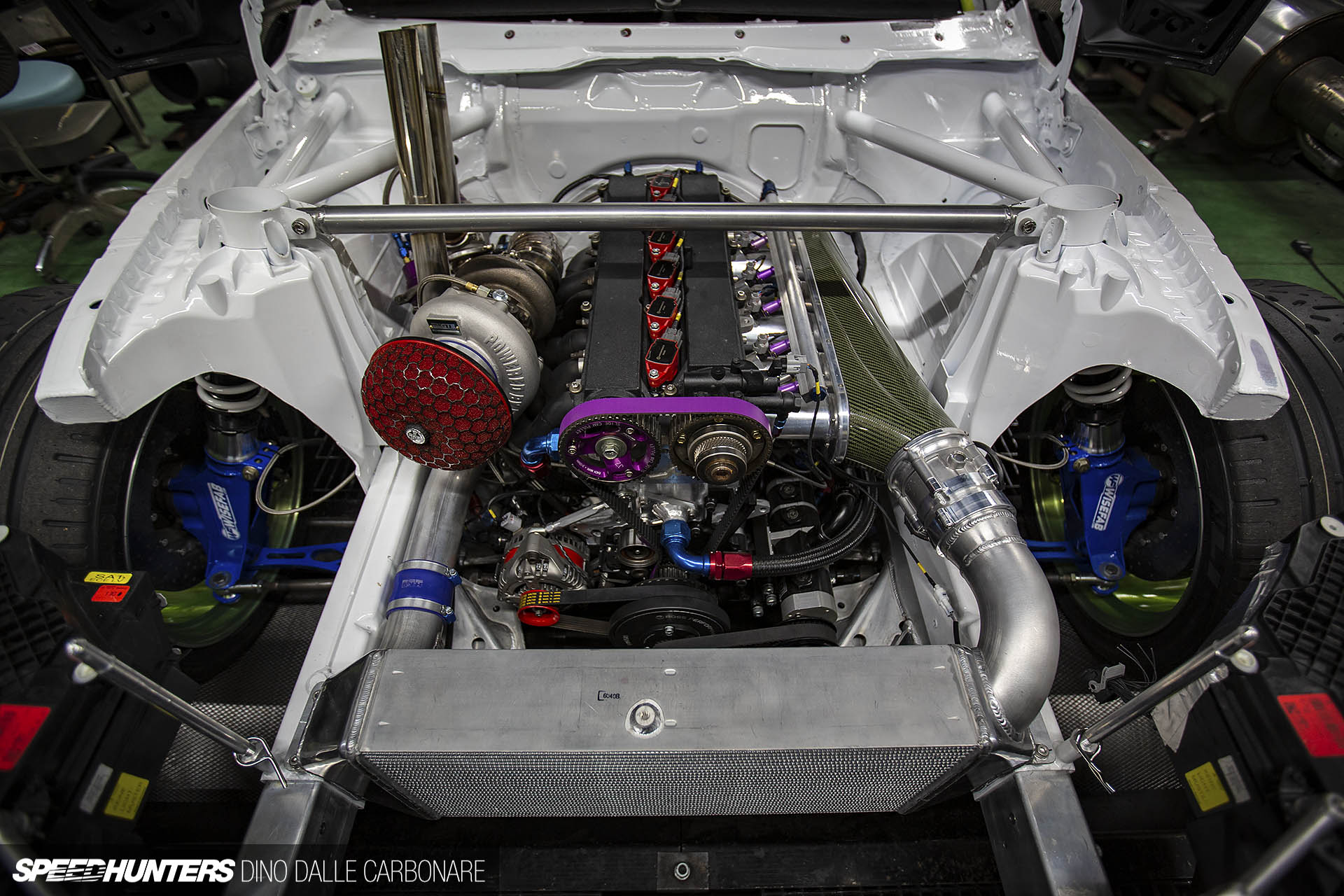
Daigo has pretty much perfected his clean and clutter-free approach to 2JZ building, with this being one of the finest examples that he and his crew at Fat Five Racing have put together.
The gist of it all is pretty straightforward; a HKS 3.4-litre stroker kit with a HKS GTIII 4R turbocharger supplying boost to deliver a not insignificant 700hp punch.


The motor sits impressively low in the chassis thanks to a dry sump system that has cut significant height from the engine assembly.
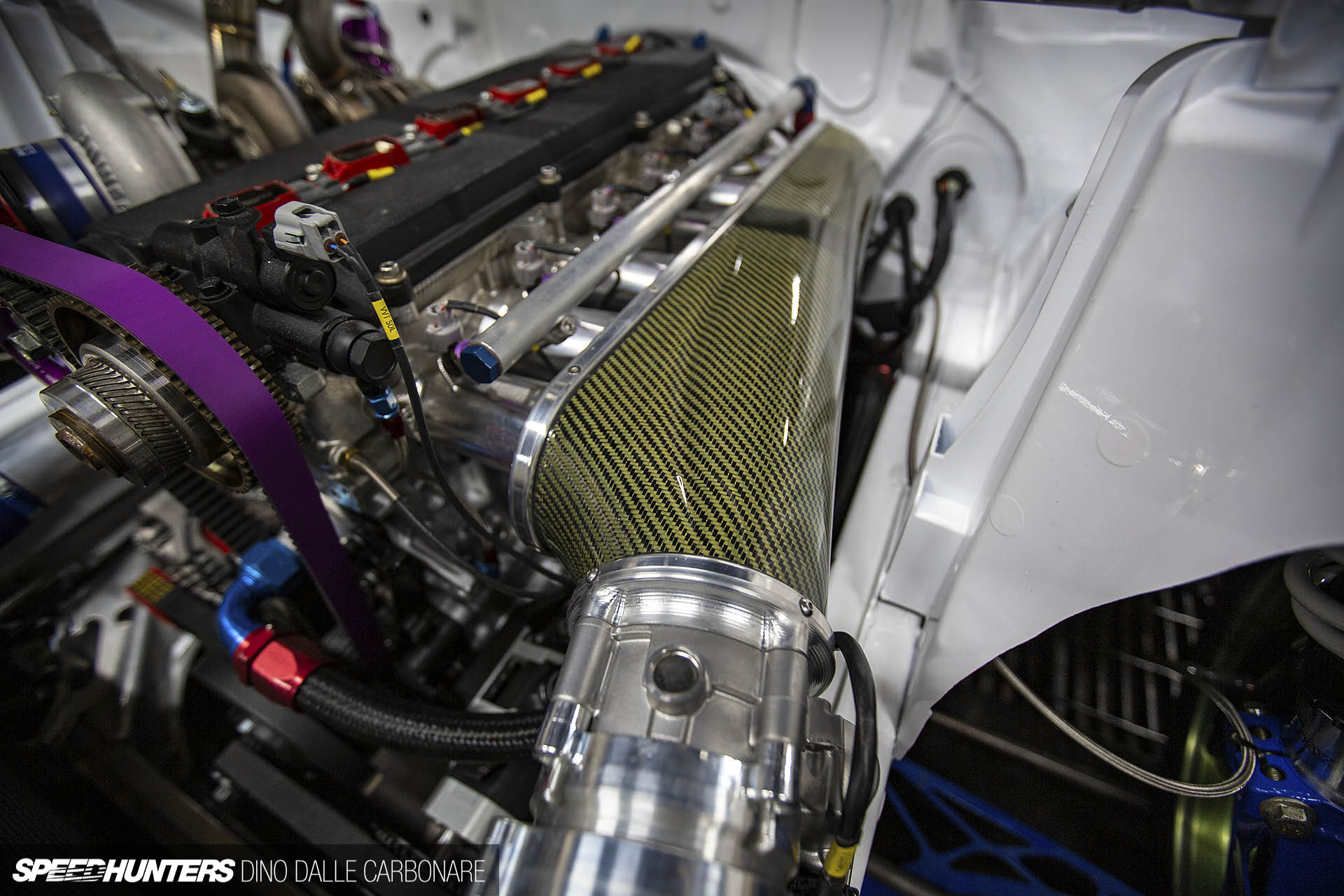
Feeding the compressed intake charge through the carbon-Kevlar intake manifold is a 90mm electric throttle, which will no doubt be used to fine tune an explosive launch to get the most acceleration off the line.
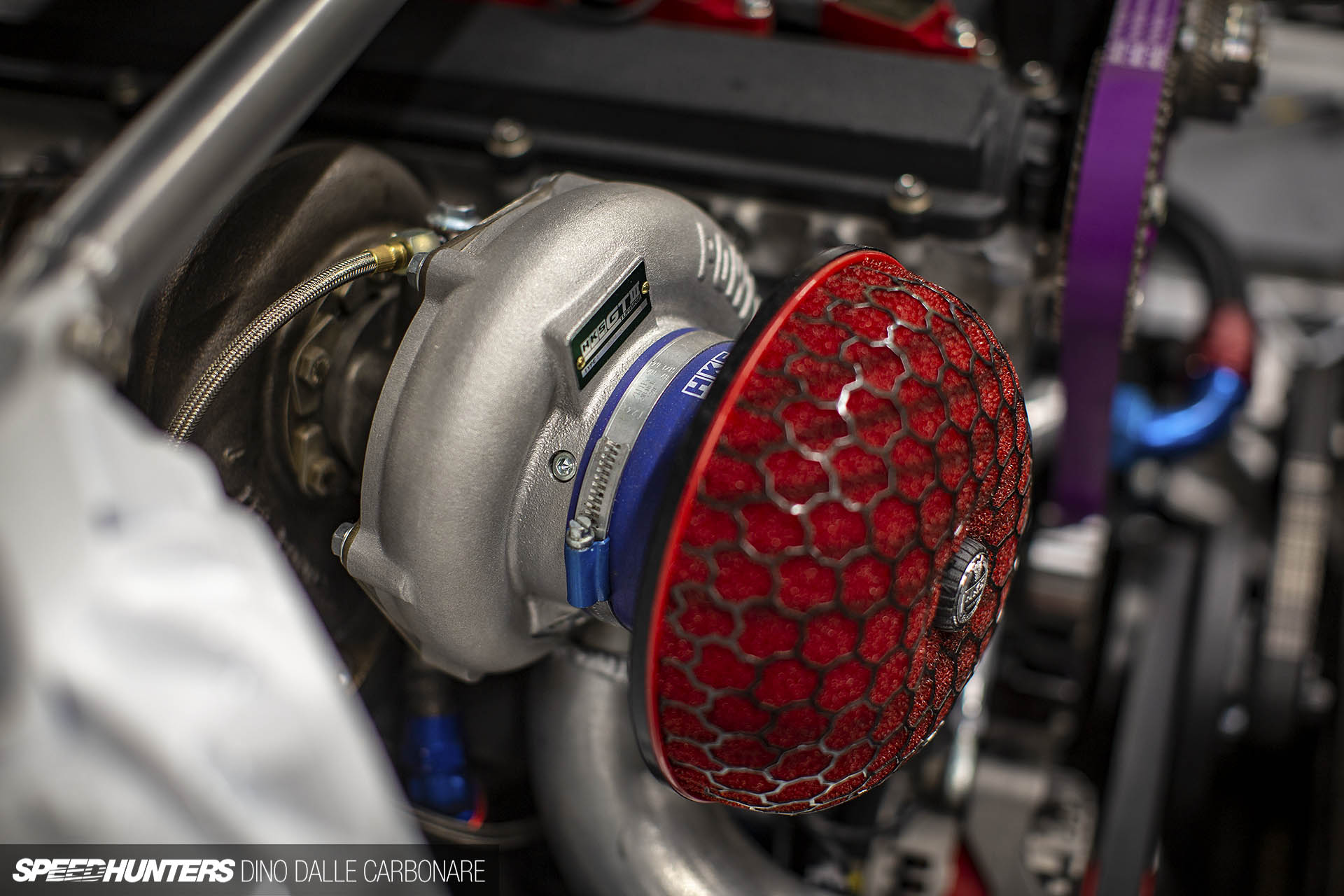
Turbo of choice for this initial set up is the aforementioned HKS GTIII 4R. It’s the replacement for the popular TO4Z, and is rated at over 700hp.
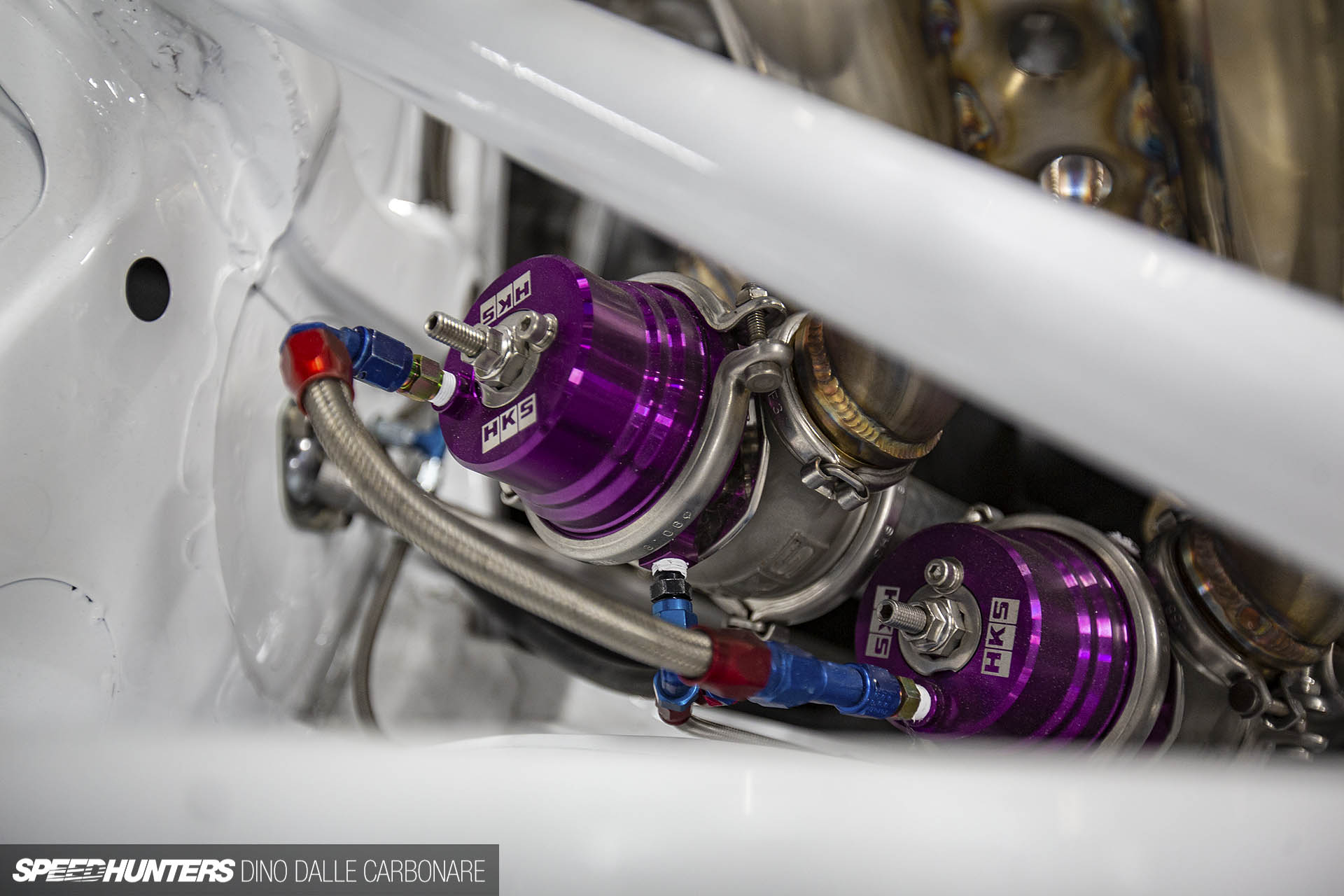
The boost it develops is controlled with two HKS external wastegates, such is the fury with whicht the 3.4-litre bottom end can spool up the turbine.

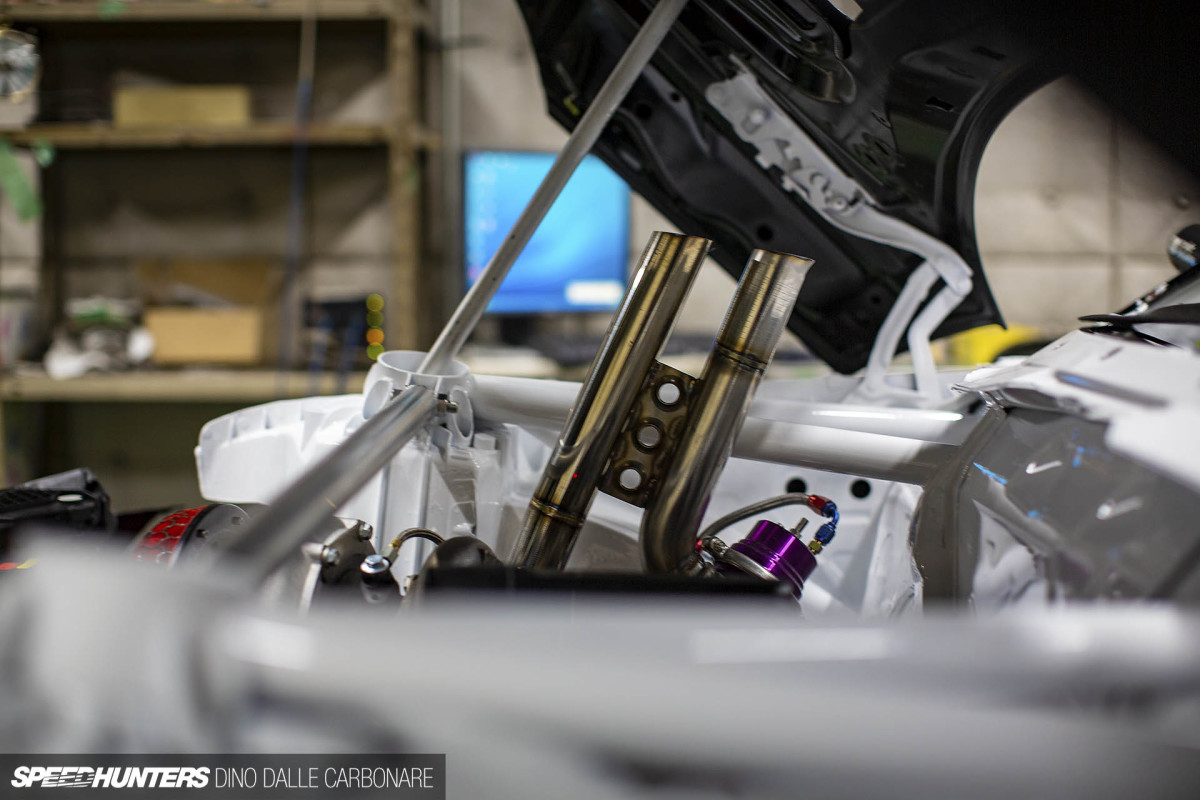
And what other way to take full advantage of such a setup, than routing the two screamer pipes right though the hood? Yes, they shoot fire.
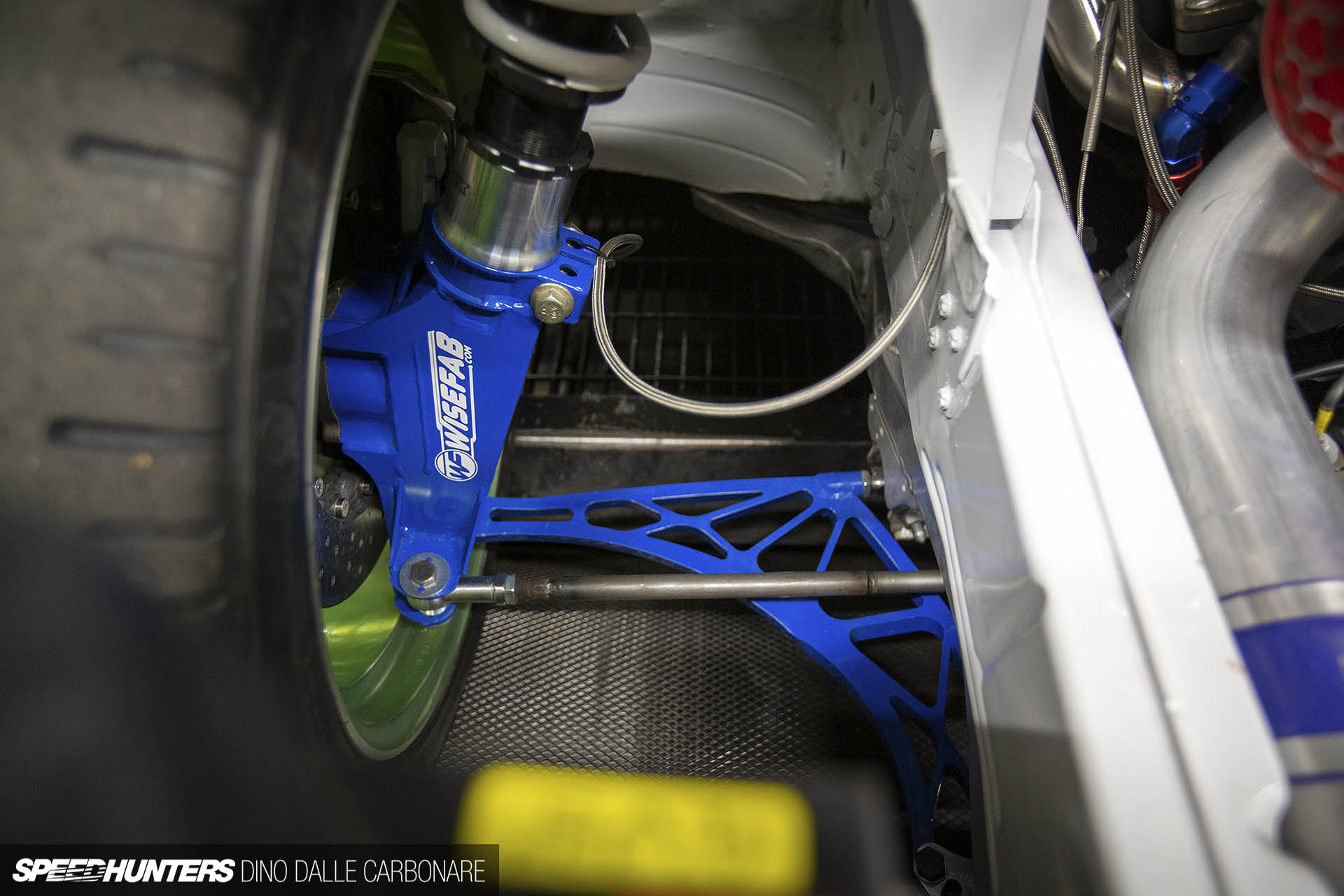
The project was created in collaboration with Wisefab who created and supplied arms and spindles for both the front and rear suspension layout. I didn’t get to see just how much steering angle the front spindle allows, but I’m sure it will be beyond adequate.
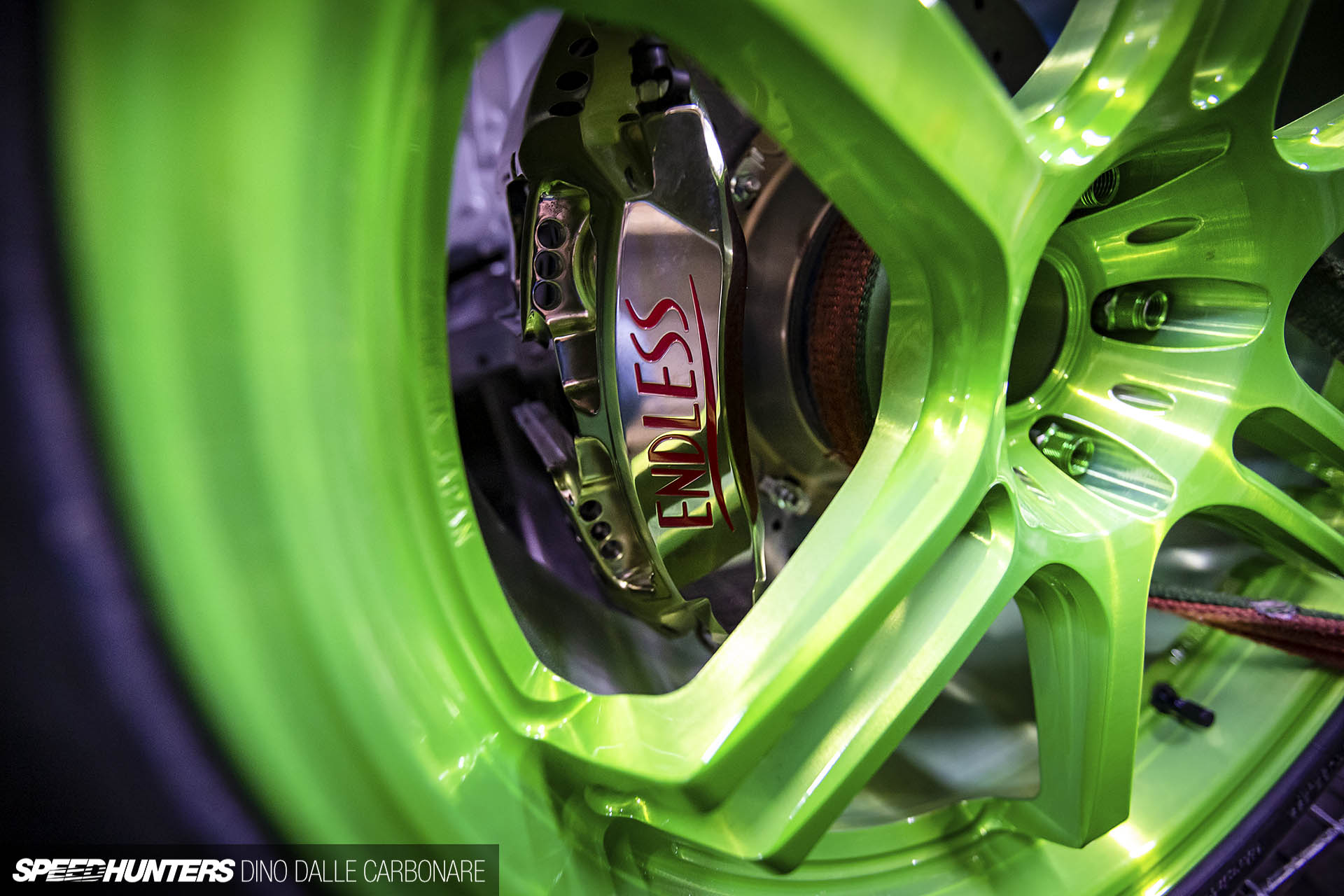
Nestled behind the front 19-inch fluro-green Potenza RW006 wheels, is an Endless brake package comprised of monobloc calipers which have been shined to a mirror finish.
At the rear, and looking rather small inside the 20-inch wheels, is a more run of the mill two-piece 6-pot caliper, sporting the same mirror finish and doubling up as the e-brake for those instant rear wheel lockups.

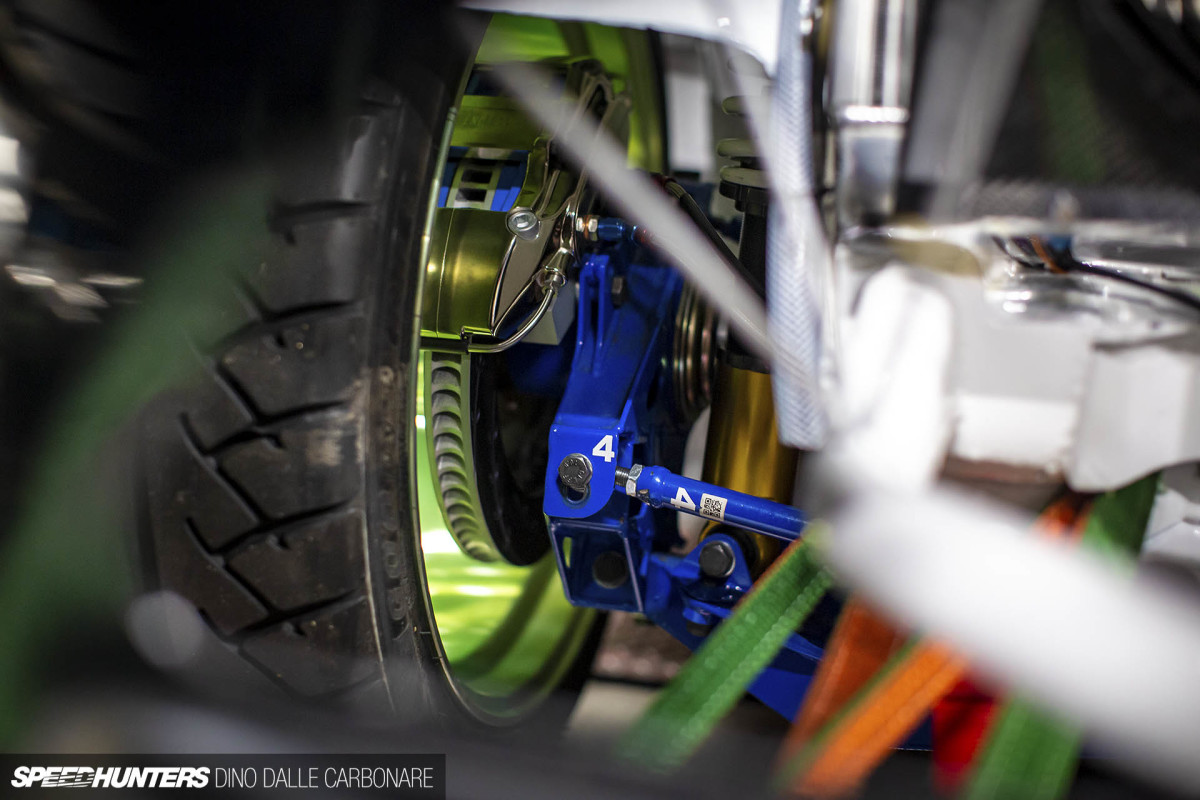
Again, it’s all Wisefab for the rear hub and multi link setup, while HKS coilovers are used all round.
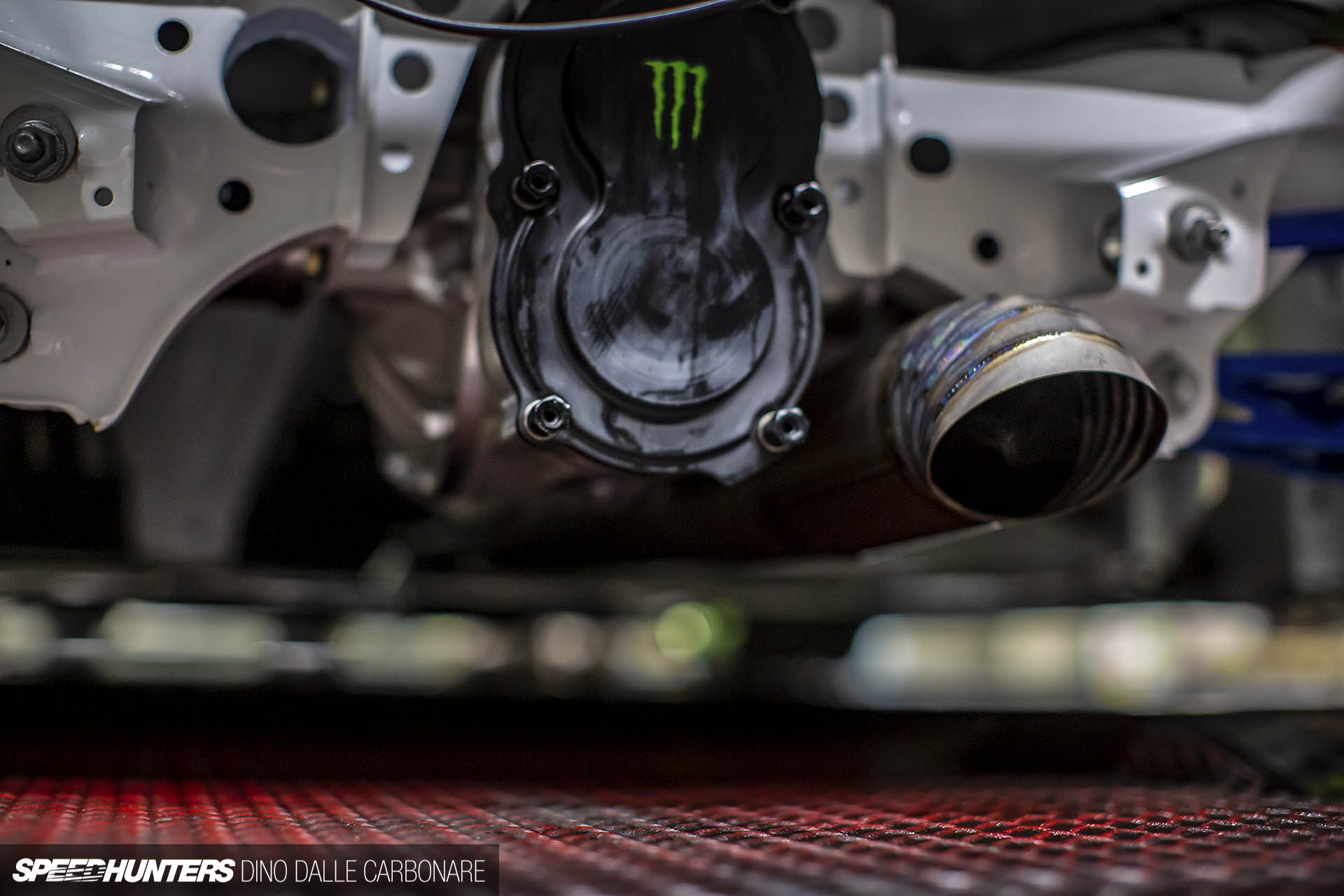
Power is sent to the rear wheels through a Samsonas six-speed mechanical sequential transmission with a Winters quick change rear end.
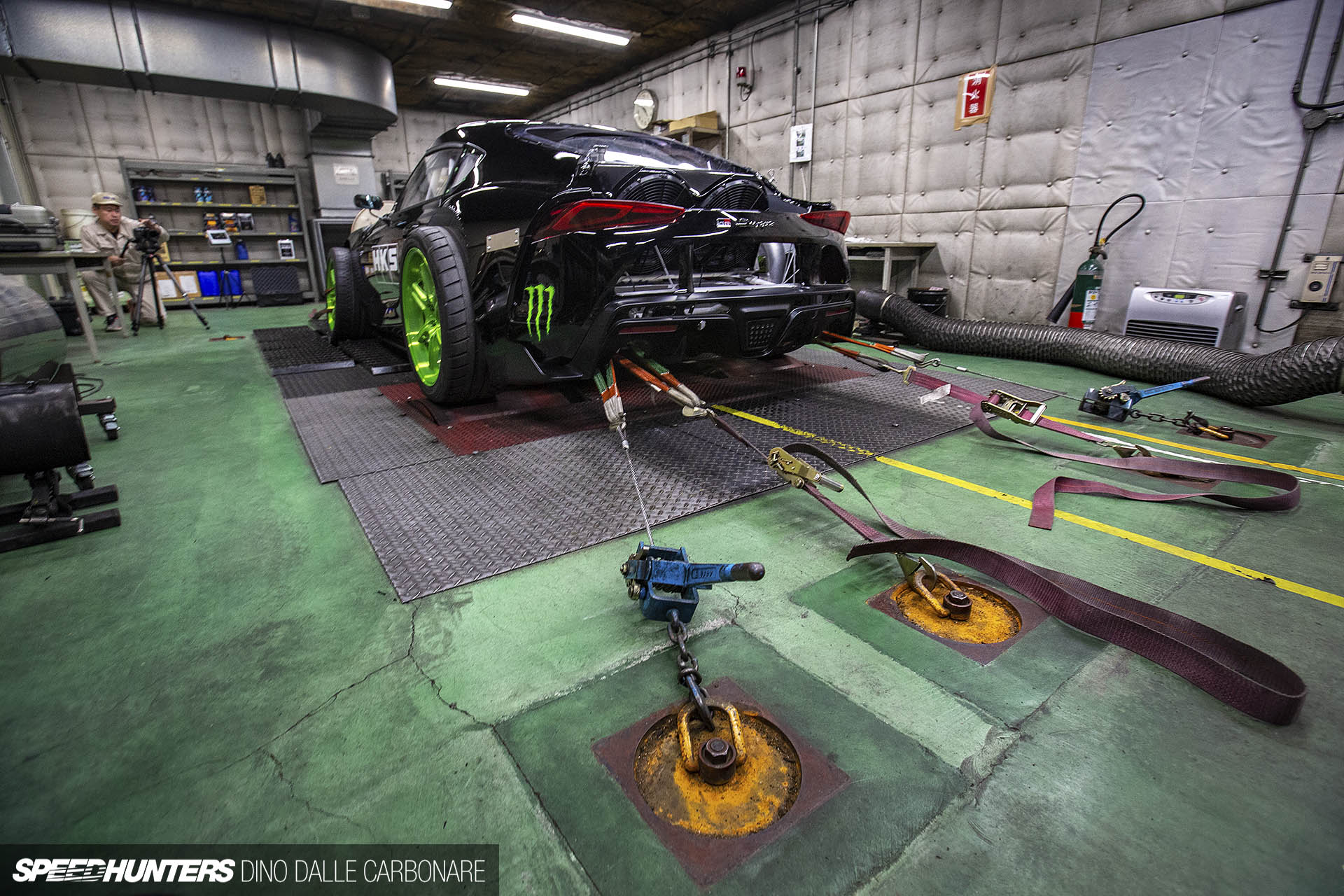
At this point, the car was secured tightly in place and the engine cranked into life, allowing it to begin to warm up its vital fluids.
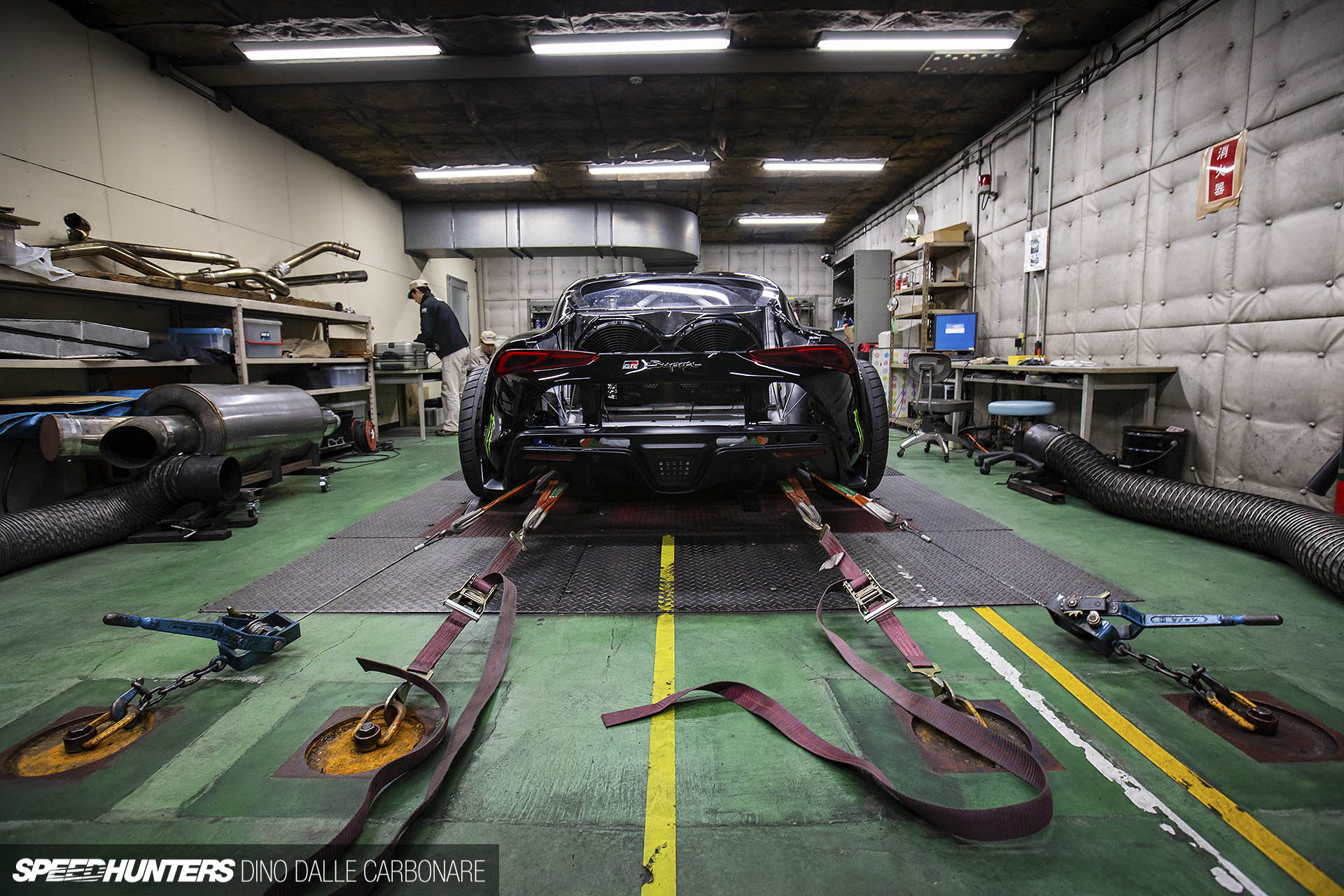
This meant that both the fan feeding air to the engine and the massive extractors were turned on too, meaning this padded room became incredibly loud. Where are those ear plugs when you need them?
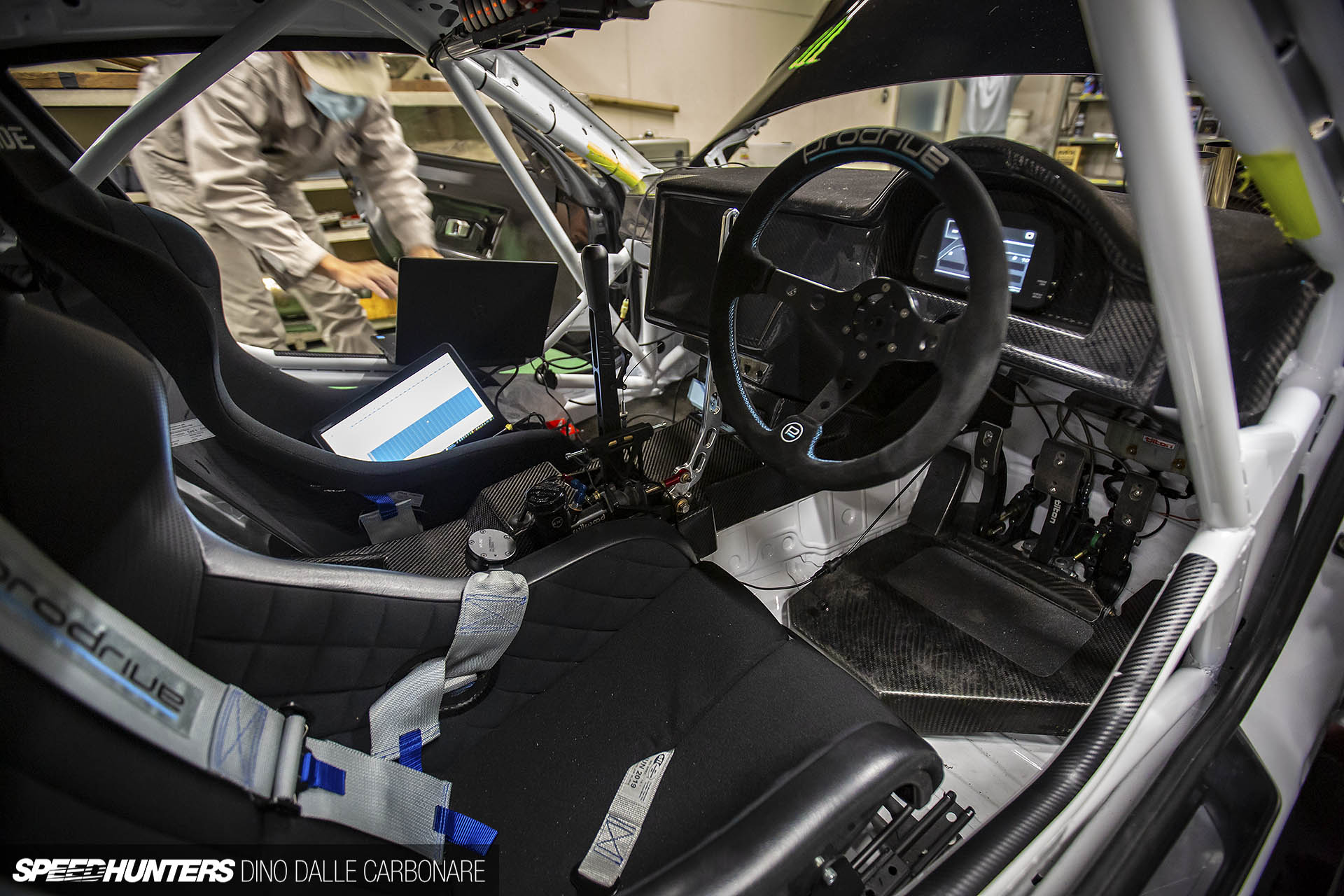
Trying not to get in the way of the mechanics still setting stuff up around the car, it was the cabin which I still needed to get a proper look at.
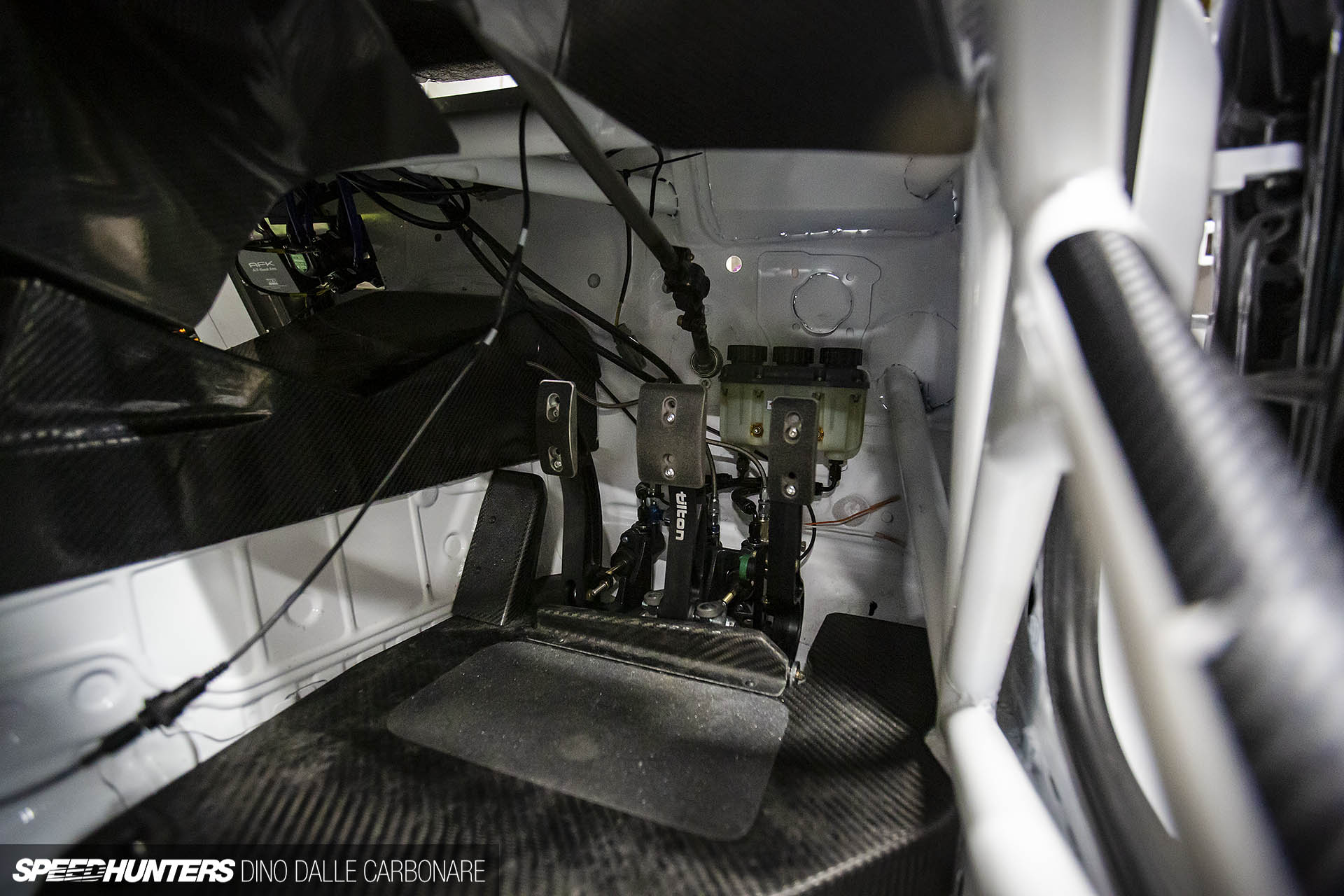
Starting with the high level of fabrication in the roll-cage department, the whole feel of the car was one step up on anything I’ve ever seen entered in D1. Pretty much everywhere I looked, I was greeted with expanses of carbon fiber, even on the floor in front of the Tilton adjustable pedal box.
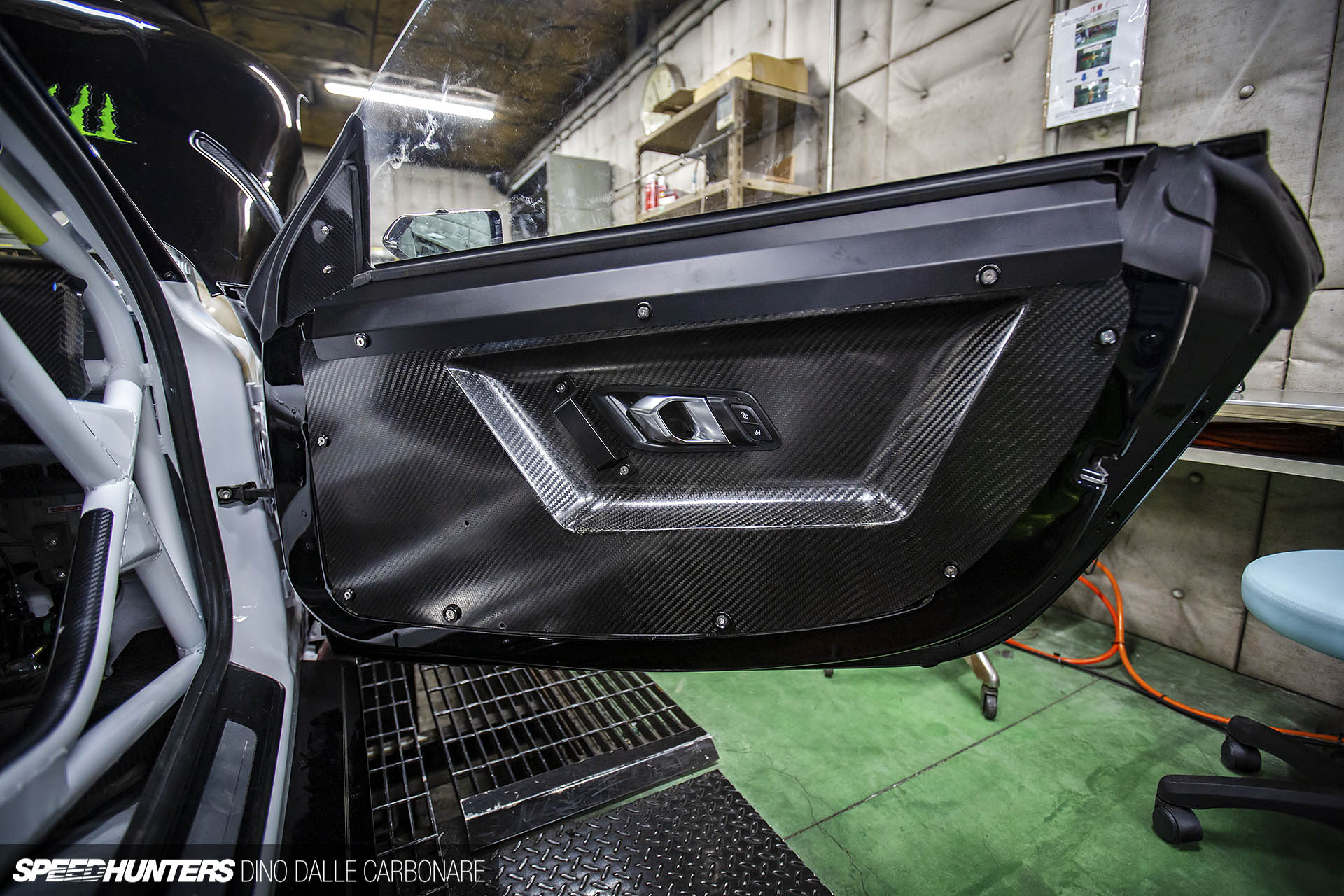
Door cards? Yup, carbon too. Is it me or is that a Hofmeister kink on the door handle?
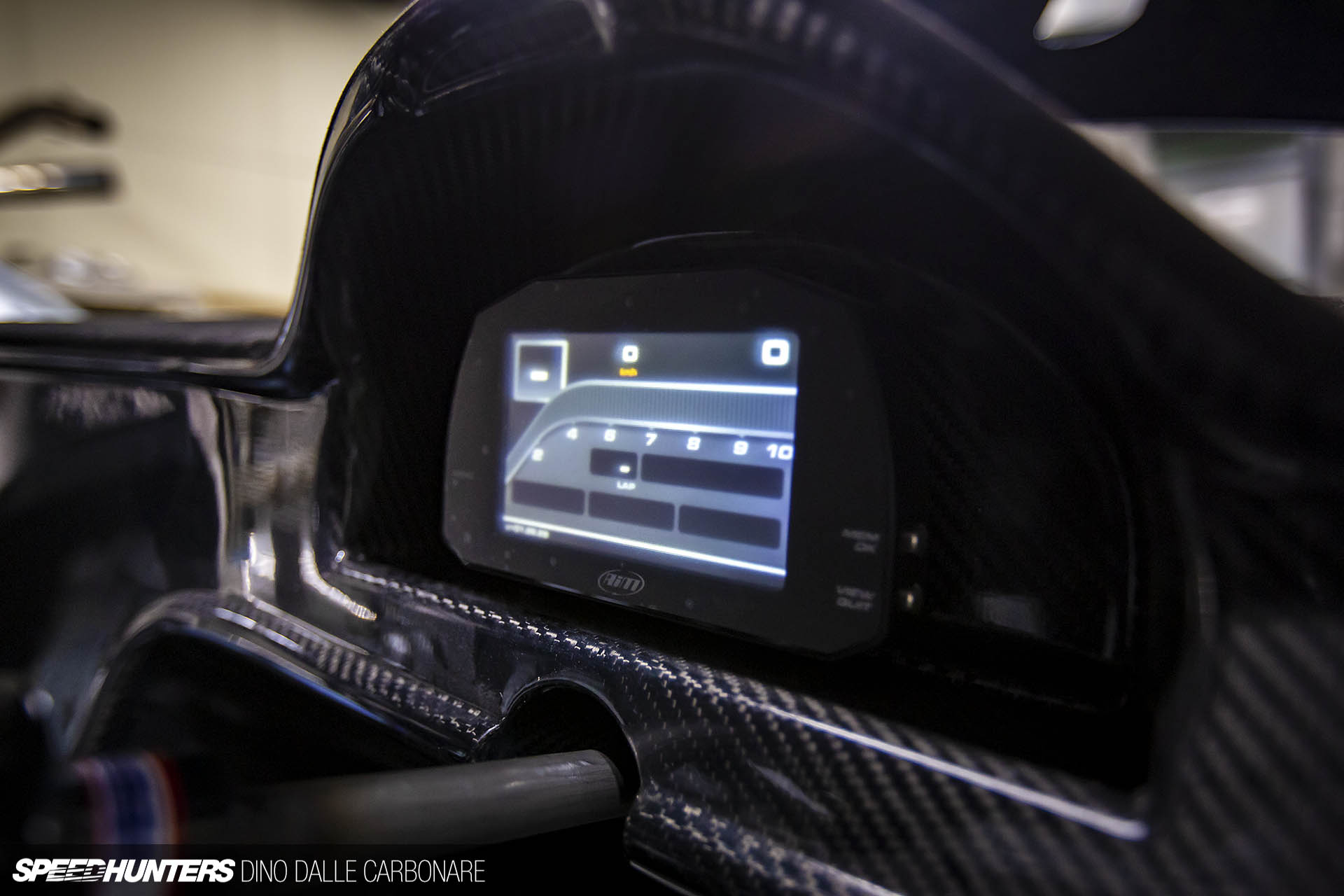
Nestled deep into the carbon fiber binnacle of the dash is an AIM color display, one of only three bits of instrumentation. The other two being a HKS boost controller display and a HKS Knock Amp meter on the lower section of the vertical center stack.
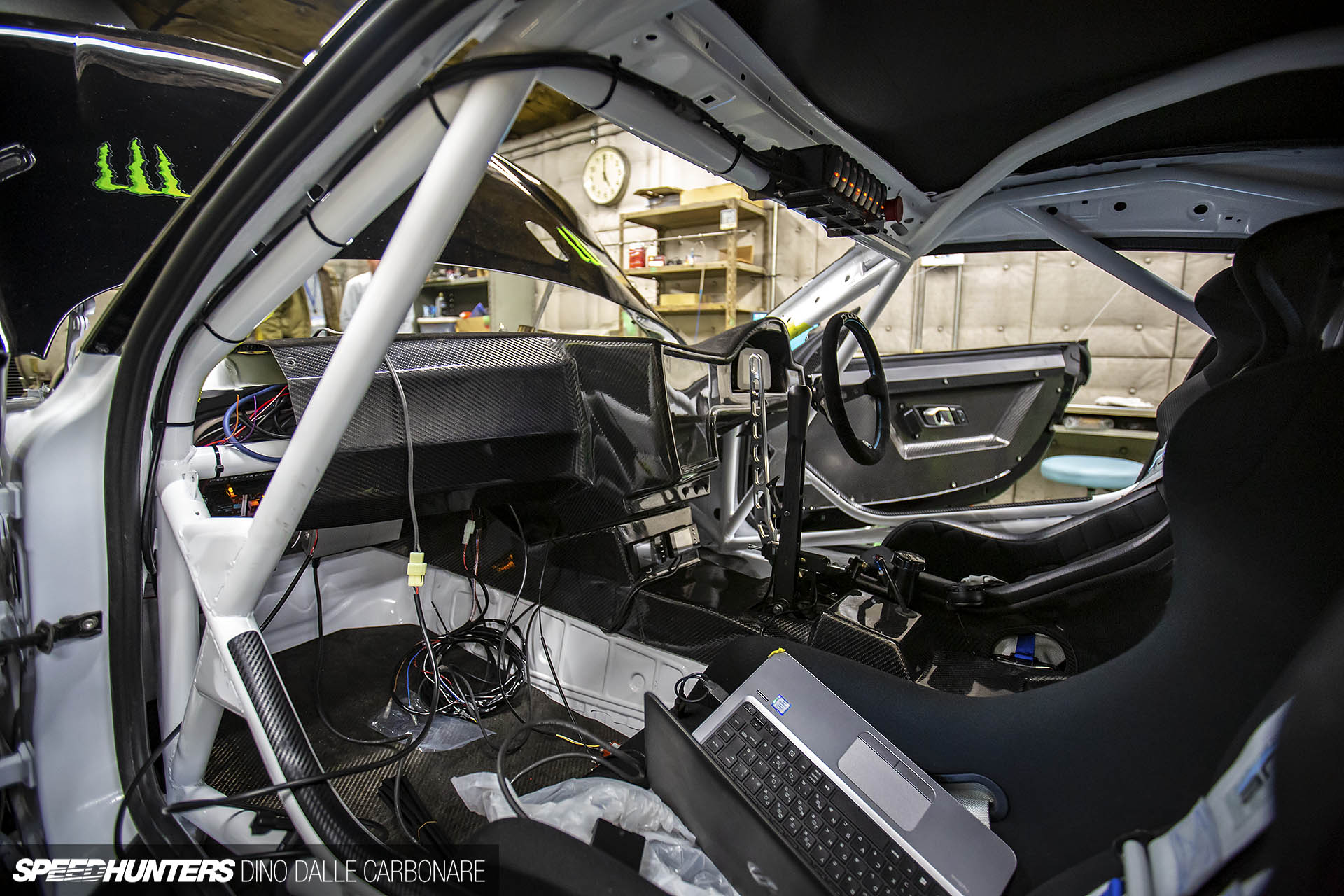
The switch panel has been mounted high on the roll cage, out of the way of the main controls.
Let It Rip!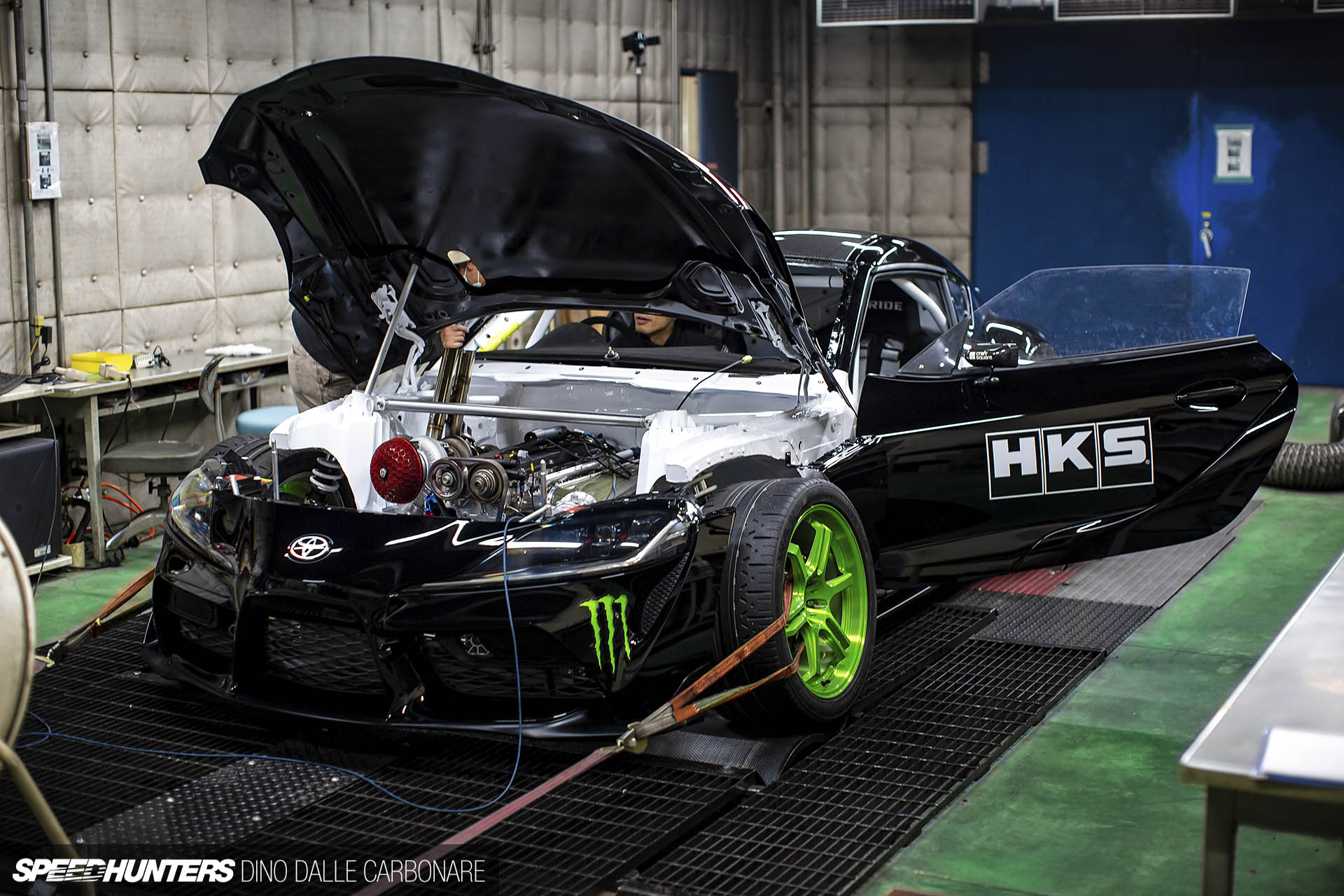
It wasn’t long before we were all told to clear and move away from the immediate vicinity of the car.
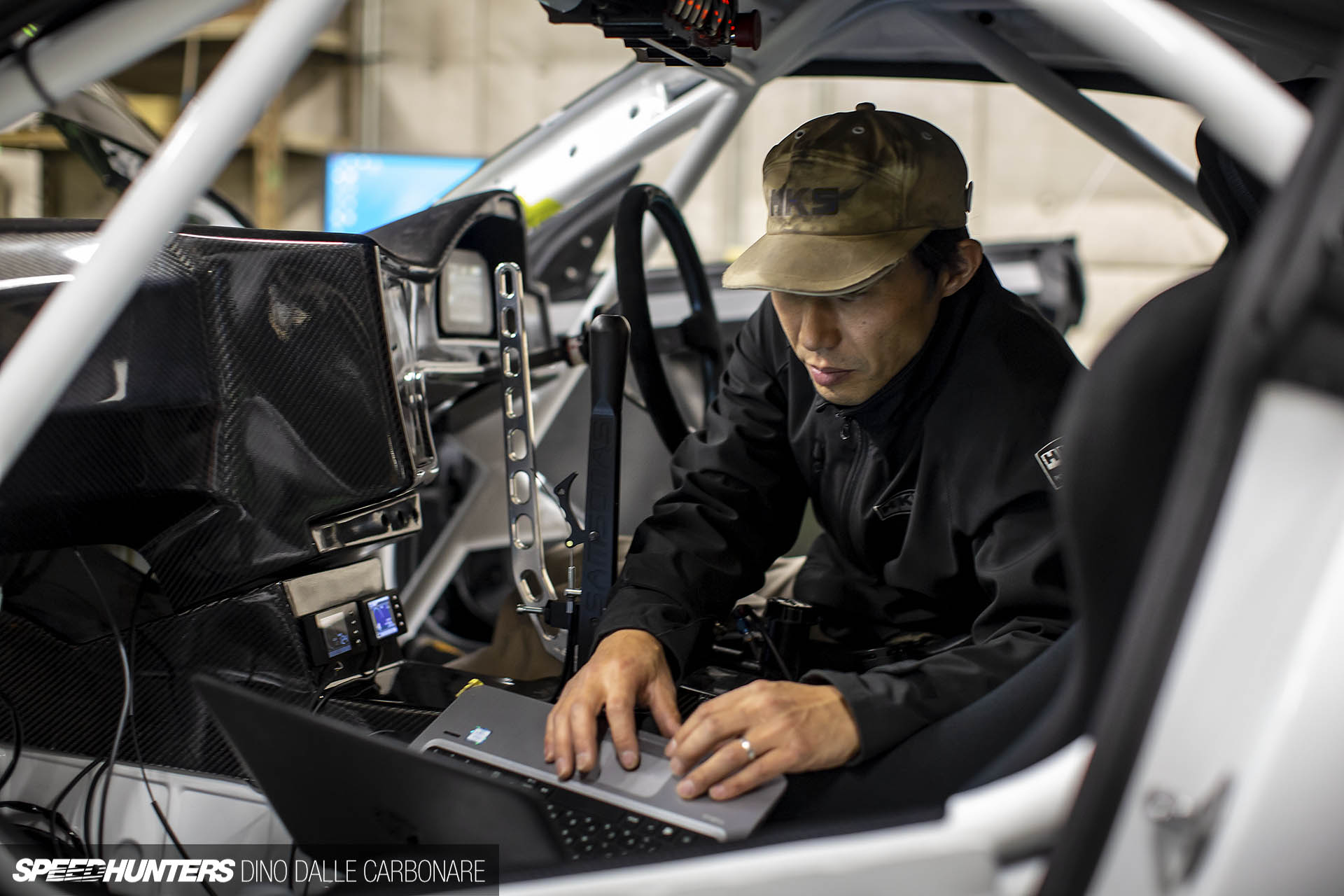
The head technician in charge of engine setup and mapping ran the engine first through a series of gentle accelerations up the gears and then gently down again to get the temperature up within the driveline componentry.
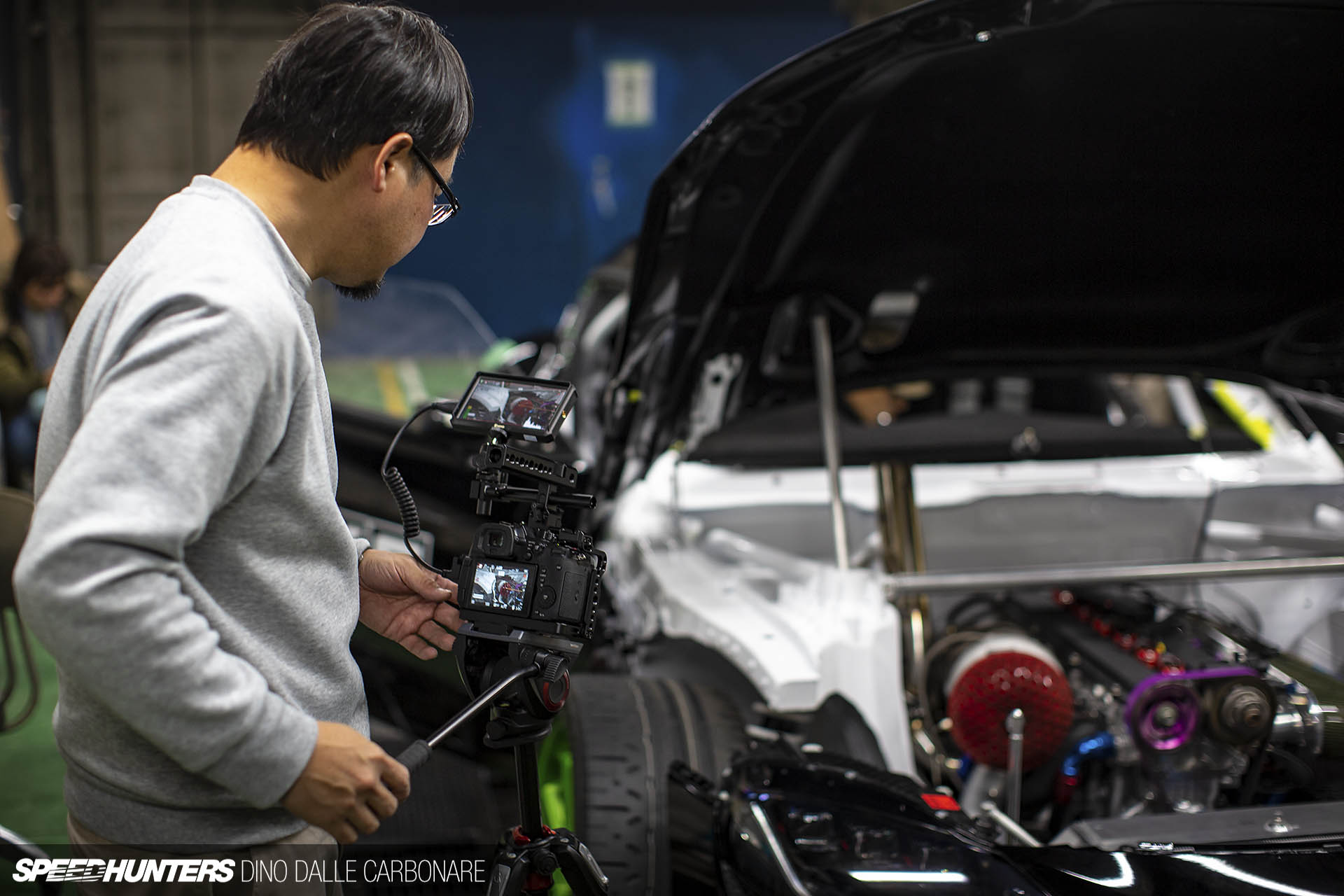
HKS’s own staff were busy recording the various dyno pulls for use on their own social media channels.
I too couldn’t pass up the opportunity to get some video clips of the mighty 3.4-litre in action.
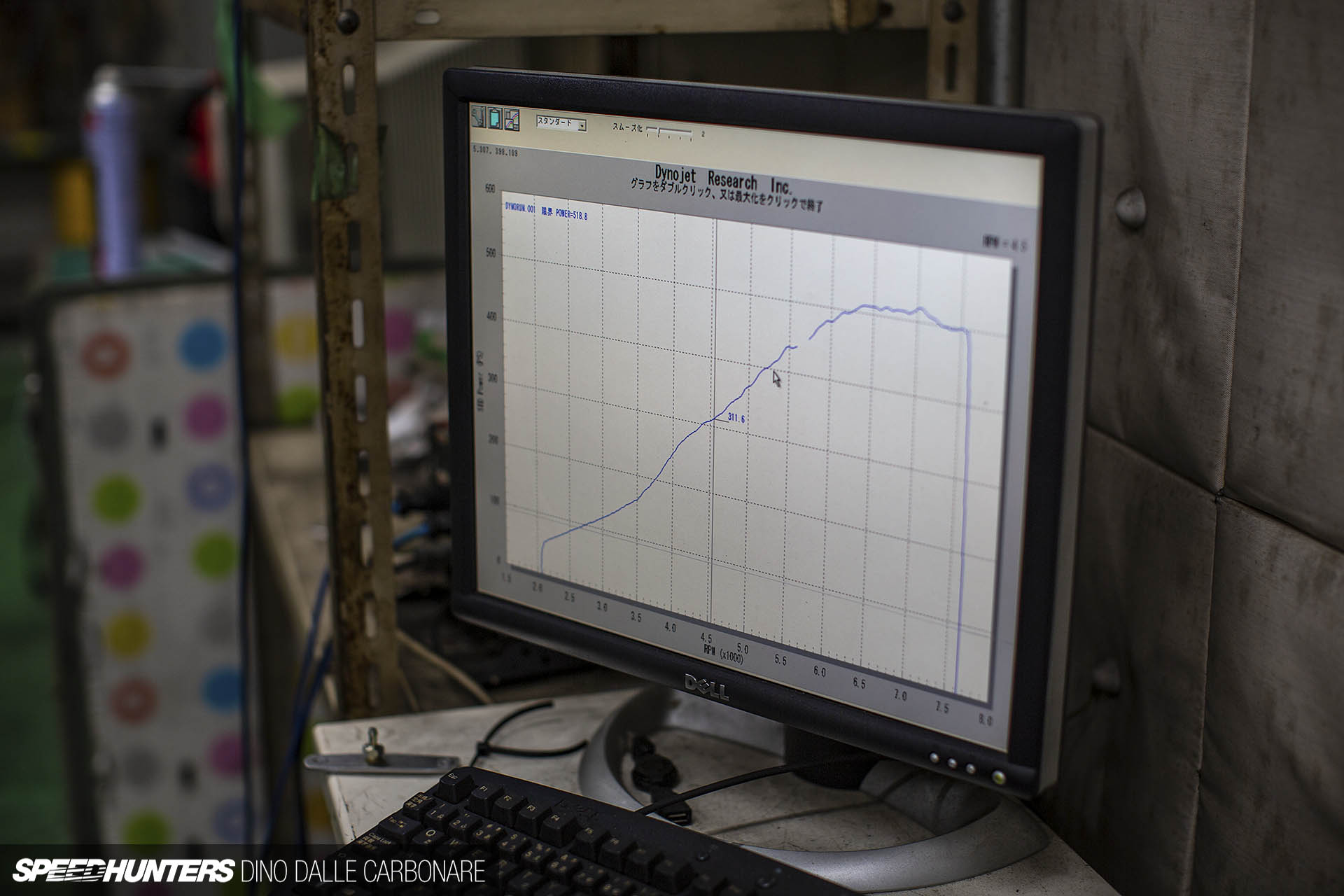
The very first pull recorded just under 520hp while running on low boost along with a very conservative base tune.
I’m sure that today, your social media feeds will be inundated with this car in action, along with the other A90 Supra which has beem built for Masato Kawabata by Team Toyo.
The new Supra is here folks, and you can’t help but feel rather excited by its presence, no matter its guise.
Dino Dalle Carbonare
Instagram: speedhunters_dino
dino@speedhunters.com