
When reporting on time attack, it’s normal to concentrate on the faster cars, their aero advancements, and the consistent push in refinements that helps each car and driver improve with every outing. But all of that is also perfectly applicable to the cars that sit at the very bottom of the time sheets too.
Kei cars may look cute and unassuming, but make no mistake – the ones you see at Tsukuba for events like Attack represent the pinnacle of what can be done with these little 660cc packages.
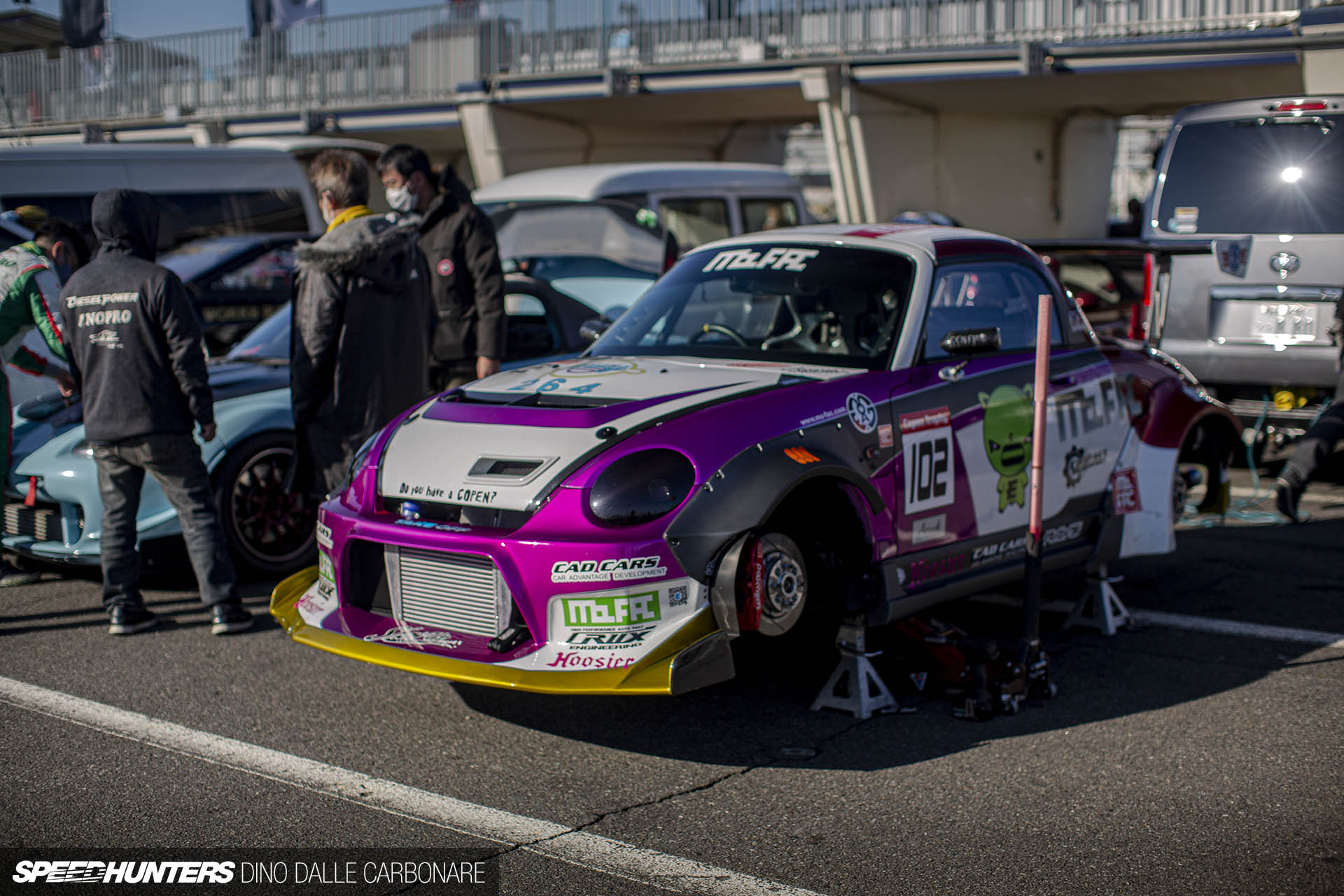
To prove my point, I spent a lot of my time at Attack Tsukuba 2021 two weekends back – see my main coverage here – checking out the kei cars present. We’ll start with the Mo-FAC (amazing name!) Daihatsu Copen.
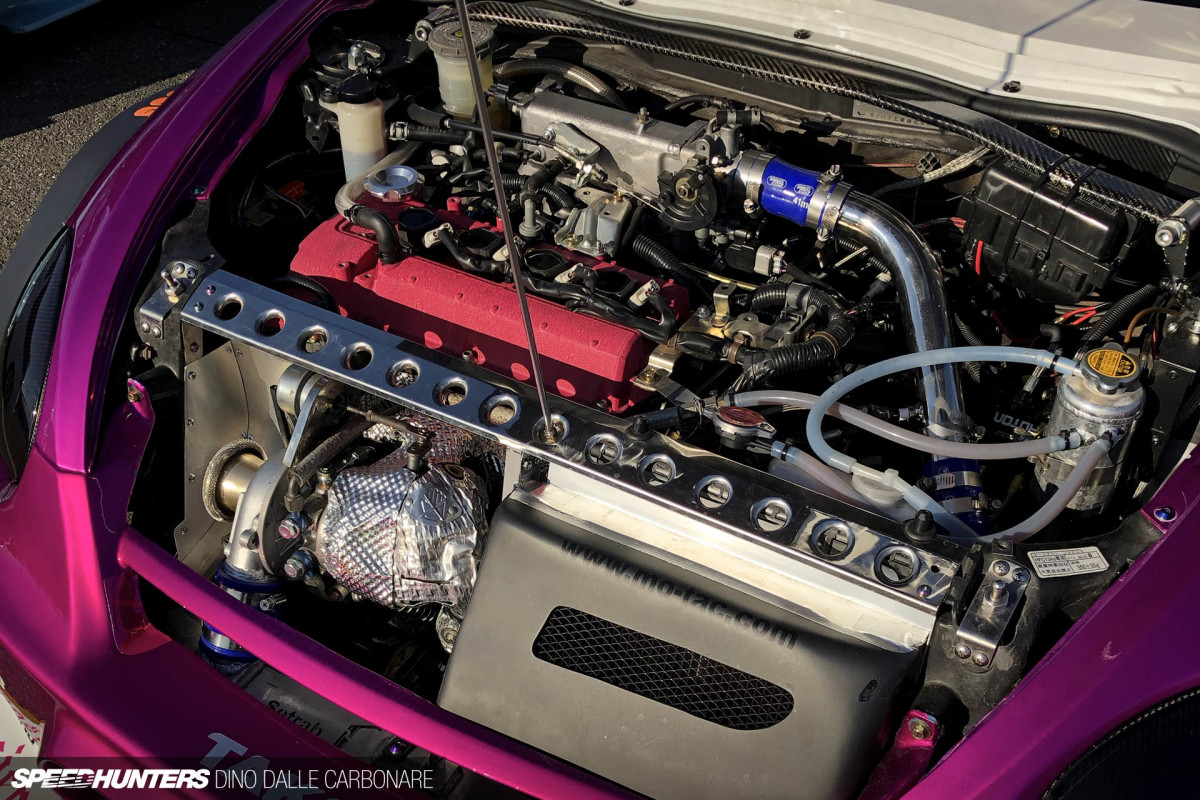

This thing is a beast, lapping Tsukuba in under a minute. It’s hard enough for a 600hp GT-R to break to dip under 60-seconds, yet here we have a Copen that ran 59.595!
Power comes from a stroked engine (now 820cc) boosted by a generously-sized turbo, to help the little motor develop 172hp. For a momentary boost of power, there’s an extra 100hp shot of nitrous oxide available, and that’s a big reason why this car managed to be so much quicker than any other kei machine at the event.


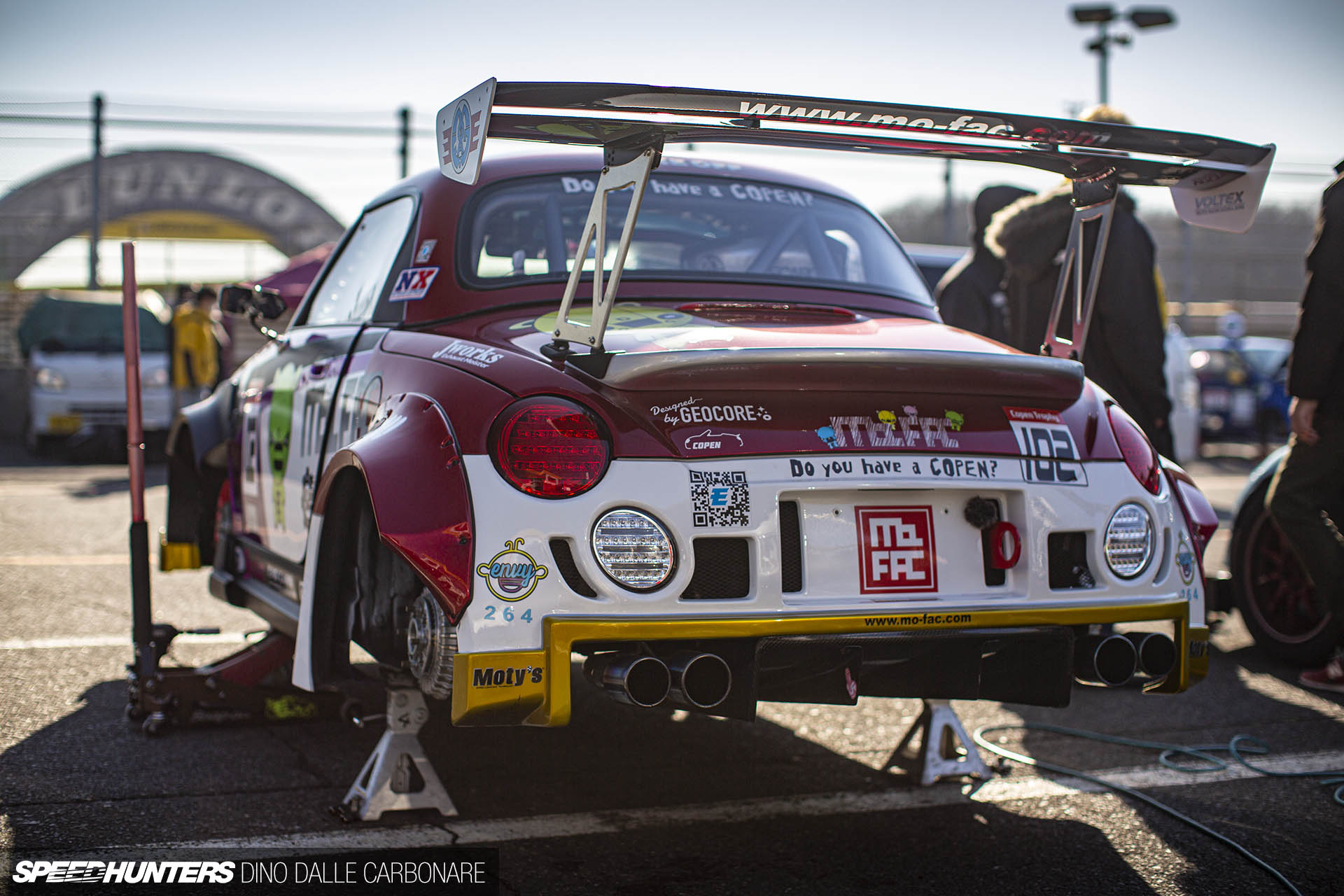
If time attack isn’t for you, but you still want some modifications for your Copen, then Mo-FAC is the shop to hit up. They even offer a lift kit for the little Daihatsu, turning it into a proper off-roader. Next time I’m in Hyogo Prefecture I’ll definitely have to pay them a visit.
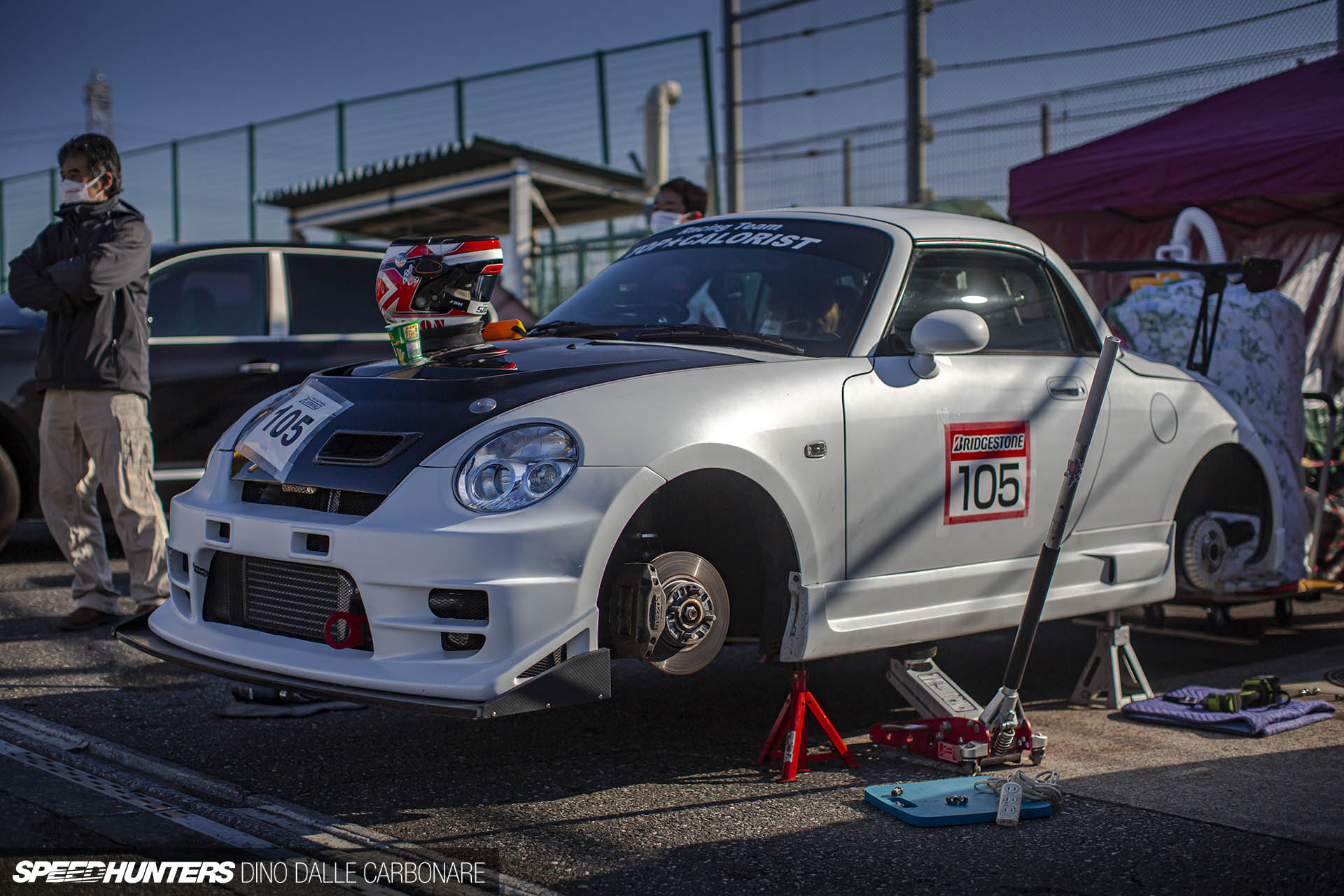
Tuned by the same shop and really looking the part, this pearl white Copen managed a 1’06″325 lap.
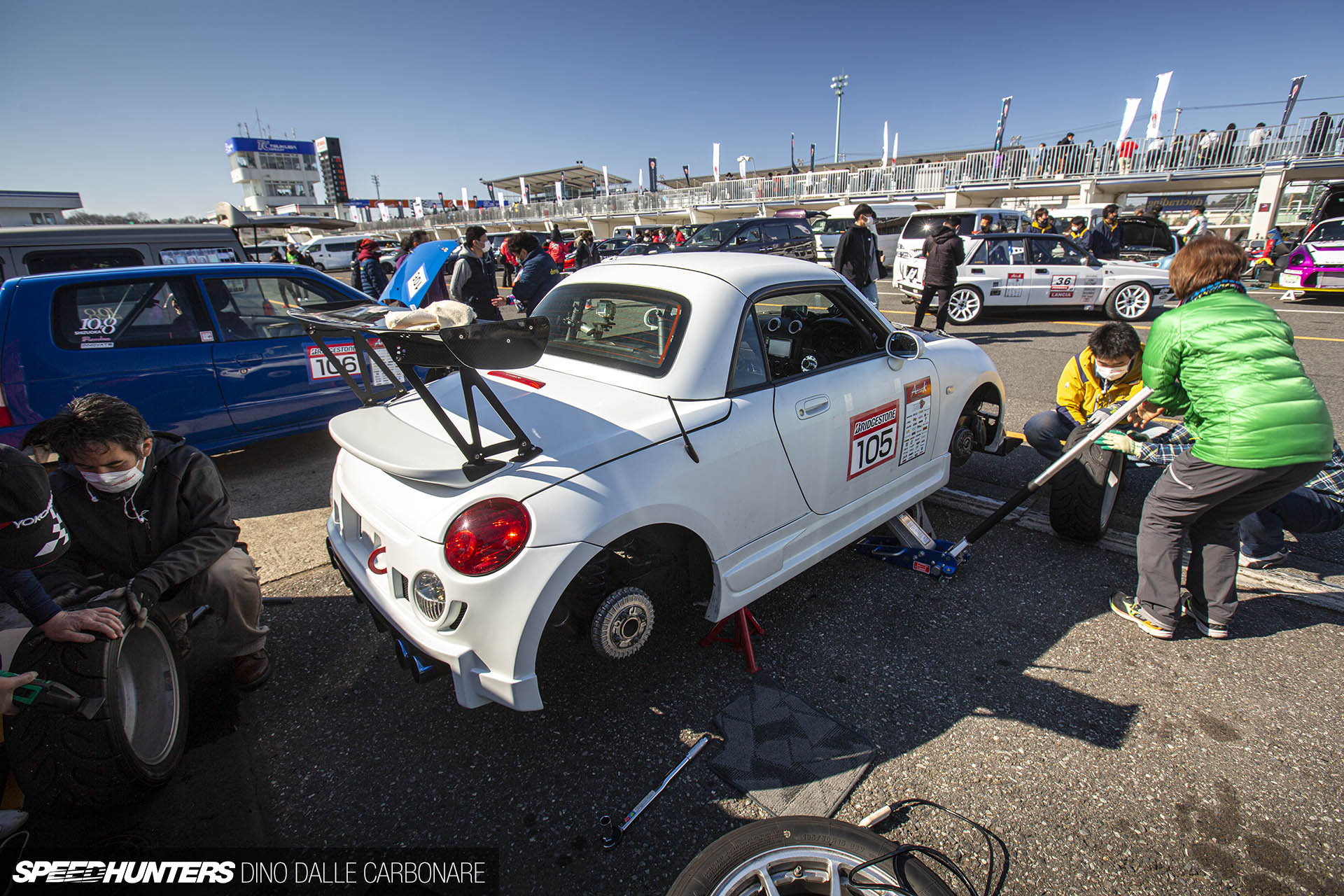
That might be 7-seconds slower, but it was driven by its owner – not a pro driver. Don’t forget that in stock form these cars probably lap Tsukuba in 1″15’000 or thereabouts.
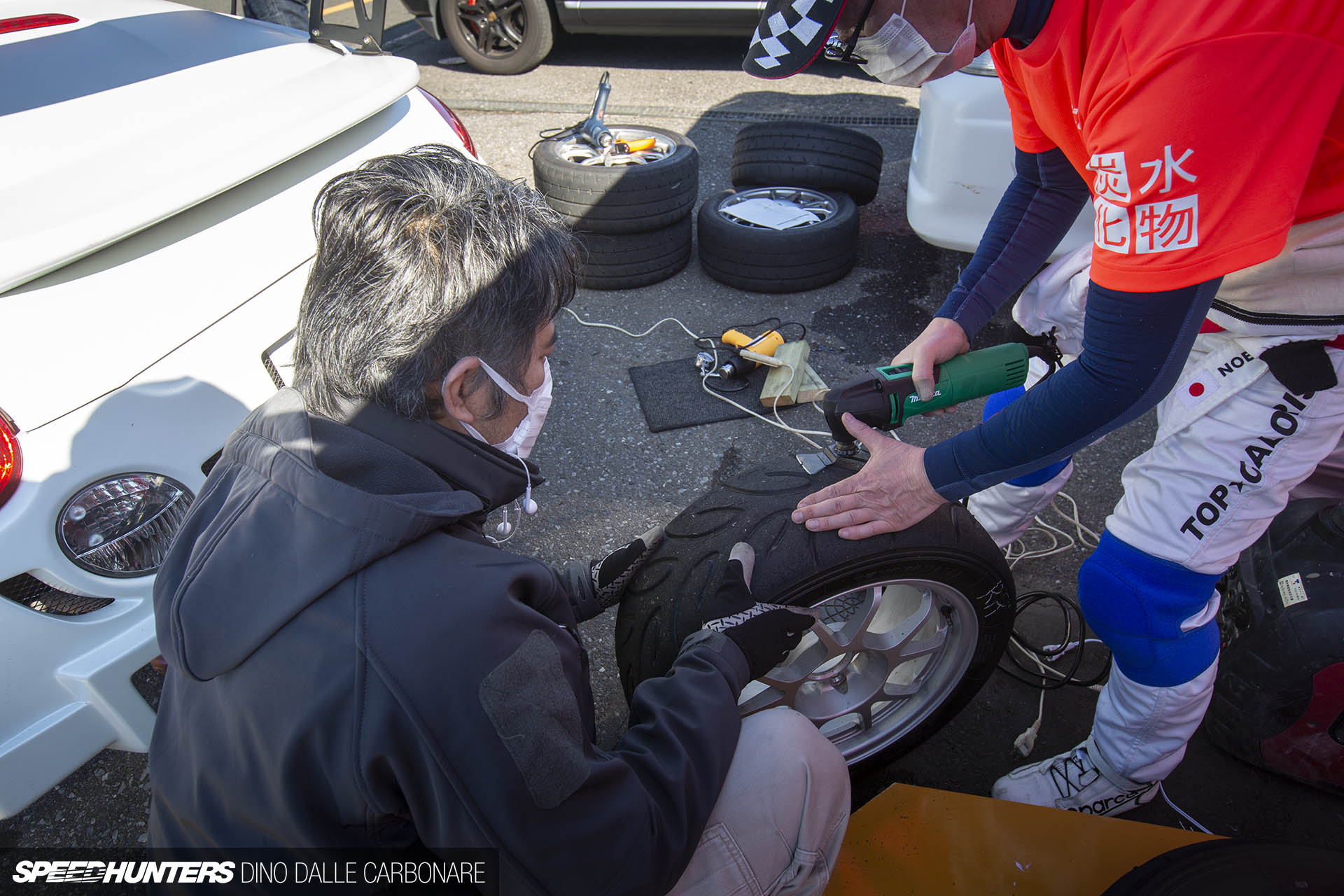
When it came to tire prep, the team was taking things just as seriously as anyone else in the paddock.
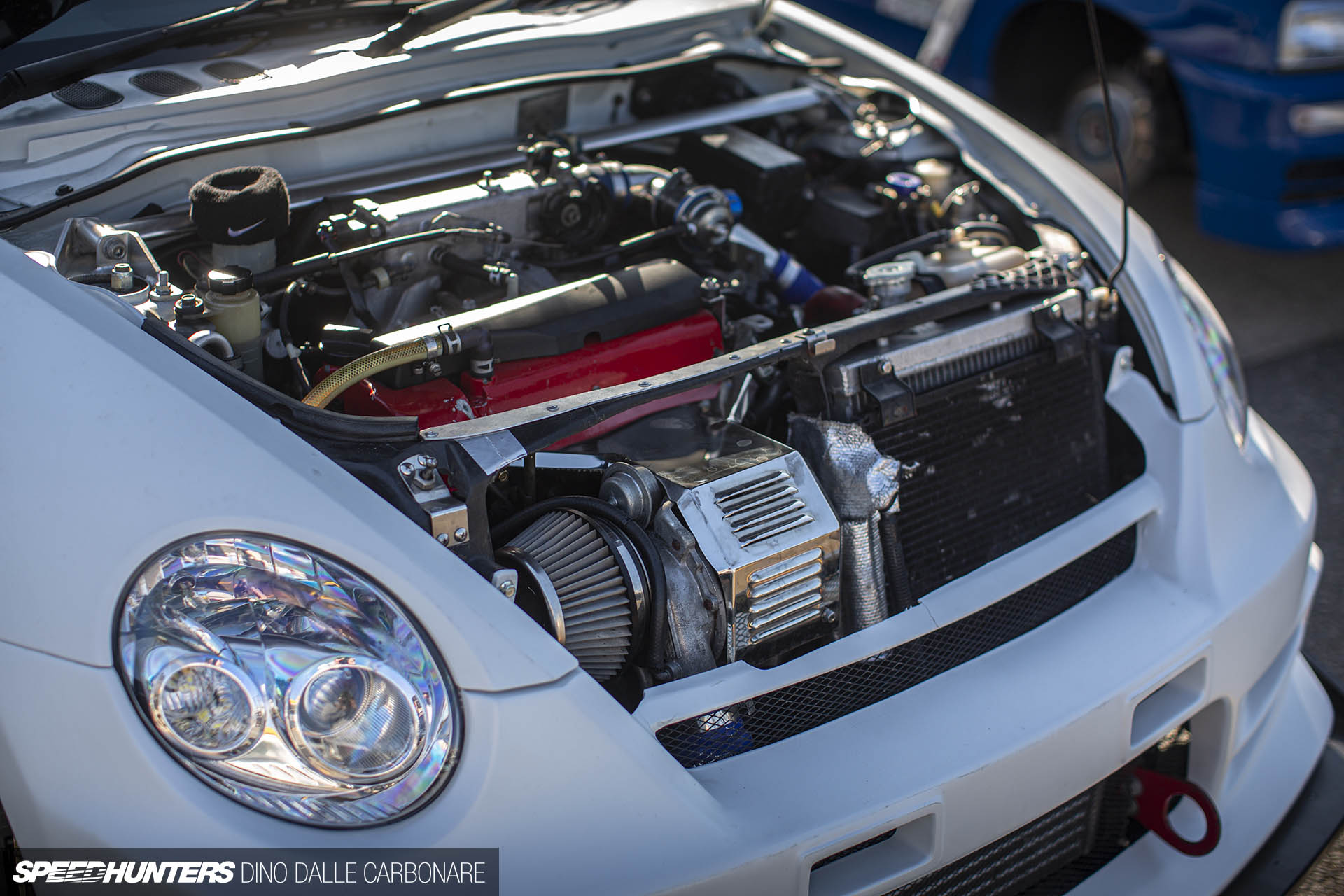


Engine-wise, this Copen had the same setup as the Mo-FAC demo car, but with different pistons yielding 880cc, and without nitrous.
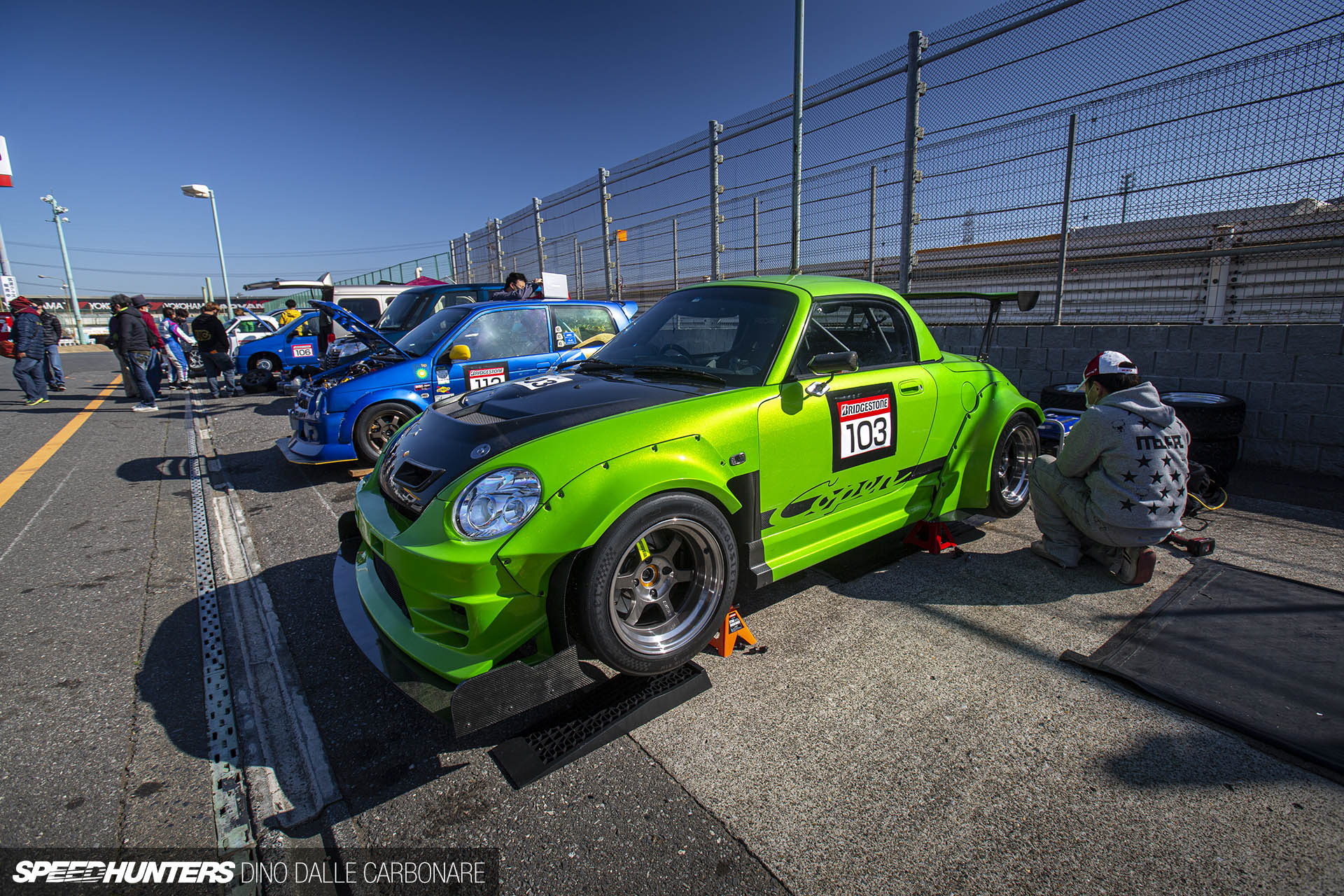
The third Copen of the group was this overfender-equipped lime green machine with a Porsche GT3 RS vibe sitting on RAYS Volk Racing TE37Vs, which looked sensational.
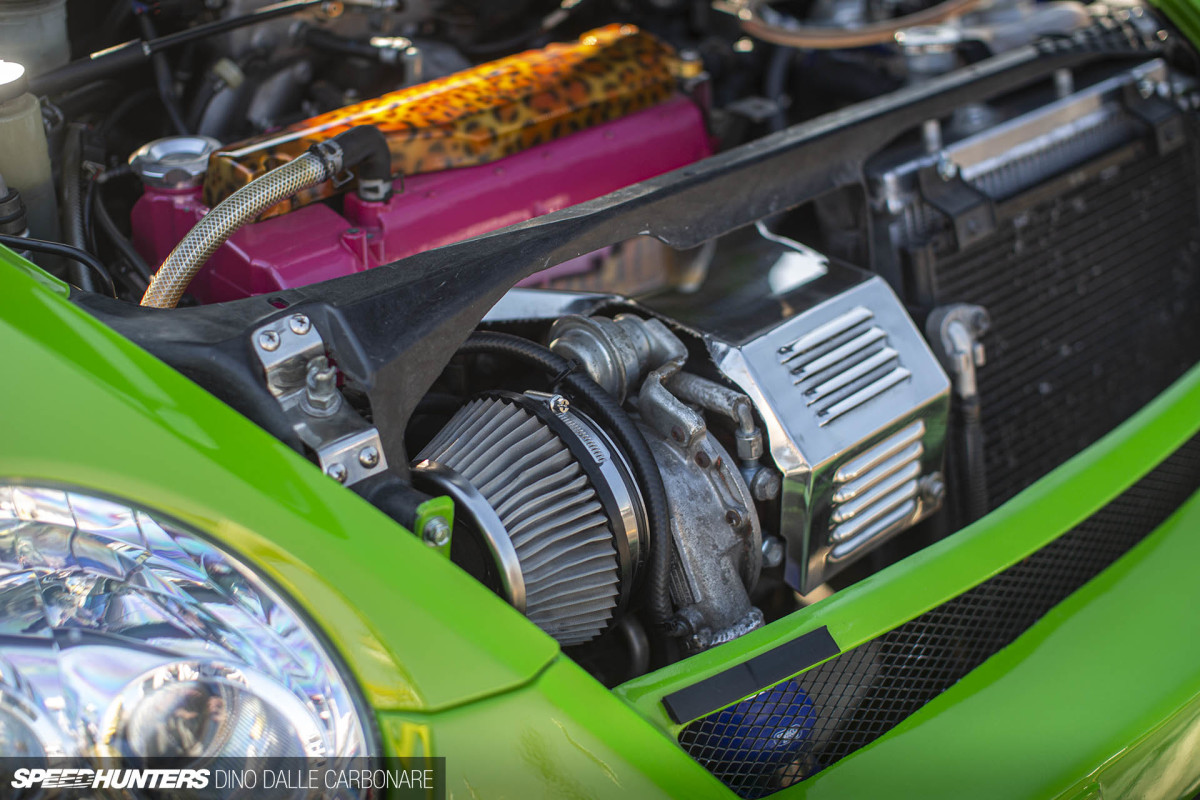


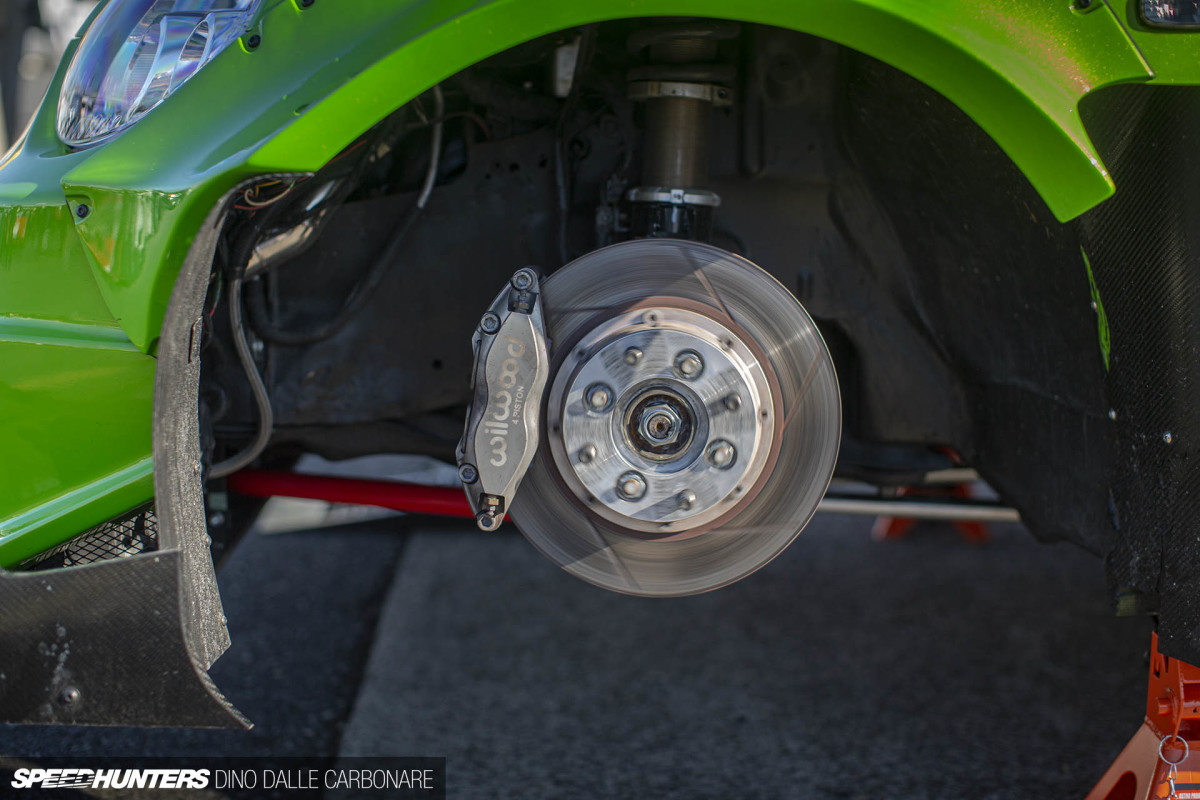

Performance-wise, it was second fastest in the Attack kei car class with a 1’03″248 lap.


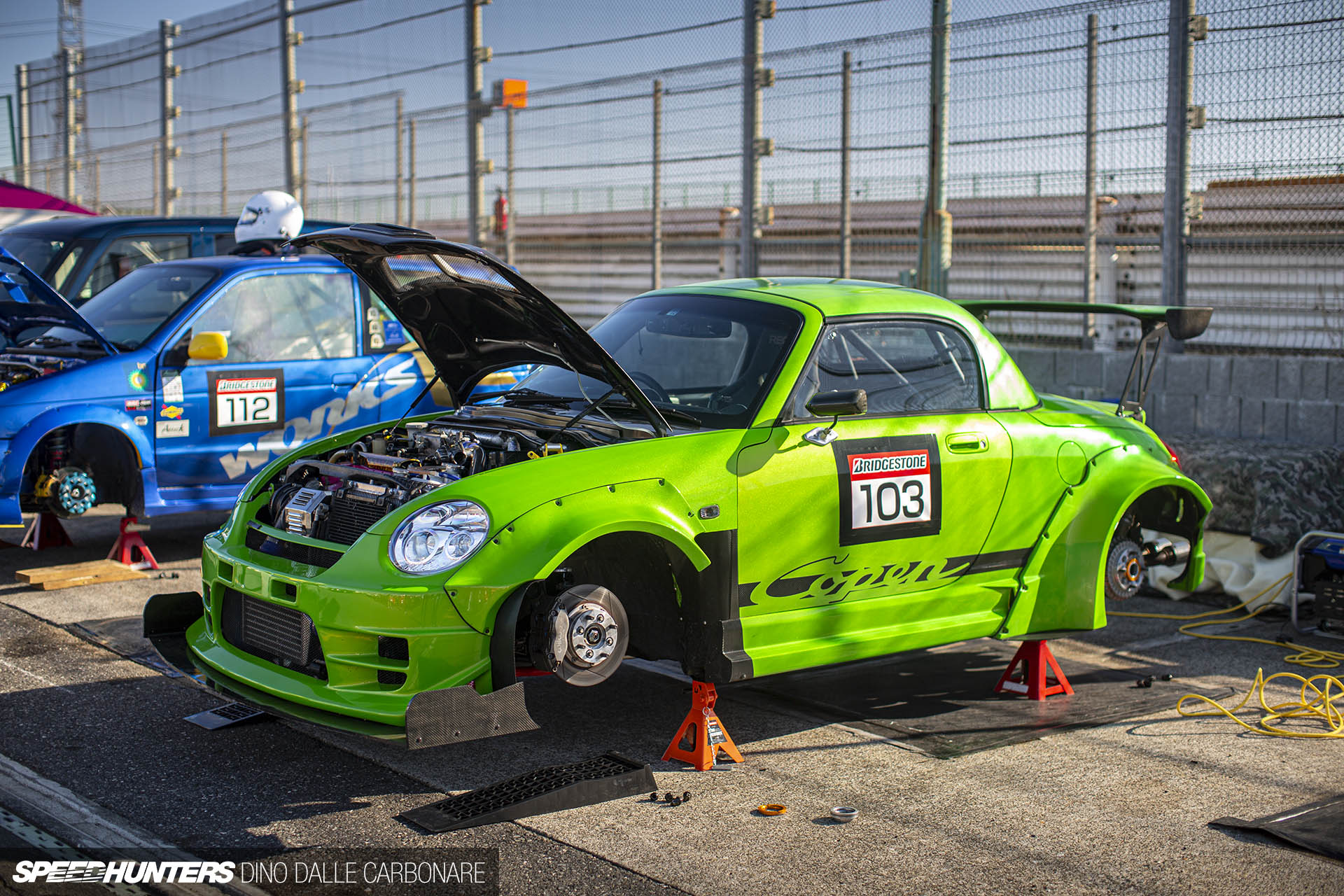
I really like the front fender treatment on this Copen, especially the way it tucks in aft of the arch. More aero comes courtesy of the carbon fiber front lip and a high-mounted, miniature GT wing.
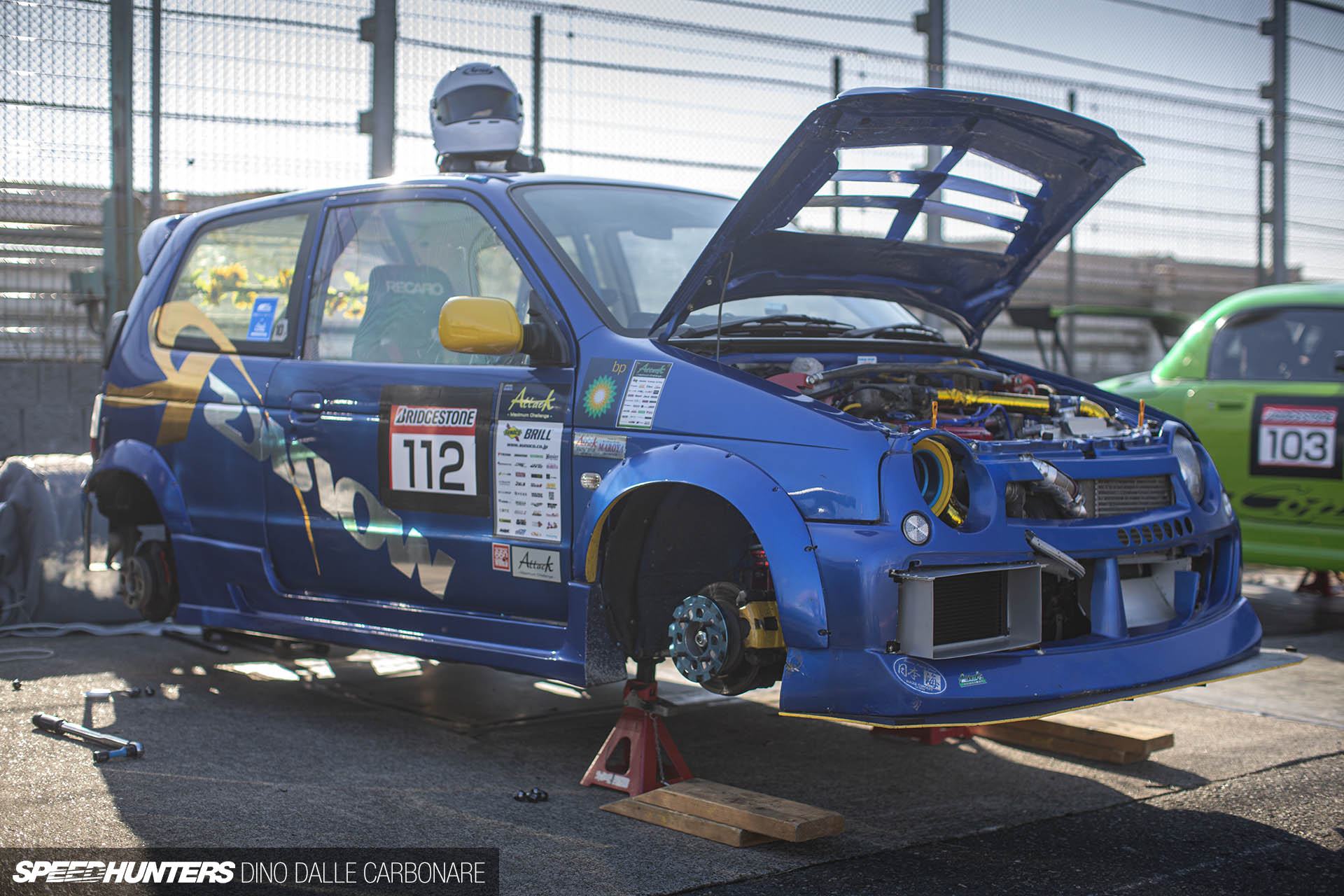
Next up are a pair of different generation Suzuki Alto Works, this round-light version running widened fenders and having far wilder execution overall.
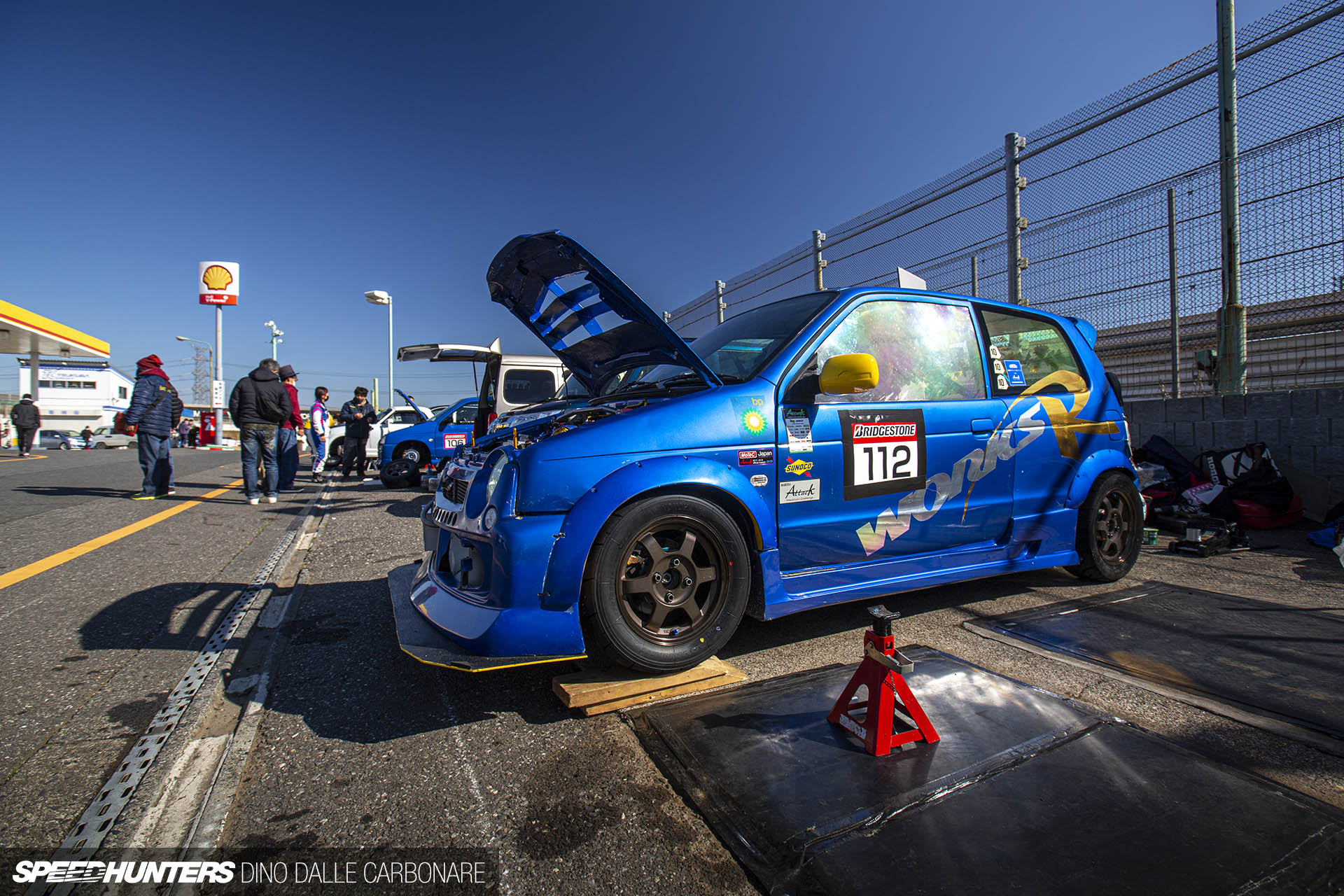
Again, we find little TE37s and semi-slicks filling up the arches.
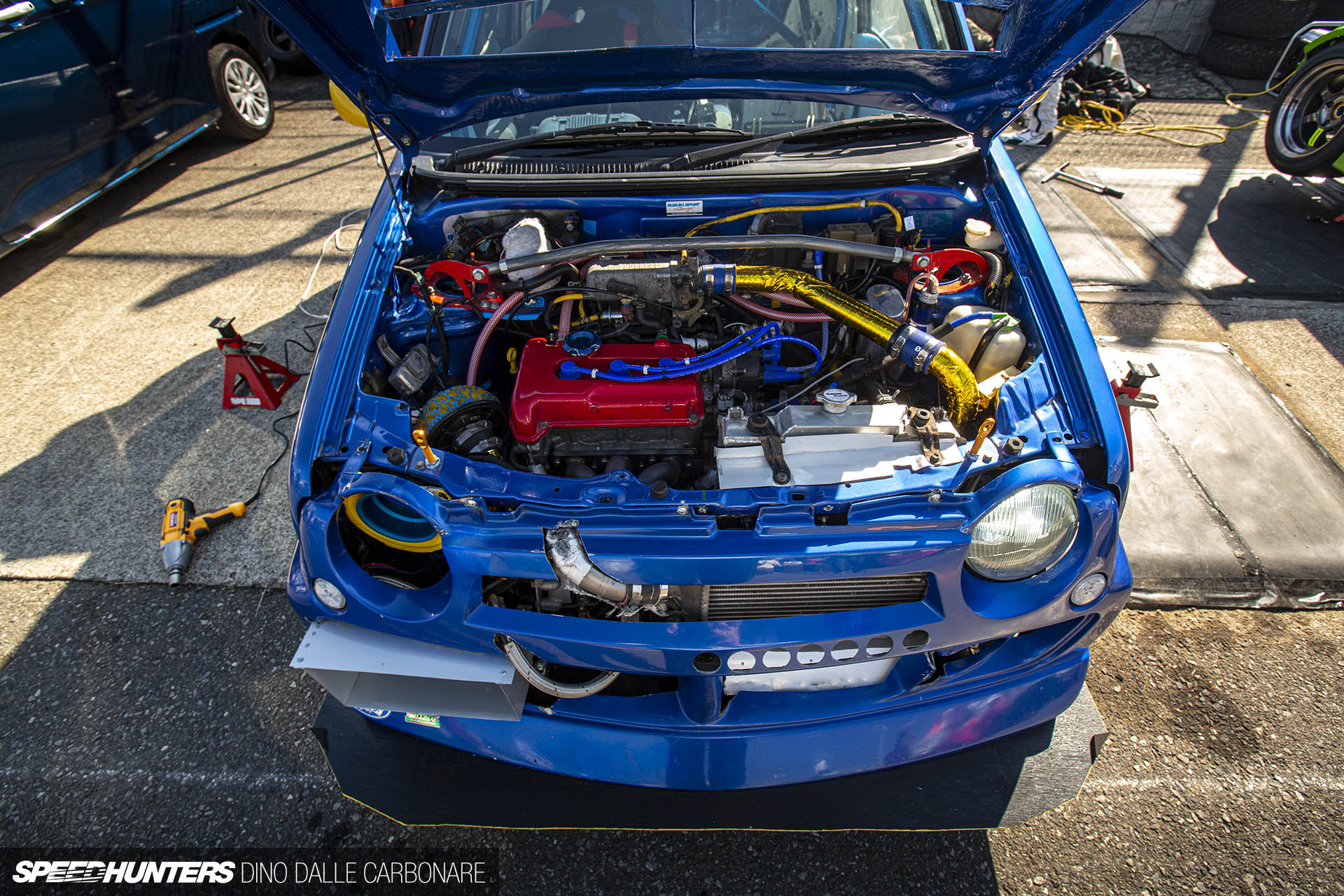

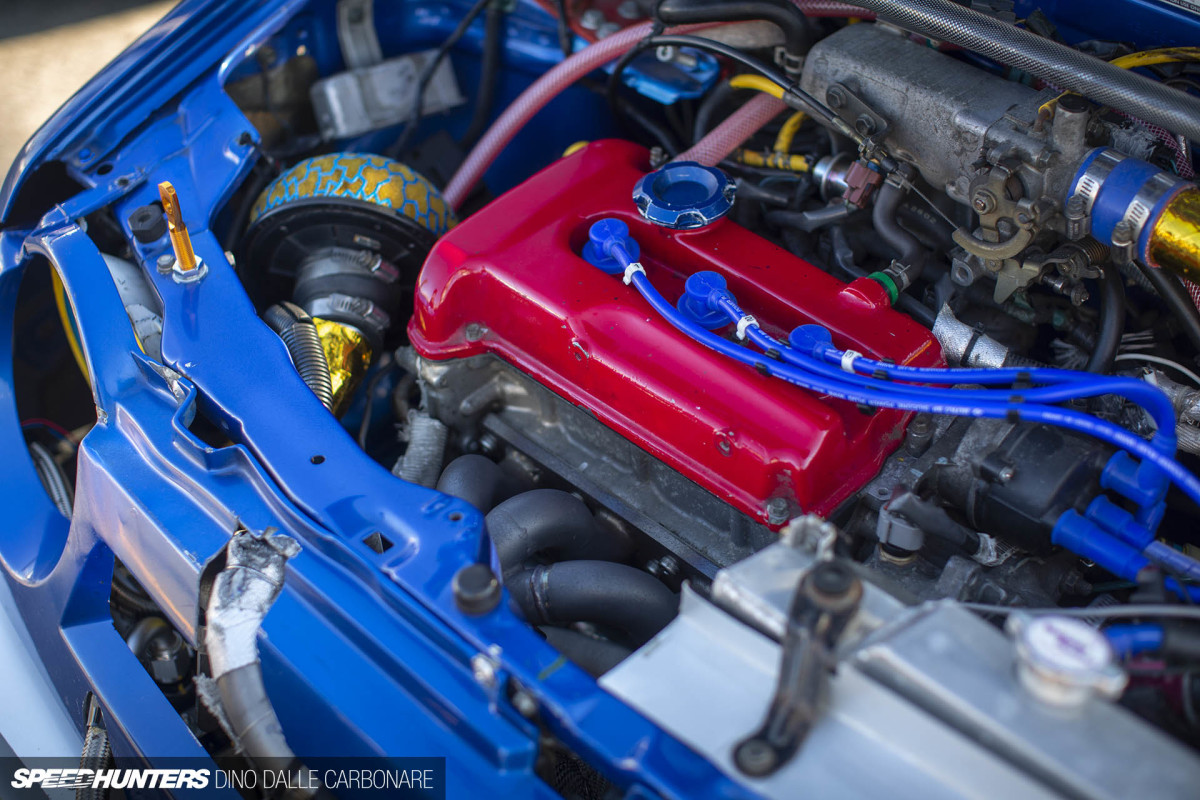

Due to space constraints under the hood, bigger turbochargers always end up sticking out of the grille. I’m surprised that no one is playing around with charge coolers to keep the piping as short as possible, but I guess the gold insulation helps a little in that department.
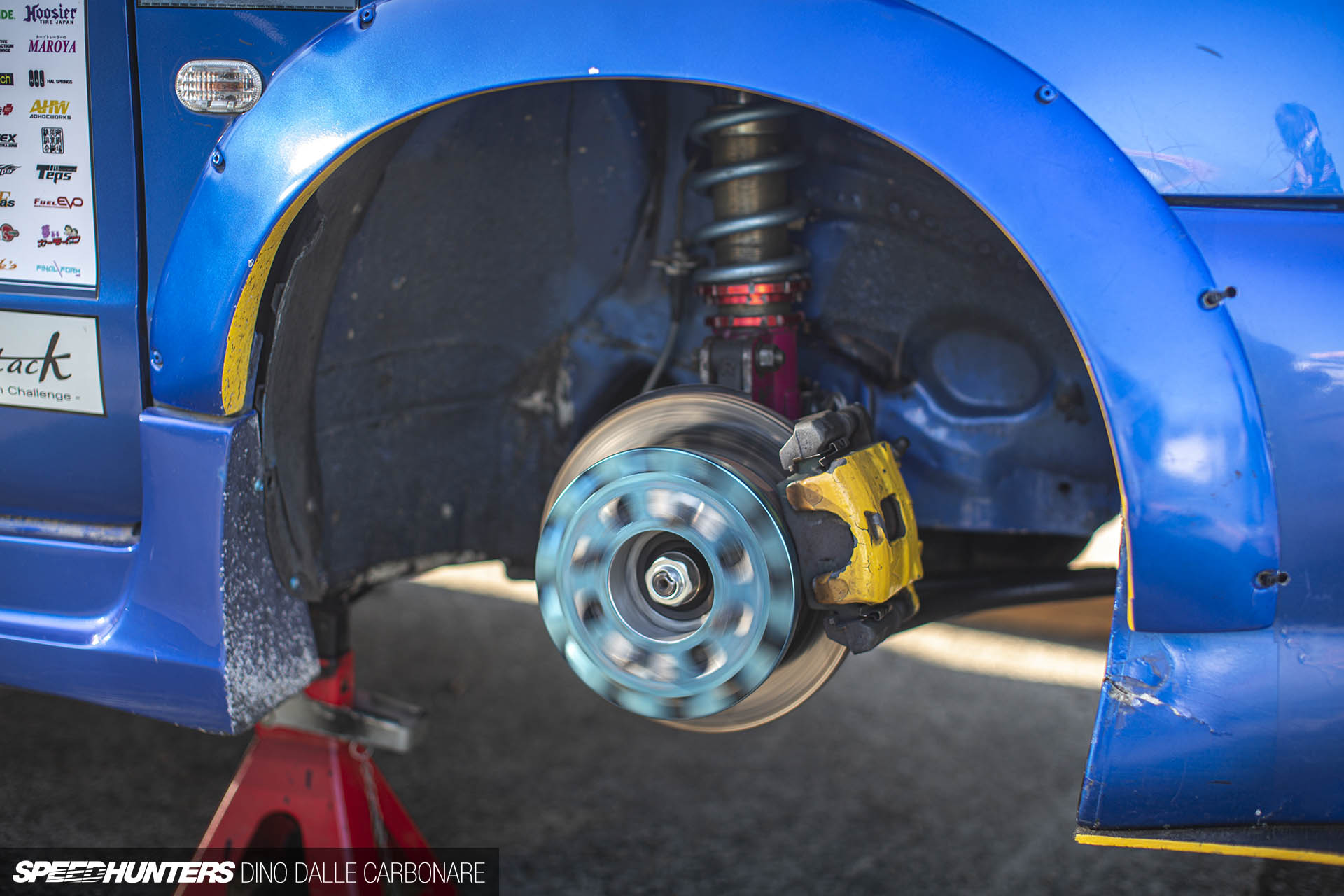
Prior to the track sessions beginning, most cars were lifted up on axle stands and left in gear so their engines and drivelines could be brought up to temp.


The other Alto had a real stealth look about it. Both cars posted best laps in the 1’06” range, which is pretty much what a stock BNR34 Skyline GT-R or Lancer Evo VI used to manage back in the day.
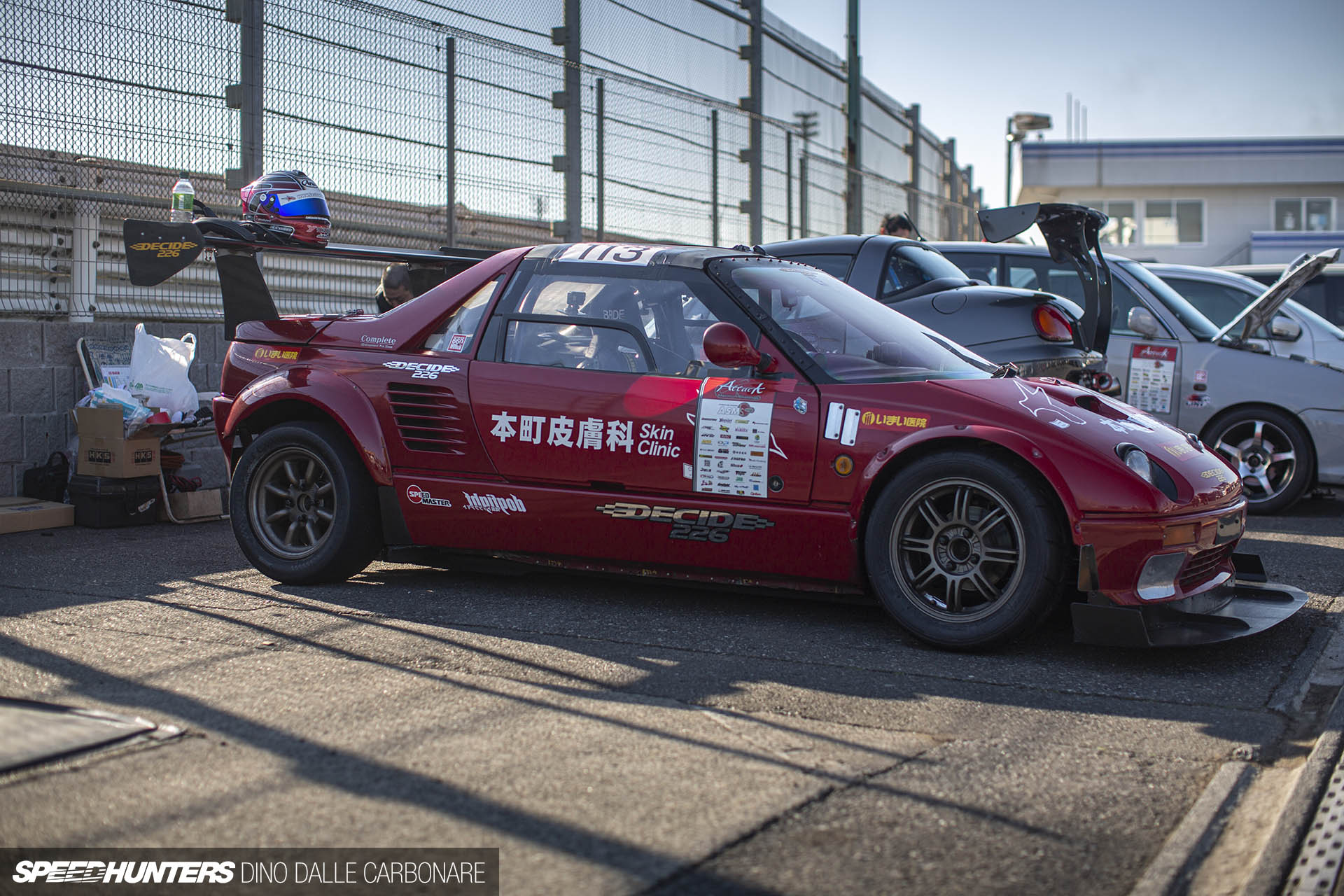
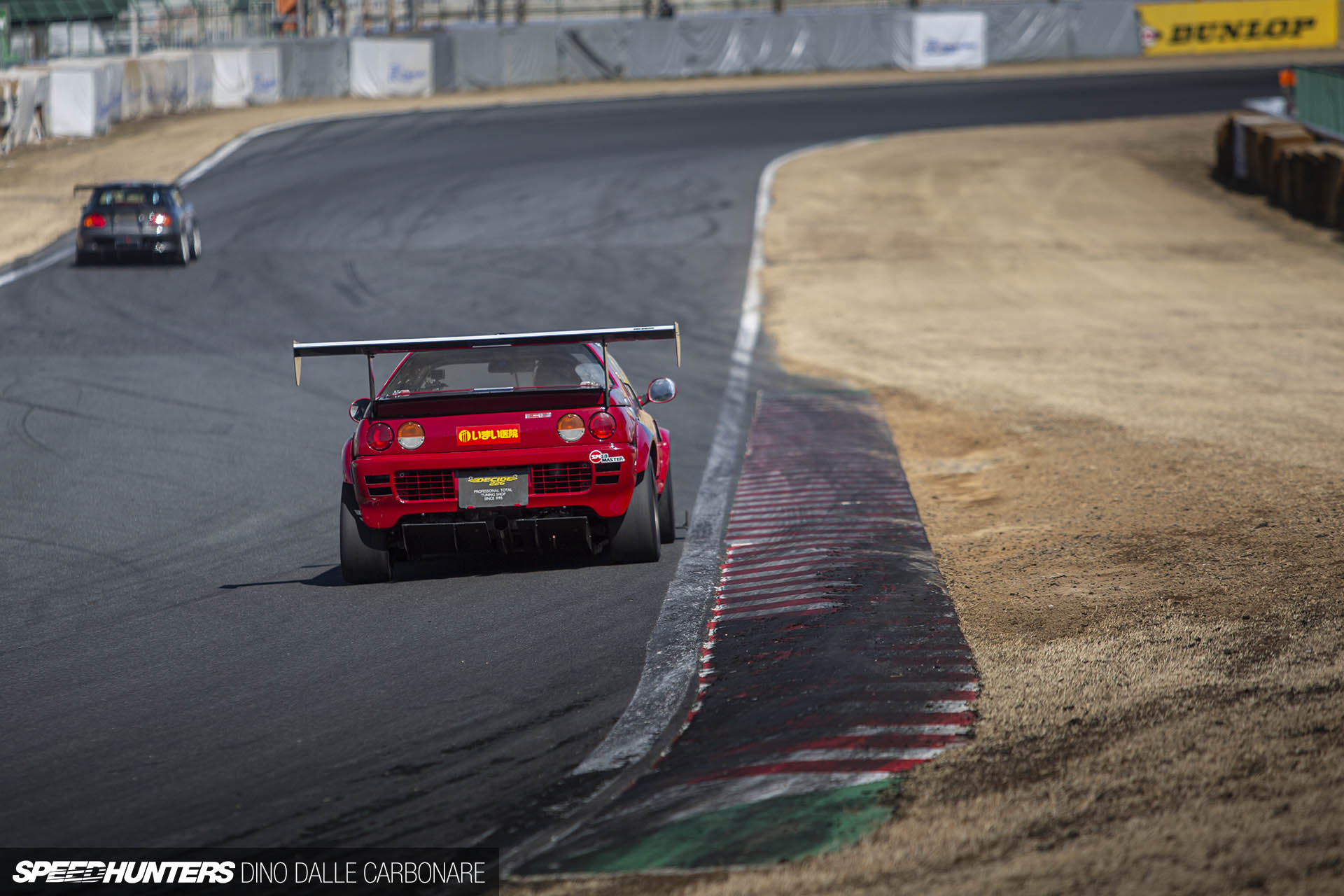
Next up is an amazing example of my favorite kei car of all time – the Autozam AZ-1. I just had to open this post with a shot of the Cara/Decide 226 AZ-1 tackling Tsukuba’s infield hairpin.


Out of the 11 laps it completed on the day, its best was a 1’03″833.
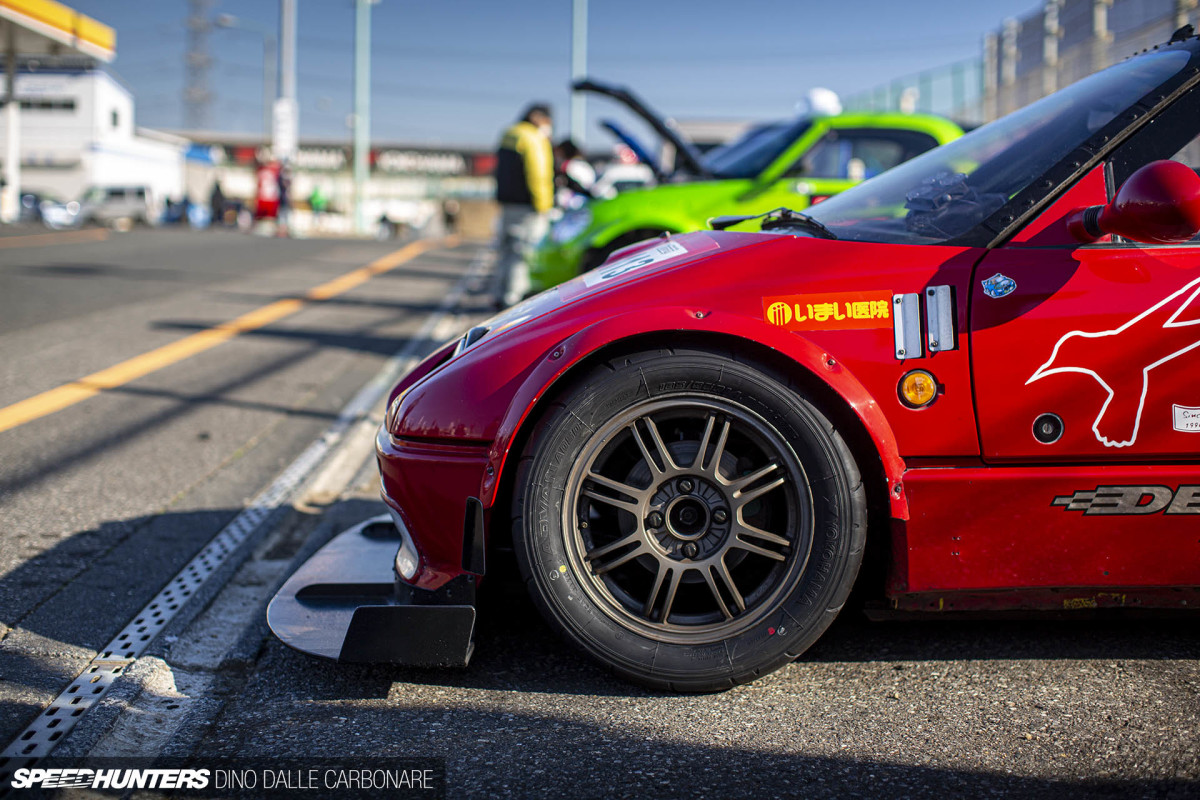

It’s always fun to take a closer look at the various setups owners go for. I noticed this car was running sticky Yokohama Advan A050s up front and Hoosier slicks on RS Watanabe wheels at the back.
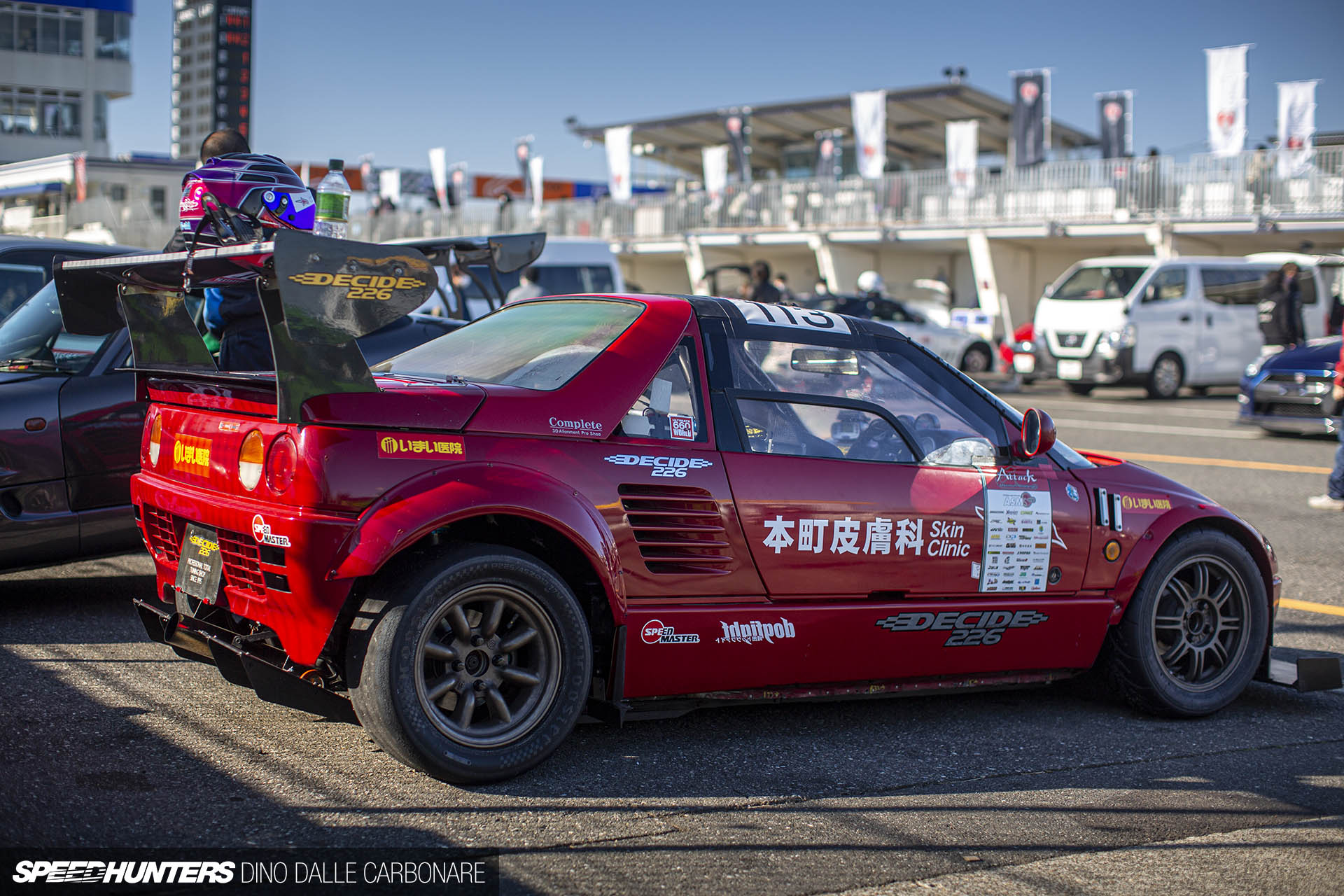
The little rear diffuser and center-exit exhaust sticking out at an angle are really cool details.

It was also running a pretty solid-looking rear spoiler.
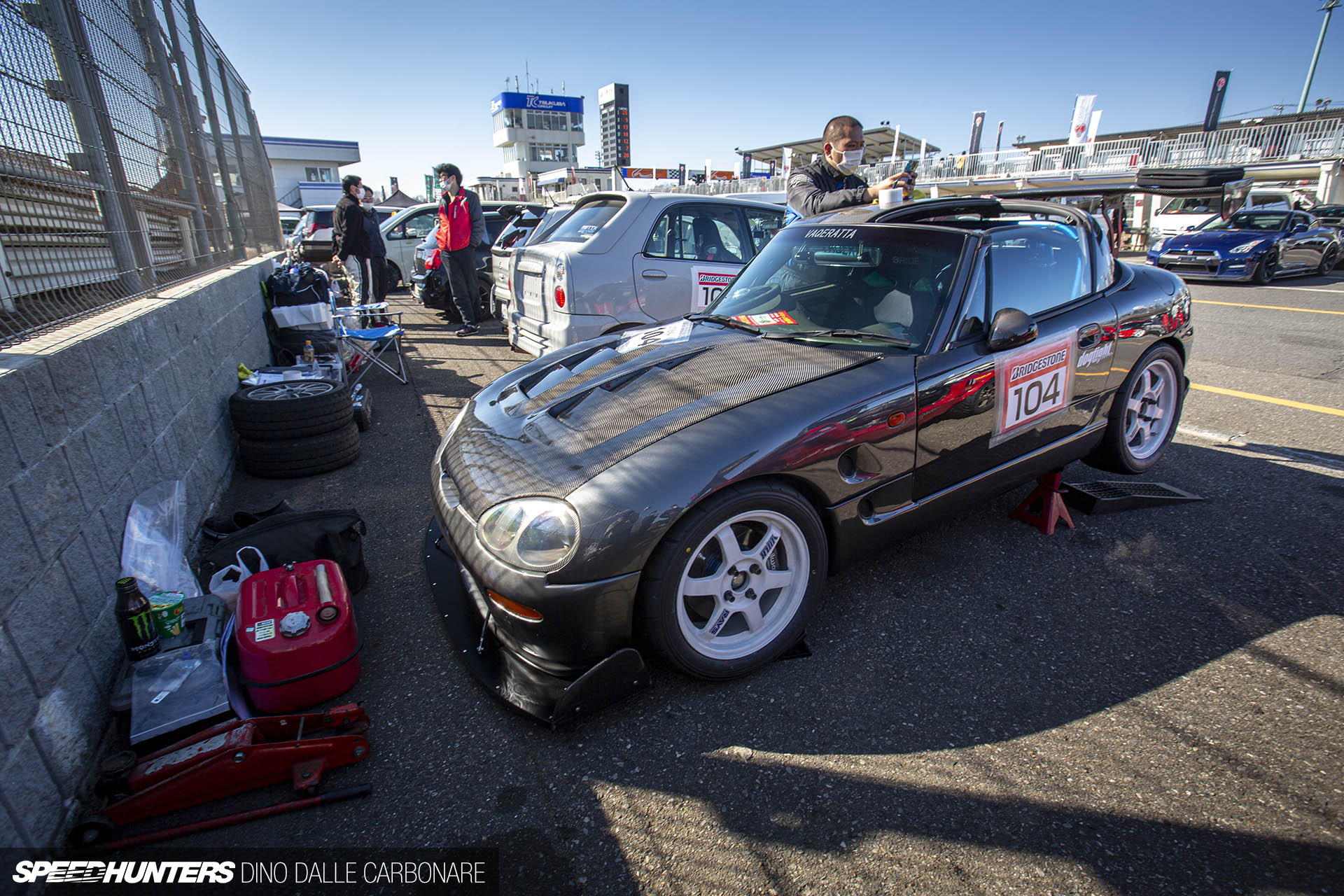


I was happy to see at least one Suzuki Cappuccino at Attack, and this one looked pretty sweet on another set of TE37s. The best lap time for this car was a 1’07″573.
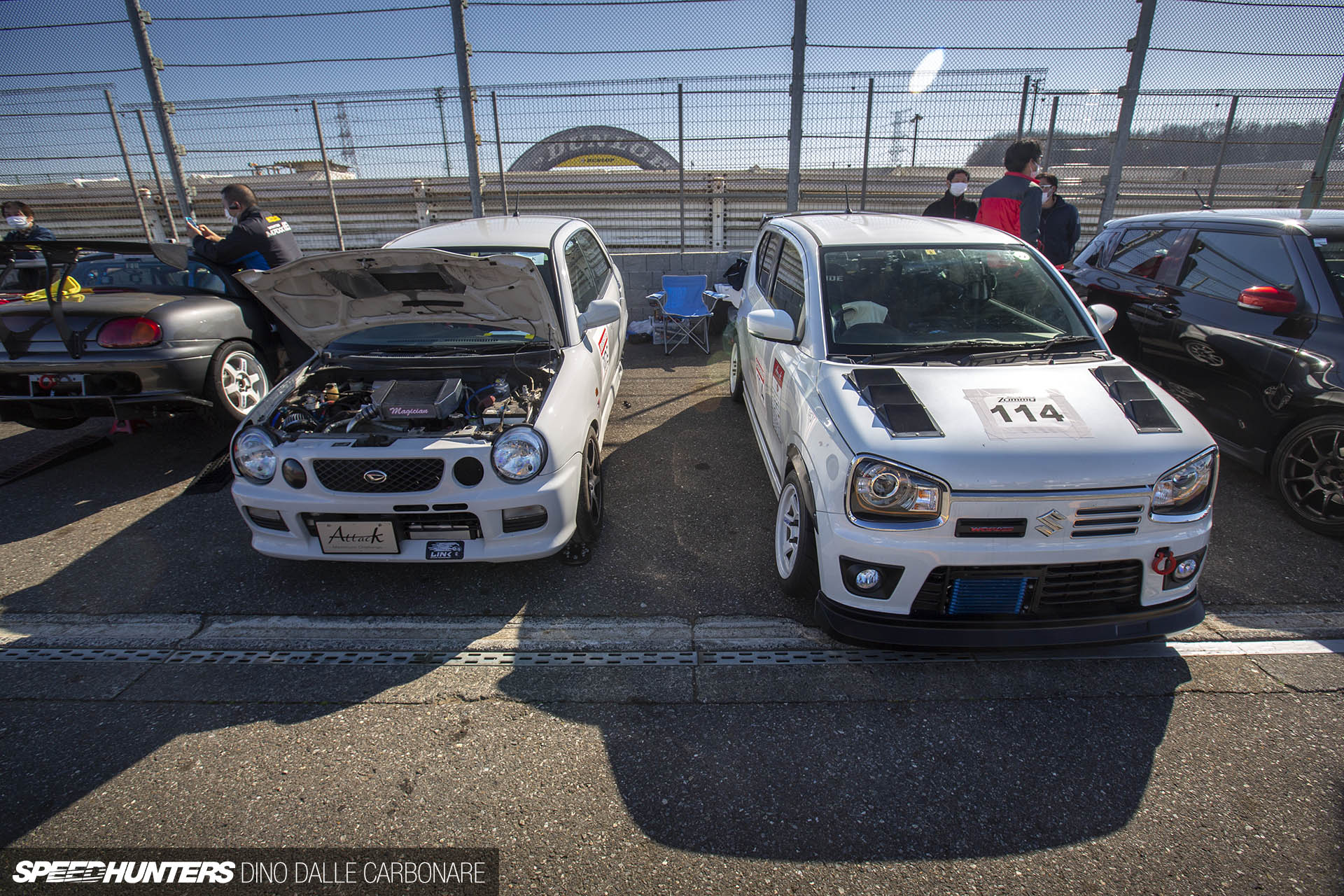
Check out this kei pairing – an older Daihatsu Opti on the left next to a current-gen Suzuki Alto Works, both modified in performance and looks.
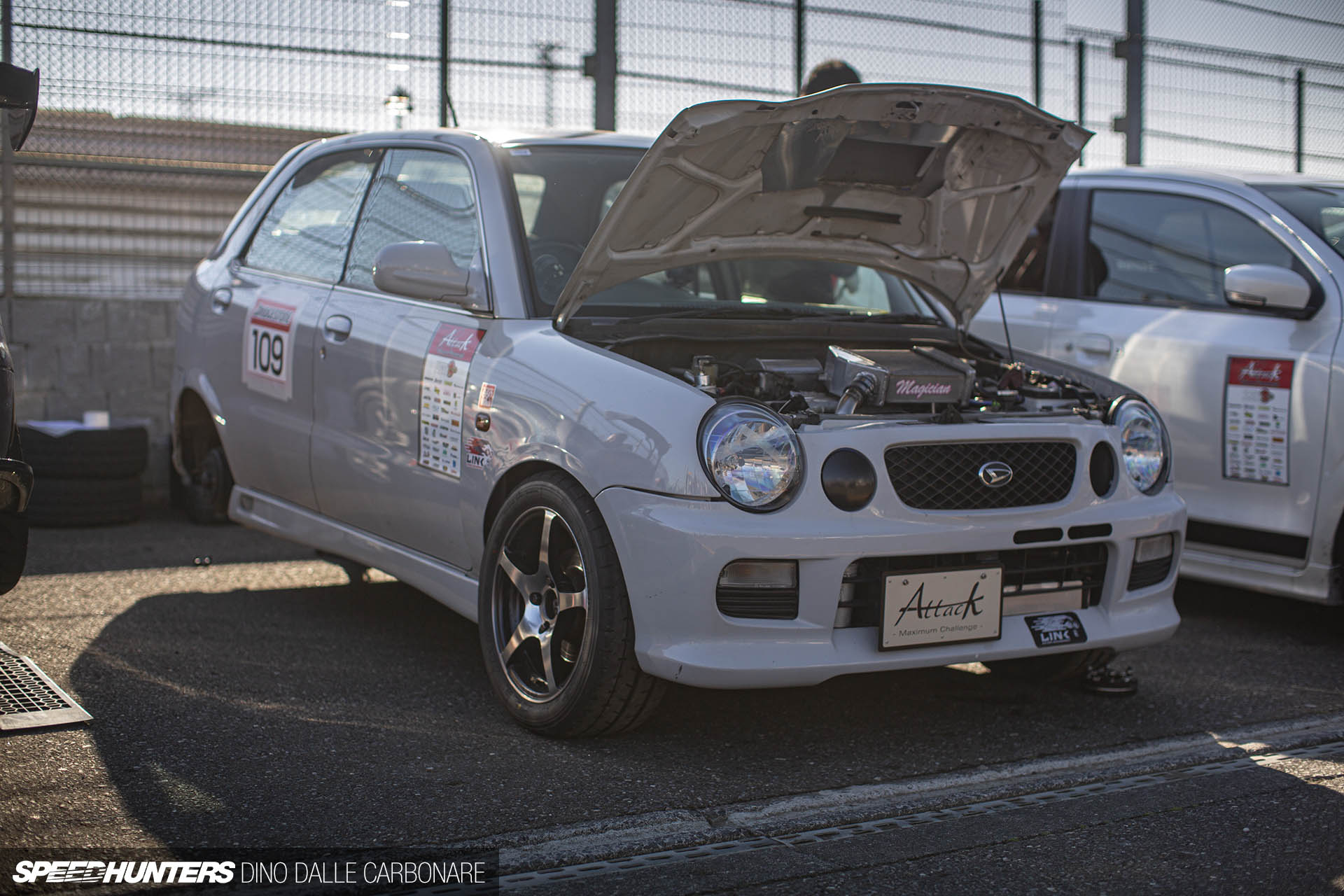
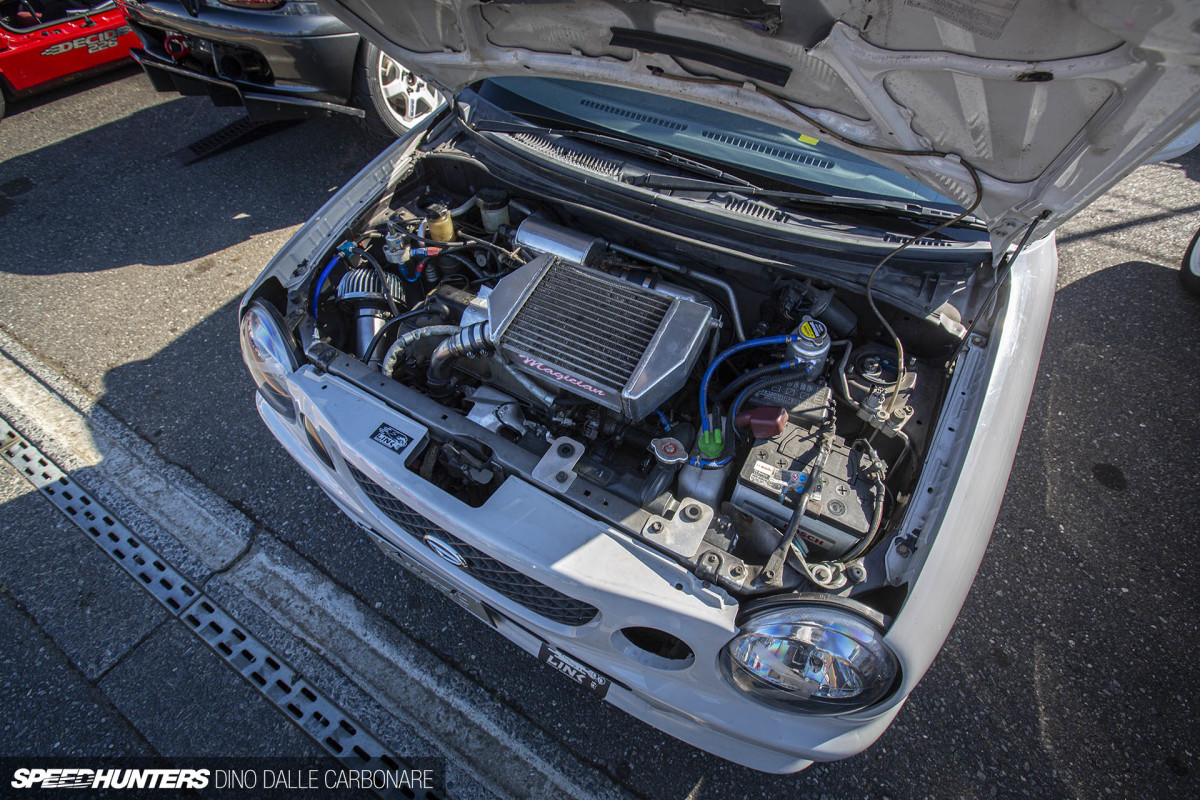

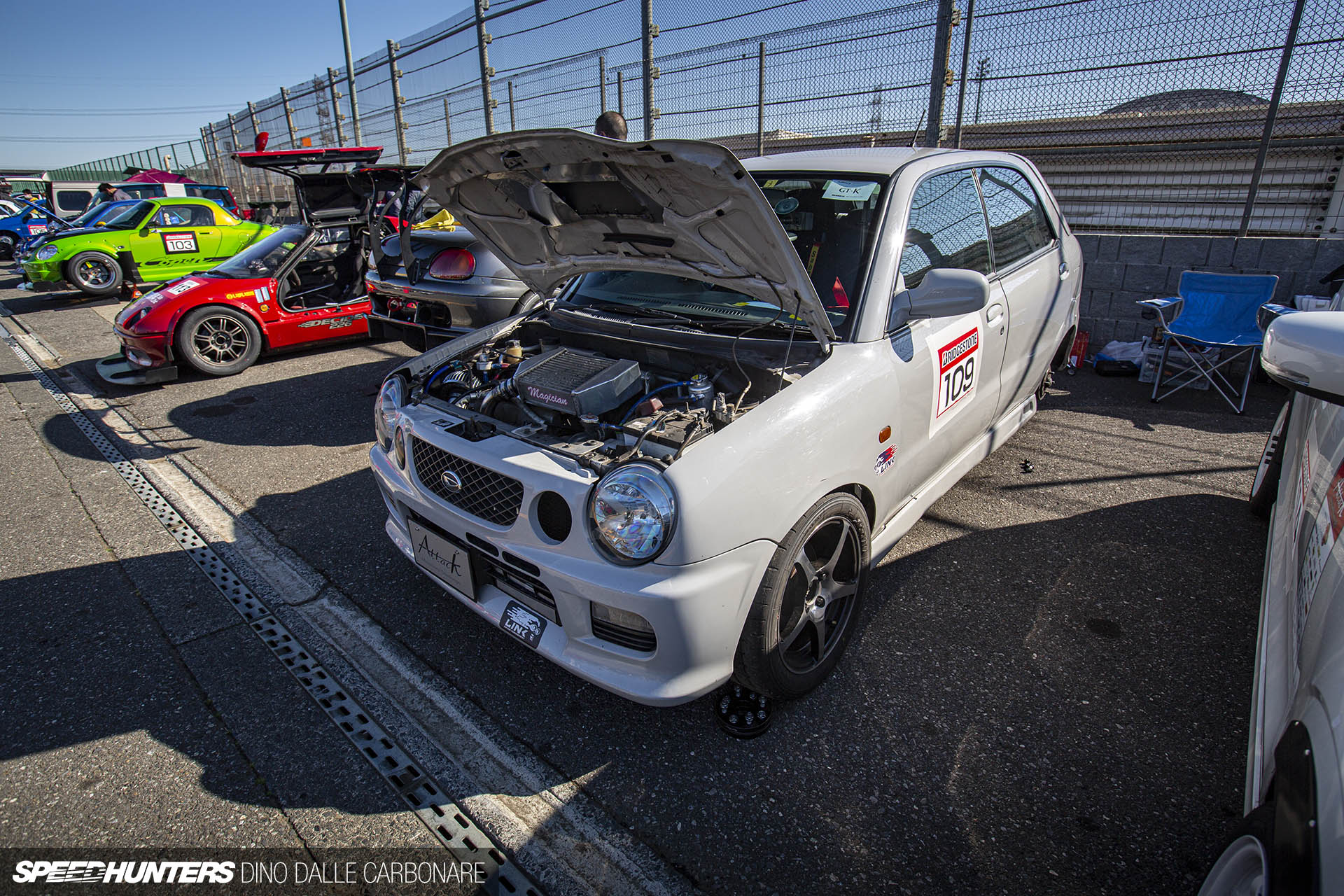
1’07″976 was the fastest lap the Otis could manage, but the best part was the ‘Magician’ sticker on the upgraded top-mount intercooler.

I didn’t get to see what the Alto Works was running under its vented hood, but seeing as it was 2-seconds off the Otis’s pace, probably just a boost increase and general handling modifications.
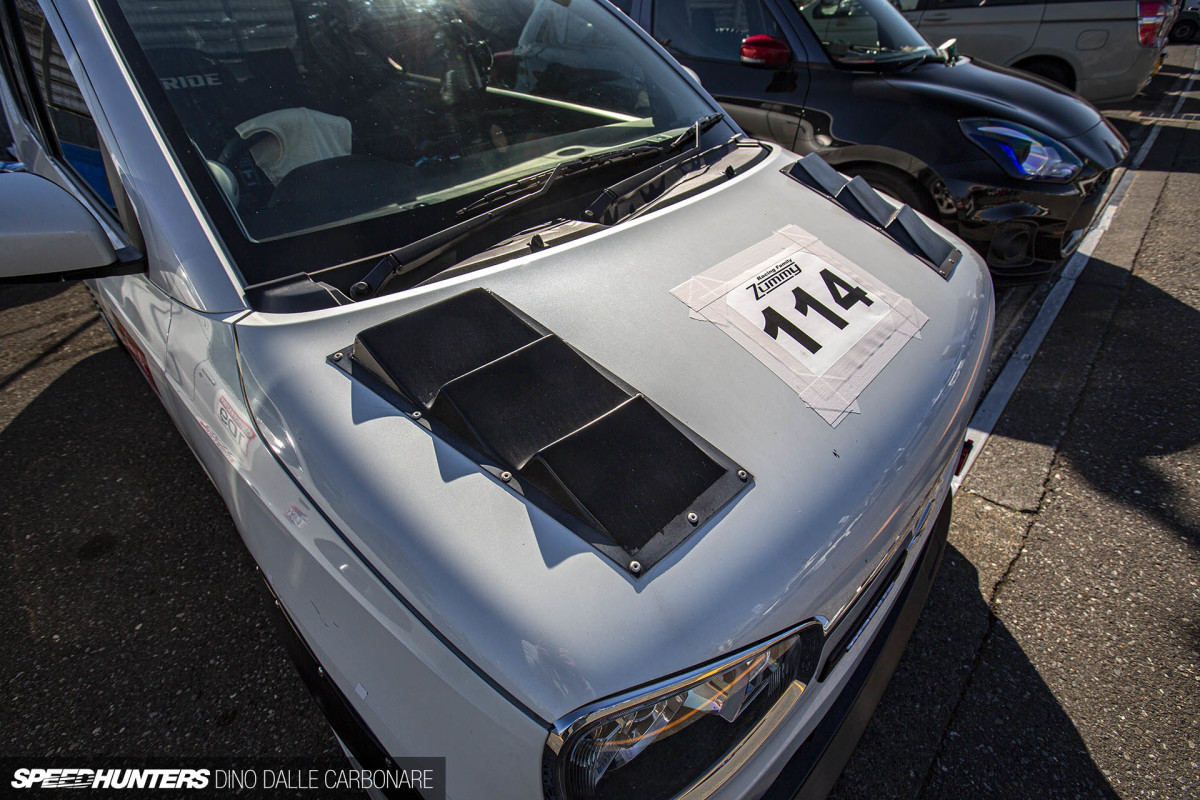

It’s a good thing Suzuki still makes cars like these. Not only is the Alto Works a more responsive version for those that need to drive a kei car but want something fun, it’s a great entry point for anyone starting out in racing.
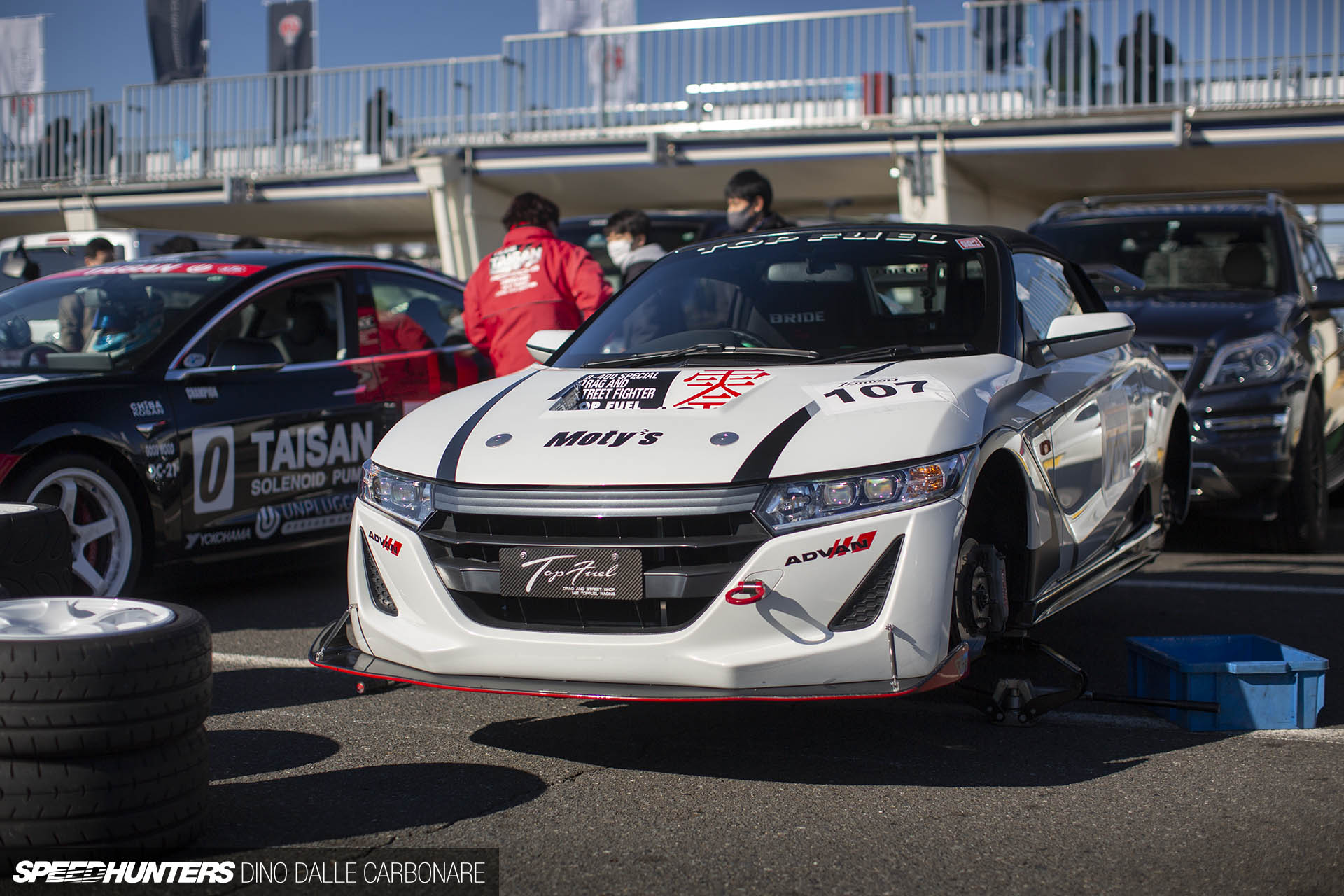
Finally, the Honda S660, starting off with this example prepped by Top Fuel.

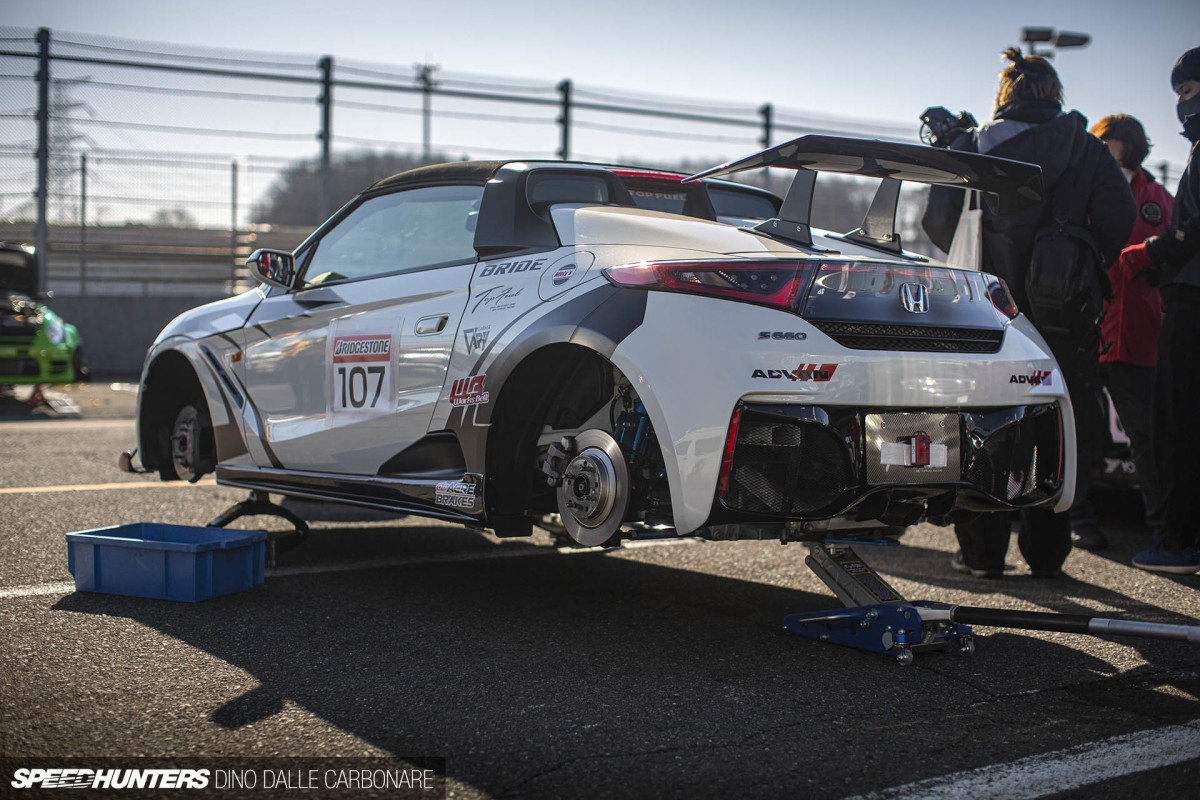
Honda stunned everyone when it returned to the sporty kei car market by paying homage to the Beat, so it’s not surprising the S660 has had much domestic success, nor that so many JDM tuners have jumped on the model. A 1’05″121 was the fastest lap this car managed.
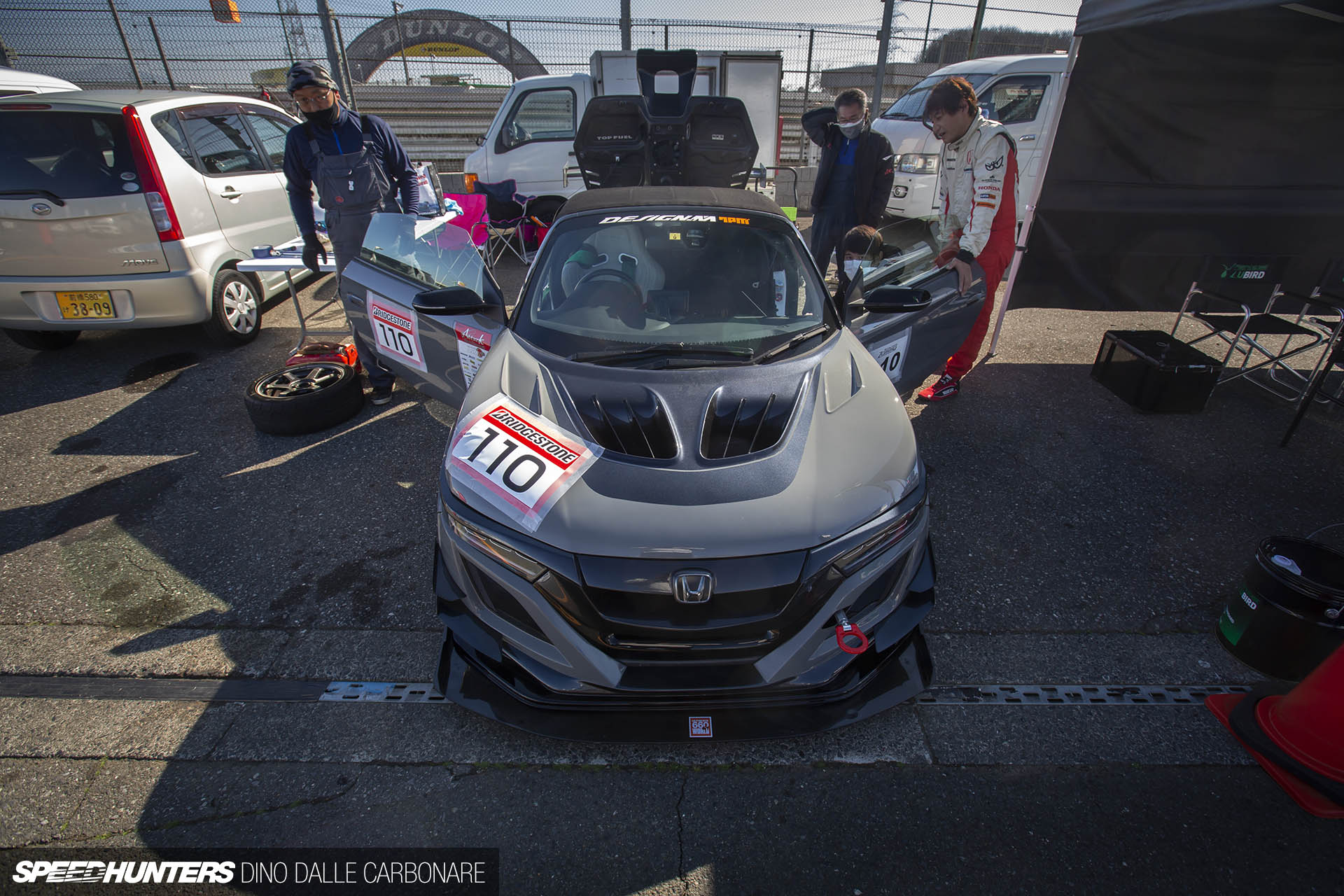

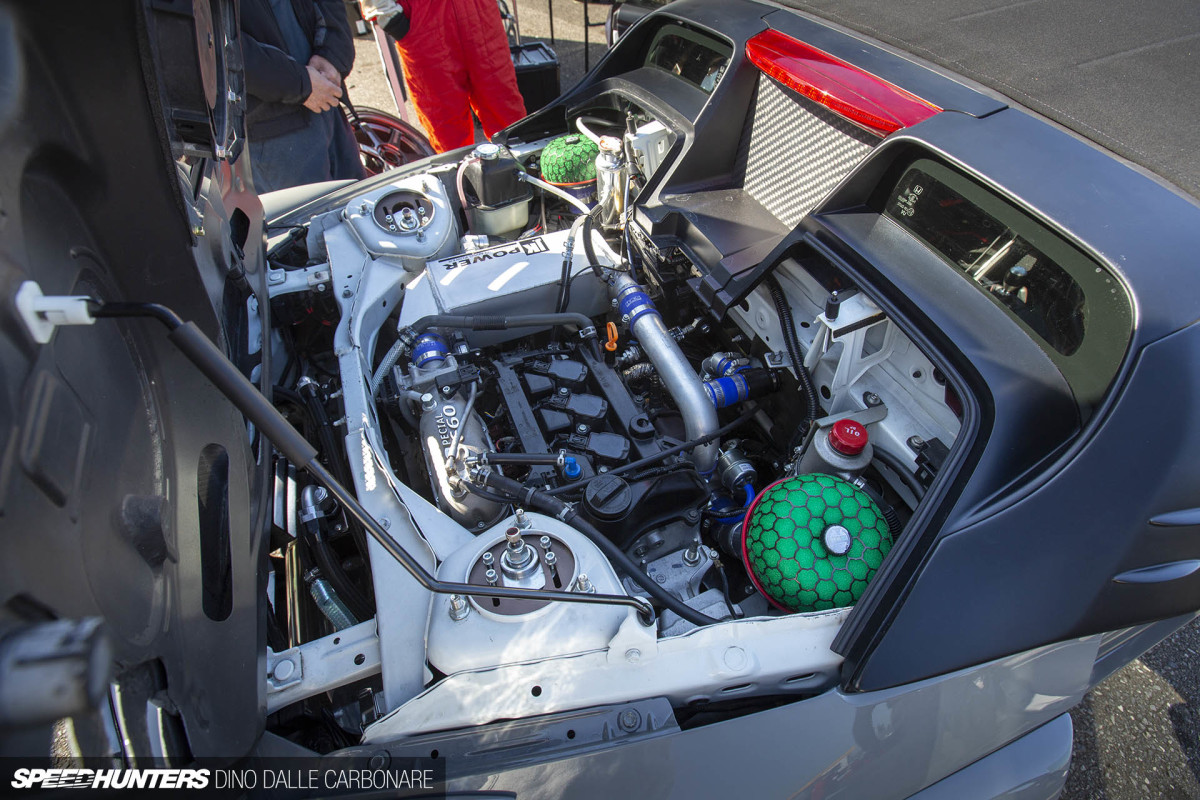
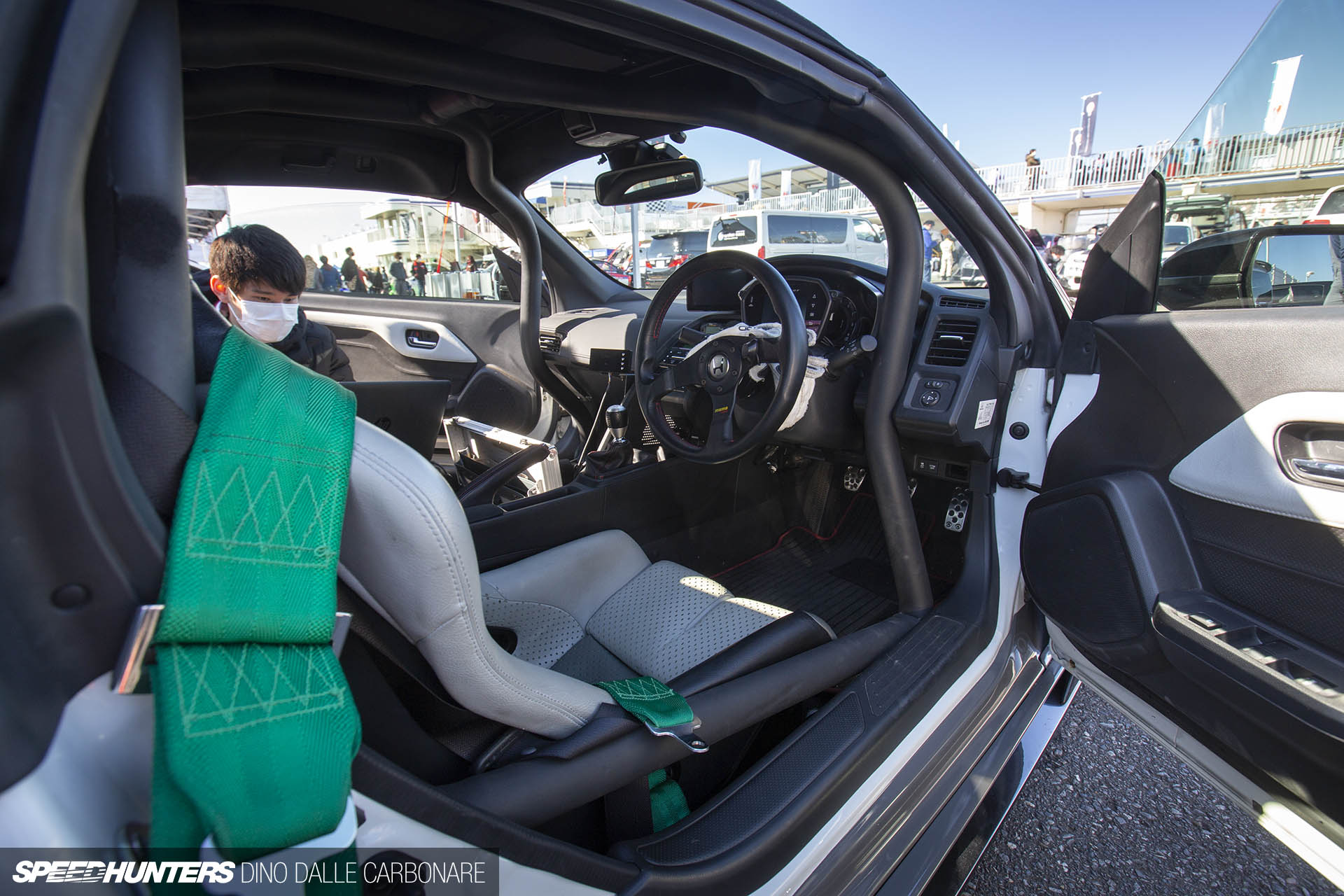
This gray S660 seemed to be the most modified example in the paddock, both from a performance and aesthetic standpoint. The guys running it managed a 1’10” lap, but unfortunately spent most of the day fiddling around in its engine bay. I think there was a lot more in it.
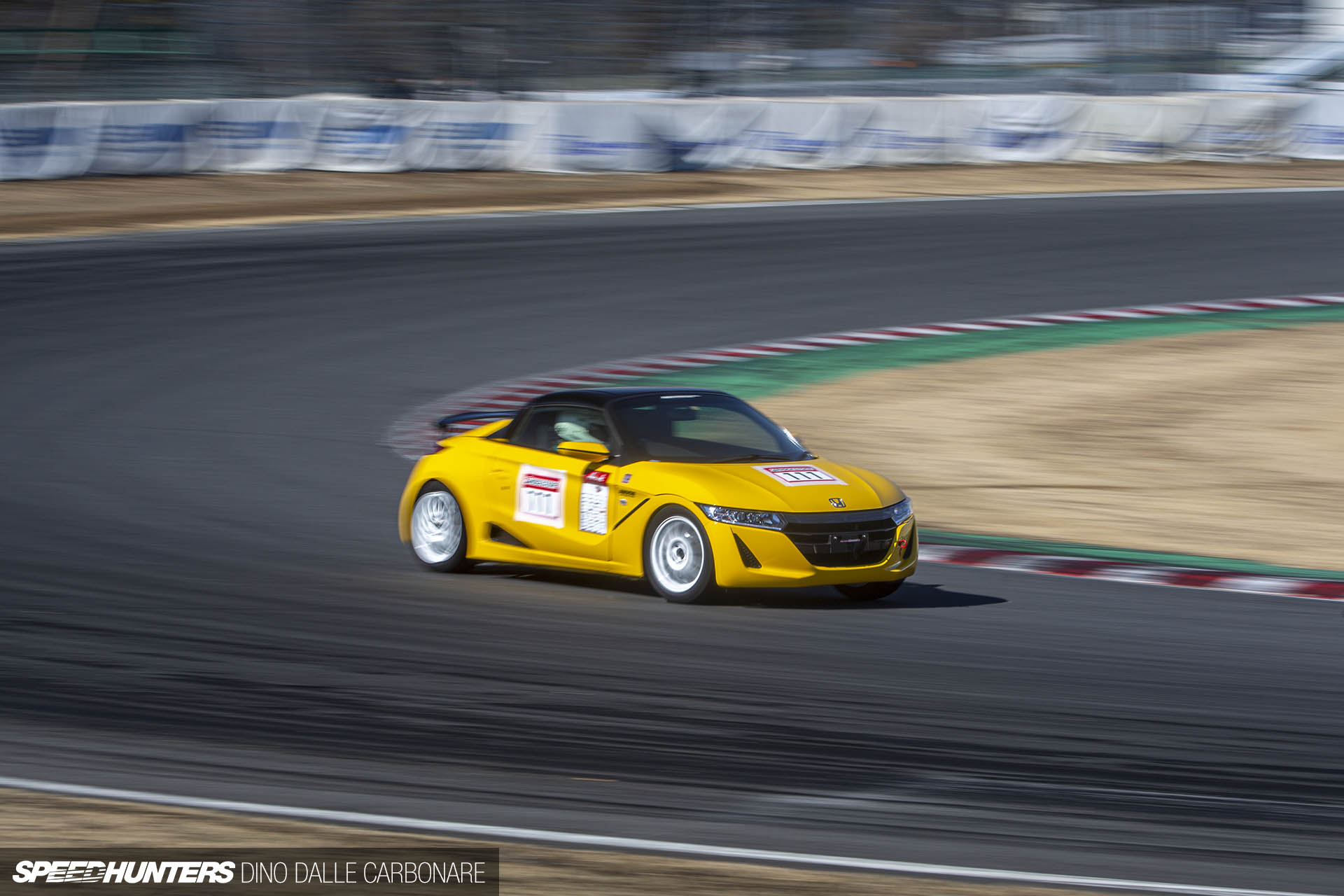
The Arvou-built S660 had no such issues though. Its driver looked confident, consistently lapping in the 1’09” zone.


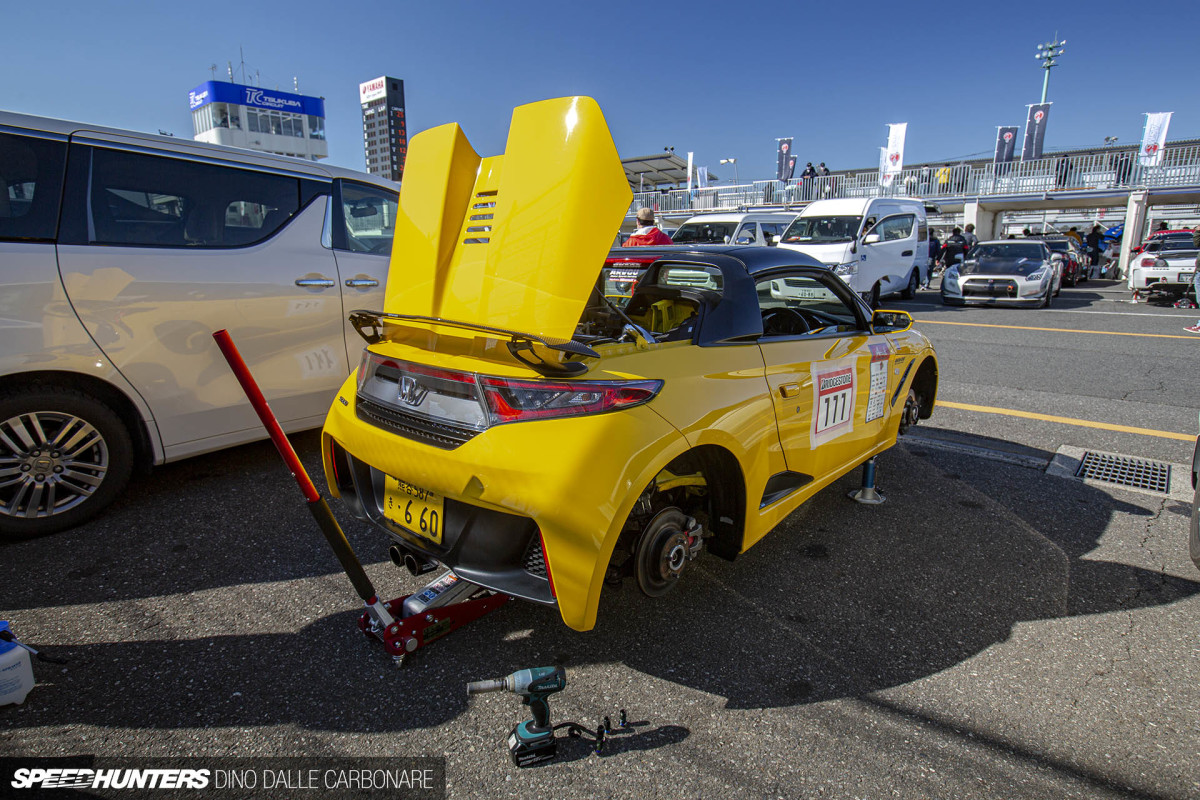
Of course there’s an Arvou handling package in play, but it’s still a pretty simple build. It really goes to prove that you don’t need a crazy budget and insane aerodynamics to enjoy a day attacking Tsukuba.
I’ve got one final short post to share from Attack Tsukuba 2021. If you like GT-Rs, you definitely won’t want to miss it…
Dino Dalle Carbonare
Instagram: dino_dalle_carbonare
dino@speedhunters.com